Compare commits
400 Commits
| Author | SHA1 | Date | |
|---|---|---|---|

|
5fe3cce5a3 | ||
|
|
09f165d442 | ||
|
|
60aea7521b | ||
|
|
29545d0e5e | ||
|
|
4a14099cfd | ||
|
|
b052574ddf | ||
|
|
5ea6a7c6d6 | ||
|
|
8ca196d51f | ||
|
|
5f572cbd77 | ||
|
|
679bd3ab30 | ||
|
|
da3d59fada | ||
|
|
835d27151d | ||
|
|
f1d7228a74 | ||
|
|
72bbd5bdef | ||
|
|
ad9d866547 | ||
|
|
a1ec668b70 | ||
|
|
389687a56d | ||
|
|
97280c73b9 | ||
|
|
f3c622b665 | ||
|
|
d71e8d8dbf | ||
|
|
02c2089ac8 | ||
|
|
07ad28a053 | ||
|
|
d323ccc3ec | ||
|
|
4738d002c7 | ||
|
|
ec099b0586 | ||
|
|
a51253fea2 | ||
|
|
304ec9ec6a | ||
|
|
8547085615 | ||
|
|
14b139ecb5 | ||
|
|
7b45f5068f | ||
|
|
99ceee840e | ||
|
|
8ed68301e3 | ||
|
|
664267e050 | ||
|
|
7ef8f46591 | ||
|
|
6933c1fed2 | ||
|
|
9d125bf533 | ||
|
|
08d5340bd8 | ||
|
|
0e6f4f981e | ||
|
|
670ee3934f | ||
|
|
569860d7ac | ||
|
|
953a562ec1 | ||
|
|
7f54008d3c | ||
|
|
5f5959bc33 | ||
|
|
0105cd48f2 | ||
|
|
28258aecd2 | ||
|
|
e585950c54 | ||
|
|
bcd661afa6 | ||
|
|
adf2730d1d | ||
|
|
ba2be6371d | ||
|
|
d2ff09a404 | ||
|
|
9f364d3880 | ||
|
|
cfad41b901 | ||
|
|
6889f044fb | ||
|
|
3d1ee27ccd | ||
|
|
775ce62950 | ||
|
|
821a6f2fa6 | ||
|
|
5197fb2fad | ||
|
|
92abe91d22 | ||
|
|
a7bf0b85d7 | ||
|
|
5ce5ea84a9 | ||
|
|
992be39f90 | ||
|
|
cab80a3c56 | ||
|
|
6af7107938 | ||
|
|
bcd31cf245 | ||
|
|
85c4ccfef9 | ||
|
|
dc0f81aabc | ||
|
|
07f934566a | ||
|
|
77cb18e9e3 | ||
|
|
fccaecf730 | ||
|
|
53cdfe8f73 | ||
|
|
ea03523c6a | ||
|
|
caf3cbf8d7 | ||
|
|
da411066c9 | ||
|
|
95d0f77fc2 | ||
|
|
9b2654277b | ||
|
|
f1b3bdac3f | ||
|
|
595fdbd95d | ||
|
|
dab9385297 | ||
|
|
df83def566 | ||
|
|
f9d4e37b3c | ||
|
|
e59a3d71e0 | ||
|
|
de3a84ac59 | ||
|
|
e017266b98 | ||
|
|
f81a8a5e5c | ||
|
|
7a3a0144a5 | ||
|
|
8263b2d32d | ||
|
|
833cd490b8 | ||
|
|
2162c37e41 | ||
|
|
b2ac8376e1 | ||
|
|
8079584143 | ||
|
|
09a4474e7f | ||
|
|
81530133ff | ||
|
|
cc4b384ac3 | ||
|
|
3852daf447 | ||
|
|
5c97111f9d | ||
|
|
75dd1f0f7e | ||
|
|
c9a4551012 | ||
|
|
87197ba91d | ||
|
|
7461bf84e5 | ||
|
|
fbc0357b2e | ||
|
|
ec334f5891 | ||
|
|
885efe772e | ||
|
|
64fc9ba678 | ||
|
|
989eccd286 | ||
|
|
f0766a2ab0 | ||
|
|
178b85ff9a | ||
|
|
68dd1ef121 | ||
|
|
b222cffe98 | ||
|
|
b4f1ab93d1 | ||
|
|
f2e139f5cd | ||
|
|
a9cbca1604 | ||
|
|
3a30ce6c16 | ||
|
|
48ec5355f9 | ||
|
|
11859bc322 | ||
|
|
28c67a5be8 | ||
|
|
44fe93e9b0 | ||
|
|
09a1681b63 | ||
|
|
f5ba2190fb | ||
|
|
14a38b5069 | ||
|
|
f23e5b602a | ||
|
|
857696ed9c | ||
|
|
2084133058 | ||
|
|
f7f0c3070e | ||
|
|
46235aa514 | ||
|
|
2eb65d21ac | ||
|
|
37a0d62a82 | ||
|
|
21ac46e439 | ||
|
|
ba3e8ba20c | ||
|
|
2c48e798ca | ||
|
|
4e40f5b62b | ||
|
|
2a8892b785 | ||
|
|
ee3b33ff03 | ||
|
|
b2c3001f8e | ||
|
|
6cfe1e1ac2 | ||
|
|
52326870e4 | ||
|
|
217fde0918 | ||
|
|
065021d82a | ||
|
|
4bb643e685 | ||
|
|
b77c745b1a | ||
|
|
7d13501b94 | ||
|
|
ac74639b32 | ||
|
|
12fa56ae68 | ||
|
|
f11b863f4b | ||
|
|
f3e4b72957 | ||
|
|
8d52fb46ca | ||
|
|
dab8f45033 | ||
|
|
bff8b02543 | ||
|
|
2406200914 | ||
|
|
db06fcfc84 | ||
|
|
93b9f74e9f | ||
|
|
33ec844f76 | ||
|
|
0f727b393e | ||
|
|
7da2aad6ee | ||
|
|
6f09f50d02 | ||
|
|
5919832059 | ||
|
|
f7635c1afc | ||
|
|
c762168ed0 | ||
|
|
67a46e553f | ||
|
|
e406f37b54 | ||
|
|
62fe877124 | ||
|
|
a0e682ba79 | ||
|
|
49e8a87383 | ||
|
|
b2764b49ca | ||
|
|
06b810de8f | ||
|
|
6da51565f5 | ||
|
|
1f69965239 | ||
|
|
af2d61178d | ||
|
|
6a955ccf4f | ||
|
|
c0658711ca | ||
|
|
d602f06882 | ||
|
|
1cb9a38ac2 | ||
|
|
47a1f73d0f | ||
|
|
142dd63b47 | ||
|
|
b1bd8370c2 | ||
|
|
215660c8da | ||
|
|
0cafe67efe | ||
|
|
ea83b3222b | ||
|
|
725087a04f | ||
|
|
d627ab4855 | ||
|
|
7d867e8df4 | ||
|
|
3d34d44497 | ||
|
|
a6f800b741 | ||
|
|
a003d1fa1e | ||
|
|
c2e84d4558 | ||
|
|
68330eab2a | ||
|
|
7070f3969d | ||
|
|
e4727ab155 | ||
|
|
280e7d97ad | ||
|
|
31e3805fb8 | ||
|
|
ef248dbe15 | ||
|
|
6a61b4b638 | ||
|
|
4b1473502f | ||
|
|
bf211d818d | ||
|
|
27dd87c890 | ||
|
|
8659084ab0 | ||
|
|
e1c9dcea93 | ||
|
|
171339ab17 | ||
|
|
8542ba5c69 | ||
|
|
97b74d328b | ||
|
|
3198a7e5f4 | ||
|
|
a2d08ce961 | ||
|
|
bd8ea09479 | ||
|
|
6d0d46c7fb | ||
|
|
820540780a | ||
|
|
f74d600497 | ||
|
|
94fec9f50e | ||
|
|
e387a50475 | ||
|
|
5c4248a29c | ||
|
|
f22886e2b6 | ||
|
|
33af3cbf37 | ||
|
|
728dfb1be7 | ||
|
|
e49f7f1afe | ||
|
|
21a454fa6c | ||
|
|
22c6c27f78 | ||
|
|
aecbb43096 | ||
|
|
fa53fd2db2 | ||
|
|
1c150995ae | ||
|
|
6c5d8f089e | ||
|
|
dd623325e8 | ||
|
|
e8a375c8f2 | ||
|
|
386d85ae72 | ||
|
|
ebb3901b05 | ||
|
|
20130b486c | ||
|
|
73c48d0463 | ||
|
|
f7cecd20e3 | ||
|
|
2bc64a7636 | ||
|
|
9564ddbb48 | ||
|
|
28062c71b5 | ||
|
|
35d1921081 | ||
|
|
4fbdf18c70 | ||
|
|
5e07ab01f0 | ||
|
|
fac465a21e | ||
|
|
e145a2ce0c | ||
|
|
dc68c313ee | ||
|
|
95c0d9ab24 | ||
|
|
46a718f339 | ||
|
|
496ba46960 | ||
|
|
43ae0aca1d | ||
|
|
b8574c1b82 | ||
|
|
32f8b1082b | ||
|
|
6443fef31a | ||
|
|
14c3795a7d | ||
|
|
3d9e2de573 | ||
|
|
0ca36a0f8d | ||
|
|
3e5555502a | ||
|
|
fbf5b5e0a9 | ||
|
|
3305e66f8c | ||
|
|
e19a44c12b | ||
|
|
8b0e6b9d1b | ||
|
|
f3e638ac6a | ||
|
|
42e0b30476 | ||
|
|
a09a7b650d | ||
|
|
332d7bbd56 | ||
|
|
d3b6fece71 | ||
|
|
9d963b82de | ||
|
|
a402161631 | ||
|
|
b481ad58e6 | ||
|
|
f91c5f2638 | ||
|
|
7143c551ab | ||
|
|
50e93392dd | ||
|
|
9f83e93839 | ||
|
|
692b132dbf | ||
|
|
e70b3e8947 | ||
|
|
612d97db6f | ||
|
|
bb1b67c076 | ||
|
|
5a75c31caa | ||
|
|
8b9210286b | ||
|
|
b5acec34f7 | ||
|
|
86d835878c | ||
|
|
eae7b331d3 | ||
|
|
ed89e29bcc | ||
|
|
c2b1886aff | ||
|
|
218f36bca5 | ||
|
|
b91fc1f5b3 | ||
|
|
2a22bf9c15 | ||
|
|
62e2037125 | ||
|
|
e5b72c6a77 | ||
|
|
93be211f80 | ||
|
|
9ae3fb4ced | ||
|
|
f641075789 | ||
|
|
f7658db1b6 | ||
|
|
b869bc1a20 | ||
|
|
a72d756d77 | ||
|
|
d3fd8f89b8 | ||
|
|
180a05a446 | ||
|
|
eb9ac9ee1f | ||
|
|
a6662b73f5 | ||
|
|
cbc7db3478 | ||
|
|
4606340f0f | ||
|
|
d4b4ccd597 | ||
|
|
9c3f4e3a37 | ||
|
|
440e00d8f9 | ||
|
|
6310613699 | ||
|
|
f55907dbea | ||
|
|
5cac87d317 | ||
|
|
9c0622de13 | ||
|
|
37b93c8b71 | ||
|
|
d6be98cda6 | ||
|
|
4d128acc17 | ||
|
|
516df9ecce | ||
|
|
8eec1d50e1 | ||
|
|
cfb096d43a | ||
|
|
713fa28804 | ||
|
|
5549f35939 | ||
|
|
6eed1db36c | ||
|
|
948124f55e | ||
|
|
2b191ca776 | ||
|
|
be4d2822ea | ||
|
|
736ddd0319 | ||
|
|
dfa289aa72 | ||
|
|
c2644f939a | ||
|
|
f11c1ae562 | ||
|
|
3126164aa6 | ||
|
|
ed10486cad | ||
|
|
04fa430c6c | ||
|
|
fa1893b59c | ||
|
|
e993e717a5 | ||
|
|
c80e56423a | ||
|
|
ffa09a01d6 | ||
|
|
7d04f8567b | ||
|
|
baa709674f | ||
|
|
ca9a494d0c | ||
|
|
37eb8c05cc | ||
|
|
7c046edb7b | ||
|
|
22cea38b20 | ||
|
|
ef2ca0a827 | ||
|
|
7f0b908de2 | ||
|
|
5fc5e776ff | ||
|
|
93b281c016 | ||
|
|
9585699918 | ||
|
|
bceaba551d | ||
|
|
0bfeed3a7e | ||
|
|
70a780c3c0 | ||
|
|
d74ab5306c | ||
|
|
688e8601ab | ||
|
|
4933ab5956 | ||
|
|
6c7225a5d4 | ||
|
|
a22982f2fa | ||
|
|
c95479dddb | ||
|
|
fc48bd8da0 | ||
|
|
d5323bfa3f | ||
|
|
e9d4a2b507 | ||
|
|
37bcbe8046 | ||
|
|
fdfb644f0a | ||
|
|
cde9f3db57 | ||
|
|
8bf5a98815 | ||
|
|
be566a15a5 | ||
|
|
d5f1b99ac4 | ||
|
|
2144bb0e27 | ||
|
|
bc665bacc7 | ||
|
|
52bfcf4883 | ||
|
|
06df3d6fb6 | ||
|
|
ca719a8697 | ||
|
|
72dfd74005 | ||
|
|
69302c4420 | ||
|
|
42d7019b2e | ||
|
|
5f0d0d6b9b | ||
|
|
76cb63e4f6 | ||
|
|
467d571206 | ||
|
|
972bfa700a | ||
|
|
458955d0fb | ||
|
|
990eeccf45 | ||
|
|
a3a7465f00 | ||
|
|
031a819257 | ||
|
|
eb4b4e3c8c | ||
|
|
d2e1fe9b1d | ||
|
|
6e27a9e39a | ||
|
|
805478c911 | ||
|
|
a281cdeb89 | ||
|
|
cda698a67f | ||
|
|
15acd17716 | ||
|
|
34a2bddfcd | ||
|
|
370f817549 | ||
|
|
041390c37e | ||
|
|
d9fe4bf500 | ||
|
|
e0c7e944fc | ||
|
|
0845fe67db | ||
|
|
fe3b12d900 | ||
|
|
a70d56864e | ||
|
|
fdbb2c5378 | ||
|
|
3c0aaf42af | ||
|
|
438e19160a | ||
|
|
f2b2ff6950 | ||
|
|
86cef96305 | ||
|
|
5f50944baf | ||
|
|
0804fd2353 | ||
|
|
86419eb457 | ||
|
|
76f3ae7bf3 | ||
|
|
aaa85190eb | ||
|
|
e2a4e926b9 | ||
|
|
d6e922dc1c | ||
|
|
27f4317ec6 | ||
|
|
e434348216 | ||
|
|
2e19afedb8 | ||
|
|
da08fa7c63 | ||
|
|
9c96b97dc7 | ||
|
|
28a51b622b | ||
|
|
8bd1da7144 | ||
|
|
e4d0b8ee6e | ||
|
|
1dfb28b362 |
58
.github/ISSUE_TEMPLATE/bug-report.yml
vendored
Normal file
58
.github/ISSUE_TEMPLATE/bug-report.yml
vendored
Normal file
@@ -0,0 +1,58 @@
|
|||||||
|
name: "\U0001F41B Bug / Help"
|
||||||
|
description: Create a report to help us improve the LLaMA Factory
|
||||||
|
body:
|
||||||
|
- type: checkboxes
|
||||||
|
id: reminder
|
||||||
|
attributes:
|
||||||
|
label: Reminder
|
||||||
|
description: |
|
||||||
|
Please ensure you have read the README carefully and searched the existing issues.
|
||||||
|
请确保您已经认真阅读了 README 并且搜索过现有的 Issue。
|
||||||
|
|
||||||
|
options:
|
||||||
|
- label: I have read the README and searched the existing issues.
|
||||||
|
required: true
|
||||||
|
|
||||||
|
- type: textarea
|
||||||
|
id: reproduction
|
||||||
|
validations:
|
||||||
|
required: true
|
||||||
|
attributes:
|
||||||
|
label: Reproduction
|
||||||
|
description: |
|
||||||
|
Please provide code snippets, error messages and stack traces that reproduces the problem.
|
||||||
|
请提供运行参数,错误信息以及异常堆栈以便于我们复现该问题。
|
||||||
|
Remember to use Markdown tags to correctly format your code.
|
||||||
|
请合理使用 Markdown 标签来格式化您的文本。
|
||||||
|
|
||||||
|
placeholder: |
|
||||||
|
python src/train_bash.py ...
|
||||||
|
|
||||||
|
- type: textarea
|
||||||
|
id: expected-behavior
|
||||||
|
validations:
|
||||||
|
required: false
|
||||||
|
attributes:
|
||||||
|
label: Expected behavior
|
||||||
|
description: |
|
||||||
|
Please provide a clear and concise description of what you would expect to happen.
|
||||||
|
请提供您原本的目的,即这段代码的期望行为。
|
||||||
|
|
||||||
|
- type: textarea
|
||||||
|
id: system-info
|
||||||
|
validations:
|
||||||
|
required: false
|
||||||
|
attributes:
|
||||||
|
label: System Info
|
||||||
|
description: |
|
||||||
|
Please share your system info with us. You can run the command **transformers-cli env** and copy-paste its output below.
|
||||||
|
请提供您的系统信息。您可以在命令行运行 **transformers-cli env** 并将其输出复制到该文本框中。
|
||||||
|
|
||||||
|
placeholder: transformers version, platform, python version, ...
|
||||||
|
|
||||||
|
- type: textarea
|
||||||
|
id: others
|
||||||
|
validations:
|
||||||
|
required: false
|
||||||
|
attributes:
|
||||||
|
label: Others
|
||||||
165
.gitignore
vendored
Normal file
165
.gitignore
vendored
Normal file
@@ -0,0 +1,165 @@
|
|||||||
|
# Byte-compiled / optimized / DLL files
|
||||||
|
__pycache__/
|
||||||
|
*.py[cod]
|
||||||
|
*$py.class
|
||||||
|
|
||||||
|
# C extensions
|
||||||
|
*.so
|
||||||
|
|
||||||
|
# Distribution / packaging
|
||||||
|
.Python
|
||||||
|
build/
|
||||||
|
develop-eggs/
|
||||||
|
dist/
|
||||||
|
downloads/
|
||||||
|
eggs/
|
||||||
|
.eggs/
|
||||||
|
lib/
|
||||||
|
lib64/
|
||||||
|
parts/
|
||||||
|
sdist/
|
||||||
|
var/
|
||||||
|
wheels/
|
||||||
|
share/python-wheels/
|
||||||
|
*.egg-info/
|
||||||
|
.installed.cfg
|
||||||
|
*.egg
|
||||||
|
MANIFEST
|
||||||
|
|
||||||
|
# PyInstaller
|
||||||
|
# Usually these files are written by a python script from a template
|
||||||
|
# before PyInstaller builds the exe, so as to inject date/other infos into it.
|
||||||
|
*.manifest
|
||||||
|
*.spec
|
||||||
|
|
||||||
|
# Installer logs
|
||||||
|
pip-log.txt
|
||||||
|
pip-delete-this-directory.txt
|
||||||
|
|
||||||
|
# Unit test / coverage reports
|
||||||
|
htmlcov/
|
||||||
|
.tox/
|
||||||
|
.nox/
|
||||||
|
.coverage
|
||||||
|
.coverage.*
|
||||||
|
.cache
|
||||||
|
nosetests.xml
|
||||||
|
coverage.xml
|
||||||
|
*.cover
|
||||||
|
*.py,cover
|
||||||
|
.hypothesis/
|
||||||
|
.pytest_cache/
|
||||||
|
cover/
|
||||||
|
|
||||||
|
# Translations
|
||||||
|
*.mo
|
||||||
|
*.pot
|
||||||
|
|
||||||
|
# Django stuff:
|
||||||
|
*.log
|
||||||
|
local_settings.py
|
||||||
|
db.sqlite3
|
||||||
|
db.sqlite3-journal
|
||||||
|
|
||||||
|
# Flask stuff:
|
||||||
|
instance/
|
||||||
|
.webassets-cache
|
||||||
|
|
||||||
|
# Scrapy stuff:
|
||||||
|
.scrapy
|
||||||
|
|
||||||
|
# Sphinx documentation
|
||||||
|
docs/_build/
|
||||||
|
|
||||||
|
# PyBuilder
|
||||||
|
.pybuilder/
|
||||||
|
target/
|
||||||
|
|
||||||
|
# Jupyter Notebook
|
||||||
|
.ipynb_checkpoints
|
||||||
|
|
||||||
|
# IPython
|
||||||
|
profile_default/
|
||||||
|
ipython_config.py
|
||||||
|
|
||||||
|
# pyenv
|
||||||
|
# For a library or package, you might want to ignore these files since the code is
|
||||||
|
# intended to run in multiple environments; otherwise, check them in:
|
||||||
|
# .python-version
|
||||||
|
|
||||||
|
# pipenv
|
||||||
|
# According to pypa/pipenv#598, it is recommended to include Pipfile.lock in version control.
|
||||||
|
# However, in case of collaboration, if having platform-specific dependencies or dependencies
|
||||||
|
# having no cross-platform support, pipenv may install dependencies that don't work, or not
|
||||||
|
# install all needed dependencies.
|
||||||
|
#Pipfile.lock
|
||||||
|
|
||||||
|
# poetry
|
||||||
|
# Similar to Pipfile.lock, it is generally recommended to include poetry.lock in version control.
|
||||||
|
# This is especially recommended for binary packages to ensure reproducibility, and is more
|
||||||
|
# commonly ignored for libraries.
|
||||||
|
# https://python-poetry.org/docs/basic-usage/#commit-your-poetrylock-file-to-version-control
|
||||||
|
#poetry.lock
|
||||||
|
|
||||||
|
# pdm
|
||||||
|
# Similar to Pipfile.lock, it is generally recommended to include pdm.lock in version control.
|
||||||
|
#pdm.lock
|
||||||
|
# pdm stores project-wide configurations in .pdm.toml, but it is recommended to not include it
|
||||||
|
# in version control.
|
||||||
|
# https://pdm.fming.dev/#use-with-ide
|
||||||
|
.pdm.toml
|
||||||
|
|
||||||
|
# PEP 582; used by e.g. github.com/David-OConnor/pyflow and github.com/pdm-project/pdm
|
||||||
|
__pypackages__/
|
||||||
|
|
||||||
|
# Celery stuff
|
||||||
|
celerybeat-schedule
|
||||||
|
celerybeat.pid
|
||||||
|
|
||||||
|
# SageMath parsed files
|
||||||
|
*.sage.py
|
||||||
|
|
||||||
|
# Environments
|
||||||
|
.env
|
||||||
|
.venv
|
||||||
|
env/
|
||||||
|
venv/
|
||||||
|
ENV/
|
||||||
|
env.bak/
|
||||||
|
venv.bak/
|
||||||
|
|
||||||
|
# Spyder project settings
|
||||||
|
.spyderproject
|
||||||
|
.spyproject
|
||||||
|
|
||||||
|
# Rope project settings
|
||||||
|
.ropeproject
|
||||||
|
|
||||||
|
# mkdocs documentation
|
||||||
|
/site
|
||||||
|
|
||||||
|
# mypy
|
||||||
|
.mypy_cache/
|
||||||
|
.dmypy.json
|
||||||
|
dmypy.json
|
||||||
|
|
||||||
|
# Pyre type checker
|
||||||
|
.pyre/
|
||||||
|
|
||||||
|
# pytype static type analyzer
|
||||||
|
.pytype/
|
||||||
|
|
||||||
|
# Cython debug symbols
|
||||||
|
cython_debug/
|
||||||
|
|
||||||
|
# PyCharm
|
||||||
|
# JetBrains specific template is maintained in a separate JetBrains.gitignore that can
|
||||||
|
# be found at https://github.com/github/gitignore/blob/main/Global/JetBrains.gitignore
|
||||||
|
# and can be added to the global gitignore or merged into this file. For a more nuclear
|
||||||
|
# option (not recommended) you can uncomment the following to ignore the entire idea folder.
|
||||||
|
.idea/
|
||||||
|
|
||||||
|
# custom .gitignore
|
||||||
|
user.config
|
||||||
|
saves/
|
||||||
|
cache/
|
||||||
128
CODE_OF_CONDUCT.md
Normal file
128
CODE_OF_CONDUCT.md
Normal file
@@ -0,0 +1,128 @@
|
|||||||
|
# Contributor Covenant Code of Conduct
|
||||||
|
|
||||||
|
## Our Pledge
|
||||||
|
|
||||||
|
We as members, contributors, and leaders pledge to make participation in our
|
||||||
|
community a harassment-free experience for everyone, regardless of age, body
|
||||||
|
size, visible or invisible disability, ethnicity, sex characteristics, gender
|
||||||
|
identity and expression, level of experience, education, socio-economic status,
|
||||||
|
nationality, personal appearance, race, religion, or sexual identity
|
||||||
|
and orientation.
|
||||||
|
|
||||||
|
We pledge to act and interact in ways that contribute to an open, welcoming,
|
||||||
|
diverse, inclusive, and healthy community.
|
||||||
|
|
||||||
|
## Our Standards
|
||||||
|
|
||||||
|
Examples of behavior that contributes to a positive environment for our
|
||||||
|
community include:
|
||||||
|
|
||||||
|
* Demonstrating empathy and kindness toward other people
|
||||||
|
* Being respectful of differing opinions, viewpoints, and experiences
|
||||||
|
* Giving and gracefully accepting constructive feedback
|
||||||
|
* Accepting responsibility and apologizing to those affected by our mistakes,
|
||||||
|
and learning from the experience
|
||||||
|
* Focusing on what is best not just for us as individuals, but for the
|
||||||
|
overall community
|
||||||
|
|
||||||
|
Examples of unacceptable behavior include:
|
||||||
|
|
||||||
|
* The use of sexualized language or imagery, and sexual attention or
|
||||||
|
advances of any kind
|
||||||
|
* Trolling, insulting or derogatory comments, and personal or political attacks
|
||||||
|
* Public or private harassment
|
||||||
|
* Publishing others' private information, such as a physical or email
|
||||||
|
address, without their explicit permission
|
||||||
|
* Other conduct which could reasonably be considered inappropriate in a
|
||||||
|
professional setting
|
||||||
|
|
||||||
|
## Enforcement Responsibilities
|
||||||
|
|
||||||
|
Community leaders are responsible for clarifying and enforcing our standards of
|
||||||
|
acceptable behavior and will take appropriate and fair corrective action in
|
||||||
|
response to any behavior that they deem inappropriate, threatening, offensive,
|
||||||
|
or harmful.
|
||||||
|
|
||||||
|
Community leaders have the right and responsibility to remove, edit, or reject
|
||||||
|
comments, commits, code, wiki edits, issues, and other contributions that are
|
||||||
|
not aligned to this Code of Conduct, and will communicate reasons for moderation
|
||||||
|
decisions when appropriate.
|
||||||
|
|
||||||
|
## Scope
|
||||||
|
|
||||||
|
This Code of Conduct applies within all community spaces, and also applies when
|
||||||
|
an individual is officially representing the community in public spaces.
|
||||||
|
Examples of representing our community include using an official e-mail address,
|
||||||
|
posting via an official social media account, or acting as an appointed
|
||||||
|
representative at an online or offline event.
|
||||||
|
|
||||||
|
## Enforcement
|
||||||
|
|
||||||
|
Instances of abusive, harassing, or otherwise unacceptable behavior may be
|
||||||
|
reported to the community leaders responsible for enforcement at
|
||||||
|
`hoshihiyouga AT gmail DOT com`.
|
||||||
|
All complaints will be reviewed and investigated promptly and fairly.
|
||||||
|
|
||||||
|
All community leaders are obligated to respect the privacy and security of the
|
||||||
|
reporter of any incident.
|
||||||
|
|
||||||
|
## Enforcement Guidelines
|
||||||
|
|
||||||
|
Community leaders will follow these Community Impact Guidelines in determining
|
||||||
|
the consequences for any action they deem in violation of this Code of Conduct:
|
||||||
|
|
||||||
|
### 1. Correction
|
||||||
|
|
||||||
|
**Community Impact**: Use of inappropriate language or other behavior deemed
|
||||||
|
unprofessional or unwelcome in the community.
|
||||||
|
|
||||||
|
**Consequence**: A private, written warning from community leaders, providing
|
||||||
|
clarity around the nature of the violation and an explanation of why the
|
||||||
|
behavior was inappropriate. A public apology may be requested.
|
||||||
|
|
||||||
|
### 2. Warning
|
||||||
|
|
||||||
|
**Community Impact**: A violation through a single incident or series
|
||||||
|
of actions.
|
||||||
|
|
||||||
|
**Consequence**: A warning with consequences for continued behavior. No
|
||||||
|
interaction with the people involved, including unsolicited interaction with
|
||||||
|
those enforcing the Code of Conduct, for a specified period of time. This
|
||||||
|
includes avoiding interactions in community spaces as well as external channels
|
||||||
|
like social media. Violating these terms may lead to a temporary or
|
||||||
|
permanent ban.
|
||||||
|
|
||||||
|
### 3. Temporary Ban
|
||||||
|
|
||||||
|
**Community Impact**: A serious violation of community standards, including
|
||||||
|
sustained inappropriate behavior.
|
||||||
|
|
||||||
|
**Consequence**: A temporary ban from any sort of interaction or public
|
||||||
|
communication with the community for a specified period of time. No public or
|
||||||
|
private interaction with the people involved, including unsolicited interaction
|
||||||
|
with those enforcing the Code of Conduct, is allowed during this period.
|
||||||
|
Violating these terms may lead to a permanent ban.
|
||||||
|
|
||||||
|
### 4. Permanent Ban
|
||||||
|
|
||||||
|
**Community Impact**: Demonstrating a pattern of violation of community
|
||||||
|
standards, including sustained inappropriate behavior, harassment of an
|
||||||
|
individual, or aggression toward or disparagement of classes of individuals.
|
||||||
|
|
||||||
|
**Consequence**: A permanent ban from any sort of public interaction within
|
||||||
|
the community.
|
||||||
|
|
||||||
|
## Attribution
|
||||||
|
|
||||||
|
This Code of Conduct is adapted from the [Contributor Covenant][homepage],
|
||||||
|
version 2.0, available at
|
||||||
|
https://www.contributor-covenant.org/version/2/0/code_of_conduct.html.
|
||||||
|
|
||||||
|
Community Impact Guidelines were inspired by [Mozilla's code of conduct
|
||||||
|
enforcement ladder](https://github.com/mozilla/diversity).
|
||||||
|
|
||||||
|
[homepage]: https://www.contributor-covenant.org
|
||||||
|
|
||||||
|
For answers to common questions about this code of conduct, see the FAQ at
|
||||||
|
https://www.contributor-covenant.org/faq. Translations are available at
|
||||||
|
https://www.contributor-covenant.org/translations.
|
||||||
534
README.md
534
README.md
@@ -1,102 +1,190 @@
|
|||||||
# LLaMA Efficient Tuning
|

|
||||||
|
|
||||||
[](https://github.com/hiyouga/LLaMA-Efficient-Tuning/stargazers)
|
[](https://github.com/hiyouga/LLaMA-Factory/stargazers)
|
||||||
[](LICENSE)
|
[](LICENSE)
|
||||||
[](https://github.com/hiyouga/LLaMA-Efficient-Tuning/commits/main)
|
[](https://github.com/hiyouga/LLaMA-Factory/commits/main)
|
||||||
[](https://pypi.org/project/llmtuner/)
|
[](https://pypi.org/project/llmtuner/)
|
||||||
[](https://github.com/hiyouga/LLaMA-Efficient-Tuning/pulls)
|
[](https://pypi.org/project/llmtuner/)
|
||||||
|
[](https://github.com/hiyouga/LLaMA-Factory/pulls)
|
||||||
|
[](https://discord.gg/c2EPEt5NU)
|
||||||
|
[](https://huggingface.co/spaces/hiyouga/LLaMA-Board)
|
||||||
|
[](https://modelscope.cn/studios/hiyouga/LLaMA-Board)
|
||||||
|
|
||||||
👋 Join our [WeChat](assets/wechat.jpg).
|
👋 Join our [WeChat](assets/wechat.jpg).
|
||||||
|
|
||||||
\[ English | [中文](README_zh.md) \]
|
\[ English | [中文](README_zh.md) \]
|
||||||
|
|
||||||
|
## LLaMA Board: A One-stop Web UI for Getting Started with LLaMA Factory
|
||||||
|
|
||||||
|
Preview LLaMA Board at **[🤗 Spaces](https://huggingface.co/spaces/hiyouga/LLaMA-Board)** or **[ModelScope](https://modelscope.cn/studios/hiyouga/LLaMA-Board)**.
|
||||||
|
|
||||||
|
Launch LLaMA Board via `CUDA_VISIBLE_DEVICES=0 python src/train_web.py`. (multiple GPUs are not supported yet in this mode)
|
||||||
|
|
||||||
|
Here is an example of altering the self-cognition of an instruction-tuned language model within 10 minutes on a single GPU.
|
||||||
|
|
||||||
|
https://github.com/hiyouga/LLaMA-Factory/assets/16256802/6ba60acc-e2e2-4bec-b846-2d88920d5ba1
|
||||||
|
|
||||||
|
## Table of Contents
|
||||||
|
|
||||||
|
- [Benchmark](#benchmark)
|
||||||
|
- [Changelog](#changelog)
|
||||||
|
- [Supported Models](#supported-models)
|
||||||
|
- [Supported Training Approaches](#supported-training-approaches)
|
||||||
|
- [Provided Datasets](#provided-datasets)
|
||||||
|
- [Requirement](#requirement)
|
||||||
|
- [Getting Started](#getting-started)
|
||||||
|
- [Projects using LLaMA Factory](#projects-using-llama-factory)
|
||||||
|
- [License](#license)
|
||||||
|
- [Citation](#citation)
|
||||||
|
- [Acknowledgement](#acknowledgement)
|
||||||
|
|
||||||
|
## Benchmark
|
||||||
|
|
||||||
|
Compared to ChatGLM's [P-Tuning](https://github.com/THUDM/ChatGLM2-6B/tree/main/ptuning), LLaMA-Factory's LoRA tuning offers up to **3.7 times faster** training speed with a better Rouge score on the advertising text generation task. By leveraging 4-bit quantization technique, LLaMA-Factory's QLoRA further improves the efficiency regarding the GPU memory.
|
||||||
|
|
||||||
|

|
||||||
|
|
||||||
|
<details><summary>Definitions</summary>
|
||||||
|
|
||||||
|
- **Training Speed**: the number of training samples processed per second during the training. (bs=4, cutoff_len=1024)
|
||||||
|
- **Rouge Score**: Rouge-2 score on the development set of the [advertising text generation](https://aclanthology.org/D19-1321.pdf) task. (bs=4, cutoff_len=1024)
|
||||||
|
- **GPU Memory**: Peak GPU memory usage in 4-bit quantized training. (bs=1, cutoff_len=1024)
|
||||||
|
- We adopt `pre_seq_len=128` for ChatGLM's P-Tuning and `lora_rank=32` for LLaMA-Factory's LoRA tuning.
|
||||||
|
|
||||||
|
</details>
|
||||||
|
|
||||||
## Changelog
|
## Changelog
|
||||||
|
|
||||||
[23/07/31] Now we support dataset streaming. Try `--streaming` and `--max_steps 100` arguments to stream your dataset.
|
[23/12/01] We supported downloading pre-trained models from the **[ModelScope Hub](https://modelscope.cn/models)** for Chinese mainland users. See [this tutorial](#use-modelscope-models-optional) for usage.
|
||||||
|
|
||||||
[23/07/29] We release two instruction-tuned 13B models at Hugging Face. See these Hugging Face Repos ([LLaMA-2](https://huggingface.co/hiyouga/Llama-2-Chinese-13b-chat) / [Baichuan](https://huggingface.co/hiyouga/baichuan-13b-sft)) for details.
|
[23/10/21] We supported **[NEFTune](https://arxiv.org/abs/2310.05914)** trick for fine-tuning. Try `--neft_alpha` argument to activate NEFTune, e.g., `--neft_alpha 5`.
|
||||||
|
|
||||||
[23/07/19] Now we support training the **LLaMA-2** models in this repo. Try `--model_name_or_path meta-llama/Llama-2-7b-hf` argument to use the LLaMA-2 model. Remember to use `--template llama2` argument when you are using the LLaMA-2-chat model.
|
<details><summary>Full Changelog</summary>
|
||||||
|
|
||||||
[23/07/18] Now we develop an all-in-one Web UI for training, evaluation and inference. Try `train_web.py` to fine-tune models in your Web browser. Thank [@KanadeSiina](https://github.com/KanadeSiina) and [@codemayq](https://github.com/codemayq) for their efforts in the development.
|
[23/09/27] We supported **$S^2$-Attn** proposed by [LongLoRA](https://github.com/dvlab-research/LongLoRA) for the LLaMA models. Try `--shift_attn` argument to enable shift short attention.
|
||||||
|
|
||||||
[23/07/11] Now we support training the **Baichuan-13B** model in this repo. Try `--model_name_or_path baichuan-inc/Baichuan-13B-Base` and `--lora_target W_pack` arguments to train the Baichuan-13B model. Remember to use `--template baichuan` argument when you are using the Baichuan-13B-Chat model.
|
[23/09/23] We integrated MMLU, C-Eval and CMMLU benchmarks in this repo. See [this example](#evaluation) to evaluate your models.
|
||||||
|
|
||||||
[23/07/09] Now we release [FastEdit](https://github.com/hiyouga/FastEdit)⚡🩹, an easy-to-use package for editing the factual knowledge of large language models efficiently. Please follow [FastEdit](https://github.com/hiyouga/FastEdit) if you are interested.
|
[23/09/10] We supported using **[FlashAttention-2](https://github.com/Dao-AILab/flash-attention)** for the LLaMA models. Try `--flash_attn` argument to enable FlashAttention-2 if you are using RTX4090, A100 or H100 GPUs.
|
||||||
|
|
||||||
[23/07/07] Now we support training the **InternLM-7B** model in this repo. Try `--model_name_or_path internlm/internlm-7b` argument to use the InternLM model. Remember to use `--template intern` argument when you are using the InternLM-chat model.
|
[23/08/12] We supported **RoPE scaling** to extend the context length of the LLaMA models. Try `--rope_scaling linear` argument in training and `--rope_scaling dynamic` argument at inference to extrapolate the position embeddings.
|
||||||
|
|
||||||
[23/07/05] Now we support training the **Falcon-7B/40B** models in this repo. Try `--model_name_or_path tiiuae/falcon-7b` and `--lora_target query_key_value` arguments to use the Falcon model.
|
[23/08/11] We supported **[DPO training](https://arxiv.org/abs/2305.18290)** for instruction-tuned models. See [this example](#dpo-training) to train your models.
|
||||||
|
|
||||||
[23/06/29] We provide a **reproducible example** of training a chat model using instruction-following datasets, see this [Hugging Face Repo](https://huggingface.co/hiyouga/baichuan-7b-sft) for details.
|
[23/07/31] We supported **dataset streaming**. Try `--streaming` and `--max_steps 10000` arguments to load your dataset in streaming mode.
|
||||||
|
|
||||||
[23/06/22] Now we align the [demo API](src/api_demo.py) with the [OpenAI's](https://platform.openai.com/docs/api-reference/chat) format where you can insert the fine-tuned model in **arbitrary ChatGPT-based applications**.
|
[23/07/29] We released two instruction-tuned 13B models at Hugging Face. See these Hugging Face Repos ([LLaMA-2](https://huggingface.co/hiyouga/Llama-2-Chinese-13b-chat) / [Baichuan](https://huggingface.co/hiyouga/Baichuan-13B-sft)) for details.
|
||||||
|
|
||||||
[23/06/15] Now we support training the **Baichuan-7B** model in this repo. Try `--model_name_or_path baichuan-inc/Baichuan-7B` and `--lora_target W_pack` arguments to use the Baichuan-7B model.
|
[23/07/18] We developed an **all-in-one Web UI** for training, evaluation and inference. Try `train_web.py` to fine-tune models in your Web browser. Thank [@KanadeSiina](https://github.com/KanadeSiina) and [@codemayq](https://github.com/codemayq) for their efforts in the development.
|
||||||
|
|
||||||
[23/06/03] Now we support quantized training and inference (aka **[QLoRA](https://github.com/artidoro/qlora)**). Try `--quantization_bit 4/8` argument to work with quantized models.
|
[23/07/09] We released **[FastEdit](https://github.com/hiyouga/FastEdit)** ⚡🩹, an easy-to-use package for editing the factual knowledge of large language models efficiently. Please follow [FastEdit](https://github.com/hiyouga/FastEdit) if you are interested.
|
||||||
|
|
||||||
[23/05/31] Now we support training the **BLOOM & BLOOMZ** models in this repo. Try `--model_name_or_path bigscience/bloomz-7b1-mt` and `--lora_target query_key_value` arguments to use the BLOOMZ model.
|
[23/06/29] We provided a **reproducible example** of training a chat model using instruction-following datasets, see [Baichuan-7B-sft](https://huggingface.co/hiyouga/Baichuan-7B-sft) for details.
|
||||||
|
|
||||||
|
[23/06/22] We aligned the [demo API](src/api_demo.py) with the [OpenAI's](https://platform.openai.com/docs/api-reference/chat) format where you can insert the fine-tuned model in **arbitrary ChatGPT-based applications**.
|
||||||
|
|
||||||
|
[23/06/03] We supported quantized training and inference (aka **[QLoRA](https://github.com/artidoro/qlora)**). Try `--quantization_bit 4/8` argument to work with quantized models.
|
||||||
|
|
||||||
|
</details>
|
||||||
|
|
||||||
## Supported Models
|
## Supported Models
|
||||||
|
|
||||||
- [LLaMA](https://github.com/facebookresearch/llama) (7B/13B/33B/65B)
|
| Model | Model size | Default module | Template |
|
||||||
- [LLaMA-2](https://huggingface.co/meta-llama) (7B/13B/70B)
|
| -------------------------------------------------------- | --------------------------- | ----------------- | --------- |
|
||||||
- [BLOOM](https://huggingface.co/bigscience/bloom) & [BLOOMZ](https://huggingface.co/bigscience/bloomz) (560M/1.1B/1.7B/3B/7.1B/176B)
|
| [Baichuan](https://github.com/baichuan-inc/Baichuan-13B) | 7B/13B | W_pack | baichuan |
|
||||||
- [Falcon](https://huggingface.co/tiiuae/falcon-7b) (7B/40B)
|
| [Baichuan2](https://github.com/baichuan-inc/Baichuan2) | 7B/13B | W_pack | baichuan2 |
|
||||||
- [Baichuan](https://huggingface.co/baichuan-inc/baichuan-7B) (7B/13B)
|
| [BLOOM](https://huggingface.co/bigscience/bloom) | 560M/1.1B/1.7B/3B/7.1B/176B | query_key_value | - |
|
||||||
- [InternLM](https://github.com/InternLM/InternLM) (7B)
|
| [BLOOMZ](https://huggingface.co/bigscience/bloomz) | 560M/1.1B/1.7B/3B/7.1B/176B | query_key_value | - |
|
||||||
|
| [ChatGLM3](https://github.com/THUDM/ChatGLM3) | 6B | query_key_value | chatglm3 |
|
||||||
|
| [Falcon](https://huggingface.co/tiiuae/falcon-7b) | 7B/40B/180B | query_key_value | falcon |
|
||||||
|
| [InternLM](https://github.com/InternLM/InternLM) | 7B/20B | q_proj,v_proj | intern |
|
||||||
|
| [LLaMA](https://github.com/facebookresearch/llama) | 7B/13B/33B/65B | q_proj,v_proj | - |
|
||||||
|
| [LLaMA-2](https://huggingface.co/meta-llama) | 7B/13B/70B | q_proj,v_proj | llama2 |
|
||||||
|
| [Mistral](https://huggingface.co/mistralai) | 7B | q_proj,v_proj | mistral |
|
||||||
|
| [Phi-1.5](https://huggingface.co/microsoft/phi-1_5) | 1.3B | Wqkv | - |
|
||||||
|
| [Qwen](https://github.com/QwenLM/Qwen) | 1.8B/7B/14B/72B | c_attn | qwen |
|
||||||
|
| [XVERSE](https://github.com/xverse-ai) | 7B/13B/65B | q_proj,v_proj | xverse |
|
||||||
|
|
||||||
|
> [!NOTE]
|
||||||
|
> **Default module** is used for the `--lora_target` argument, you can use `--lora_target all` to specify all the available modules.
|
||||||
|
>
|
||||||
|
> For the "base" models, the `--template` argument can be chosen from `default`, `alpaca`, `vicuna` etc. But make sure to use the **corresponding template** for the "chat" models.
|
||||||
|
|
||||||
|
Please refer to [constants.py](src/llmtuner/extras/constants.py) for a full list of models we supported.
|
||||||
|
|
||||||
## Supported Training Approaches
|
## Supported Training Approaches
|
||||||
|
|
||||||
- [(Continually) pre-training](https://s3-us-west-2.amazonaws.com/openai-assets/research-covers/language-unsupervised/language_understanding_paper.pdf)
|
| Approach | Full-parameter | Partial-parameter | LoRA | QLoRA |
|
||||||
- Full-parameter tuning
|
| ---------------------- | ------------------ | ------------------ | ------------------ | ------------------ |
|
||||||
- Partial-parameter tuning
|
| Pre-Training | :white_check_mark: | :white_check_mark: | :white_check_mark: | :white_check_mark: |
|
||||||
- [LoRA](https://arxiv.org/abs/2106.09685)
|
| Supervised Fine-Tuning | :white_check_mark: | :white_check_mark: | :white_check_mark: | :white_check_mark: |
|
||||||
- [QLoRA](https://arxiv.org/abs/2305.14314)
|
| Reward Modeling | :white_check_mark: | :white_check_mark: | :white_check_mark: | :white_check_mark: |
|
||||||
- [Supervised fine-tuning](https://arxiv.org/abs/2109.01652)
|
| PPO Training | :white_check_mark: | :white_check_mark: | :white_check_mark: | :white_check_mark: |
|
||||||
- Full-parameter tuning
|
| DPO Training | :white_check_mark: | :white_check_mark: | :white_check_mark: | :white_check_mark: |
|
||||||
- Partial-parameter tuning
|
|
||||||
- [LoRA](https://arxiv.org/abs/2106.09685)
|
> [!NOTE]
|
||||||
- [QLoRA](https://arxiv.org/abs/2305.14314)
|
> Use `--quantization_bit 4/8` argument to enable QLoRA.
|
||||||
- [RLHF](https://arxiv.org/abs/2203.02155)
|
|
||||||
- [LoRA](https://arxiv.org/abs/2106.09685)
|
|
||||||
- [QLoRA](https://arxiv.org/abs/2305.14314)
|
|
||||||
|
|
||||||
## Provided Datasets
|
## Provided Datasets
|
||||||
|
|
||||||
- For pre-training:
|
<details><summary>Pre-training datasets</summary>
|
||||||
- [Wiki Demo (en)](data/wiki_demo.txt)
|
|
||||||
- [RefinedWeb (en)](https://huggingface.co/datasets/tiiuae/falcon-refinedweb)
|
- [Wiki Demo (en)](data/wiki_demo.txt)
|
||||||
- [StarCoder (en)](https://huggingface.co/datasets/bigcode/starcoderdata)
|
- [RefinedWeb (en)](https://huggingface.co/datasets/tiiuae/falcon-refinedweb)
|
||||||
- [Wikipedia (en)](https://huggingface.co/datasets/olm/olm-wikipedia-20221220)
|
- [RedPajama V2 (en)](https://huggingface.co/datasets/togethercomputer/RedPajama-Data-V2)
|
||||||
- [Wikipedia (zh)](https://huggingface.co/datasets/pleisto/wikipedia-cn-20230720-filtered)
|
- [Wikipedia (en)](https://huggingface.co/datasets/olm/olm-wikipedia-20221220)
|
||||||
- For supervised fine-tuning:
|
- [Wikipedia (zh)](https://huggingface.co/datasets/pleisto/wikipedia-cn-20230720-filtered)
|
||||||
- [Stanford Alpaca (en)](https://github.com/tatsu-lab/stanford_alpaca)
|
- [Pile (en)](https://huggingface.co/datasets/EleutherAI/pile)
|
||||||
- [Stanford Alpaca (zh)](https://github.com/ymcui/Chinese-LLaMA-Alpaca)
|
- [SkyPile (zh)](https://huggingface.co/datasets/Skywork/SkyPile-150B)
|
||||||
- [GPT-4 Generated Data (en&zh)](https://github.com/Instruction-Tuning-with-GPT-4/GPT-4-LLM)
|
- [The Stack (en)](https://huggingface.co/datasets/bigcode/the-stack)
|
||||||
- [Open Assistant (multilingual)](https://huggingface.co/datasets/OpenAssistant/oasst1)
|
- [StarCoder (en)](https://huggingface.co/datasets/bigcode/starcoderdata)
|
||||||
- [Self-cognition (zh)](data/self_cognition.json)
|
|
||||||
- [ShareGPT (zh)](https://huggingface.co/datasets/QingyiSi/Alpaca-CoT/tree/main/Chinese-instruction-collection)
|
</details>
|
||||||
- [RefGPT (zh)](https://github.com/sufengniu/RefGPT)
|
|
||||||
- [Guanaco Dataset (multilingual)](https://huggingface.co/datasets/JosephusCheung/GuanacoDataset)
|
<details><summary>Supervised fine-tuning datasets</summary>
|
||||||
- [BELLE 2M (zh)](https://huggingface.co/datasets/BelleGroup/train_2M_CN)
|
|
||||||
- [BELLE 1M (zh)](https://huggingface.co/datasets/BelleGroup/train_1M_CN)
|
- [Stanford Alpaca (en)](https://github.com/tatsu-lab/stanford_alpaca)
|
||||||
- [BELLE 0.5M (zh)](https://huggingface.co/datasets/BelleGroup/train_0.5M_CN)
|
- [Stanford Alpaca (zh)](https://github.com/ymcui/Chinese-LLaMA-Alpaca)
|
||||||
- [BELLE Dialogue 0.4M (zh)](https://huggingface.co/datasets/BelleGroup/generated_chat_0.4M)
|
- [GPT-4 Generated Data (en&zh)](https://github.com/Instruction-Tuning-with-GPT-4/GPT-4-LLM)
|
||||||
- [BELLE School Math 0.25M (zh)](https://huggingface.co/datasets/BelleGroup/school_math_0.25M)
|
- [Self-cognition (zh)](data/self_cognition.json)
|
||||||
- [BELLE Multiturn Chat 0.8M (zh)](https://huggingface.co/datasets/BelleGroup/multiturn_chat_0.8M)
|
- [Open Assistant (multilingual)](https://huggingface.co/datasets/OpenAssistant/oasst1)
|
||||||
- [Firefly 1.1M (zh)](https://huggingface.co/datasets/YeungNLP/firefly-train-1.1M)
|
- [ShareGPT (zh)](https://huggingface.co/datasets/QingyiSi/Alpaca-CoT/tree/main/Chinese-instruction-collection)
|
||||||
- [LIMA (en)](https://huggingface.co/datasets/GAIR/lima)
|
- [Guanaco Dataset (multilingual)](https://huggingface.co/datasets/JosephusCheung/GuanacoDataset)
|
||||||
- [CodeAlpaca 20k (en)](https://huggingface.co/datasets/sahil2801/CodeAlpaca-20k)
|
- [BELLE 2M (zh)](https://huggingface.co/datasets/BelleGroup/train_2M_CN)
|
||||||
- [Alpaca CoT (multilingual)](https://huggingface.co/datasets/QingyiSi/Alpaca-CoT)
|
- [BELLE 1M (zh)](https://huggingface.co/datasets/BelleGroup/train_1M_CN)
|
||||||
- [Web QA (zh)](https://huggingface.co/datasets/suolyer/webqa)
|
- [BELLE 0.5M (zh)](https://huggingface.co/datasets/BelleGroup/train_0.5M_CN)
|
||||||
- [UltraChat (en)](https://github.com/thunlp/UltraChat)
|
- [BELLE Dialogue 0.4M (zh)](https://huggingface.co/datasets/BelleGroup/generated_chat_0.4M)
|
||||||
- [WebNovel (zh)](https://huggingface.co/datasets/zxbsmk/webnovel_cn)
|
- [BELLE School Math 0.25M (zh)](https://huggingface.co/datasets/BelleGroup/school_math_0.25M)
|
||||||
- For reward modelling:
|
- [BELLE Multiturn Chat 0.8M (zh)](https://huggingface.co/datasets/BelleGroup/multiturn_chat_0.8M)
|
||||||
- [HH-RLHF (en)](https://huggingface.co/datasets/Anthropic/hh-rlhf)
|
- [UltraChat (en)](https://github.com/thunlp/UltraChat)
|
||||||
- [Open Assistant (multilingual)](https://huggingface.co/datasets/OpenAssistant/oasst1)
|
- [LIMA (en)](https://huggingface.co/datasets/GAIR/lima)
|
||||||
- [GPT-4 Generated Data (en&zh)](https://github.com/Instruction-Tuning-with-GPT-4/GPT-4-LLM)
|
- [OpenPlatypus (en)](https://huggingface.co/datasets/garage-bAInd/Open-Platypus)
|
||||||
|
- [CodeAlpaca 20k (en)](https://huggingface.co/datasets/sahil2801/CodeAlpaca-20k)
|
||||||
|
- [Alpaca CoT (multilingual)](https://huggingface.co/datasets/QingyiSi/Alpaca-CoT)
|
||||||
|
- [OpenOrca (en)](https://huggingface.co/datasets/Open-Orca/OpenOrca)
|
||||||
|
- [MathInstruct (en)](https://huggingface.co/datasets/TIGER-Lab/MathInstruct)
|
||||||
|
- [Firefly 1.1M (zh)](https://huggingface.co/datasets/YeungNLP/firefly-train-1.1M)
|
||||||
|
- [Web QA (zh)](https://huggingface.co/datasets/suolyer/webqa)
|
||||||
|
- [WebNovel (zh)](https://huggingface.co/datasets/zxbsmk/webnovel_cn)
|
||||||
|
- [Nectar (en)](https://huggingface.co/datasets/berkeley-nest/Nectar)
|
||||||
|
- [Ad Gen (zh)](https://huggingface.co/datasets/HasturOfficial/adgen)
|
||||||
|
- [ShareGPT Hyperfiltered (en)](https://huggingface.co/datasets/totally-not-an-llm/sharegpt-hyperfiltered-3k)
|
||||||
|
- [ShareGPT4 (en&zh)](https://huggingface.co/datasets/shibing624/sharegpt_gpt4)
|
||||||
|
- [UltraChat 200k (en)](https://huggingface.co/datasets/HuggingFaceH4/ultrachat_200k)
|
||||||
|
- [AgentInstruct (en)](https://huggingface.co/datasets/THUDM/AgentInstruct)
|
||||||
|
- [LMSYS Chat 1M (en)](https://huggingface.co/datasets/lmsys/lmsys-chat-1m)
|
||||||
|
- [Evol Instruct V2 (en)](https://huggingface.co/datasets/WizardLM/WizardLM_evol_instruct_V2_196k)
|
||||||
|
|
||||||
|
</details>
|
||||||
|
|
||||||
|
<details><summary>Preference datasets</summary>
|
||||||
|
|
||||||
|
- [HH-RLHF (en)](https://huggingface.co/datasets/Anthropic/hh-rlhf)
|
||||||
|
- [Open Assistant (multilingual)](https://huggingface.co/datasets/OpenAssistant/oasst1)
|
||||||
|
- [GPT-4 Generated Data (en&zh)](https://github.com/Instruction-Tuning-with-GPT-4/GPT-4-LLM)
|
||||||
|
- [Nectar (en)](https://huggingface.co/datasets/berkeley-nest/Nectar)
|
||||||
|
|
||||||
|
</details>
|
||||||
|
|
||||||
Please refer to [data/README.md](data/README.md) for details.
|
Please refer to [data/README.md](data/README.md) for details.
|
||||||
|
|
||||||
@@ -111,28 +199,37 @@ huggingface-cli login
|
|||||||
|
|
||||||
- Python 3.8+ and PyTorch 1.13.1+
|
- Python 3.8+ and PyTorch 1.13.1+
|
||||||
- 🤗Transformers, Datasets, Accelerate, PEFT and TRL
|
- 🤗Transformers, Datasets, Accelerate, PEFT and TRL
|
||||||
- jieba, rouge-chinese and nltk (used at evaluation)
|
- sentencepiece, protobuf and tiktoken
|
||||||
- gradio and matplotlib (used in web_demo.py)
|
- jieba, rouge-chinese and nltk (used at evaluation and predict)
|
||||||
- uvicorn, fastapi and sse-starlette (used in api_demo.py)
|
- gradio and matplotlib (used in web UI)
|
||||||
|
- uvicorn, fastapi and sse-starlette (used in API)
|
||||||
|
|
||||||
And **powerful GPUs**!
|
### Hardware Requirement
|
||||||
|
|
||||||
|
| Method | Bits | 7B | 13B | 30B | 65B |
|
||||||
|
| ------ | ---- | ----- | ----- | ----- | ------ |
|
||||||
|
| Full | 16 | 140GB | 240GB | 520GB | 1200GB |
|
||||||
|
| Freeze | 16 | 20GB | 40GB | 120GB | 240GB |
|
||||||
|
| LoRA | 16 | 16GB | 32GB | 80GB | 160GB |
|
||||||
|
| QLoRA | 8 | 10GB | 16GB | 40GB | 80GB |
|
||||||
|
| QLoRA | 4 | 6GB | 12GB | 24GB | 48GB |
|
||||||
|
|
||||||
## Getting Started
|
## Getting Started
|
||||||
|
|
||||||
### Data Preparation (optional)
|
### Data Preparation (optional)
|
||||||
|
|
||||||
Please refer to `data/example_dataset` for checking the details about the format of dataset files. You can either use a single `.json` file or a [dataset loading script](https://huggingface.co/docs/datasets/dataset_script) with multiple files to create a custom dataset.
|
Please refer to [data/README.md](data/README.md) for checking the details about the format of dataset files. You can either use a single `.json` file or a [dataset loading script](https://huggingface.co/docs/datasets/dataset_script) with multiple files to create a custom dataset.
|
||||||
|
|
||||||
Note: please update `data/dataset_info.json` to use your custom dataset. About the format of this file, please refer to `data/README.md`.
|
> [!NOTE]
|
||||||
|
> Please update `data/dataset_info.json` to use your custom dataset. About the format of this file, please refer to `data/README.md`.
|
||||||
|
|
||||||
### Dependence Installation (optional)
|
### Dependence Installation (optional)
|
||||||
|
|
||||||
```bash
|
```bash
|
||||||
git lfs install
|
git clone https://github.com/hiyouga/LLaMA-Factory.git
|
||||||
git clone https://github.com/hiyouga/LLaMA-Efficient-Tuning.git
|
conda create -n llama_factory python=3.10
|
||||||
conda create -n llama_etuning python=3.10
|
conda activate llama_factory
|
||||||
conda activate llama_etuning
|
cd LLaMA-Factory
|
||||||
cd LLaMA-Efficient-Tuning
|
|
||||||
pip install -r requirements.txt
|
pip install -r requirements.txt
|
||||||
```
|
```
|
||||||
|
|
||||||
@@ -142,24 +239,43 @@ If you want to enable the quantized LoRA (QLoRA) on the Windows platform, you wi
|
|||||||
pip install https://github.com/jllllll/bitsandbytes-windows-webui/releases/download/wheels/bitsandbytes-0.39.1-py3-none-win_amd64.whl
|
pip install https://github.com/jllllll/bitsandbytes-windows-webui/releases/download/wheels/bitsandbytes-0.39.1-py3-none-win_amd64.whl
|
||||||
```
|
```
|
||||||
|
|
||||||
### All-in-one Web UI
|
### Use ModelScope Models (optional)
|
||||||
|
|
||||||
|
If you have trouble with downloading models from Hugging Face, you can use LLaMA-Factory together with ModelScope in the following manner.
|
||||||
|
|
||||||
```bash
|
```bash
|
||||||
CUDA_VISIBLE_DEVICES=0 python src/train_web.py
|
export USE_MODELSCOPE_HUB=1 # `set USE_MODELSCOPE_HUB=1` for Windows
|
||||||
```
|
```
|
||||||
|
|
||||||
Currently the web UI only supports training on **a single GPU**.
|
Then you can train the corresponding model by specifying a model ID of the ModelScope Hub. (find a full list of model IDs at [ModelScope Hub](https://modelscope.cn/models))
|
||||||
|
|
||||||
### (Continually) Pre-Training
|
```bash
|
||||||
|
CUDA_VISIBLE_DEVICES=0 python src/train_bash.py \
|
||||||
|
--model_name_or_path modelscope/Llama-2-7b-ms \
|
||||||
|
... # arguments (same as above)
|
||||||
|
```
|
||||||
|
|
||||||
|
LLaMA Board also supports using the models on the ModelScope Hub.
|
||||||
|
|
||||||
|
```bash
|
||||||
|
CUDA_VISIBLE_DEVICES=0 USE_MODELSCOPE_HUB=1 python src/train_web.py
|
||||||
|
```
|
||||||
|
|
||||||
|
### Train on a single GPU
|
||||||
|
|
||||||
|
> [!IMPORTANT]
|
||||||
|
> If you want to train models on multiple GPUs, please refer to [Distributed Training](#distributed-training).
|
||||||
|
|
||||||
|
#### Pre-Training
|
||||||
|
|
||||||
```bash
|
```bash
|
||||||
CUDA_VISIBLE_DEVICES=0 python src/train_bash.py \
|
CUDA_VISIBLE_DEVICES=0 python src/train_bash.py \
|
||||||
--stage pt \
|
--stage pt \
|
||||||
--model_name_or_path path_to_your_model \
|
--model_name_or_path path_to_llama_model \
|
||||||
--do_train \
|
--do_train \
|
||||||
--dataset wiki_demo \
|
--dataset wiki_demo \
|
||||||
--template default \
|
|
||||||
--finetuning_type lora \
|
--finetuning_type lora \
|
||||||
|
--lora_target q_proj,v_proj \
|
||||||
--output_dir path_to_pt_checkpoint \
|
--output_dir path_to_pt_checkpoint \
|
||||||
--overwrite_cache \
|
--overwrite_cache \
|
||||||
--per_device_train_batch_size 4 \
|
--per_device_train_batch_size 4 \
|
||||||
@@ -173,16 +289,17 @@ CUDA_VISIBLE_DEVICES=0 python src/train_bash.py \
|
|||||||
--fp16
|
--fp16
|
||||||
```
|
```
|
||||||
|
|
||||||
### Supervised Fine-Tuning
|
#### Supervised Fine-Tuning
|
||||||
|
|
||||||
```bash
|
```bash
|
||||||
CUDA_VISIBLE_DEVICES=0 python src/train_bash.py \
|
CUDA_VISIBLE_DEVICES=0 python src/train_bash.py \
|
||||||
--stage sft \
|
--stage sft \
|
||||||
--model_name_or_path path_to_your_model \
|
--model_name_or_path path_to_llama_model \
|
||||||
--do_train \
|
--do_train \
|
||||||
--dataset alpaca_gpt4_en \
|
--dataset alpaca_gpt4_en \
|
||||||
--template default \
|
--template default \
|
||||||
--finetuning_type lora \
|
--finetuning_type lora \
|
||||||
|
--lora_target q_proj,v_proj \
|
||||||
--output_dir path_to_sft_checkpoint \
|
--output_dir path_to_sft_checkpoint \
|
||||||
--overwrite_cache \
|
--overwrite_cache \
|
||||||
--per_device_train_batch_size 4 \
|
--per_device_train_batch_size 4 \
|
||||||
@@ -196,22 +313,77 @@ CUDA_VISIBLE_DEVICES=0 python src/train_bash.py \
|
|||||||
--fp16
|
--fp16
|
||||||
```
|
```
|
||||||
|
|
||||||
Remember to specify `--lora_target W_pack` if you are using Baichuan models.
|
#### Reward Modeling
|
||||||
|
|
||||||
### Reward Model Training
|
|
||||||
|
|
||||||
```bash
|
```bash
|
||||||
CUDA_VISIBLE_DEVICES=0 python src/train_bash.py \
|
CUDA_VISIBLE_DEVICES=0 python src/train_bash.py \
|
||||||
--stage rm \
|
--stage rm \
|
||||||
--model_name_or_path path_to_your_model \
|
--model_name_or_path path_to_llama_model \
|
||||||
--do_train \
|
--do_train \
|
||||||
--dataset comparison_gpt4_en \
|
--dataset comparison_gpt4_en \
|
||||||
--template default \
|
--template default \
|
||||||
--finetuning_type lora \
|
--finetuning_type lora \
|
||||||
|
--lora_target q_proj,v_proj \
|
||||||
--resume_lora_training False \
|
--resume_lora_training False \
|
||||||
--checkpoint_dir path_to_sft_checkpoint \
|
--checkpoint_dir path_to_sft_checkpoint \
|
||||||
--output_dir path_to_rm_checkpoint \
|
--output_dir path_to_rm_checkpoint \
|
||||||
--per_device_train_batch_size 4 \
|
--per_device_train_batch_size 2 \
|
||||||
|
--gradient_accumulation_steps 4 \
|
||||||
|
--lr_scheduler_type cosine \
|
||||||
|
--logging_steps 10 \
|
||||||
|
--save_steps 1000 \
|
||||||
|
--learning_rate 1e-6 \
|
||||||
|
--num_train_epochs 1.0 \
|
||||||
|
--plot_loss \
|
||||||
|
--fp16
|
||||||
|
```
|
||||||
|
|
||||||
|
#### PPO Training
|
||||||
|
|
||||||
|
```bash
|
||||||
|
CUDA_VISIBLE_DEVICES=0 python src/train_bash.py \
|
||||||
|
--stage ppo \
|
||||||
|
--model_name_or_path path_to_llama_model \
|
||||||
|
--do_train \
|
||||||
|
--dataset alpaca_gpt4_en \
|
||||||
|
--template default \
|
||||||
|
--finetuning_type lora \
|
||||||
|
--lora_target q_proj,v_proj \
|
||||||
|
--resume_lora_training False \
|
||||||
|
--checkpoint_dir path_to_sft_checkpoint \
|
||||||
|
--reward_model path_to_rm_checkpoint \
|
||||||
|
--output_dir path_to_ppo_checkpoint \
|
||||||
|
--per_device_train_batch_size 2 \
|
||||||
|
--gradient_accumulation_steps 4 \
|
||||||
|
--lr_scheduler_type cosine \
|
||||||
|
--top_k 0 \
|
||||||
|
--top_p 0.9 \
|
||||||
|
--logging_steps 10 \
|
||||||
|
--save_steps 1000 \
|
||||||
|
--learning_rate 1e-5 \
|
||||||
|
--num_train_epochs 1.0 \
|
||||||
|
--plot_loss \
|
||||||
|
--fp16
|
||||||
|
```
|
||||||
|
|
||||||
|
> [!WARNING]
|
||||||
|
> Use `--per_device_train_batch_size=1` for LLaMA-2 models in fp16 PPO training.
|
||||||
|
|
||||||
|
#### DPO Training
|
||||||
|
|
||||||
|
```bash
|
||||||
|
CUDA_VISIBLE_DEVICES=0 python src/train_bash.py \
|
||||||
|
--stage dpo \
|
||||||
|
--model_name_or_path path_to_llama_model \
|
||||||
|
--do_train \
|
||||||
|
--dataset comparison_gpt4_en \
|
||||||
|
--template default \
|
||||||
|
--finetuning_type lora \
|
||||||
|
--lora_target q_proj,v_proj \
|
||||||
|
--resume_lora_training False \
|
||||||
|
--checkpoint_dir path_to_sft_checkpoint \
|
||||||
|
--output_dir path_to_dpo_checkpoint \
|
||||||
|
--per_device_train_batch_size 2 \
|
||||||
--gradient_accumulation_steps 4 \
|
--gradient_accumulation_steps 4 \
|
||||||
--lr_scheduler_type cosine \
|
--lr_scheduler_type cosine \
|
||||||
--logging_steps 10 \
|
--logging_steps 10 \
|
||||||
@@ -222,50 +394,22 @@ CUDA_VISIBLE_DEVICES=0 python src/train_bash.py \
|
|||||||
--fp16
|
--fp16
|
||||||
```
|
```
|
||||||
|
|
||||||
### PPO Training (RLHF)
|
|
||||||
|
|
||||||
```bash
|
|
||||||
CUDA_VISIBLE_DEVICES=0 python src/train_bash.py \
|
|
||||||
--stage ppo \
|
|
||||||
--model_name_or_path path_to_your_model \
|
|
||||||
--do_train \
|
|
||||||
--dataset alpaca_gpt4_en \
|
|
||||||
--template default \
|
|
||||||
--finetuning_type lora \
|
|
||||||
--resume_lora_training False \
|
|
||||||
--checkpoint_dir path_to_sft_checkpoint \
|
|
||||||
--reward_model path_to_rm_checkpoint \
|
|
||||||
--output_dir path_to_ppo_checkpoint \
|
|
||||||
--per_device_train_batch_size 2 \
|
|
||||||
--gradient_accumulation_steps 4 \
|
|
||||||
--lr_scheduler_type cosine \
|
|
||||||
--logging_steps 10 \
|
|
||||||
--save_steps 1000 \
|
|
||||||
--learning_rate 1e-5 \
|
|
||||||
--num_train_epochs 1.0 \
|
|
||||||
--plot_loss
|
|
||||||
```
|
|
||||||
|
|
||||||
### Distributed Training
|
### Distributed Training
|
||||||
|
|
||||||
|
#### Use Huggingface Accelerate
|
||||||
|
|
||||||
```bash
|
```bash
|
||||||
accelerate config # configure the environment
|
accelerate config # configure the environment
|
||||||
accelerate launch src/train_bash.py # arguments (same as above)
|
accelerate launch src/train_bash.py # arguments (same as above)
|
||||||
```
|
```
|
||||||
|
|
||||||
<details><summary>Example configuration for full-tuning with DeepSpeed ZeRO-2</summary>
|
<details><summary>Example config for LoRA training</summary>
|
||||||
|
|
||||||
```yaml
|
```yaml
|
||||||
compute_environment: LOCAL_MACHINE
|
compute_environment: LOCAL_MACHINE
|
||||||
deepspeed_config:
|
distributed_type: MULTI_GPU
|
||||||
gradient_accumulation_steps: 4
|
|
||||||
gradient_clipping: 0.5
|
|
||||||
offload_optimizer_device: none
|
|
||||||
offload_param_device: none
|
|
||||||
zero3_init_flag: false
|
|
||||||
zero_stage: 2
|
|
||||||
distributed_type: DEEPSPEED
|
|
||||||
downcast_bf16: 'no'
|
downcast_bf16: 'no'
|
||||||
|
gpu_ids: all
|
||||||
machine_rank: 0
|
machine_rank: 0
|
||||||
main_training_function: main
|
main_training_function: main
|
||||||
mixed_precision: fp16
|
mixed_precision: fp16
|
||||||
@@ -281,59 +425,74 @@ use_cpu: false
|
|||||||
|
|
||||||
</details>
|
</details>
|
||||||
|
|
||||||
### Evaluation (BLEU and ROUGE_CHINESE)
|
#### Use DeepSpeed
|
||||||
|
|
||||||
```bash
|
```bash
|
||||||
CUDA_VISIBLE_DEVICES=0 python src/train_bash.py \
|
deepspeed --num_gpus 8 --master_port=9901 src/train_bash.py \
|
||||||
--stage sft \
|
--deepspeed ds_config.json \
|
||||||
--model_name_or_path path_to_your_model \
|
... # arguments (same as above)
|
||||||
--do_eval \
|
|
||||||
--dataset alpaca_gpt4_en \
|
|
||||||
--template default \
|
|
||||||
--finetuning_type lora \
|
|
||||||
--checkpoint_dir path_to_checkpoint \
|
|
||||||
--output_dir path_to_eval_result \
|
|
||||||
--per_device_eval_batch_size 8 \
|
|
||||||
--max_samples 100 \
|
|
||||||
--predict_with_generate
|
|
||||||
```
|
```
|
||||||
|
|
||||||
We recommend using `--per_device_eval_batch_size=1` and `--max_target_length 128` at 4/8-bit evaluation.
|
<details><summary>Example config for full-parameter training with DeepSpeed ZeRO-2</summary>
|
||||||
|
|
||||||
### Predict
|
```json
|
||||||
|
{
|
||||||
|
"train_batch_size": "auto",
|
||||||
|
"train_micro_batch_size_per_gpu": "auto",
|
||||||
|
"gradient_accumulation_steps": "auto",
|
||||||
|
"gradient_clipping": "auto",
|
||||||
|
"zero_allow_untested_optimizer": true,
|
||||||
|
"fp16": {
|
||||||
|
"enabled": "auto",
|
||||||
|
"loss_scale": 0,
|
||||||
|
"initial_scale_power": 16,
|
||||||
|
"loss_scale_window": 1000,
|
||||||
|
"hysteresis": 2,
|
||||||
|
"min_loss_scale": 1
|
||||||
|
},
|
||||||
|
"zero_optimization": {
|
||||||
|
"stage": 2,
|
||||||
|
"allgather_partitions": true,
|
||||||
|
"allgather_bucket_size": 5e8,
|
||||||
|
"reduce_scatter": true,
|
||||||
|
"reduce_bucket_size": 5e8,
|
||||||
|
"overlap_comm": false,
|
||||||
|
"contiguous_gradients": true
|
||||||
|
}
|
||||||
|
}
|
||||||
|
```
|
||||||
|
|
||||||
|
</details>
|
||||||
|
|
||||||
|
### Merge LoRA weights and export model
|
||||||
|
|
||||||
```bash
|
```bash
|
||||||
CUDA_VISIBLE_DEVICES=0 python src/train_bash.py \
|
python src/export_model.py \
|
||||||
--stage sft \
|
--model_name_or_path path_to_llama_model \
|
||||||
--model_name_or_path path_to_your_model \
|
|
||||||
--do_predict \
|
|
||||||
--dataset alpaca_gpt4_en \
|
|
||||||
--template default \
|
--template default \
|
||||||
--finetuning_type lora \
|
--finetuning_type lora \
|
||||||
--checkpoint_dir path_to_checkpoint \
|
--checkpoint_dir path_to_checkpoint \
|
||||||
--output_dir path_to_predict_result \
|
--export_dir path_to_export
|
||||||
--per_device_eval_batch_size 8 \
|
|
||||||
--max_samples 100 \
|
|
||||||
--predict_with_generate
|
|
||||||
```
|
```
|
||||||
|
|
||||||
### API Demo
|
### API Demo
|
||||||
|
|
||||||
```bash
|
```bash
|
||||||
python src/api_demo.py \
|
python src/api_demo.py \
|
||||||
--model_name_or_path path_to_your_model \
|
--model_name_or_path path_to_llama_model \
|
||||||
--template default \
|
--template default \
|
||||||
--finetuning_type lora \
|
--finetuning_type lora \
|
||||||
--checkpoint_dir path_to_checkpoint
|
--checkpoint_dir path_to_checkpoint
|
||||||
```
|
```
|
||||||
|
|
||||||
Visit `http://localhost:8000/docs` for API documentation.
|
> [!TIP]
|
||||||
|
> Visit `http://localhost:8000/docs` for API documentation.
|
||||||
|
|
||||||
### CLI Demo
|
### CLI Demo
|
||||||
|
|
||||||
```bash
|
```bash
|
||||||
python src/cli_demo.py \
|
python src/cli_demo.py \
|
||||||
--model_name_or_path path_to_your_model \
|
--model_name_or_path path_to_llama_model \
|
||||||
--template default \
|
--template default \
|
||||||
--finetuning_type lora \
|
--finetuning_type lora \
|
||||||
--checkpoint_dir path_to_checkpoint
|
--checkpoint_dir path_to_checkpoint
|
||||||
@@ -343,59 +502,84 @@ python src/cli_demo.py \
|
|||||||
|
|
||||||
```bash
|
```bash
|
||||||
python src/web_demo.py \
|
python src/web_demo.py \
|
||||||
--model_name_or_path path_to_your_model \
|
--model_name_or_path path_to_llama_model \
|
||||||
--template default \
|
--template default \
|
||||||
--finetuning_type lora \
|
--finetuning_type lora \
|
||||||
--checkpoint_dir path_to_checkpoint
|
--checkpoint_dir path_to_checkpoint
|
||||||
```
|
```
|
||||||
|
|
||||||
### Export model
|
### Evaluation
|
||||||
|
|
||||||
```bash
|
```bash
|
||||||
python src/export_model.py \
|
CUDA_VISIBLE_DEVICES=0 python src/evaluate.py \
|
||||||
--model_name_or_path path_to_your_model \
|
--model_name_or_path path_to_llama_model \
|
||||||
|
--finetuning_type lora \
|
||||||
|
--checkpoint_dir path_to_checkpoint \
|
||||||
|
--template vanilla \
|
||||||
|
--task mmlu \
|
||||||
|
--split test \
|
||||||
|
--lang en \
|
||||||
|
--n_shot 5 \
|
||||||
|
--batch_size 4
|
||||||
|
```
|
||||||
|
|
||||||
|
### Predict
|
||||||
|
|
||||||
|
```bash
|
||||||
|
CUDA_VISIBLE_DEVICES=0 python src/train_bash.py \
|
||||||
|
--stage sft \
|
||||||
|
--model_name_or_path path_to_llama_model \
|
||||||
|
--do_predict \
|
||||||
|
--dataset alpaca_gpt4_en \
|
||||||
--template default \
|
--template default \
|
||||||
--finetuning_type lora \
|
--finetuning_type lora \
|
||||||
--checkpoint_dir path_to_checkpoint \
|
--checkpoint_dir path_to_checkpoint \
|
||||||
--output_dir path_to_export
|
--output_dir path_to_predict_result \
|
||||||
|
--per_device_eval_batch_size 8 \
|
||||||
|
--max_samples 100 \
|
||||||
|
--predict_with_generate \
|
||||||
|
--fp16
|
||||||
```
|
```
|
||||||
|
|
||||||
## TODO
|
> [!WARNING]
|
||||||
|
> Use `--per_device_train_batch_size=1` for LLaMA-2 models in fp16 predict.
|
||||||
|
|
||||||
- [ ] Supporting flash attention ([torch](https://pytorch.org/docs/stable/generated/torch.nn.functional.scaled_dot_product_attention.html) / [xformers](https://github.com/facebookresearch/xformers) / [flashattn](https://github.com/Dao-AILab/flash-attention)).
|
> [!TIP]
|
||||||
- [ ] Implementing multi-query attention for faster inference.
|
> We recommend using `--per_device_eval_batch_size=1` and `--max_target_length 128` at 4/8-bit predict.
|
||||||
- [ ] Supporting full-parameter RLHF training.
|
|
||||||
|
## Projects using LLaMA Factory
|
||||||
|
|
||||||
|
- **[StarWhisper](https://github.com/Yu-Yang-Li/StarWhisper)**: A large language model for Astronomy, based on ChatGLM2-6B and Qwen-14B.
|
||||||
|
- **[DISC-LawLLM](https://github.com/FudanDISC/DISC-LawLLM)**: A large language model specialized in Chinese legal domain, based on Baichuan-13B, is capable of retrieving and reasoning on legal knowledge.
|
||||||
|
- **[Sunsimiao](https://github.com/thomas-yanxin/Sunsimiao)**: A large language model specialized in Chinese medical domain, based on Baichuan-7B and ChatGLM-6B.
|
||||||
|
- **[CareGPT](https://github.com/WangRongsheng/CareGPT)**: A series of large language models for Chinese medical domain, based on LLaMA2-7B and Baichuan-13B.
|
||||||
|
|
||||||
|
> [!TIP]
|
||||||
|
> If you have a project that should be incorporated, please contact via email or create a pull request.
|
||||||
|
|
||||||
## License
|
## License
|
||||||
|
|
||||||
This repository is licensed under the [Apache-2.0 License](LICENSE).
|
This repository is licensed under the [Apache-2.0 License](LICENSE).
|
||||||
|
|
||||||
Please follow the model licenses to use the corresponding model weights:
|
Please follow the model licenses to use the corresponding model weights: [Baichuan](https://huggingface.co/baichuan-inc/Baichuan-13B-Base/resolve/main/Community%20License%20for%20Baichuan-13B%20Model.pdf) / [Baichuan2](https://huggingface.co/baichuan-inc/Baichuan2-13B-Chat/resolve/main/Community%20License%20for%20Baichuan2%20Model.pdf) / [BLOOM](https://huggingface.co/spaces/bigscience/license) / [ChatGLM3](https://github.com/THUDM/ChatGLM3/blob/main/MODEL_LICENSE) / [Falcon](https://huggingface.co/tiiuae/falcon-180B/blob/main/LICENSE.txt) / [InternLM](https://github.com/InternLM/InternLM#license) / [LLaMA](https://github.com/facebookresearch/llama/blob/main/MODEL_CARD.md) / [LLaMA-2](https://ai.meta.com/llama/license/) / [Mistral](LICENSE) / [Phi-1.5](https://huggingface.co/microsoft/phi-1_5/resolve/main/Research%20License.docx) / [Qwen](https://github.com/QwenLM/Qwen/blob/main/LICENSE) / [XVERSE](https://github.com/xverse-ai/XVERSE-13B/blob/main/MODEL_LICENSE.pdf)
|
||||||
|
|
||||||
- [LLaMA](https://github.com/facebookresearch/llama/blob/main/MODEL_CARD.md)
|
|
||||||
- [LLaMA-2](https://ai.meta.com/llama/license/)
|
|
||||||
- [BLOOM](https://huggingface.co/spaces/bigscience/license)
|
|
||||||
- [Falcon](LICENSE)
|
|
||||||
- [Baichuan](https://huggingface.co/baichuan-inc/baichuan-7B/resolve/main/baichuan-7B%20%E6%A8%A1%E5%9E%8B%E8%AE%B8%E5%8F%AF%E5%8D%8F%E8%AE%AE.pdf)
|
|
||||||
- [InternLM](https://github.com/InternLM/InternLM#open-source-license)
|
|
||||||
|
|
||||||
## Citation
|
## Citation
|
||||||
|
|
||||||
If this work is helpful, please kindly cite as:
|
If this work is helpful, please kindly cite as:
|
||||||
|
|
||||||
```bibtex
|
```bibtex
|
||||||
@Misc{llama-efficient-tuning,
|
@Misc{llama-factory,
|
||||||
title = {LLaMA Efficient Tuning},
|
title = {LLaMA Factory},
|
||||||
author = {hiyouga},
|
author = {hiyouga},
|
||||||
howpublished = {\url{https://github.com/hiyouga/LLaMA-Efficient-Tuning}},
|
howpublished = {\url{https://github.com/hiyouga/LLaMA-Factory}},
|
||||||
year = {2023}
|
year = {2023}
|
||||||
}
|
}
|
||||||
```
|
```
|
||||||
|
|
||||||
## Acknowledgement
|
## Acknowledgement
|
||||||
|
|
||||||
This repo is a sibling of [ChatGLM-Efficient-Tuning](https://github.com/hiyouga/ChatGLM-Efficient-Tuning). They share a similar code structure of efficient tuning on large language models.
|
This repo benefits from [PEFT](https://github.com/huggingface/peft), [QLoRA](https://github.com/artidoro/qlora) and [FastChat](https://github.com/lm-sys/FastChat). Thanks for their wonderful works.
|
||||||
|
|
||||||
## Star History
|
## Star History
|
||||||
|
|
||||||
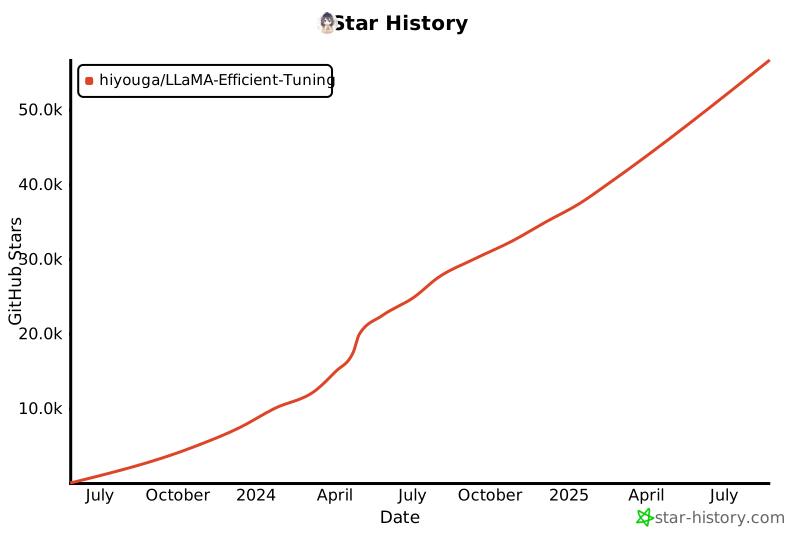
|
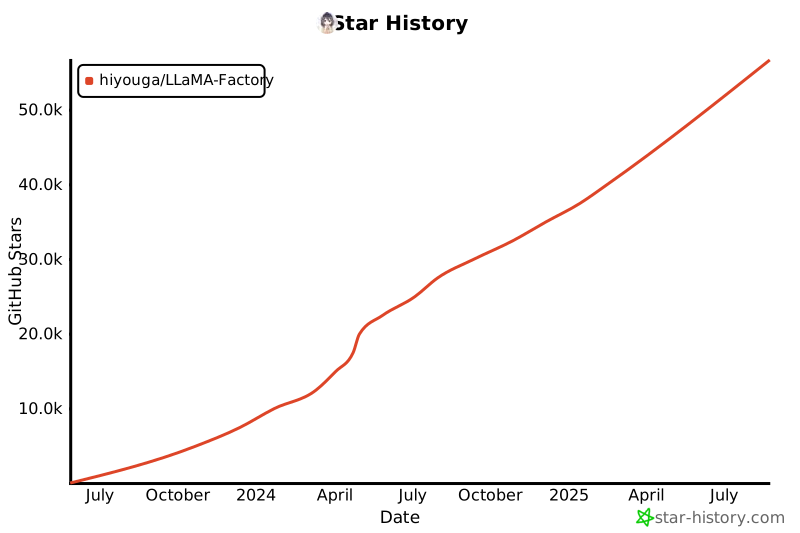
|
||||||
|
|||||||
536
README_zh.md
536
README_zh.md
@@ -1,104 +1,192 @@
|
|||||||
# LLaMA Efficient Tuning
|

|
||||||
|
|
||||||
[](https://github.com/hiyouga/LLaMA-Efficient-Tuning/stargazers)
|
[](https://github.com/hiyouga/LLaMA-Factory/stargazers)
|
||||||
[](LICENSE)
|
[](LICENSE)
|
||||||
[](https://github.com/hiyouga/LLaMA-Efficient-Tuning/commits/main)
|
[](https://github.com/hiyouga/LLaMA-Factory/commits/main)
|
||||||
[](https://pypi.org/project/llmtuner/)
|
[](https://pypi.org/project/llmtuner/)
|
||||||
[](https://github.com/hiyouga/LLaMA-Efficient-Tuning/pulls)
|
[](https://pypi.org/project/llmtuner/)
|
||||||
|
[](https://github.com/hiyouga/LLaMA-Factory/pulls)
|
||||||
|
[](https://discord.gg/c2EPEt5NU)
|
||||||
|
[](https://huggingface.co/spaces/hiyouga/LLaMA-Board)
|
||||||
|
[](https://modelscope.cn/studios/hiyouga/LLaMA-Board)
|
||||||
|
|
||||||
👋 加入我们的[微信群](assets/wechat.jpg)。
|
👋 加入我们的[微信群](assets/wechat.jpg)。
|
||||||
|
|
||||||
\[ [English](README.md) | 中文 \]
|
\[ [English](README.md) | 中文 \]
|
||||||
|
|
||||||
|
## LLaMA Board: 通过一站式网页界面快速上手 LLaMA Factory
|
||||||
|
|
||||||
|
通过 **[🤗 Spaces](https://huggingface.co/spaces/hiyouga/LLaMA-Board)** 或 **[ModelScope](https://modelscope.cn/studios/hiyouga/LLaMA-Board)** 预览 LLaMA Board。
|
||||||
|
|
||||||
|
使用 `CUDA_VISIBLE_DEVICES=0 python src/train_web.py` 启动 LLaMA Board。(该模式目前仅支持单卡训练)
|
||||||
|
|
||||||
|
下面是使用单张 GPU 在 10 分钟内更改对话式大型语言模型自我认知的示例。
|
||||||
|
|
||||||
|
https://github.com/hiyouga/LLaMA-Factory/assets/16256802/6ba60acc-e2e2-4bec-b846-2d88920d5ba1
|
||||||
|
|
||||||
|
## 目录
|
||||||
|
|
||||||
|
- [性能指标](#性能指标)
|
||||||
|
- [更新日志](#更新日志)
|
||||||
|
- [模型](#模型)
|
||||||
|
- [训练方法](#训练方法)
|
||||||
|
- [数据集](#数据集)
|
||||||
|
- [软硬件依赖](#软硬件依赖)
|
||||||
|
- [如何使用](#如何使用)
|
||||||
|
- [使用了 LLaMA Factory 的项目](#使用了-llama-factory-的项目)
|
||||||
|
- [协议](#协议)
|
||||||
|
- [引用](#引用)
|
||||||
|
- [致谢](#致谢)
|
||||||
|
|
||||||
|
## 性能指标
|
||||||
|
|
||||||
|
与 ChatGLM 官方的 [P-Tuning](https://github.com/THUDM/ChatGLM2-6B/tree/main/ptuning) 微调相比,LLaMA-Factory 的 LoRA 微调提供了 **3.7 倍**的加速比,同时在广告文案生成任务上取得了更高的 Rouge 分数。结合 4 比特量化技术,LLaMA-Factory 的 QLoRA 微调进一步降低了 GPU 显存消耗。
|
||||||
|
|
||||||
|

|
||||||
|
|
||||||
|
<details><summary>变量定义</summary>
|
||||||
|
|
||||||
|
- **Training Speed**: 训练阶段每秒处理的样本数量。(批处理大小=4,截断长度=1024)
|
||||||
|
- **Rouge Score**: [广告文案生成](https://aclanthology.org/D19-1321.pdf)任务验证集上的 Rouge-2 分数。(批处理大小=4,截断长度=1024)
|
||||||
|
- **GPU Memory**: 4 比特量化训练的 GPU 显存峰值。(批处理大小=1,截断长度=1024)
|
||||||
|
- 我们在 ChatGLM 的 P-Tuning 中采用 `pre_seq_len=128`,在 LLaMA-Factory 的 LoRA 微调中采用 `lora_rank=32`。
|
||||||
|
|
||||||
|
</details>
|
||||||
|
|
||||||
## 更新日志
|
## 更新日志
|
||||||
|
|
||||||
[23/07/31] 现在我们支持了训练数据流式加载。请尝试使用 `--streaming` 和 `--max_steps 100` 参数来流式加载数据集。
|
[23/12/01] 我们支持了从 **[魔搭社区](https://modelscope.cn/models)** 下载预训练模型。详细用法请参照 [此教程](#使用魔搭社区可跳过)。
|
||||||
|
|
||||||
[23/07/29] 我们在 Hugging Face 发布了两个 13B 指令微调模型。详细内容请查阅我们的 Hugging Face 项目([LLaMA-2](https://huggingface.co/hiyouga/Llama-2-Chinese-13b-chat) / [Baichuan](https://huggingface.co/hiyouga/baichuan-13b-sft))。
|
[23/10/21] 我们支持了 **[NEFTune](https://arxiv.org/abs/2310.05914)** 训练技巧。请使用 `--neft_alpha` 参数启用 NEFTune,例如 `--neft_alpha 5`。
|
||||||
|
|
||||||
[23/07/19] 现在我们支持了 **LLaMA-2** 模型的训练。请尝试使用 `--model_name_or_path meta-llama/Llama-2-7b-hf` 参数。请注意使用 LLaMA-2-chat 模型需要添加 `--template llama2` 参数。
|
<details><summary>展开日志</summary>
|
||||||
|
|
||||||
[23/07/18] 我们开发了支持训练和测试的浏览器一键微调界面。请尝试使用 `train_web.py` 在您的浏览器中微调模型。感谢 [@KanadeSiina](https://github.com/KanadeSiina) 和 [@codemayq](https://github.com/codemayq) 在该功能开发中付出的努力。
|
[23/09/27] 我们针对 LLaMA 模型支持了 [LongLoRA](https://github.com/dvlab-research/LongLoRA) 提出的 **$S^2$-Attn**。请使用 `--shift_attn` 参数以启用该功能。
|
||||||
|
|
||||||
[23/07/11] 现在我们支持了 **Baichuan-13B** 模型的训练。请尝试使用 `--model_name_or_path path_to_baichuan_model` 和 `--lora_target W_pack` 参数。请注意使用 Baichuan-13B-Chat 模型需要添加 `--template baichuan` 参数。
|
[23/09/23] 我们在项目中集成了 MMLU、C-Eval 和 CMMLU 评估集。使用方法请参阅[此示例](#模型评估)。
|
||||||
|
|
||||||
[23/07/09] 我们开源了 [FastEdit](https://github.com/hiyouga/FastEdit)⚡🩹,一个简单易用的、能迅速编辑大模型事实记忆的工具包。如果您感兴趣请关注我们的 [FastEdit](https://github.com/hiyouga/FastEdit) 项目。
|
[23/09/10] 我们针对 LLaMA 模型支持了 **[FlashAttention-2](https://github.com/Dao-AILab/flash-attention)**。如果您使用的是 RTX4090、A100 或 H100 GPU,请使用 `--flash_attn` 参数以启用 FlashAttention-2。
|
||||||
|
|
||||||
[23/07/07] 现在我们支持了 **InternLM-7B** 模型的训练。请尝试使用 `--model_name_or_path internlm/internlm-7b` 参数。请注意使用 InternLM-chat 模型需要添加 `--template intern` 参数。
|
[23/08/12] 我们支持了 **RoPE 插值**来扩展 LLaMA 模型的上下文长度。请使用 `--rope_scaling linear` 参数训练模型或使用 `--rope_scaling dynamic` 参数评估模型。
|
||||||
|
|
||||||
[23/07/05] 现在我们支持了 **Falcon-7B/40B** 模型的训练。请尝试使用 `--model_name_or_path tiiuae/falcon-7b` 和 `--lora_target query_key_value` 参数。
|
[23/08/11] 我们支持了指令模型的 **[DPO 训练](https://arxiv.org/abs/2305.18290)**。使用方法请参阅[此示例](#dpo-训练)。
|
||||||
|
|
||||||
[23/06/29] 我们提供了一个**可复现的**指令模型微调示例,详细内容请查阅 [Hugging Face 项目](https://huggingface.co/hiyouga/baichuan-7b-sft)。
|
[23/07/31] 我们支持了**数据流式加载**。请尝试使用 `--streaming` 和 `--max_steps 10000` 参数来流式加载数据集。
|
||||||
|
|
||||||
[23/06/22] 我们对齐了[示例 API](src/api_demo.py) 与 [OpenAI API](https://platform.openai.com/docs/api-reference/chat) 的格式,您可以将微调模型接入任意基于 ChatGPT 的应用中。
|
[23/07/29] 我们在 Hugging Face 发布了两个 13B 指令微调模型。详细内容请查阅我们的 Hugging Face 项目([LLaMA-2](https://huggingface.co/hiyouga/Llama-2-Chinese-13b-chat) / [Baichuan](https://huggingface.co/hiyouga/Baichuan-13B-sft))。
|
||||||
|
|
||||||
[23/06/15] 现在我们支持了 **Baichuan-7B** 模型的训练。请尝试使用 `--model_name_or_path baichuan-inc/Baichuan-7B` 和 `--lora_target W_pack` 参数。
|
[23/07/18] 我们开发了支持训练和测试的**浏览器一体化界面**。请使用 `train_web.py` 在您的浏览器中微调模型。感谢 [@KanadeSiina](https://github.com/KanadeSiina) 和 [@codemayq](https://github.com/codemayq) 在该功能开发中付出的努力。
|
||||||
|
|
||||||
[23/06/03] 现在我们实现了 4 比特的 LoRA 训练(也称 [QLoRA](https://github.com/artidoro/qlora))。请尝试使用 `--quantization_bit 4` 参数进行 4 比特量化微调。
|
[23/07/09] 我们开源了 **[FastEdit](https://github.com/hiyouga/FastEdit)** ⚡🩹,一个简单易用的、能迅速编辑大模型事实记忆的工具包。如果您感兴趣请关注我们的 [FastEdit](https://github.com/hiyouga/FastEdit) 项目。
|
||||||
|
|
||||||
[23/05/31] 现在我们支持了 **BLOOM & BLOOMZ** 模型的训练。请尝试使用 `--model_name_or_path bigscience/bloomz-7b1-mt` 和 `--lora_target query_key_value` 参数。
|
[23/06/29] 我们提供了一个**可复现的**指令模型微调示例,详细内容请查阅 [Baichuan-7B-sft](https://huggingface.co/hiyouga/Baichuan-7B-sft)。
|
||||||
|
|
||||||
|
[23/06/22] 我们对齐了[示例 API](src/api_demo.py) 与 [OpenAI API](https://platform.openai.com/docs/api-reference/chat) 的格式,您可以将微调模型接入**任意基于 ChatGPT 的应用**中。
|
||||||
|
|
||||||
|
[23/06/03] 我们实现了 4 比特的 LoRA 训练(也称 **[QLoRA](https://github.com/artidoro/qlora)**)。请使用 `--quantization_bit 4` 参数进行 4 比特量化微调。
|
||||||
|
|
||||||
|
</details>
|
||||||
|
|
||||||
## 模型
|
## 模型
|
||||||
|
|
||||||
- [LLaMA](https://github.com/facebookresearch/llama) (7B/13B/33B/65B)
|
| 模型名 | 模型大小 | 默认模块 | Template |
|
||||||
- [LLaMA-2](https://huggingface.co/meta-llama) (7B/13B/70B)
|
| -------------------------------------------------------- | --------------------------- | ----------------- | --------- |
|
||||||
- [BLOOM](https://huggingface.co/bigscience/bloom) & [BLOOMZ](https://huggingface.co/bigscience/bloomz) (560M/1.1B/1.7B/3B/7.1B/176B)
|
| [Baichuan](https://github.com/baichuan-inc/Baichuan-13B) | 7B/13B | W_pack | baichuan |
|
||||||
- [Falcon](https://huggingface.co/tiiuae/falcon-7b) (7B/40B)
|
| [Baichuan2](https://github.com/baichuan-inc/Baichuan2) | 7B/13B | W_pack | baichuan2 |
|
||||||
- [Baichuan](https://huggingface.co/baichuan-inc/baichuan-7B) (7B/13B)
|
| [BLOOM](https://huggingface.co/bigscience/bloom) | 560M/1.1B/1.7B/3B/7.1B/176B | query_key_value | - |
|
||||||
- [InternLM](https://github.com/InternLM/InternLM) (7B)
|
| [BLOOMZ](https://huggingface.co/bigscience/bloomz) | 560M/1.1B/1.7B/3B/7.1B/176B | query_key_value | - |
|
||||||
|
| [ChatGLM3](https://github.com/THUDM/ChatGLM3) | 6B | query_key_value | chatglm3 |
|
||||||
|
| [Falcon](https://huggingface.co/tiiuae/falcon-7b) | 7B/40B/180B | query_key_value | falcon |
|
||||||
|
| [InternLM](https://github.com/InternLM/InternLM) | 7B/20B | q_proj,v_proj | intern |
|
||||||
|
| [LLaMA](https://github.com/facebookresearch/llama) | 7B/13B/33B/65B | q_proj,v_proj | - |
|
||||||
|
| [LLaMA-2](https://huggingface.co/meta-llama) | 7B/13B/70B | q_proj,v_proj | llama2 |
|
||||||
|
| [Mistral](https://huggingface.co/mistralai) | 7B | q_proj,v_proj | mistral |
|
||||||
|
| [Phi-1.5](https://huggingface.co/microsoft/phi-1_5) | 1.3B | Wqkv | - |
|
||||||
|
| [Qwen](https://github.com/QwenLM/Qwen) | 1.8B/7B/14B/72B | c_attn | qwen |
|
||||||
|
| [XVERSE](https://github.com/xverse-ai) | 7B/13B/65B | q_proj,v_proj | xverse |
|
||||||
|
|
||||||
## 微调方法
|
> [!NOTE]
|
||||||
|
> **默认模块**应作为 `--lora_target` 参数的默认值,可使用 `--lora_target all` 参数指定全部模块。
|
||||||
|
>
|
||||||
|
> 对于所有“基座”(Base)模型,`--template` 参数可以是 `default`, `alpaca`, `vicuna` 等任意值。但“对话”(Chat)模型请务必使用**对应的模板**。
|
||||||
|
|
||||||
- [二次预训练](https://s3-us-west-2.amazonaws.com/openai-assets/research-covers/language-unsupervised/language_understanding_paper.pdf)
|
项目所支持模型的完整列表请参阅 [constants.py](src/llmtuner/extras/constants.py)。
|
||||||
- 全参数微调
|
|
||||||
- 部分参数微调
|
## 训练方法
|
||||||
- [LoRA](https://arxiv.org/abs/2106.09685)
|
|
||||||
- [QLoRA](https://arxiv.org/abs/2305.14314)
|
| 方法 | 全参数训练 | 部分参数训练 | LoRA | QLoRA |
|
||||||
- [指令监督微调](https://arxiv.org/abs/2109.01652)
|
| ---------------------- | ------------------ | ------------------ | ------------------ | ------------------ |
|
||||||
- 全参数微调
|
| 预训练 | :white_check_mark: | :white_check_mark: | :white_check_mark: | :white_check_mark: |
|
||||||
- 部分参数微调
|
| 指令监督微调 | :white_check_mark: | :white_check_mark: | :white_check_mark: | :white_check_mark: |
|
||||||
- [LoRA](https://arxiv.org/abs/2106.09685)
|
| 奖励模型训练 | :white_check_mark: | :white_check_mark: | :white_check_mark: | :white_check_mark: |
|
||||||
- [QLoRA](https://arxiv.org/abs/2305.14314)
|
| PPO 训练 | :white_check_mark: | :white_check_mark: | :white_check_mark: | :white_check_mark: |
|
||||||
- [人类反馈的强化学习(RLHF)](https://arxiv.org/abs/2203.02155)
|
| DPO 训练 | :white_check_mark: | :white_check_mark: | :white_check_mark: | :white_check_mark: |
|
||||||
- [LoRA](https://arxiv.org/abs/2106.09685)
|
|
||||||
- [QLoRA](https://arxiv.org/abs/2305.14314)
|
> [!NOTE]
|
||||||
|
> 请使用 `--quantization_bit 4/8` 参数来启用 QLoRA 训练。
|
||||||
|
|
||||||
## 数据集
|
## 数据集
|
||||||
|
|
||||||
- 用于二次预训练:
|
<details><summary>预训练数据集</summary>
|
||||||
- [Wiki Demo (en)](data/wiki_demo.txt)
|
|
||||||
- [RefinedWeb (en)](https://huggingface.co/datasets/tiiuae/falcon-refinedweb)
|
|
||||||
- [StarCoder (en)](https://huggingface.co/datasets/bigcode/starcoderdata)
|
|
||||||
- [Wikipedia (en)](https://huggingface.co/datasets/olm/olm-wikipedia-20221220)
|
|
||||||
- [Wikipedia (zh)](https://huggingface.co/datasets/pleisto/wikipedia-cn-20230720-filtered)
|
|
||||||
- 用于指令监督微调:
|
|
||||||
- [Stanford Alpaca (en)](https://github.com/tatsu-lab/stanford_alpaca)
|
|
||||||
- [Stanford Alpaca (zh)](https://github.com/ymcui/Chinese-LLaMA-Alpaca)
|
|
||||||
- [GPT-4 Generated Data (en&zh)](https://github.com/Instruction-Tuning-with-GPT-4/GPT-4-LLM)
|
|
||||||
- [Open Assistant (multilingual)](https://huggingface.co/datasets/OpenAssistant/oasst1)
|
|
||||||
- [Self-cognition (zh)](data/self_cognition.json)
|
|
||||||
- [ShareGPT (zh)](https://huggingface.co/datasets/QingyiSi/Alpaca-CoT/tree/main/Chinese-instruction-collection)
|
|
||||||
- [RefGPT (zh)](https://github.com/sufengniu/RefGPT)
|
|
||||||
- [Guanaco Dataset (multilingual)](https://huggingface.co/datasets/JosephusCheung/GuanacoDataset)
|
|
||||||
- [BELLE 2M (zh)](https://huggingface.co/datasets/BelleGroup/train_2M_CN)
|
|
||||||
- [BELLE 1M (zh)](https://huggingface.co/datasets/BelleGroup/train_1M_CN)
|
|
||||||
- [BELLE 0.5M (zh)](https://huggingface.co/datasets/BelleGroup/train_0.5M_CN)
|
|
||||||
- [BELLE Dialogue 0.4M (zh)](https://huggingface.co/datasets/BelleGroup/generated_chat_0.4M)
|
|
||||||
- [BELLE School Math 0.25M (zh)](https://huggingface.co/datasets/BelleGroup/school_math_0.25M)
|
|
||||||
- [BELLE Multiturn Chat 0.8M (zh)](https://huggingface.co/datasets/BelleGroup/multiturn_chat_0.8M)
|
|
||||||
- [Firefly 1.1M (zh)](https://huggingface.co/datasets/YeungNLP/firefly-train-1.1M)
|
|
||||||
- [LIMA (en)](https://huggingface.co/datasets/GAIR/lima)
|
|
||||||
- [CodeAlpaca 20k (en)](https://huggingface.co/datasets/sahil2801/CodeAlpaca-20k)
|
|
||||||
- [Alpaca CoT (multilingual)](https://huggingface.co/datasets/QingyiSi/Alpaca-CoT)
|
|
||||||
- [Web QA (zh)](https://huggingface.co/datasets/suolyer/webqa)
|
|
||||||
- [UltraChat (en)](https://github.com/thunlp/UltraChat)
|
|
||||||
- [WebNovel (zh)](https://huggingface.co/datasets/zxbsmk/webnovel_cn)
|
|
||||||
- 用于奖励模型训练:
|
|
||||||
- [HH-RLHF (en)](https://huggingface.co/datasets/Anthropic/hh-rlhf)
|
|
||||||
- [Open Assistant (multilingual)](https://huggingface.co/datasets/OpenAssistant/oasst1)
|
|
||||||
- [GPT-4 Generated Data (en&zh)](https://github.com/Instruction-Tuning-with-GPT-4/GPT-4-LLM)
|
|
||||||
|
|
||||||
使用方法请参考 [data/README.md](data/README_zh.md) 文件。
|
- [Wiki Demo (en)](data/wiki_demo.txt)
|
||||||
|
- [RefinedWeb (en)](https://huggingface.co/datasets/tiiuae/falcon-refinedweb)
|
||||||
|
- [RedPajama V2 (en)](https://huggingface.co/datasets/togethercomputer/RedPajama-Data-V2)
|
||||||
|
- [Wikipedia (en)](https://huggingface.co/datasets/olm/olm-wikipedia-20221220)
|
||||||
|
- [Wikipedia (zh)](https://huggingface.co/datasets/pleisto/wikipedia-cn-20230720-filtered)
|
||||||
|
- [Pile (en)](https://huggingface.co/datasets/EleutherAI/pile)
|
||||||
|
- [SkyPile (zh)](https://huggingface.co/datasets/Skywork/SkyPile-150B)
|
||||||
|
- [The Stack (en)](https://huggingface.co/datasets/bigcode/the-stack)
|
||||||
|
- [StarCoder (en)](https://huggingface.co/datasets/bigcode/starcoderdata)
|
||||||
|
|
||||||
|
</details>
|
||||||
|
|
||||||
|
<details><summary>指令微调数据集</summary>
|
||||||
|
|
||||||
|
- [Stanford Alpaca (en)](https://github.com/tatsu-lab/stanford_alpaca)
|
||||||
|
- [Stanford Alpaca (zh)](https://github.com/ymcui/Chinese-LLaMA-Alpaca)
|
||||||
|
- [GPT-4 Generated Data (en&zh)](https://github.com/Instruction-Tuning-with-GPT-4/GPT-4-LLM)
|
||||||
|
- [Self-cognition (zh)](data/self_cognition.json)
|
||||||
|
- [Open Assistant (multilingual)](https://huggingface.co/datasets/OpenAssistant/oasst1)
|
||||||
|
- [ShareGPT (zh)](https://huggingface.co/datasets/QingyiSi/Alpaca-CoT/tree/main/Chinese-instruction-collection)
|
||||||
|
- [Guanaco Dataset (multilingual)](https://huggingface.co/datasets/JosephusCheung/GuanacoDataset)
|
||||||
|
- [BELLE 2M (zh)](https://huggingface.co/datasets/BelleGroup/train_2M_CN)
|
||||||
|
- [BELLE 1M (zh)](https://huggingface.co/datasets/BelleGroup/train_1M_CN)
|
||||||
|
- [BELLE 0.5M (zh)](https://huggingface.co/datasets/BelleGroup/train_0.5M_CN)
|
||||||
|
- [BELLE Dialogue 0.4M (zh)](https://huggingface.co/datasets/BelleGroup/generated_chat_0.4M)
|
||||||
|
- [BELLE School Math 0.25M (zh)](https://huggingface.co/datasets/BelleGroup/school_math_0.25M)
|
||||||
|
- [BELLE Multiturn Chat 0.8M (zh)](https://huggingface.co/datasets/BelleGroup/multiturn_chat_0.8M)
|
||||||
|
- [UltraChat (en)](https://github.com/thunlp/UltraChat)
|
||||||
|
- [LIMA (en)](https://huggingface.co/datasets/GAIR/lima)
|
||||||
|
- [OpenPlatypus (en)](https://huggingface.co/datasets/garage-bAInd/Open-Platypus)
|
||||||
|
- [CodeAlpaca 20k (en)](https://huggingface.co/datasets/sahil2801/CodeAlpaca-20k)
|
||||||
|
- [Alpaca CoT (multilingual)](https://huggingface.co/datasets/QingyiSi/Alpaca-CoT)
|
||||||
|
- [OpenOrca (en)](https://huggingface.co/datasets/Open-Orca/OpenOrca)
|
||||||
|
- [MathInstruct (en)](https://huggingface.co/datasets/TIGER-Lab/MathInstruct)
|
||||||
|
- [Firefly 1.1M (zh)](https://huggingface.co/datasets/YeungNLP/firefly-train-1.1M)
|
||||||
|
- [Web QA (zh)](https://huggingface.co/datasets/suolyer/webqa)
|
||||||
|
- [WebNovel (zh)](https://huggingface.co/datasets/zxbsmk/webnovel_cn)
|
||||||
|
- [Nectar (en)](https://huggingface.co/datasets/berkeley-nest/Nectar)
|
||||||
|
- [Ad Gen (zh)](https://huggingface.co/datasets/HasturOfficial/adgen)
|
||||||
|
- [ShareGPT Hyperfiltered (en)](https://huggingface.co/datasets/totally-not-an-llm/sharegpt-hyperfiltered-3k)
|
||||||
|
- [ShareGPT4 (en&zh)](https://huggingface.co/datasets/shibing624/sharegpt_gpt4)
|
||||||
|
- [UltraChat 200k (en)](https://huggingface.co/datasets/HuggingFaceH4/ultrachat_200k)
|
||||||
|
- [AgentInstruct (en)](https://huggingface.co/datasets/THUDM/AgentInstruct)
|
||||||
|
- [LMSYS Chat 1M (en)](https://huggingface.co/datasets/lmsys/lmsys-chat-1m)
|
||||||
|
- [Evol Instruct V2 (en)](https://huggingface.co/datasets/WizardLM/WizardLM_evol_instruct_V2_196k)
|
||||||
|
|
||||||
|
</details>
|
||||||
|
|
||||||
|
<details><summary>偏好数据集</summary>
|
||||||
|
|
||||||
|
- [HH-RLHF (en)](https://huggingface.co/datasets/Anthropic/hh-rlhf)
|
||||||
|
- [Open Assistant (multilingual)](https://huggingface.co/datasets/OpenAssistant/oasst1)
|
||||||
|
- [GPT-4 Generated Data (en&zh)](https://github.com/Instruction-Tuning-with-GPT-4/GPT-4-LLM)
|
||||||
|
- [Nectar (en)](https://huggingface.co/datasets/berkeley-nest/Nectar)
|
||||||
|
|
||||||
|
</details>
|
||||||
|
|
||||||
|
使用方法请参考 [data/README_zh.md](data/README_zh.md) 文件。
|
||||||
|
|
||||||
部分数据集的使用需要确认,我们推荐使用下述命令登录您的 Hugging Face 账户。
|
部分数据集的使用需要确认,我们推荐使用下述命令登录您的 Hugging Face 账户。
|
||||||
|
|
||||||
@@ -107,32 +195,41 @@ pip install --upgrade huggingface_hub
|
|||||||
huggingface-cli login
|
huggingface-cli login
|
||||||
```
|
```
|
||||||
|
|
||||||
## 软件依赖
|
## 软硬件依赖
|
||||||
|
|
||||||
- Python 3.8+ 和 PyTorch 1.13.1+
|
- Python 3.8+ 和 PyTorch 1.13.1+
|
||||||
- 🤗Transformers, Datasets, Accelerate, PEFT 和 TRL
|
- 🤗Transformers, Datasets, Accelerate, PEFT 和 TRL
|
||||||
- jieba, rouge-chinese 和 nltk (用于评估)
|
- sentencepiece, protobuf 和 tiktoken
|
||||||
|
- jieba, rouge-chinese 和 nltk (用于评估及预测)
|
||||||
- gradio 和 matplotlib (用于网页端交互)
|
- gradio 和 matplotlib (用于网页端交互)
|
||||||
- uvicorn, fastapi 和 sse-starlette (用于 API)
|
- uvicorn, fastapi 和 sse-starlette (用于 API)
|
||||||
|
|
||||||
以及 **强而有力的 GPU**!
|
### 硬件依赖
|
||||||
|
|
||||||
|
| 训练方法 | 精度 | 7B | 13B | 30B | 65B |
|
||||||
|
| ------- | ---- | ----- | ----- | ----- | ------ |
|
||||||
|
| 全参数 | 16 | 140GB | 240GB | 520GB | 1200GB |
|
||||||
|
| 部分参数 | 16 | 20GB | 40GB | 120GB | 240GB |
|
||||||
|
| LoRA | 16 | 16GB | 32GB | 80GB | 160GB |
|
||||||
|
| QLoRA | 8 | 10GB | 16GB | 40GB | 80GB |
|
||||||
|
| QLoRA | 4 | 6GB | 12GB | 24GB | 48GB |
|
||||||
|
|
||||||
## 如何使用
|
## 如何使用
|
||||||
|
|
||||||
### 数据准备(可跳过)
|
### 数据准备(可跳过)
|
||||||
|
|
||||||
关于数据集文件的格式,请参考 `data/example_dataset` 文件夹的内容。构建自定义数据集时,既可以使用单个 `.json` 文件,也可以使用一个[数据加载脚本](https://huggingface.co/docs/datasets/dataset_script)和多个文件。
|
关于数据集文件的格式,请参考 [data/README_zh.md](data/README_zh.md) 的内容。构建自定义数据集时,既可以使用单个 `.json` 文件,也可以使用一个[数据加载脚本](https://huggingface.co/docs/datasets/dataset_script)和多个文件。
|
||||||
|
|
||||||
注意:使用自定义数据集时,请更新 `data/dataset_info.json` 文件,该文件的格式请参考 `data/README.md`。
|
> [!NOTE]
|
||||||
|
> 使用自定义数据集时,请更新 `data/dataset_info.json` 文件,该文件的格式请参考 `data/README_zh.md`。
|
||||||
|
|
||||||
### 环境搭建(可跳过)
|
### 环境搭建(可跳过)
|
||||||
|
|
||||||
```bash
|
```bash
|
||||||
git lfs install
|
git clone https://github.com/hiyouga/LLaMA-Factory.git
|
||||||
git clone https://github.com/hiyouga/LLaMA-Efficient-Tuning.git
|
conda create -n llama_factory python=3.10
|
||||||
conda create -n llama_etuning python=3.10
|
conda activate llama_factory
|
||||||
conda activate llama_etuning
|
cd LLaMA-Factory
|
||||||
cd LLaMA-Efficient-Tuning
|
|
||||||
pip install -r requirements.txt
|
pip install -r requirements.txt
|
||||||
```
|
```
|
||||||
|
|
||||||
@@ -142,24 +239,43 @@ pip install -r requirements.txt
|
|||||||
pip install https://github.com/jllllll/bitsandbytes-windows-webui/releases/download/wheels/bitsandbytes-0.39.1-py3-none-win_amd64.whl
|
pip install https://github.com/jllllll/bitsandbytes-windows-webui/releases/download/wheels/bitsandbytes-0.39.1-py3-none-win_amd64.whl
|
||||||
```
|
```
|
||||||
|
|
||||||
### 浏览器一键微调/测试
|
### 使用魔搭社区(可跳过)
|
||||||
|
|
||||||
|
如果您在 Hugging Face 模型的下载中遇到了问题,可以通过下述方法使用魔搭社区。
|
||||||
|
|
||||||
```bash
|
```bash
|
||||||
CUDA_VISIBLE_DEVICES=0 python src/train_web.py
|
export USE_MODELSCOPE_HUB=1 # Windows 使用 `set USE_MODELSCOPE_HUB=1`
|
||||||
```
|
```
|
||||||
|
|
||||||
目前网页 UI 仅支持**单卡训练**。
|
接着即可通过指定模型名称来训练对应的模型。(在[魔搭社区](https://modelscope.cn/models)查看所有可用的模型)
|
||||||
|
|
||||||
### 二次预训练
|
```bash
|
||||||
|
CUDA_VISIBLE_DEVICES=0 python src/train_bash.py \
|
||||||
|
--model_name_or_path modelscope/Llama-2-7b-ms \
|
||||||
|
... # 参数同上
|
||||||
|
```
|
||||||
|
|
||||||
|
LLaMA Board 同样支持魔搭社区的模型下载。
|
||||||
|
|
||||||
|
```bash
|
||||||
|
CUDA_VISIBLE_DEVICES=0 USE_MODELSCOPE_HUB=1 python src/train_web.py
|
||||||
|
```
|
||||||
|
|
||||||
|
### 单 GPU 训练
|
||||||
|
|
||||||
|
> [!IMPORTANT]
|
||||||
|
> 如果您使用多张 GPU 训练模型,请移步[多 GPU 分布式训练](#多-gpu-分布式训练)部分。
|
||||||
|
|
||||||
|
#### 预训练
|
||||||
|
|
||||||
```bash
|
```bash
|
||||||
CUDA_VISIBLE_DEVICES=0 python src/train_bash.py \
|
CUDA_VISIBLE_DEVICES=0 python src/train_bash.py \
|
||||||
--stage pt \
|
--stage pt \
|
||||||
--model_name_or_path path_to_your_model \
|
--model_name_or_path path_to_llama_model \
|
||||||
--do_train \
|
--do_train \
|
||||||
--dataset wiki_demo \
|
--dataset wiki_demo \
|
||||||
--template default \
|
|
||||||
--finetuning_type lora \
|
--finetuning_type lora \
|
||||||
|
--lora_target q_proj,v_proj \
|
||||||
--output_dir path_to_pt_checkpoint \
|
--output_dir path_to_pt_checkpoint \
|
||||||
--overwrite_cache \
|
--overwrite_cache \
|
||||||
--per_device_train_batch_size 4 \
|
--per_device_train_batch_size 4 \
|
||||||
@@ -173,16 +289,17 @@ CUDA_VISIBLE_DEVICES=0 python src/train_bash.py \
|
|||||||
--fp16
|
--fp16
|
||||||
```
|
```
|
||||||
|
|
||||||
### 指令监督微调
|
#### 指令监督微调
|
||||||
|
|
||||||
```bash
|
```bash
|
||||||
CUDA_VISIBLE_DEVICES=0 python src/train_bash.py \
|
CUDA_VISIBLE_DEVICES=0 python src/train_bash.py \
|
||||||
--stage sft \
|
--stage sft \
|
||||||
--model_name_or_path path_to_your_model \
|
--model_name_or_path path_to_llama_model \
|
||||||
--do_train \
|
--do_train \
|
||||||
--dataset alpaca_gpt4_zh \
|
--dataset alpaca_gpt4_zh \
|
||||||
--template default \
|
--template default \
|
||||||
--finetuning_type lora \
|
--finetuning_type lora \
|
||||||
|
--lora_target q_proj,v_proj \
|
||||||
--output_dir path_to_sft_checkpoint \
|
--output_dir path_to_sft_checkpoint \
|
||||||
--overwrite_cache \
|
--overwrite_cache \
|
||||||
--per_device_train_batch_size 4 \
|
--per_device_train_batch_size 4 \
|
||||||
@@ -196,22 +313,77 @@ CUDA_VISIBLE_DEVICES=0 python src/train_bash.py \
|
|||||||
--fp16
|
--fp16
|
||||||
```
|
```
|
||||||
|
|
||||||
使用 Baichuan 模型时请指定 `--lora_target W_pack` 参数。
|
#### 奖励模型训练
|
||||||
|
|
||||||
### 奖励模型训练
|
|
||||||
|
|
||||||
```bash
|
```bash
|
||||||
CUDA_VISIBLE_DEVICES=0 python src/train_bash.py \
|
CUDA_VISIBLE_DEVICES=0 python src/train_bash.py \
|
||||||
--stage rm \
|
--stage rm \
|
||||||
--model_name_or_path path_to_your_model \
|
--model_name_or_path path_to_llama_model \
|
||||||
--do_train \
|
--do_train \
|
||||||
--dataset comparison_gpt4_zh \
|
--dataset comparison_gpt4_zh \
|
||||||
--template default \
|
--template default \
|
||||||
--finetuning_type lora \
|
--finetuning_type lora \
|
||||||
|
--lora_target q_proj,v_proj \
|
||||||
--resume_lora_training False \
|
--resume_lora_training False \
|
||||||
--checkpoint_dir path_to_sft_checkpoint \
|
--checkpoint_dir path_to_sft_checkpoint \
|
||||||
--output_dir path_to_rm_checkpoint \
|
--output_dir path_to_rm_checkpoint \
|
||||||
--per_device_train_batch_size 4 \
|
--per_device_train_batch_size 2 \
|
||||||
|
--gradient_accumulation_steps 4 \
|
||||||
|
--lr_scheduler_type cosine \
|
||||||
|
--logging_steps 10 \
|
||||||
|
--save_steps 1000 \
|
||||||
|
--learning_rate 1e-6 \
|
||||||
|
--num_train_epochs 1.0 \
|
||||||
|
--plot_loss \
|
||||||
|
--fp16
|
||||||
|
```
|
||||||
|
|
||||||
|
#### PPO 训练
|
||||||
|
|
||||||
|
```bash
|
||||||
|
CUDA_VISIBLE_DEVICES=0 python src/train_bash.py \
|
||||||
|
--stage ppo \
|
||||||
|
--model_name_or_path path_to_llama_model \
|
||||||
|
--do_train \
|
||||||
|
--dataset alpaca_gpt4_zh \
|
||||||
|
--template default \
|
||||||
|
--finetuning_type lora \
|
||||||
|
--lora_target q_proj,v_proj \
|
||||||
|
--resume_lora_training False \
|
||||||
|
--checkpoint_dir path_to_sft_checkpoint \
|
||||||
|
--reward_model path_to_rm_checkpoint \
|
||||||
|
--output_dir path_to_ppo_checkpoint \
|
||||||
|
--per_device_train_batch_size 2 \
|
||||||
|
--gradient_accumulation_steps 4 \
|
||||||
|
--lr_scheduler_type cosine \
|
||||||
|
--top_k 0 \
|
||||||
|
--top_p 0.9 \
|
||||||
|
--logging_steps 10 \
|
||||||
|
--save_steps 1000 \
|
||||||
|
--learning_rate 1e-5 \
|
||||||
|
--num_train_epochs 1.0 \
|
||||||
|
--plot_loss \
|
||||||
|
--fp16
|
||||||
|
```
|
||||||
|
|
||||||
|
> [!WARNING]
|
||||||
|
> 如果使用 fp16 精度进行 LLaMA-2 模型的 PPO 训练,请使用 `--per_device_train_batch_size=1`。
|
||||||
|
|
||||||
|
#### DPO 训练
|
||||||
|
|
||||||
|
```bash
|
||||||
|
CUDA_VISIBLE_DEVICES=0 python src/train_bash.py \
|
||||||
|
--stage dpo \
|
||||||
|
--model_name_or_path path_to_llama_model \
|
||||||
|
--do_train \
|
||||||
|
--dataset comparison_gpt4_zh \
|
||||||
|
--template default \
|
||||||
|
--finetuning_type lora \
|
||||||
|
--lora_target q_proj,v_proj \
|
||||||
|
--resume_lora_training False \
|
||||||
|
--checkpoint_dir path_to_sft_checkpoint \
|
||||||
|
--output_dir path_to_dpo_checkpoint \
|
||||||
|
--per_device_train_batch_size 2 \
|
||||||
--gradient_accumulation_steps 4 \
|
--gradient_accumulation_steps 4 \
|
||||||
--lr_scheduler_type cosine \
|
--lr_scheduler_type cosine \
|
||||||
--logging_steps 10 \
|
--logging_steps 10 \
|
||||||
@@ -222,50 +394,22 @@ CUDA_VISIBLE_DEVICES=0 python src/train_bash.py \
|
|||||||
--fp16
|
--fp16
|
||||||
```
|
```
|
||||||
|
|
||||||
### RLHF 训练
|
|
||||||
|
|
||||||
```bash
|
|
||||||
CUDA_VISIBLE_DEVICES=0 python src/train_bash.py \
|
|
||||||
--stage ppo \
|
|
||||||
--model_name_or_path path_to_your_model \
|
|
||||||
--do_train \
|
|
||||||
--dataset alpaca_gpt4_zh \
|
|
||||||
--template default \
|
|
||||||
--finetuning_type lora \
|
|
||||||
--resume_lora_training False \
|
|
||||||
--checkpoint_dir path_to_sft_checkpoint \
|
|
||||||
--reward_model path_to_rm_checkpoint \
|
|
||||||
--output_dir path_to_ppo_checkpoint \
|
|
||||||
--per_device_train_batch_size 2 \
|
|
||||||
--gradient_accumulation_steps 4 \
|
|
||||||
--lr_scheduler_type cosine \
|
|
||||||
--logging_steps 10 \
|
|
||||||
--save_steps 1000 \
|
|
||||||
--learning_rate 1e-5 \
|
|
||||||
--num_train_epochs 1.0 \
|
|
||||||
--plot_loss
|
|
||||||
```
|
|
||||||
|
|
||||||
### 多 GPU 分布式训练
|
### 多 GPU 分布式训练
|
||||||
|
|
||||||
|
#### 使用 Huggingface Accelerate
|
||||||
|
|
||||||
```bash
|
```bash
|
||||||
accelerate config # 首先配置分布式环境
|
accelerate config # 首先配置分布式环境
|
||||||
accelerate launch src/train_bash.py # 参数同上
|
accelerate launch src/train_bash.py # 参数同上
|
||||||
```
|
```
|
||||||
|
|
||||||
<details><summary>使用 DeepSpeed ZeRO-2 进行全参数微调的 Accelerate 配置示例</summary>
|
<details><summary>LoRA 训练的 Accelerate 配置示例</summary>
|
||||||
|
|
||||||
```yaml
|
```yaml
|
||||||
compute_environment: LOCAL_MACHINE
|
compute_environment: LOCAL_MACHINE
|
||||||
deepspeed_config:
|
distributed_type: MULTI_GPU
|
||||||
gradient_accumulation_steps: 4
|
|
||||||
gradient_clipping: 0.5
|
|
||||||
offload_optimizer_device: none
|
|
||||||
offload_param_device: none
|
|
||||||
zero3_init_flag: false
|
|
||||||
zero_stage: 2
|
|
||||||
distributed_type: DEEPSPEED
|
|
||||||
downcast_bf16: 'no'
|
downcast_bf16: 'no'
|
||||||
|
gpu_ids: all
|
||||||
machine_rank: 0
|
machine_rank: 0
|
||||||
main_training_function: main
|
main_training_function: main
|
||||||
mixed_precision: fp16
|
mixed_precision: fp16
|
||||||
@@ -281,59 +425,74 @@ use_cpu: false
|
|||||||
|
|
||||||
</details>
|
</details>
|
||||||
|
|
||||||
### 指标评估(BLEU分数和汉语ROUGE分数)
|
#### 使用 DeepSpeed
|
||||||
|
|
||||||
```bash
|
```bash
|
||||||
CUDA_VISIBLE_DEVICES=0 python src/train_bash.py \
|
deepspeed --num_gpus 8 --master_port=9901 src/train_bash.py \
|
||||||
--stage sft \
|
--deepspeed ds_config.json \
|
||||||
--model_name_or_path path_to_your_model \
|
... # 参数同上
|
||||||
--do_eval \
|
|
||||||
--dataset alpaca_gpt4_zh \
|
|
||||||
--template default \
|
|
||||||
--finetuning_type lora \
|
|
||||||
--checkpoint_dir path_to_checkpoint \
|
|
||||||
--output_dir path_to_eval_result \
|
|
||||||
--per_device_eval_batch_size 8 \
|
|
||||||
--max_samples 100 \
|
|
||||||
--predict_with_generate
|
|
||||||
```
|
```
|
||||||
|
|
||||||
我们建议在量化模型的评估中使用 `--per_device_eval_batch_size=1` 和 `--max_target_length 128` 参数。
|
<details><summary>使用 DeepSpeed ZeRO-2 进行全参数训练的 DeepSpeed 配置示例</summary>
|
||||||
|
|
||||||
### 模型预测
|
```json
|
||||||
|
{
|
||||||
|
"train_batch_size": "auto",
|
||||||
|
"train_micro_batch_size_per_gpu": "auto",
|
||||||
|
"gradient_accumulation_steps": "auto",
|
||||||
|
"gradient_clipping": "auto",
|
||||||
|
"zero_allow_untested_optimizer": true,
|
||||||
|
"fp16": {
|
||||||
|
"enabled": "auto",
|
||||||
|
"loss_scale": 0,
|
||||||
|
"initial_scale_power": 16,
|
||||||
|
"loss_scale_window": 1000,
|
||||||
|
"hysteresis": 2,
|
||||||
|
"min_loss_scale": 1
|
||||||
|
},
|
||||||
|
"zero_optimization": {
|
||||||
|
"stage": 2,
|
||||||
|
"allgather_partitions": true,
|
||||||
|
"allgather_bucket_size": 5e8,
|
||||||
|
"reduce_scatter": true,
|
||||||
|
"reduce_bucket_size": 5e8,
|
||||||
|
"overlap_comm": false,
|
||||||
|
"contiguous_gradients": true
|
||||||
|
}
|
||||||
|
}
|
||||||
|
```
|
||||||
|
|
||||||
|
</details>
|
||||||
|
|
||||||
|
### 合并 LoRA 权重并导出完整模型
|
||||||
|
|
||||||
```bash
|
```bash
|
||||||
CUDA_VISIBLE_DEVICES=0 python src/train_bash.py \
|
python src/export_model.py \
|
||||||
--stage sft \
|
--model_name_or_path path_to_llama_model \
|
||||||
--model_name_or_path path_to_your_model \
|
|
||||||
--do_predict \
|
|
||||||
--dataset alpaca_gpt4_zh \
|
|
||||||
--template default \
|
--template default \
|
||||||
--finetuning_type lora \
|
--finetuning_type lora \
|
||||||
--checkpoint_dir path_to_checkpoint \
|
--checkpoint_dir path_to_checkpoint \
|
||||||
--output_dir path_to_predict_result \
|
--export_dir path_to_export
|
||||||
--per_device_eval_batch_size 8 \
|
|
||||||
--max_samples 100 \
|
|
||||||
--predict_with_generate
|
|
||||||
```
|
```
|
||||||
|
|
||||||
### API 服务
|
### API 服务
|
||||||
|
|
||||||
```bash
|
```bash
|
||||||
python src/api_demo.py \
|
python src/api_demo.py \
|
||||||
--model_name_or_path path_to_your_model \
|
--model_name_or_path path_to_llama_model \
|
||||||
--template default \
|
--template default \
|
||||||
--finetuning_type lora \
|
--finetuning_type lora \
|
||||||
--checkpoint_dir path_to_checkpoint
|
--checkpoint_dir path_to_checkpoint
|
||||||
```
|
```
|
||||||
|
|
||||||
关于 API 文档请见 `http://localhost:8000/docs`。
|
> [!TIP]
|
||||||
|
> 关于 API 文档请见 `http://localhost:8000/docs`。
|
||||||
|
|
||||||
### 命令行测试
|
### 命令行测试
|
||||||
|
|
||||||
```bash
|
```bash
|
||||||
python src/cli_demo.py \
|
python src/cli_demo.py \
|
||||||
--model_name_or_path path_to_your_model \
|
--model_name_or_path path_to_llama_model \
|
||||||
--template default \
|
--template default \
|
||||||
--finetuning_type lora \
|
--finetuning_type lora \
|
||||||
--checkpoint_dir path_to_checkpoint
|
--checkpoint_dir path_to_checkpoint
|
||||||
@@ -343,59 +502,84 @@ python src/cli_demo.py \
|
|||||||
|
|
||||||
```bash
|
```bash
|
||||||
python src/web_demo.py \
|
python src/web_demo.py \
|
||||||
--model_name_or_path path_to_your_model \
|
--model_name_or_path path_to_llama_model \
|
||||||
--template default \
|
--template default \
|
||||||
--finetuning_type lora \
|
--finetuning_type lora \
|
||||||
--checkpoint_dir path_to_checkpoint
|
--checkpoint_dir path_to_checkpoint
|
||||||
```
|
```
|
||||||
|
|
||||||
### 导出微调模型
|
### 模型评估
|
||||||
|
|
||||||
```bash
|
```bash
|
||||||
python src/export_model.py \
|
CUDA_VISIBLE_DEVICES=0 python src/evaluate.py \
|
||||||
--model_name_or_path path_to_your_model \
|
--model_name_or_path path_to_llama_model \
|
||||||
|
--finetuning_type lora \
|
||||||
|
--checkpoint_dir path_to_checkpoint \
|
||||||
|
--template vanilla \
|
||||||
|
--task ceval \
|
||||||
|
--split validation \
|
||||||
|
--lang zh \
|
||||||
|
--n_shot 5 \
|
||||||
|
--batch_size 4
|
||||||
|
```
|
||||||
|
|
||||||
|
### 模型预测
|
||||||
|
|
||||||
|
```bash
|
||||||
|
CUDA_VISIBLE_DEVICES=0 python src/train_bash.py \
|
||||||
|
--stage sft \
|
||||||
|
--model_name_or_path path_to_llama_model \
|
||||||
|
--do_predict \
|
||||||
|
--dataset alpaca_gpt4_zh \
|
||||||
--template default \
|
--template default \
|
||||||
--finetuning_type lora \
|
--finetuning_type lora \
|
||||||
--checkpoint_dir path_to_checkpoint \
|
--checkpoint_dir path_to_checkpoint \
|
||||||
--output_dir path_to_export
|
--output_dir path_to_predict_result \
|
||||||
|
--per_device_eval_batch_size 8 \
|
||||||
|
--max_samples 100 \
|
||||||
|
--predict_with_generate \
|
||||||
|
--fp16
|
||||||
```
|
```
|
||||||
|
|
||||||
## TODO
|
> [!WARNING]
|
||||||
|
> 如果使用 fp16 精度进行 LLaMA-2 模型的预测,请使用 `--per_device_eval_batch_size=1`。
|
||||||
|
|
||||||
- [ ] 实现 flash attention ([torch](https://pytorch.org/docs/stable/generated/torch.nn.functional.scaled_dot_product_attention.html) / [xformers](https://github.com/facebookresearch/xformers) / [flashattn](https://github.com/Dao-AILab/flash-attention))。
|
> [!TIP]
|
||||||
- [ ] 在推理阶段使用 Multi-query attention 进行加速。
|
> 我们建议在量化模型的预测中使用 `--per_device_eval_batch_size=1` 和 `--max_target_length 128`。
|
||||||
- [ ] 支持 RLHF 的全参数微调。
|
|
||||||
|
## 使用了 LLaMA Factory 的项目
|
||||||
|
|
||||||
|
- **[StarWhisper](https://github.com/Yu-Yang-Li/StarWhisper)**: 天文大模型 StarWhisper,基于 ChatGLM2-6B 和 Qwen-14B 在天文数据上微调而得。
|
||||||
|
- **[DISC-LawLLM](https://github.com/FudanDISC/DISC-LawLLM)**: 中文法律领域大模型 DISC-LawLLM,基于 Baichuan-13B 微调而得,具有法律推理和知识检索能力。
|
||||||
|
- **[Sunsimiao](https://github.com/thomas-yanxin/Sunsimiao)**: 孙思邈中文医疗大模型 Sumsimiao,基于 Baichuan-7B 和 ChatGLM-6B 在中文医疗数据上微调而得。
|
||||||
|
- **[CareGPT](https://github.com/WangRongsheng/CareGPT)**: 医疗大模型项目 CareGPT,基于 LLaMA2-7B 和 Baichuan-13B 在中文医疗数据上微调而得。
|
||||||
|
|
||||||
|
> [!TIP]
|
||||||
|
> 如果您有项目希望添加至上述列表,请通过邮件联系或者创建一个 PR。
|
||||||
|
|
||||||
## 协议
|
## 协议
|
||||||
|
|
||||||
本仓库的代码依照 [Apache-2.0](LICENSE) 协议开源。
|
本仓库的代码依照 [Apache-2.0](LICENSE) 协议开源。
|
||||||
|
|
||||||
使用模型权重时,请遵循对应的模型协议:
|
使用模型权重时,请遵循对应的模型协议:[Baichuan](https://huggingface.co/baichuan-inc/Baichuan-13B-Base/resolve/main/Community%20License%20for%20Baichuan-13B%20Model.pdf) / [Baichuan2](https://huggingface.co/baichuan-inc/Baichuan2-13B-Chat/resolve/main/Community%20License%20for%20Baichuan2%20Model.pdf) / [BLOOM](https://huggingface.co/spaces/bigscience/license) / [ChatGLM3](https://github.com/THUDM/ChatGLM3/blob/main/MODEL_LICENSE) / [Falcon](https://huggingface.co/tiiuae/falcon-180B/blob/main/LICENSE.txt) / [InternLM](https://github.com/InternLM/InternLM#license) / [LLaMA](https://github.com/facebookresearch/llama/blob/main/MODEL_CARD.md) / [LLaMA-2](https://ai.meta.com/llama/license/) / [Mistral](LICENSE) / [Phi-1.5](https://huggingface.co/microsoft/phi-1_5/resolve/main/Research%20License.docx) / [Qwen](https://github.com/QwenLM/Qwen/blob/main/LICENSE) / [XVERSE](https://github.com/xverse-ai/XVERSE-13B/blob/main/MODEL_LICENSE.pdf)
|
||||||
|
|
||||||
- [LLaMA](https://github.com/facebookresearch/llama/blob/main/MODEL_CARD.md)
|
|
||||||
- [LLaMA-2](https://ai.meta.com/llama/license/)
|
|
||||||
- [BLOOM](https://huggingface.co/spaces/bigscience/license)
|
|
||||||
- [Falcon](LICENSE)
|
|
||||||
- [Baichuan](https://huggingface.co/baichuan-inc/baichuan-7B/resolve/main/baichuan-7B%20%E6%A8%A1%E5%9E%8B%E8%AE%B8%E5%8F%AF%E5%8D%8F%E8%AE%AE.pdf)
|
|
||||||
- [InternLM](https://github.com/InternLM/InternLM#open-source-license)
|
|
||||||
|
|
||||||
## 引用
|
## 引用
|
||||||
|
|
||||||
如果您觉得此项目有帮助,请考虑以下列格式引用
|
如果您觉得此项目有帮助,请考虑以下列格式引用
|
||||||
|
|
||||||
```bibtex
|
```bibtex
|
||||||
@Misc{llama-efficient-tuning,
|
@Misc{llama-factory,
|
||||||
title = {LLaMA Efficient Tuning},
|
title = {LLaMA Factory},
|
||||||
author = {hiyouga},
|
author = {hiyouga},
|
||||||
howpublished = {\url{https://github.com/hiyouga/LLaMA-Efficient-Tuning}},
|
howpublished = {\url{https://github.com/hiyouga/LLaMA-Factory}},
|
||||||
year = {2023}
|
year = {2023}
|
||||||
}
|
}
|
||||||
```
|
```
|
||||||
|
|
||||||
## 致谢
|
## 致谢
|
||||||
|
|
||||||
本项目是 [ChatGLM-Efficient-Tuning](https://github.com/hiyouga/ChatGLM-Efficient-Tuning) 的同类项目。采用了类似的代码结构和训练方法。
|
本项目受益于 [PEFT](https://github.com/huggingface/peft)、[QLoRA](https://github.com/artidoro/qlora) 和 [FastChat](https://github.com/lm-sys/FastChat),感谢以上诸位作者的付出。
|
||||||
|
|
||||||
## Star History
|
## Star History
|
||||||
|
|
||||||

|

|
||||||
|
|||||||
1216
assets/benchmark.svg
Normal file
1216
assets/benchmark.svg
Normal file

File diff suppressed because it is too large
Load Diff
|
After Width: | Height: | Size: 29 KiB |
103
data/README.md
103
data/README.md
@@ -2,17 +2,106 @@ If you are using a custom dataset, please provide your dataset definition in the
|
|||||||
|
|
||||||
```json
|
```json
|
||||||
"dataset_name": {
|
"dataset_name": {
|
||||||
"hf_hub_url": "the name of the dataset repository on the HuggingFace hub. (if specified, ignore below 3 arguments)",
|
"hf_hub_url": "the name of the dataset repository on the Hugging Face hub. (if specified, ignore below 3 arguments)",
|
||||||
"script_url": "the name of the directory containing a dataset loading script. (if specified, ignore below 2 arguments)",
|
"script_url": "the name of the directory containing a dataset loading script. (if specified, ignore below 2 arguments)",
|
||||||
"file_name": "the name of the dataset file in the this directory. (required if above are not specified)",
|
"file_name": "the name of the dataset file in the this directory. (required if above are not specified)",
|
||||||
"file_sha1": "the SHA-1 hash value of the dataset file. (optional)",
|
"file_sha1": "the SHA-1 hash value of the dataset file. (optional, does not affect training)",
|
||||||
|
"subset": "the name of the subset. (optional, default: None)",
|
||||||
|
"ranking": "whether the dataset is a preference dataset or not. (default: false)",
|
||||||
|
"formatting": "the format of the dataset. (optional, default: alpaca, can be chosen from {alpaca, sharegpt})",
|
||||||
"columns": {
|
"columns": {
|
||||||
"prompt": "the name of the column in the datasets containing the prompts. (default: instruction)",
|
"prompt": "the column name in the dataset containing the prompts. (default: instruction, for alpaca)",
|
||||||
"query": "the name of the column in the datasets containing the queries. (default: input)",
|
"query": "the column name in the dataset containing the queries. (default: input, for alpaca)",
|
||||||
"response": "the name of the column in the datasets containing the responses. (default: output)",
|
"response": "the column name in the dataset containing the responses. (default: output, for alpaca)",
|
||||||
"history": "the name of the column in the datasets containing the history of chat. (default: None)"
|
"history": "the column name in the dataset containing the histories. (default: None, for alpaca)",
|
||||||
|
"messages": "the column name in the dataset containing the messages. (default: conversations, for sharegpt)",
|
||||||
|
"role": "the key in the message represents the identity. (default: from, for sharegpt)",
|
||||||
|
"content": "the key in the message represents the content. (default: value, for sharegpt)"
|
||||||
}
|
}
|
||||||
}
|
}
|
||||||
```
|
```
|
||||||
|
|
||||||
where the `prompt` and `response` columns should contain non-empty values. The `query` column will be concatenated with the `prompt` column and used as input for the model. The `history` column should contain a list where each element is a string tuple representing a query-response pair.
|
Given above, you can use the custom dataset via specifying `--dataset dataset_name`.
|
||||||
|
|
||||||
|
Currently we support dataset in **alpaca** or **sharegpt** format, the dataset in alpaca format should follow the below format:
|
||||||
|
|
||||||
|
```json
|
||||||
|
[
|
||||||
|
{
|
||||||
|
"instruction": "user instruction (required)",
|
||||||
|
"input": "user input (optional)",
|
||||||
|
"output": "model response (required)",
|
||||||
|
"history": [
|
||||||
|
["user instruction in the first round (optional)", "model response in the first round (optional)"],
|
||||||
|
["user instruction in the second round (optional)", "model response in the second round (optional)"]
|
||||||
|
]
|
||||||
|
}
|
||||||
|
]
|
||||||
|
```
|
||||||
|
|
||||||
|
Regarding the above dataset, the `columns` in `dataset_info.json` should be:
|
||||||
|
|
||||||
|
```json
|
||||||
|
"dataset_name": {
|
||||||
|
"columns": {
|
||||||
|
"prompt": "instruction",
|
||||||
|
"query": "input",
|
||||||
|
"response": "output",
|
||||||
|
"history": "history"
|
||||||
|
}
|
||||||
|
}
|
||||||
|
```
|
||||||
|
|
||||||
|
where the `prompt` and `response` columns should contain non-empty values, represent instruction and response respectively. The `query` column will be concatenated with the `prompt` column and used as input for the model.
|
||||||
|
|
||||||
|
The `history` column is a list consisting string tuples representing query-response pairs in history. Note that the responses **in each round will be used for training**.
|
||||||
|
|
||||||
|
For the pre-training datasets, only the `prompt` column will be used for training.
|
||||||
|
|
||||||
|
For the preference datasets, the `response` column should be a string list whose length is 2, with the preferred answers appearing first, for example:
|
||||||
|
|
||||||
|
```json
|
||||||
|
{
|
||||||
|
"instruction": "user instruction",
|
||||||
|
"input": "user input",
|
||||||
|
"output": [
|
||||||
|
"chosen answer",
|
||||||
|
"rejected answer"
|
||||||
|
]
|
||||||
|
}
|
||||||
|
```
|
||||||
|
|
||||||
|
The dataset in sharegpt format should follow the below format:
|
||||||
|
|
||||||
|
```json
|
||||||
|
[
|
||||||
|
{
|
||||||
|
"conversations": [
|
||||||
|
{
|
||||||
|
"from": "human",
|
||||||
|
"value": "user instruction"
|
||||||
|
},
|
||||||
|
{
|
||||||
|
"from": "gpt",
|
||||||
|
"value": "model response"
|
||||||
|
}
|
||||||
|
]
|
||||||
|
}
|
||||||
|
]
|
||||||
|
```
|
||||||
|
|
||||||
|
Regarding the above dataset, the `columns` in `dataset_info.json` should be:
|
||||||
|
|
||||||
|
```json
|
||||||
|
"dataset_name": {
|
||||||
|
"columns": {
|
||||||
|
"messages": "conversations",
|
||||||
|
"role": "from",
|
||||||
|
"content": "value"
|
||||||
|
}
|
||||||
|
}
|
||||||
|
```
|
||||||
|
|
||||||
|
where the `messages` column should be a list whose length is even, and follow the `u/a/u/a/u/a` order.
|
||||||
|
|
||||||
|
Pre-training datasets and preference datasets are incompatible with the sharegpt format yet.
|
||||||
|
|||||||
@@ -1,18 +1,107 @@
|
|||||||
如果您使用自定义数据集,请务必在 `dataset_info.json` 文件中以如下格式提供您的数据集定义。
|
如果您使用自定义数据集,请务必在 `dataset_info.json` 文件中按照以下格式提供数据集定义。
|
||||||
|
|
||||||
```json
|
```json
|
||||||
"数据集名称": {
|
"数据集名称": {
|
||||||
"hf_hub_url": "HuggingFace上的项目地址(若指定,则忽略下列三个参数)",
|
"hf_hub_url": "Hugging Face 上的项目地址(若指定,则忽略下列三个参数)",
|
||||||
"script_url": "包含数据加载脚本的本地文件夹名称(若指定,则忽略下列两个参数)",
|
"script_url": "包含数据加载脚本的本地文件夹名称(若指定,则忽略下列两个参数)",
|
||||||
"file_name": "该目录下数据集文件的名称(若上述参数未指定,则此项必需)",
|
"file_name": "该目录下数据集文件的名称(若上述参数未指定,则此项必需)",
|
||||||
"file_sha1": "数据集文件的SHA-1哈希值(可选)",
|
"file_sha1": "数据集文件的SHA-1哈希值(可选,留空不影响训练)",
|
||||||
|
"subset": "数据集子集的名称(可选,默认:None)",
|
||||||
|
"ranking": "是否为偏好数据集(可选,默认:False)",
|
||||||
|
"formatting": "数据集格式(可选,默认:alpaca,可以为 alpaca 或 sharegpt)",
|
||||||
"columns": {
|
"columns": {
|
||||||
"prompt": "数据集代表提示词的表头名称(默认:instruction)",
|
"prompt": "数据集代表提示词的表头名称(默认:instruction,用于 alpaca 格式)",
|
||||||
"query": "数据集代表请求的表头名称(默认:input)",
|
"query": "数据集代表请求的表头名称(默认:input,用于 alpaca 格式)",
|
||||||
"response": "数据集代表回答的表头名称(默认:output)",
|
"response": "数据集代表回答的表头名称(默认:output,用于 alpaca 格式)",
|
||||||
"history": "数据集代表历史对话的表头名称(默认:None)"
|
"history": "数据集代表历史对话的表头名称(默认:None,用于 alpaca 格式)",
|
||||||
|
"messages": "数据集代表消息列表的表头名称(默认:conversations,用于 sharegpt 格式)",
|
||||||
|
"role": "消息中代表发送者身份的键名(默认:from,用于 sharegpt 格式)",
|
||||||
|
"content": "消息中代表文本内容的键名(默认:value,用于 sharegpt 格式)"
|
||||||
}
|
}
|
||||||
}
|
}
|
||||||
```
|
```
|
||||||
|
|
||||||
其中 `prompt` 和 `response` 列应当是非空的字符串。`query` 列的内容将会和 `prompt` 列拼接作为模型输入。`history` 列应当是一个列表,其中每个元素是一个字符串二元组,分别代表用户请求和模型答复。
|
添加后可通过指定 `--dataset 数据集名称` 参数使用自定义数据集。
|
||||||
|
|
||||||
|
该项目目前支持两种格式的数据集:**alpaca** 和 **sharegpt**,其中 alpaca 格式的数据集按照以下方式组织:
|
||||||
|
|
||||||
|
```json
|
||||||
|
[
|
||||||
|
{
|
||||||
|
"instruction": "用户指令(必填)",
|
||||||
|
"input": "用户输入(选填)",
|
||||||
|
"output": "模型回答(必填)",
|
||||||
|
"history": [
|
||||||
|
["第一轮指令(选填)", "第一轮回答(选填)"],
|
||||||
|
["第二轮指令(选填)", "第二轮回答(选填)"]
|
||||||
|
]
|
||||||
|
}
|
||||||
|
]
|
||||||
|
```
|
||||||
|
|
||||||
|
对于上述格式的数据,`dataset_info.json` 中的 `columns` 应为:
|
||||||
|
|
||||||
|
```json
|
||||||
|
"数据集名称": {
|
||||||
|
"columns": {
|
||||||
|
"prompt": "instruction",
|
||||||
|
"query": "input",
|
||||||
|
"response": "output",
|
||||||
|
"history": "history"
|
||||||
|
}
|
||||||
|
}
|
||||||
|
```
|
||||||
|
|
||||||
|
其中 `prompt` 和 `response` 列应当是非空的字符串,分别代表用户指令和模型回答。`query` 列的内容将会和 `prompt` 列拼接作为模型输入。
|
||||||
|
|
||||||
|
`history` 列是由多个字符串二元组构成的列表,分别代表历史消息中每轮的指令和回答。注意每轮的模型回答**均会被用于训练**。
|
||||||
|
|
||||||
|
对于预训练数据集,仅 `prompt` 列中的内容会用于模型训练。
|
||||||
|
|
||||||
|
对于偏好数据集,`response` 列应当是一个长度为 2 的字符串列表,排在前面的代表更优的回答,例如:
|
||||||
|
|
||||||
|
```json
|
||||||
|
{
|
||||||
|
"instruction": "用户指令",
|
||||||
|
"input": "用户输入",
|
||||||
|
"output": [
|
||||||
|
"优质回答",
|
||||||
|
"劣质回答"
|
||||||
|
]
|
||||||
|
}
|
||||||
|
```
|
||||||
|
|
||||||
|
而 sharegpt 格式的数据集按照以下方式组织:
|
||||||
|
|
||||||
|
```json
|
||||||
|
[
|
||||||
|
{
|
||||||
|
"conversations": [
|
||||||
|
{
|
||||||
|
"from": "human",
|
||||||
|
"value": "用户指令"
|
||||||
|
},
|
||||||
|
{
|
||||||
|
"from": "gpt",
|
||||||
|
"value": "模型回答"
|
||||||
|
}
|
||||||
|
]
|
||||||
|
}
|
||||||
|
]
|
||||||
|
```
|
||||||
|
|
||||||
|
对于上述格式的数据,`dataset_info.json` 中的 `columns` 应为:
|
||||||
|
|
||||||
|
```json
|
||||||
|
"数据集名称": {
|
||||||
|
"columns": {
|
||||||
|
"messages": "conversations",
|
||||||
|
"role": "from",
|
||||||
|
"content": "value"
|
||||||
|
}
|
||||||
|
}
|
||||||
|
```
|
||||||
|
|
||||||
|
其中 `messages` 列必须为偶数长度的列表,且符合 `用户/模型/用户/模型/用户/模型` 的顺序。
|
||||||
|
|
||||||
|
预训练数据集和偏好数据集尚不支持 sharegpt 格式。
|
||||||
|
|||||||
@@ -1,6 +1,5 @@
|
|||||||
import json
|
import json
|
||||||
import datasets
|
import datasets
|
||||||
from typing import Any, Dict, List
|
|
||||||
|
|
||||||
|
|
||||||
_DESCRIPTION = "BELLE multiturn chat dataset."
|
_DESCRIPTION = "BELLE multiturn chat dataset."
|
||||||
@@ -23,11 +22,9 @@ class BelleMultiturn(datasets.GeneratorBasedBuilder):
|
|||||||
|
|
||||||
VERSION = datasets.Version("0.0.0")
|
VERSION = datasets.Version("0.0.0")
|
||||||
|
|
||||||
def _info(self) -> datasets.DatasetInfo:
|
def _info(self):
|
||||||
features = datasets.Features({
|
features = datasets.Features({
|
||||||
"instruction": datasets.Value("string"),
|
"conversations": [{"from": datasets.Value("string"), "value": datasets.Value("string")}]
|
||||||
"output": datasets.Value("string"),
|
|
||||||
"history": datasets.Sequence(datasets.Sequence(datasets.Value("string")))
|
|
||||||
})
|
})
|
||||||
return datasets.DatasetInfo(
|
return datasets.DatasetInfo(
|
||||||
description=_DESCRIPTION,
|
description=_DESCRIPTION,
|
||||||
@@ -37,7 +34,7 @@ class BelleMultiturn(datasets.GeneratorBasedBuilder):
|
|||||||
citation=_CITATION
|
citation=_CITATION
|
||||||
)
|
)
|
||||||
|
|
||||||
def _split_generators(self, dl_manager: datasets.DownloadManager) -> List[datasets.SplitGenerator]:
|
def _split_generators(self, dl_manager: datasets.DownloadManager):
|
||||||
file_path = dl_manager.download(_URL)
|
file_path = dl_manager.download(_URL)
|
||||||
return [
|
return [
|
||||||
datasets.SplitGenerator(
|
datasets.SplitGenerator(
|
||||||
@@ -48,10 +45,11 @@ class BelleMultiturn(datasets.GeneratorBasedBuilder):
|
|||||||
)
|
)
|
||||||
]
|
]
|
||||||
|
|
||||||
def _generate_examples(self, filepath: str) -> Dict[int, Dict[str, Any]]: # generate multi-turn chat with history
|
def _generate_examples(self, filepath: str):
|
||||||
with open(filepath, "r", encoding="utf-8") as f:
|
with open(filepath, "r", encoding="utf-8") as f:
|
||||||
for key, row in enumerate(f):
|
for key, row in enumerate(f):
|
||||||
data = json.loads(row)
|
data = json.loads(row)
|
||||||
|
conversations = []
|
||||||
prompt = data["instruction"].strip()
|
prompt = data["instruction"].strip()
|
||||||
response = data["output"].strip()
|
response = data["output"].strip()
|
||||||
|
|
||||||
@@ -59,7 +57,8 @@ class BelleMultiturn(datasets.GeneratorBasedBuilder):
|
|||||||
human_idx = prompt.rfind("Human:")
|
human_idx = prompt.rfind("Human:")
|
||||||
query = prompt[human_idx+6:assist_idx].strip()
|
query = prompt[human_idx+6:assist_idx].strip()
|
||||||
prompt = prompt[:human_idx].strip()
|
prompt = prompt[:human_idx].strip()
|
||||||
history = []
|
conversations.insert(0, {"from": "gpt", "value": response})
|
||||||
|
conversations.insert(0, {"from": "human", "value": query})
|
||||||
|
|
||||||
while prompt.rfind("Assistant:") != -1:
|
while prompt.rfind("Assistant:") != -1:
|
||||||
assist_idx = prompt.rfind("Assistant:")
|
assist_idx = prompt.rfind("Assistant:")
|
||||||
@@ -67,13 +66,10 @@ class BelleMultiturn(datasets.GeneratorBasedBuilder):
|
|||||||
if human_idx != -1:
|
if human_idx != -1:
|
||||||
old_query = prompt[human_idx+6:assist_idx].strip()
|
old_query = prompt[human_idx+6:assist_idx].strip()
|
||||||
old_resp = prompt[assist_idx+10:].strip()
|
old_resp = prompt[assist_idx+10:].strip()
|
||||||
history.insert(0, (old_query, old_resp))
|
conversations.insert(0, {"from": "gpt", "value": old_resp})
|
||||||
|
conversations.insert(0, {"from": "human", "value": old_query})
|
||||||
else:
|
else:
|
||||||
break
|
break
|
||||||
prompt = prompt[:human_idx].strip()
|
prompt = prompt[:human_idx].strip()
|
||||||
|
|
||||||
yield key, {
|
yield key, {"conversations": conversations}
|
||||||
"instruction": query,
|
|
||||||
"output": response,
|
|
||||||
"history": history
|
|
||||||
}
|
|
||||||
|
|||||||
@@ -3,7 +3,7 @@ import datasets
|
|||||||
from typing import Any, Dict, List
|
from typing import Any, Dict, List
|
||||||
|
|
||||||
|
|
||||||
_DESCRIPTION = "An example of dataset for LLaMA."
|
_DESCRIPTION = "An example of dataset."
|
||||||
_CITATION = ""
|
_CITATION = ""
|
||||||
_HOMEPAGE = ""
|
_HOMEPAGE = ""
|
||||||
_LICENSE = ""
|
_LICENSE = ""
|
||||||
|
|||||||
@@ -1,9 +1,9 @@
|
|||||||
import json
|
import json
|
||||||
import datasets
|
import datasets
|
||||||
from typing import Any, Dict, List
|
from typing import List
|
||||||
|
|
||||||
|
|
||||||
_DESCRIPTION = "Human preference data about helpfulness and harmlessness for ChatGLM."
|
_DESCRIPTION = "Human preference data about helpfulness and harmlessness."
|
||||||
_CITATION = ""
|
_CITATION = ""
|
||||||
_HOMEPAGE = "https://huggingface.co/datasets/Anthropic/hh-rlhf"
|
_HOMEPAGE = "https://huggingface.co/datasets/Anthropic/hh-rlhf"
|
||||||
_LICENSE = "mit"
|
_LICENSE = "mit"
|
||||||
@@ -42,7 +42,7 @@ class HhRlhfEn(datasets.GeneratorBasedBuilder):
|
|||||||
citation=_CITATION
|
citation=_CITATION
|
||||||
)
|
)
|
||||||
|
|
||||||
def _split_generators(self, dl_manager: datasets.DownloadManager) -> List[datasets.SplitGenerator]:
|
def _split_generators(self, dl_manager: datasets.DownloadManager):
|
||||||
file_path = dl_manager.download_and_extract(_URLS)
|
file_path = dl_manager.download_and_extract(_URLS)
|
||||||
return [
|
return [
|
||||||
datasets.SplitGenerator(
|
datasets.SplitGenerator(
|
||||||
@@ -59,7 +59,7 @@ class HhRlhfEn(datasets.GeneratorBasedBuilder):
|
|||||||
)
|
)
|
||||||
]
|
]
|
||||||
|
|
||||||
def _generate_examples(self, filepaths: List[str]) -> Dict[int, Dict[str, Any]]: # generate multi-turn chat for ChatGLM
|
def _generate_examples(self, filepaths: List[str]):
|
||||||
key = 0
|
key = 0
|
||||||
for filepath in filepaths:
|
for filepath in filepaths:
|
||||||
with open(filepath, "r", encoding="utf-8") as f:
|
with open(filepath, "r", encoding="utf-8") as f:
|
||||||
|
|||||||
@@ -1 +0,0 @@
|
|||||||
f967a4f6d04a11308a15524aa9a846a19a8d1e83
|
|
||||||
@@ -1 +0,0 @@
|
|||||||
0a4f0d74fd1c5cab2eb6d84a3a3fe669847becd8
|
|
||||||
@@ -1,6 +1,6 @@
|
|||||||
import json
|
import json
|
||||||
import datasets
|
import datasets
|
||||||
from typing import Any, Dict, List
|
from typing import List
|
||||||
|
|
||||||
|
|
||||||
_DESCRIPTION = "UltraChat: Large-scale, Informative, and Diverse Multi-round Dialogue Data."
|
_DESCRIPTION = "UltraChat: Large-scale, Informative, and Diverse Multi-round Dialogue Data."
|
||||||
@@ -21,15 +21,13 @@ _LICENSE = "cc-by-nc-4.0"
|
|||||||
_BASE_DATA_URL = "https://huggingface.co/datasets/stingning/ultrachat/resolve/main/train_{idx}.jsonl"
|
_BASE_DATA_URL = "https://huggingface.co/datasets/stingning/ultrachat/resolve/main/train_{idx}.jsonl"
|
||||||
|
|
||||||
|
|
||||||
class BelleMultiturn(datasets.GeneratorBasedBuilder):
|
class UltraChat(datasets.GeneratorBasedBuilder):
|
||||||
|
|
||||||
VERSION = datasets.Version("0.0.0")
|
VERSION = datasets.Version("0.0.0")
|
||||||
|
|
||||||
def _info(self) -> datasets.DatasetInfo:
|
def _info(self):
|
||||||
features = datasets.Features({
|
features = datasets.Features({
|
||||||
"instruction": datasets.Value("string"),
|
"conversations": [{"from": datasets.Value("string"), "value": datasets.Value("string")}]
|
||||||
"output": datasets.Value("string"),
|
|
||||||
"history": datasets.Sequence(datasets.Sequence(datasets.Value("string")))
|
|
||||||
})
|
})
|
||||||
return datasets.DatasetInfo(
|
return datasets.DatasetInfo(
|
||||||
description=_DESCRIPTION,
|
description=_DESCRIPTION,
|
||||||
@@ -39,8 +37,8 @@ class BelleMultiturn(datasets.GeneratorBasedBuilder):
|
|||||||
citation=_CITATION
|
citation=_CITATION
|
||||||
)
|
)
|
||||||
|
|
||||||
def _split_generators(self, dl_manager: datasets.DownloadManager) -> List[datasets.SplitGenerator]:
|
def _split_generators(self, dl_manager: datasets.DownloadManager):
|
||||||
file_paths = [dl_manager.download(_BASE_DATA_URL.format(idx=idx)) for idx in range(9)] # multiple shards
|
file_paths = [dl_manager.download(_BASE_DATA_URL.format(idx=idx)) for idx in range(10)] # multiple shards
|
||||||
return [
|
return [
|
||||||
datasets.SplitGenerator(
|
datasets.SplitGenerator(
|
||||||
name=datasets.Split.TRAIN,
|
name=datasets.Split.TRAIN,
|
||||||
@@ -50,7 +48,7 @@ class BelleMultiturn(datasets.GeneratorBasedBuilder):
|
|||||||
)
|
)
|
||||||
]
|
]
|
||||||
|
|
||||||
def _generate_examples(self, filepaths: List[str]) -> Dict[int, Dict[str, Any]]: # generate multi-turn chat for ChatGLM
|
def _generate_examples(self, filepaths: List[str]):
|
||||||
for filepath in filepaths:
|
for filepath in filepaths:
|
||||||
with open(filepath, "r", encoding="utf-8") as f:
|
with open(filepath, "r", encoding="utf-8") as f:
|
||||||
for row in f:
|
for row in f:
|
||||||
@@ -58,19 +56,14 @@ class BelleMultiturn(datasets.GeneratorBasedBuilder):
|
|||||||
data = json.loads(row)
|
data = json.loads(row)
|
||||||
except:
|
except:
|
||||||
continue
|
continue
|
||||||
key = data["id"]
|
key: int = data["id"]
|
||||||
content = data["data"]
|
content: List[str] = data["data"]
|
||||||
if len(content) % 2 == 1:
|
if len(content) % 2 == 1:
|
||||||
content.pop(-1)
|
content.pop(-1)
|
||||||
if len(content) < 2:
|
if len(content) < 2:
|
||||||
continue
|
continue
|
||||||
|
conversations = [{
|
||||||
query = content[-2]
|
"from": "human" if i % 2 == 0 else "gpt",
|
||||||
response = content[-1]
|
"value": content[i]
|
||||||
history = [[content[2*i], content[2*i+1]] for i in range(len(content) // 2 - 1)]
|
} for i in range(len(content))]
|
||||||
|
yield key, {"conversations": conversations}
|
||||||
yield key, {
|
|
||||||
"instruction": query,
|
|
||||||
"output": response,
|
|
||||||
"history": history
|
|
||||||
}
|
|
||||||
|
|||||||
@@ -1,50 +0,0 @@
|
|||||||
Machine learning (ML) is a field devoted to understanding and building methods that let machines "learn" – that is, methods that leverage data to improve computer performance on some set of tasks.
|
|
||||||
Machine learning algorithms build a model based on sample data, known as training data, in order to make predictions or decisions without being explicitly programmed to do so. Machine learning algorithms are used in a wide variety of applications, such as in medicine, email filtering, speech recognition, agriculture, and computer vision, where it is difficult or unfeasible to develop conventional algorithms to perform the needed tasks.
|
|
||||||
A subset of machine learning is closely related to computational statistics, which focuses on making predictions using computers, but not all machine learning is statistical learning. The study of mathematical optimization delivers methods, theory and application domains to the field of machine learning. Data mining is a related field of study, focusing on exploratory data analysis through unsupervised learning.
|
|
||||||
Some implementations of machine learning use data and neural networks in a way that mimics the working of a biological brain.
|
|
||||||
In its application across business problems, machine learning is also referred to as predictive analytics.
|
|
||||||
Learning algorithms work on the basis that strategies, algorithms, and inferences that worked well in the past are likely to continue working well in the future. These inferences can sometimes be obvious, such as "since the sun rose every morning for the last 10,000 days, it will probably rise tomorrow morning as well". Other times, they can be more nuanced, such as "X% of families have geographically separate species with color variants, so there is a Y% chance that undiscovered black swans exist".
|
|
||||||
Machine learning programs can perform tasks without being explicitly programmed to do so. It involves computers learning from data provided so that they carry out certain tasks. For simple tasks assigned to computers, it is possible to program algorithms telling the machine how to execute all steps required to solve the problem at hand; on the computer's part, no learning is needed. For more advanced tasks, it can be challenging for a human to manually create the needed algorithms. In practice, it can turn out to be more effective to help the machine develop its own algorithm, rather than having human programmers specify every needed step.
|
|
||||||
The discipline of machine learning employs various approaches to teach computers to accomplish tasks where no fully satisfactory algorithm is available. In cases where vast numbers of potential answers exist, one approach is to label some of the correct answers as valid. This can then be used as training data for the computer to improve the algorithm(s) it uses to determine correct answers. For example, to train a system for the task of digital character recognition, the MNIST dataset of handwritten digits has often been used.
|
|
||||||
The term machine learning was coined in 1959 by Arthur Samuel, an IBM employee and pioneer in the field of computer gaming and artificial intelligence. The synonym self-teaching computers was also used in this time period.
|
|
||||||
By the early 1960s an experimental "learning machine" with punched tape memory, called Cybertron, had been developed by Raytheon Company to analyze sonar signals, electrocardiograms, and speech patterns using rudimentary reinforcement learning. It was repetitively "trained" by a human operator/teacher to recognize patterns and equipped with a "goof" button to cause it to re-evaluate incorrect decisions. A representative book on research into machine learning during the 1960s was Nilsson's book on Learning Machines, dealing mostly with machine learning for pattern classification. Interest related to pattern recognition continued into the 1970s, as described by Duda and Hart in 1973. In 1981 a report was given on using teaching strategies so that a neural network learns to recognize 40 characters (26 letters, 10 digits, and 4 special symbols) from a computer terminal.
|
|
||||||
Tom M. Mitchell provided a widely quoted, more formal definition of the algorithms studied in the machine learning field: "A computer program is said to learn from experience E with respect to some class of tasks T and performance measure P if its performance at tasks in T, as measured by P, improves with experience E." This definition of the tasks in which machine learning is concerned offers a fundamentally operational definition rather than defining the field in cognitive terms. This follows Alan Turing's proposal in his paper "Computing Machinery and Intelligence", in which the question "Can machines think?" is replaced with the question "Can machines do what we (as thinking entities) can do?".
|
|
||||||
Modern-day machine learning has two objectives, one is to classify data based on models which have been developed, the other purpose is to make predictions for future outcomes based on these models. A hypothetical algorithm specific to classifying data may use computer vision of moles coupled with supervised learning in order to train it to classify the cancerous moles. A machine learning algorithm for stock trading may inform the trader of future potential predictions.
|
|
||||||
As a scientific endeavor, machine learning grew out of the quest for artificial intelligence (AI). In the early days of AI as an academic discipline, some researchers were interested in having machines learn from data. They attempted to approach the problem with various symbolic methods, as well as what were then termed "neural networks"; these were mostly perceptrons and other models that were later found to be reinventions of the generalized linear models of statistics. Probabilistic reasoning was also employed, especially in automated medical diagnosis.: 488
|
|
||||||
However, an increasing emphasis on the logical, knowledge-based approach caused a rift between AI and machine learning. Probabilistic systems were plagued by theoretical and practical problems of data acquisition and representation.: 488 By 1980, expert systems had come to dominate AI, and statistics was out of favor. Work on symbolic/knowledge-based learning did continue within AI, leading to inductive logic programming, but the more statistical line of research was now outside the field of AI proper, in pattern recognition and information retrieval.: 708–710, 755 Neural networks research had been abandoned by AI and computer science around the same time. This line, too, was continued outside the AI/CS field, as "connectionism", by researchers from other disciplines including Hopfield, Rumelhart, and Hinton. Their main success came in the mid-1980s with the reinvention of backpropagation.: 25
|
|
||||||
Machine learning (ML), reorganized and recognized as its own field, started to flourish in the 1990s. The field changed its goal from achieving artificial intelligence to tackling solvable problems of a practical nature. It shifted focus away from the symbolic approaches it had inherited from AI, and toward methods and models borrowed from statistics, fuzzy logic, and probability theory.
|
|
||||||
Machine learning and data mining often employ the same methods and overlap significantly, but while machine learning focuses on prediction, based on known properties learned from the training data, data mining focuses on the discovery of (previously) unknown properties in the data (this is the analysis step of knowledge discovery in databases). Data mining uses many machine learning methods, but with different goals; on the other hand, machine learning also employs data mining methods as "unsupervised learning" or as a preprocessing step to improve learner accuracy. Much of the confusion between these two research communities (which do often have separate conferences and separate journals, ECML PKDD being a major exception) comes from the basic assumptions they work with: in machine learning, performance is usually evaluated with respect to the ability to reproduce known knowledge, while in knowledge discovery and data mining (KDD) the key task is the discovery of previously unknown knowledge. Evaluated with respect to known knowledge, an uninformed (unsupervised) method will easily be outperformed by other supervised methods, while in a typical KDD task, supervised methods cannot be used due to the unavailability of training data.
|
|
||||||
Machine learning also has intimate ties to optimization: many learning problems are formulated as minimization of some loss function on a training set of examples. Loss functions express the discrepancy between the predictions of the model being trained and the actual problem instances (for example, in classification, one wants to assign a label to instances, and models are trained to correctly predict the pre-assigned labels of a set of examples).
|
|
||||||
The difference between optimization and machine learning arises from the goal of generalization: while optimization algorithms can minimize the loss on a training set, machine learning is concerned with minimizing the loss on unseen samples. Characterizing the generalization of various learning algorithms is an active topic of current research, especially for deep learning algorithms.
|
|
||||||
Machine learning and statistics are closely related fields in terms of methods, but distinct in their principal goal: statistics draws population inferences from a sample, while machine learning finds generalizable predictive patterns. According to Michael I. Jordan, the ideas of machine learning, from methodological principles to theoretical tools, have had a long pre-history in statistics. He also suggested the term data science as a placeholder to call the overall field.
|
|
||||||
Leo Breiman distinguished two statistical modeling paradigms: data model and algorithmic model, wherein "algorithmic model" means more or less the machine learning algorithms like Random Forest.
|
|
||||||
Some statisticians have adopted methods from machine learning, leading to a combined field that they call statistical learning.
|
|
||||||
Analytical and computational techniques derived from deep-rooted physics of disordered systems can be extended to large-scale problems, including machine learning, e.g., to analyze the weight space of deep neural networks. Statistical physics is thus finding applications in the area of medical diagnostics.
|
|
||||||
A core objective of a learner is to generalize from its experience. Generalization in this context is the ability of a learning machine to perform accurately on new, unseen examples/tasks after having experienced a learning data set. The training examples come from some generally unknown probability distribution (considered representative of the space of occurrences) and the learner has to build a general model about this space that enables it to produce sufficiently accurate predictions in new cases.
|
|
||||||
The computational analysis of machine learning algorithms and their performance is a branch of theoretical computer science known as computational learning theory via the Probably Approximately Correct Learning (PAC) model. Because training sets are finite and the future is uncertain, learning theory usually does not yield guarantees of the performance of algorithms. Instead, probabilistic bounds on the performance are quite common. The bias–variance decomposition is one way to quantify generalization error.
|
|
||||||
For the best performance in the context of generalization, the complexity of the hypothesis should match the complexity of the function underlying the data. If the hypothesis is less complex than the function, then the model has under fitted the data. If the complexity of the model is increased in response, then the training error decreases. But if the hypothesis is too complex, then the model is subject to overfitting and generalization will be poorer.
|
|
||||||
In addition to performance bounds, learning theorists study the time complexity and feasibility of learning. In computational learning theory, a computation is considered feasible if it can be done in polynomial time. There are two kinds of time complexity results: Positive results show that a certain class of functions can be learned in polynomial time. Negative results show that certain classes cannot be learned in polynomial time.
|
|
||||||
Machine learning approaches are traditionally divided into three broad categories, which correspond to learning paradigms, depending on the nature of the "signal" or "feedback" available to the learning system:
|
|
||||||
Supervised learning: The computer is presented with example inputs and their desired outputs, given by a "teacher", and the goal is to learn a general rule that maps inputs to outputs.
|
|
||||||
Unsupervised learning: No labels are given to the learning algorithm, leaving it on its own to find structure in its input. Unsupervised learning can be a goal in itself (discovering hidden patterns in data) or a means towards an end (feature learning).
|
|
||||||
Reinforcement learning: A computer program interacts with a dynamic environment in which it must perform a certain goal (such as driving a vehicle or playing a game against an opponent). As it navigates its problem space, the program is provided feedback that's analogous to rewards, which it tries to maximize. Although each algorithm has advantages and limitations, no single algorithm works for all problems.
|
|
||||||
Supervised learning algorithms build a mathematical model of a set of data that contains both the inputs and the desired outputs. The data is known as training data, and consists of a set of training examples. Each training example has one or more inputs and the desired output, also known as a supervisory signal. In the mathematical model, each training example is represented by an array or vector, sometimes called a feature vector, and the training data is represented by a matrix. Through iterative optimization of an objective function, supervised learning algorithms learn a function that can be used to predict the output associated with new inputs. An optimal function will allow the algorithm to correctly determine the output for inputs that were not a part of the training data. An algorithm that improves the accuracy of its outputs or predictions over time is said to have learned to perform that task.
|
|
||||||
Types of supervised-learning algorithms include active learning, classification and regression. Classification algorithms are used when the outputs are restricted to a limited set of values, and regression algorithms are used when the outputs may have any numerical value within a range. As an example, for a classification algorithm that filters emails, the input would be an incoming email, and the output would be the name of the folder in which to file the email.
|
|
||||||
Similarity learning is an area of supervised machine learning closely related to regression and classification, but the goal is to learn from examples using a similarity function that measures how similar or related two objects are. It has applications in ranking, recommendation systems, visual identity tracking, face verification, and speaker verification.
|
|
||||||
Unsupervised learning algorithms take a set of data that contains only inputs, and find structure in the data, like grouping or clustering of data points. The algorithms, therefore, learn from test data that has not been labeled, classified or categorized. Instead of responding to feedback, unsupervised learning algorithms identify commonalities in the data and react based on the presence or absence of such commonalities in each new piece of data. A central application of unsupervised learning is in the field of density estimation in statistics, such as finding the probability density function. Though unsupervised learning encompasses other domains involving summarizing and explaining data features. Unsupervised learning algorithms streamlined the process of survey and graph large indel based haplotypes of a gene of interest from pan-genome.
|
|
||||||
Cluster analysis is the assignment of a set of observations into subsets (called clusters) so that observations within the same cluster are similar according to one or more predesignated criteria, while observations drawn from different clusters are dissimilar. Different clustering techniques make different assumptions on the structure of the data, often defined by some similarity metric and evaluated, for example, by internal compactness, or the similarity between members of the same cluster, and separation, the difference between clusters. Other methods are based on estimated density and graph connectivity.
|
|
||||||
Semi-supervised learning falls between unsupervised learning (without any labeled training data) and supervised learning (with completely labeled training data). Some of the training examples are missing training labels, yet many machine-learning researchers have found that unlabeled data, when used in conjunction with a small amount of labeled data, can produce a considerable improvement in learning accuracy.
|
|
||||||
In weakly supervised learning, the training labels are noisy, limited, or imprecise; however, these labels are often cheaper to obtain, resulting in larger effective training sets.
|
|
||||||
Reinforcement learning is an area of machine learning concerned with how software agents ought to take actions in an environment so as to maximize some notion of cumulative reward. Due to its generality, the field is studied in many other disciplines, such as game theory, control theory, operations research, information theory, simulation-based optimization, multi-agent systems, swarm intelligence, statistics and genetic algorithms. In machine learning, the environment is typically represented as a Markov decision process (MDP). Many reinforcements learning algorithms use dynamic programming techniques. Reinforcement learning algorithms do not assume knowledge of an exact mathematical model of the MDP and are used when exact models are infeasible. Reinforcement learning algorithms are used in autonomous vehicles or in learning to play a game against a human opponent.
|
|
||||||
Dimensionality reduction is a process of reducing the number of random variables under consideration by obtaining a set of principal variables. In other words, it is a process of reducing the dimension of the feature set, also called the "number of features". Most of the dimensionality reduction techniques can be considered as either feature elimination or extraction. One of the popular methods of dimensionality reduction is principal component analysis (PCA). PCA involves changing higher-dimensional data (e.g., 3D) to a smaller space (e.g., 2D). This results in a smaller dimension of data (2D instead of 3D), while keeping all original variables in the model without changing the data. The manifold hypothesis proposes that high-dimensional data sets lie along low-dimensional manifolds, and many dimensionality reduction techniques make this assumption, leading to the area of manifold learning and manifold regularization.
|
|
||||||
Although machine learning has been transformative in some fields, machine-learning programs often fail to deliver expected results. Reasons for this are numerous: lack of (suitable) data, lack of access to the data, data bias, privacy problems, badly chosen tasks and algorithms, wrong tools and people, lack of resources, and evaluation problems.
|
|
||||||
In 2018, a self-driving car from Uber failed to detect a pedestrian, who was killed after a collision. Attempts to use machine learning in healthcare with the IBM Watson system failed to deliver even after years of time and billions of dollars invested.
|
|
||||||
Machine learning has been used as a strategy to update the evidence related to a systematic review and increased reviewer burden related to the growth of biomedical literature. While it has improved with training sets, it has not yet developed sufficiently to reduce the workload burden without limiting the necessary sensitivity for the findings research themselves.
|
|
||||||
Machine learning approaches in particular can suffer from different data biases. A machine learning system trained specifically on current customers may not be able to predict the needs of new customer groups that are not represented in the training data. When trained on human-made data, machine learning is likely to pick up the constitutional and unconscious biases already present in society. Language models learned from data have been shown to contain human-like biases. Machine learning systems used for criminal risk assessment have been found to be biased against black people. In 2015, Google photos would often tag black people as gorillas, and in 2018 this still was not well resolved, but Google reportedly was still using the workaround to remove all gorillas from the training data, and thus was not able to recognize real gorillas at all. Similar issues with recognizing non-white people have been found in many other systems. In 2016, Microsoft tested a chatbot that learned from Twitter, and it quickly picked up racist and sexist language. Because of such challenges, the effective use of machine learning may take longer to be adopted in other domains. Concern for fairness in machine learning, that is, reducing bias in machine learning and propelling its use for human good is increasingly expressed by artificial intelligence scientists, including Fei-Fei Li, who reminds engineers that "There's nothing artificial about AI...It's inspired by people, it's created by people, and—most importantly—it impacts people. It is a powerful tool we are only just beginning to understand, and that is a profound responsibility."
|
|
||||||
Learners can also disappoint by "learning the wrong lesson". A toy example is that an image classifier trained only on pictures of brown horses and black cats might conclude that all brown patches are likely to be horses. A real-world example is that, unlike humans, current image classifiers often do not primarily make judgments from the spatial relationship between components of the picture, and they learn relationships between pixels that humans are oblivious to, but that still correlate with images of certain types of real objects. Modifying these patterns on a legitimate image can result in "adversarial" images that the system misclassifies.
|
|
||||||
Adversarial vulnerabilities can also result in nonlinear systems, or from non-pattern perturbations. Some systems are so brittle that changing a single adversarial pixel predictably induces misclassification.[citation needed] Machine learning models are often vulnerable to manipulation and/or evasion via adversarial machine learning.
|
|
||||||
Researchers have demonstrated how backdoors can be placed undetectably into classifying (e.g., for categories "spam" and well-visible "not spam" of posts) machine learning models which are often developed and/or trained by third parties. Parties can change the classification of any input, including in cases for which a type of data/software transparency is provided, possibly including white-box access.
|
|
||||||
Machine learning poses a host of ethical questions. Systems that are trained on datasets collected with biases may exhibit these biases upon use (algorithmic bias), thus digitizing cultural prejudices. For example, in 1988, the UK's Commission for Racial Equality found that St. George's Medical School had been using a computer program trained from data of previous admissions staff and this program had denied nearly 60 candidates who were found to be either women or had non-European sounding names. Using job hiring data from a firm with racist hiring policies may lead to a machine learning system duplicating the bias by scoring job applicants by similarity to previous successful applicants. Responsible collection of data and documentation of algorithmic rules used by a system thus is a critical part of machine learning.
|
|
||||||
AI can be well-equipped to make decisions in technical fields, which rely heavily on data and historical information. These decisions rely on the objectivity and logical reasoning. Because human languages contain biases, machines trained on language corpora will necessarily also learn these biases.
|
|
||||||
Other forms of ethical challenges, not related to personal biases, are seen in health care. There are concerns among health care professionals that these systems might not be designed in the public's interest but as income-generating machines. This is especially true in the United States where there is a long-standing ethical dilemma of improving health care, but also increase profits. For example, the algorithms could be designed to provide patients with unnecessary tests or medication in which the algorithm's proprietary owners hold stakes. There is potential for machine learning in health care to provide professionals an additional tool to diagnose, medicate, and plan recovery paths for patients, but this requires these biases to be mitigated.
|
|
||||||
Since the 2010s, advances in both machine learning algorithms and computer hardware have led to more efficient methods for training deep neural networks (a particular narrow subdomain of machine learning) that contain many layers of non-linear hidden units. By 2019, graphic processing units (GPUs), often with AI-specific enhancements, had displaced CPUs as the dominant method of training large-scale commercial cloud AI. OpenAI estimated the hardware computing used in the largest deep learning projects from AlexNet (2012) to AlphaZero (2017), and found a 300,000-fold increase in the amount of compute required, with a doubling-time trendline of 3.4 months.
|
|
||||||
1
data/wiki_demo.txt.REMOVED.git-id
Normal file
1
data/wiki_demo.txt.REMOVED.git-id
Normal file
@@ -0,0 +1 @@
|
|||||||
|
c9cf509b7fdac5490cfd6dae72c2d7b8a60af6cb
|
||||||
166
evaluation/ceval/ceval.py
Normal file
166
evaluation/ceval/ceval.py
Normal file
@@ -0,0 +1,166 @@
|
|||||||
|
# Copyright 2020 The HuggingFace Datasets Authors and the current dataset script contributor.
|
||||||
|
#
|
||||||
|
# Licensed under the Apache License, Version 2.0 (the "License");
|
||||||
|
# you may not use this file except in compliance with the License.
|
||||||
|
# You may obtain a copy of the License at
|
||||||
|
#
|
||||||
|
# http://www.apache.org/licenses/LICENSE-2.0
|
||||||
|
#
|
||||||
|
# Unless required by applicable law or agreed to in writing, software
|
||||||
|
# distributed under the License is distributed on an "AS IS" BASIS,
|
||||||
|
# WITHOUT WARRANTIES OR CONDITIONS OF ANY KIND, either express or implied.
|
||||||
|
# See the License for the specific language governing permissions and
|
||||||
|
# limitations under the License.
|
||||||
|
import os
|
||||||
|
|
||||||
|
import datasets
|
||||||
|
import pandas as pd
|
||||||
|
|
||||||
|
|
||||||
|
_CITATION = """\
|
||||||
|
@article{huang2023ceval,
|
||||||
|
title={C-Eval: A Multi-Level Multi-Discipline Chinese Evaluation Suite for Foundation Models},
|
||||||
|
author={Huang, Yuzhen and Bai, Yuzhuo and Zhu, Zhihao and Zhang, Junlei and Zhang, Jinghan and Su, Tangjun and Liu, Junteng and Lv, Chuancheng and Zhang, Yikai and Lei, Jiayi and Fu, Yao and Sun, Maosong and He, Junxian},
|
||||||
|
journal={arXiv preprint arXiv:2305.08322},
|
||||||
|
year={2023}
|
||||||
|
}
|
||||||
|
"""
|
||||||
|
|
||||||
|
_DESCRIPTION = """\
|
||||||
|
C-Eval is a comprehensive Chinese evaluation suite for foundation models. It consists of 13948 multi-choice questions spanning 52 diverse disciplines and four difficulty levels.
|
||||||
|
"""
|
||||||
|
|
||||||
|
_HOMEPAGE = "https://cevalbenchmark.com"
|
||||||
|
|
||||||
|
_LICENSE = "Creative Commons Attribution-NonCommercial-ShareAlike 4.0 International License"
|
||||||
|
|
||||||
|
_URL = "ceval.zip"
|
||||||
|
|
||||||
|
task_list = [
|
||||||
|
"computer_network",
|
||||||
|
"operating_system",
|
||||||
|
"computer_architecture",
|
||||||
|
"college_programming",
|
||||||
|
"college_physics",
|
||||||
|
"college_chemistry",
|
||||||
|
"advanced_mathematics",
|
||||||
|
"probability_and_statistics",
|
||||||
|
"discrete_mathematics",
|
||||||
|
"electrical_engineer",
|
||||||
|
"metrology_engineer",
|
||||||
|
"high_school_mathematics",
|
||||||
|
"high_school_physics",
|
||||||
|
"high_school_chemistry",
|
||||||
|
"high_school_biology",
|
||||||
|
"middle_school_mathematics",
|
||||||
|
"middle_school_biology",
|
||||||
|
"middle_school_physics",
|
||||||
|
"middle_school_chemistry",
|
||||||
|
"veterinary_medicine",
|
||||||
|
"college_economics",
|
||||||
|
"business_administration",
|
||||||
|
"marxism",
|
||||||
|
"mao_zedong_thought",
|
||||||
|
"education_science",
|
||||||
|
"teacher_qualification",
|
||||||
|
"high_school_politics",
|
||||||
|
"high_school_geography",
|
||||||
|
"middle_school_politics",
|
||||||
|
"middle_school_geography",
|
||||||
|
"modern_chinese_history",
|
||||||
|
"ideological_and_moral_cultivation",
|
||||||
|
"logic",
|
||||||
|
"law",
|
||||||
|
"chinese_language_and_literature",
|
||||||
|
"art_studies",
|
||||||
|
"professional_tour_guide",
|
||||||
|
"legal_professional",
|
||||||
|
"high_school_chinese",
|
||||||
|
"high_school_history",
|
||||||
|
"middle_school_history",
|
||||||
|
"civil_servant",
|
||||||
|
"sports_science",
|
||||||
|
"plant_protection",
|
||||||
|
"basic_medicine",
|
||||||
|
"clinical_medicine",
|
||||||
|
"urban_and_rural_planner",
|
||||||
|
"accountant",
|
||||||
|
"fire_engineer",
|
||||||
|
"environmental_impact_assessment_engineer",
|
||||||
|
"tax_accountant",
|
||||||
|
"physician",
|
||||||
|
]
|
||||||
|
|
||||||
|
|
||||||
|
class CevalConfig(datasets.BuilderConfig):
|
||||||
|
def __init__(self, **kwargs):
|
||||||
|
super().__init__(version=datasets.Version("1.0.0"), **kwargs)
|
||||||
|
|
||||||
|
|
||||||
|
class Ceval(datasets.GeneratorBasedBuilder):
|
||||||
|
BUILDER_CONFIGS = [
|
||||||
|
CevalConfig(
|
||||||
|
name=task_name,
|
||||||
|
)
|
||||||
|
for task_name in task_list
|
||||||
|
]
|
||||||
|
|
||||||
|
def _info(self):
|
||||||
|
features = datasets.Features(
|
||||||
|
{
|
||||||
|
"id": datasets.Value("int32"),
|
||||||
|
"question": datasets.Value("string"),
|
||||||
|
"A": datasets.Value("string"),
|
||||||
|
"B": datasets.Value("string"),
|
||||||
|
"C": datasets.Value("string"),
|
||||||
|
"D": datasets.Value("string"),
|
||||||
|
"answer": datasets.Value("string"),
|
||||||
|
"explanation": datasets.Value("string"),
|
||||||
|
}
|
||||||
|
)
|
||||||
|
return datasets.DatasetInfo(
|
||||||
|
description=_DESCRIPTION,
|
||||||
|
features=features,
|
||||||
|
homepage=_HOMEPAGE,
|
||||||
|
license=_LICENSE,
|
||||||
|
citation=_CITATION,
|
||||||
|
)
|
||||||
|
|
||||||
|
def _split_generators(self, dl_manager):
|
||||||
|
data_dir = dl_manager.download_and_extract(_URL)
|
||||||
|
task_name = self.config.name
|
||||||
|
return [
|
||||||
|
datasets.SplitGenerator(
|
||||||
|
name=datasets.Split.TEST,
|
||||||
|
gen_kwargs={
|
||||||
|
"filepath": os.path.join(
|
||||||
|
data_dir, "test", f"{task_name}_test.csv"
|
||||||
|
),
|
||||||
|
},
|
||||||
|
),
|
||||||
|
datasets.SplitGenerator(
|
||||||
|
name=datasets.Split.VALIDATION,
|
||||||
|
gen_kwargs={
|
||||||
|
"filepath": os.path.join(
|
||||||
|
data_dir, "val", f"{task_name}_val.csv"
|
||||||
|
),
|
||||||
|
},
|
||||||
|
),
|
||||||
|
datasets.SplitGenerator(
|
||||||
|
name=datasets.Split.TRAIN,
|
||||||
|
gen_kwargs={
|
||||||
|
"filepath": os.path.join(
|
||||||
|
data_dir, "dev", f"{task_name}_dev.csv"
|
||||||
|
),
|
||||||
|
},
|
||||||
|
),
|
||||||
|
]
|
||||||
|
|
||||||
|
def _generate_examples(self, filepath):
|
||||||
|
df = pd.read_csv(filepath, encoding="utf-8")
|
||||||
|
for i, instance in enumerate(df.to_dict(orient="records")):
|
||||||
|
if "answer" not in instance.keys():
|
||||||
|
instance["answer"] = ""
|
||||||
|
if "explanation" not in instance.keys():
|
||||||
|
instance["explanation"] = ""
|
||||||
|
yield i, instance
|
||||||
167
evaluation/cmmlu/cmmlu.py
Normal file
167
evaluation/cmmlu/cmmlu.py
Normal file
@@ -0,0 +1,167 @@
|
|||||||
|
# Copyright 2020 The HuggingFace Datasets Authors and the current dataset script contributor.
|
||||||
|
#
|
||||||
|
# Licensed under the Apache License, Version 2.0 (the "License");
|
||||||
|
# you may not use this file except in compliance with the License.
|
||||||
|
# You may obtain a copy of the License at
|
||||||
|
#
|
||||||
|
# http://www.apache.org/licenses/LICENSE-2.0
|
||||||
|
#
|
||||||
|
# Unless required by applicable law or agreed to in writing, software
|
||||||
|
# distributed under the License is distributed on an "AS IS" BASIS,
|
||||||
|
# WITHOUT WARRANTIES OR CONDITIONS OF ANY KIND, either express or implied.
|
||||||
|
# See the License for the specific language governing permissions and
|
||||||
|
# limitations under the License.
|
||||||
|
import os
|
||||||
|
|
||||||
|
import datasets
|
||||||
|
import pandas as pd
|
||||||
|
|
||||||
|
|
||||||
|
_CITATION = """\
|
||||||
|
@article{li2023cmmlu,
|
||||||
|
title={CMMLU: Measuring massive multitask language understanding in Chinese},
|
||||||
|
author={Haonan Li and Yixuan Zhang and Fajri Koto and Yifei Yang and Hai Zhao and Yeyun Gong and Nan Duan and Timothy Baldwin},
|
||||||
|
journal={arXiv preprint arXiv:2306.09212},
|
||||||
|
year={2023}
|
||||||
|
}
|
||||||
|
"""
|
||||||
|
|
||||||
|
_DESCRIPTION = """\
|
||||||
|
CMMLU is a comprehensive Chinese assessment suite specifically designed to evaluate the advanced knowledge and reasoning abilities of LLMs within the Chinese language and cultural context.
|
||||||
|
"""
|
||||||
|
|
||||||
|
_HOMEPAGE = "https://github.com/haonan-li/CMMLU"
|
||||||
|
|
||||||
|
_LICENSE = "Creative Commons Attribution-NonCommercial-ShareAlike 4.0 International License"
|
||||||
|
|
||||||
|
_URL = "cmmlu.zip"
|
||||||
|
|
||||||
|
task_list = [
|
||||||
|
'agronomy',
|
||||||
|
'anatomy',
|
||||||
|
'ancient_chinese',
|
||||||
|
'arts',
|
||||||
|
'astronomy',
|
||||||
|
'business_ethics',
|
||||||
|
'chinese_civil_service_exam',
|
||||||
|
'chinese_driving_rule',
|
||||||
|
'chinese_food_culture',
|
||||||
|
'chinese_foreign_policy',
|
||||||
|
'chinese_history',
|
||||||
|
'chinese_literature',
|
||||||
|
'chinese_teacher_qualification',
|
||||||
|
'clinical_knowledge',
|
||||||
|
'college_actuarial_science',
|
||||||
|
'college_education',
|
||||||
|
'college_engineering_hydrology',
|
||||||
|
'college_law',
|
||||||
|
'college_mathematics',
|
||||||
|
'college_medical_statistics',
|
||||||
|
'college_medicine',
|
||||||
|
'computer_science',
|
||||||
|
'computer_security',
|
||||||
|
'conceptual_physics',
|
||||||
|
'construction_project_management',
|
||||||
|
'economics',
|
||||||
|
'education',
|
||||||
|
'electrical_engineering',
|
||||||
|
'elementary_chinese',
|
||||||
|
'elementary_commonsense',
|
||||||
|
'elementary_information_and_technology',
|
||||||
|
'elementary_mathematics',
|
||||||
|
'ethnology',
|
||||||
|
'food_science',
|
||||||
|
'genetics',
|
||||||
|
'global_facts',
|
||||||
|
'high_school_biology',
|
||||||
|
'high_school_chemistry',
|
||||||
|
'high_school_geography',
|
||||||
|
'high_school_mathematics',
|
||||||
|
'high_school_physics',
|
||||||
|
'high_school_politics',
|
||||||
|
'human_sexuality',
|
||||||
|
'international_law',
|
||||||
|
'journalism',
|
||||||
|
'jurisprudence',
|
||||||
|
'legal_and_moral_basis',
|
||||||
|
'logical',
|
||||||
|
'machine_learning',
|
||||||
|
'management',
|
||||||
|
'marketing',
|
||||||
|
'marxist_theory',
|
||||||
|
'modern_chinese',
|
||||||
|
'nutrition',
|
||||||
|
'philosophy',
|
||||||
|
'professional_accounting',
|
||||||
|
'professional_law',
|
||||||
|
'professional_medicine',
|
||||||
|
'professional_psychology',
|
||||||
|
'public_relations',
|
||||||
|
'security_study',
|
||||||
|
'sociology',
|
||||||
|
'sports_science',
|
||||||
|
'traditional_chinese_medicine',
|
||||||
|
'virology',
|
||||||
|
'world_history',
|
||||||
|
'world_religions',
|
||||||
|
]
|
||||||
|
|
||||||
|
|
||||||
|
class CMMLUConfig(datasets.BuilderConfig):
|
||||||
|
def __init__(self, **kwargs):
|
||||||
|
super().__init__(version=datasets.Version("1.0.1"), **kwargs)
|
||||||
|
|
||||||
|
|
||||||
|
class CMMLU(datasets.GeneratorBasedBuilder):
|
||||||
|
BUILDER_CONFIGS = [
|
||||||
|
CMMLUConfig(
|
||||||
|
name=task_name,
|
||||||
|
)
|
||||||
|
for task_name in task_list
|
||||||
|
]
|
||||||
|
|
||||||
|
def _info(self):
|
||||||
|
features = datasets.Features(
|
||||||
|
{
|
||||||
|
"question": datasets.Value("string"),
|
||||||
|
"A": datasets.Value("string"),
|
||||||
|
"B": datasets.Value("string"),
|
||||||
|
"C": datasets.Value("string"),
|
||||||
|
"D": datasets.Value("string"),
|
||||||
|
"answer": datasets.Value("string"),
|
||||||
|
}
|
||||||
|
)
|
||||||
|
return datasets.DatasetInfo(
|
||||||
|
description=_DESCRIPTION,
|
||||||
|
features=features,
|
||||||
|
homepage=_HOMEPAGE,
|
||||||
|
license=_LICENSE,
|
||||||
|
citation=_CITATION,
|
||||||
|
)
|
||||||
|
|
||||||
|
def _split_generators(self, dl_manager):
|
||||||
|
data_dir = dl_manager.download_and_extract(_URL)
|
||||||
|
task_name = self.config.name
|
||||||
|
return [
|
||||||
|
datasets.SplitGenerator(
|
||||||
|
name=datasets.Split.TEST,
|
||||||
|
gen_kwargs={
|
||||||
|
"filepath": os.path.join(data_dir, f"test/{task_name}.csv"),
|
||||||
|
},
|
||||||
|
),
|
||||||
|
datasets.SplitGenerator(
|
||||||
|
name=datasets.Split.TRAIN,
|
||||||
|
gen_kwargs={
|
||||||
|
"filepath": os.path.join(data_dir, f"dev/{task_name}.csv"),
|
||||||
|
},
|
||||||
|
),
|
||||||
|
]
|
||||||
|
|
||||||
|
def _generate_examples(self, filepath):
|
||||||
|
df = pd.read_csv(filepath, header=0, index_col=0, encoding="utf-8")
|
||||||
|
for i, instance in enumerate(df.to_dict(orient="records")):
|
||||||
|
question = instance.pop("Question", "")
|
||||||
|
answer = instance.pop("Answer", "")
|
||||||
|
instance["question"] = question
|
||||||
|
instance["answer"] = answer
|
||||||
|
yield i, instance
|
||||||
167
evaluation/mmlu/mmlu.py
Normal file
167
evaluation/mmlu/mmlu.py
Normal file
@@ -0,0 +1,167 @@
|
|||||||
|
# Copyright 2020 The HuggingFace Datasets Authors and the current dataset script contributor.
|
||||||
|
#
|
||||||
|
# Licensed under the Apache License, Version 2.0 (the "License");
|
||||||
|
# you may not use this file except in compliance with the License.
|
||||||
|
# You may obtain a copy of the License at
|
||||||
|
#
|
||||||
|
# http://www.apache.org/licenses/LICENSE-2.0
|
||||||
|
#
|
||||||
|
# Unless required by applicable law or agreed to in writing, software
|
||||||
|
# distributed under the License is distributed on an "AS IS" BASIS,
|
||||||
|
# WITHOUT WARRANTIES OR CONDITIONS OF ANY KIND, either express or implied.
|
||||||
|
# See the License for the specific language governing permissions and
|
||||||
|
# limitations under the License.
|
||||||
|
import os
|
||||||
|
|
||||||
|
import datasets
|
||||||
|
import pandas as pd
|
||||||
|
|
||||||
|
|
||||||
|
_CITATION = """\
|
||||||
|
@article{hendryckstest2021,
|
||||||
|
title={Measuring Massive Multitask Language Understanding},
|
||||||
|
author={Dan Hendrycks and Collin Burns and Steven Basart and Andy Zou and Mantas Mazeika and Dawn Song and Jacob Steinhardt},
|
||||||
|
journal={Proceedings of the International Conference on Learning Representations (ICLR)},
|
||||||
|
year={2021}
|
||||||
|
}
|
||||||
|
"""
|
||||||
|
|
||||||
|
_DESCRIPTION = """\
|
||||||
|
Measuring Massive Multitask Language Understanding by Dan Hendrycks, Collin Burns, Steven Basart, Andy Zou, Mantas Mazeika, Dawn Song, and Jacob Steinhardt (ICLR 2021).
|
||||||
|
"""
|
||||||
|
|
||||||
|
_HOMEPAGE = "https://github.com/hendrycks/test"
|
||||||
|
|
||||||
|
_LICENSE = "MIT"
|
||||||
|
|
||||||
|
_URL = "mmlu.zip"
|
||||||
|
|
||||||
|
task_list = [
|
||||||
|
"high_school_european_history",
|
||||||
|
"business_ethics",
|
||||||
|
"clinical_knowledge",
|
||||||
|
"medical_genetics",
|
||||||
|
"high_school_us_history",
|
||||||
|
"high_school_physics",
|
||||||
|
"high_school_world_history",
|
||||||
|
"virology",
|
||||||
|
"high_school_microeconomics",
|
||||||
|
"econometrics",
|
||||||
|
"college_computer_science",
|
||||||
|
"high_school_biology",
|
||||||
|
"abstract_algebra",
|
||||||
|
"professional_accounting",
|
||||||
|
"philosophy",
|
||||||
|
"professional_medicine",
|
||||||
|
"nutrition",
|
||||||
|
"global_facts",
|
||||||
|
"machine_learning",
|
||||||
|
"security_studies",
|
||||||
|
"public_relations",
|
||||||
|
"professional_psychology",
|
||||||
|
"prehistory",
|
||||||
|
"anatomy",
|
||||||
|
"human_sexuality",
|
||||||
|
"college_medicine",
|
||||||
|
"high_school_government_and_politics",
|
||||||
|
"college_chemistry",
|
||||||
|
"logical_fallacies",
|
||||||
|
"high_school_geography",
|
||||||
|
"elementary_mathematics",
|
||||||
|
"human_aging",
|
||||||
|
"college_mathematics",
|
||||||
|
"high_school_psychology",
|
||||||
|
"formal_logic",
|
||||||
|
"high_school_statistics",
|
||||||
|
"international_law",
|
||||||
|
"high_school_mathematics",
|
||||||
|
"high_school_computer_science",
|
||||||
|
"conceptual_physics",
|
||||||
|
"miscellaneous",
|
||||||
|
"high_school_chemistry",
|
||||||
|
"marketing",
|
||||||
|
"professional_law",
|
||||||
|
"management",
|
||||||
|
"college_physics",
|
||||||
|
"jurisprudence",
|
||||||
|
"world_religions",
|
||||||
|
"sociology",
|
||||||
|
"us_foreign_policy",
|
||||||
|
"high_school_macroeconomics",
|
||||||
|
"computer_security",
|
||||||
|
"moral_scenarios",
|
||||||
|
"moral_disputes",
|
||||||
|
"electrical_engineering",
|
||||||
|
"astronomy",
|
||||||
|
"college_biology",
|
||||||
|
]
|
||||||
|
|
||||||
|
|
||||||
|
class MMLUConfig(datasets.BuilderConfig):
|
||||||
|
def __init__(self, **kwargs):
|
||||||
|
super().__init__(version=datasets.Version("1.0.0"), **kwargs)
|
||||||
|
|
||||||
|
|
||||||
|
class MMLU(datasets.GeneratorBasedBuilder):
|
||||||
|
BUILDER_CONFIGS = [
|
||||||
|
MMLUConfig(
|
||||||
|
name=task_name,
|
||||||
|
)
|
||||||
|
for task_name in task_list
|
||||||
|
]
|
||||||
|
|
||||||
|
def _info(self):
|
||||||
|
features = datasets.Features(
|
||||||
|
{
|
||||||
|
"question": datasets.Value("string"),
|
||||||
|
"A": datasets.Value("string"),
|
||||||
|
"B": datasets.Value("string"),
|
||||||
|
"C": datasets.Value("string"),
|
||||||
|
"D": datasets.Value("string"),
|
||||||
|
"answer": datasets.Value("string"),
|
||||||
|
}
|
||||||
|
)
|
||||||
|
return datasets.DatasetInfo(
|
||||||
|
description=_DESCRIPTION,
|
||||||
|
features=features,
|
||||||
|
homepage=_HOMEPAGE,
|
||||||
|
license=_LICENSE,
|
||||||
|
citation=_CITATION,
|
||||||
|
)
|
||||||
|
|
||||||
|
def _split_generators(self, dl_manager):
|
||||||
|
data_dir = dl_manager.download_and_extract(_URL)
|
||||||
|
task_name = self.config.name
|
||||||
|
return [
|
||||||
|
datasets.SplitGenerator(
|
||||||
|
name=datasets.Split.TEST,
|
||||||
|
gen_kwargs={
|
||||||
|
"filepath": os.path.join(
|
||||||
|
data_dir, "data", "test", f"{task_name}_test.csv"
|
||||||
|
),
|
||||||
|
},
|
||||||
|
),
|
||||||
|
datasets.SplitGenerator(
|
||||||
|
name=datasets.Split.VALIDATION,
|
||||||
|
gen_kwargs={
|
||||||
|
"filepath": os.path.join(
|
||||||
|
data_dir, "data", "val", f"{task_name}_val.csv"
|
||||||
|
),
|
||||||
|
},
|
||||||
|
),
|
||||||
|
datasets.SplitGenerator(
|
||||||
|
name=datasets.Split.TRAIN,
|
||||||
|
gen_kwargs={
|
||||||
|
"filepath": os.path.join(
|
||||||
|
data_dir, "data", "dev", f"{task_name}_dev.csv"
|
||||||
|
),
|
||||||
|
},
|
||||||
|
),
|
||||||
|
]
|
||||||
|
|
||||||
|
def _generate_examples(self, filepath):
|
||||||
|
df = pd.read_csv(filepath)
|
||||||
|
df.columns = ["question", "A", "B", "C", "D", "answer"]
|
||||||
|
|
||||||
|
for i, instance in enumerate(df.to_dict(orient="records")):
|
||||||
|
yield i, instance
|
||||||
@@ -1,16 +1,19 @@
|
|||||||
torch>=1.13.1
|
torch>=1.13.1
|
||||||
transformers>=4.29.1
|
transformers>=4.31.0,<4.35.0
|
||||||
datasets>=2.12.0
|
datasets>=2.14.0
|
||||||
accelerate>=0.21.0
|
accelerate>=0.21.0
|
||||||
peft>=0.4.0
|
peft>=0.6.0
|
||||||
trl>=0.4.7
|
trl>=0.7.4
|
||||||
|
gradio>=3.38.0,<4.0.0
|
||||||
|
scipy
|
||||||
sentencepiece
|
sentencepiece
|
||||||
|
protobuf
|
||||||
|
tiktoken
|
||||||
jieba
|
jieba
|
||||||
rouge-chinese
|
rouge-chinese
|
||||||
nltk
|
nltk
|
||||||
gradio>=3.36.0
|
|
||||||
uvicorn
|
uvicorn
|
||||||
pydantic==1.10.11
|
pydantic
|
||||||
fastapi==0.95.1
|
fastapi
|
||||||
sse-starlette
|
sse-starlette
|
||||||
matplotlib
|
matplotlib
|
||||||
|
|||||||
4
setup.py
4
setup.py
@@ -25,12 +25,12 @@ def main():
|
|||||||
version=get_version(),
|
version=get_version(),
|
||||||
author="hiyouga",
|
author="hiyouga",
|
||||||
author_email="hiyouga" "@" "buaa.edu.cn",
|
author_email="hiyouga" "@" "buaa.edu.cn",
|
||||||
description="Easy-to-use fine-tuning framework using PEFT",
|
description="Easy-to-use LLM fine-tuning framework",
|
||||||
long_description=open("README.md", "r", encoding="utf-8").read(),
|
long_description=open("README.md", "r", encoding="utf-8").read(),
|
||||||
long_description_content_type="text/markdown",
|
long_description_content_type="text/markdown",
|
||||||
keywords=["LLaMA", "BLOOM", "Falcon", "LLM", "ChatGPT", "transformer", "pytorch", "deep learning"],
|
keywords=["LLaMA", "BLOOM", "Falcon", "LLM", "ChatGPT", "transformer", "pytorch", "deep learning"],
|
||||||
license="Apache 2.0 License",
|
license="Apache 2.0 License",
|
||||||
url="https://github.com/hiyouga/LLaMA-Efficient-Tuning",
|
url="https://github.com/hiyouga/LLaMA-Factory",
|
||||||
package_dir={"": "src"},
|
package_dir={"": "src"},
|
||||||
packages=find_packages("src"),
|
packages=find_packages("src"),
|
||||||
python_requires=">=3.8.0",
|
python_requires=">=3.8.0",
|
||||||
|
|||||||
@@ -1,18 +1,12 @@
|
|||||||
# coding=utf-8
|
|
||||||
# Implements API for fine-tuned models in OpenAI's format. (https://platform.openai.com/docs/api-reference/chat)
|
|
||||||
# Usage: python api_demo.py --model_name_or_path path_to_model --checkpoint_dir path_to_checkpoint
|
|
||||||
# Visit http://localhost:8000/docs for document.
|
|
||||||
|
|
||||||
import uvicorn
|
import uvicorn
|
||||||
|
|
||||||
from llmtuner import ChatModel
|
from llmtuner import ChatModel, create_app
|
||||||
from llmtuner.api.app import create_app
|
|
||||||
from llmtuner.tuner import get_infer_args
|
|
||||||
|
|
||||||
|
|
||||||
def main():
|
def main():
|
||||||
chat_model = ChatModel(*get_infer_args())
|
chat_model = ChatModel()
|
||||||
app = create_app(chat_model)
|
app = create_app(chat_model)
|
||||||
|
print("Visit http://localhost:8000/docs for API document.")
|
||||||
uvicorn.run(app, host="0.0.0.0", port=8000, workers=1)
|
uvicorn.run(app, host="0.0.0.0", port=8000, workers=1)
|
||||||
|
|
||||||
|
|
||||||
|
|||||||
@@ -1,13 +1,16 @@
|
|||||||
# coding=utf-8
|
|
||||||
# Implements stream chat in command line for fine-tuned models.
|
|
||||||
# Usage: python cli_demo.py --model_name_or_path path_to_model --checkpoint_dir path_to_checkpoint
|
|
||||||
|
|
||||||
from llmtuner import ChatModel
|
from llmtuner import ChatModel
|
||||||
from llmtuner.tuner import get_infer_args
|
from llmtuner.extras.misc import torch_gc
|
||||||
|
|
||||||
|
try:
|
||||||
|
import platform
|
||||||
|
if platform.system() != "Windows":
|
||||||
|
import readline
|
||||||
|
except ImportError:
|
||||||
|
print("Install `readline` for a better experience.")
|
||||||
|
|
||||||
|
|
||||||
def main():
|
def main():
|
||||||
chat_model = ChatModel(*get_infer_args())
|
chat_model = ChatModel()
|
||||||
history = []
|
history = []
|
||||||
print("Welcome to the CLI application, use `clear` to remove the history, use `exit` to exit the application.")
|
print("Welcome to the CLI application, use `clear` to remove the history, use `exit` to exit the application.")
|
||||||
|
|
||||||
@@ -25,6 +28,7 @@ def main():
|
|||||||
|
|
||||||
if query.strip() == "clear":
|
if query.strip() == "clear":
|
||||||
history = []
|
history = []
|
||||||
|
torch_gc()
|
||||||
print("History has been removed.")
|
print("History has been removed.")
|
||||||
continue
|
continue
|
||||||
|
|
||||||
|
|||||||
10
src/evaluate.py
Normal file
10
src/evaluate.py
Normal file
@@ -0,0 +1,10 @@
|
|||||||
|
from llmtuner import Evaluator
|
||||||
|
|
||||||
|
|
||||||
|
def main():
|
||||||
|
evaluator = Evaluator()
|
||||||
|
evaluator.eval()
|
||||||
|
|
||||||
|
|
||||||
|
if __name__ == "__main__":
|
||||||
|
main()
|
||||||
@@ -1,16 +1,8 @@
|
|||||||
# coding=utf-8
|
from llmtuner import export_model
|
||||||
# Exports the fine-tuned model.
|
|
||||||
# Usage: python export_model.py --checkpoint_dir path_to_checkpoint --output_dir path_to_save_model
|
|
||||||
|
|
||||||
from llmtuner.tuner import get_train_args, load_model_and_tokenizer
|
|
||||||
|
|
||||||
|
|
||||||
def main():
|
def main():
|
||||||
model_args, _, training_args, finetuning_args, _ = get_train_args()
|
export_model()
|
||||||
model, tokenizer = load_model_and_tokenizer(model_args, finetuning_args)
|
|
||||||
model.save_pretrained(training_args.output_dir, max_shard_size="10GB")
|
|
||||||
tokenizer.save_pretrained(training_args.output_dir)
|
|
||||||
print("model and tokenizer have been saved at:", training_args.output_dir)
|
|
||||||
|
|
||||||
|
|
||||||
if __name__ == "__main__":
|
if __name__ == "__main__":
|
||||||
|
|||||||
@@ -1,4 +1,10 @@
|
|||||||
|
# Level: api, webui > chat, eval, train > data, model > extras, hparams
|
||||||
|
|
||||||
|
from llmtuner.api import create_app
|
||||||
from llmtuner.chat import ChatModel
|
from llmtuner.chat import ChatModel
|
||||||
|
from llmtuner.eval import Evaluator
|
||||||
|
from llmtuner.train import export_model, run_exp
|
||||||
|
from llmtuner.webui import create_ui, create_web_demo
|
||||||
|
|
||||||
|
|
||||||
__version__ = "0.1.5"
|
__version__ = "0.3.3"
|
||||||
|
|||||||
@@ -0,0 +1 @@
|
|||||||
|
from llmtuner.api.app import create_app
|
||||||
|
|||||||
@@ -1,13 +1,8 @@
|
|||||||
import uvicorn
|
import json
|
||||||
from fastapi import FastAPI, HTTPException
|
|
||||||
from fastapi.middleware.cors import CORSMiddleware
|
|
||||||
from contextlib import asynccontextmanager
|
|
||||||
from sse_starlette import EventSourceResponse
|
|
||||||
from typing import List, Tuple
|
from typing import List, Tuple
|
||||||
|
from pydantic import BaseModel
|
||||||
|
from contextlib import asynccontextmanager
|
||||||
|
|
||||||
from llmtuner.tuner import get_infer_args
|
|
||||||
from llmtuner.extras.misc import torch_gc
|
|
||||||
from llmtuner.chat.stream_chat import ChatModel
|
|
||||||
from llmtuner.api.protocol import (
|
from llmtuner.api.protocol import (
|
||||||
Role,
|
Role,
|
||||||
Finish,
|
Finish,
|
||||||
@@ -20,17 +15,44 @@ from llmtuner.api.protocol import (
|
|||||||
ChatCompletionStreamResponse,
|
ChatCompletionStreamResponse,
|
||||||
ChatCompletionResponseChoice,
|
ChatCompletionResponseChoice,
|
||||||
ChatCompletionResponseStreamChoice,
|
ChatCompletionResponseStreamChoice,
|
||||||
ChatCompletionResponseUsage
|
ChatCompletionResponseUsage,
|
||||||
|
ScoreEvaluationRequest,
|
||||||
|
ScoreEvaluationResponse
|
||||||
|
)
|
||||||
|
from llmtuner.chat import ChatModel
|
||||||
|
from llmtuner.extras.misc import torch_gc
|
||||||
|
from llmtuner.extras.packages import (
|
||||||
|
is_fastapi_availble, is_starlette_available, is_uvicorn_available
|
||||||
)
|
)
|
||||||
|
|
||||||
|
|
||||||
|
if is_fastapi_availble():
|
||||||
|
from fastapi import FastAPI, HTTPException, status
|
||||||
|
from fastapi.middleware.cors import CORSMiddleware
|
||||||
|
|
||||||
|
|
||||||
|
if is_starlette_available():
|
||||||
|
from sse_starlette import EventSourceResponse
|
||||||
|
|
||||||
|
|
||||||
|
if is_uvicorn_available():
|
||||||
|
import uvicorn
|
||||||
|
|
||||||
|
|
||||||
@asynccontextmanager
|
@asynccontextmanager
|
||||||
async def lifespan(app: FastAPI): # collects GPU memory
|
async def lifespan(app: "FastAPI"): # collects GPU memory
|
||||||
yield
|
yield
|
||||||
torch_gc()
|
torch_gc()
|
||||||
|
|
||||||
|
|
||||||
def create_app(chat_model: ChatModel) -> FastAPI:
|
def to_json(data: BaseModel) -> str:
|
||||||
|
try: # pydantic v2
|
||||||
|
return json.dumps(data.model_dump(exclude_unset=True), ensure_ascii=False)
|
||||||
|
except: # pydantic v1
|
||||||
|
return data.json(exclude_unset=True, ensure_ascii=False)
|
||||||
|
|
||||||
|
|
||||||
|
def create_app(chat_model: "ChatModel") -> "FastAPI":
|
||||||
app = FastAPI(lifespan=lifespan)
|
app = FastAPI(lifespan=lifespan)
|
||||||
|
|
||||||
app.add_middleware(
|
app.add_middleware(
|
||||||
@@ -46,57 +68,78 @@ def create_app(chat_model: ChatModel) -> FastAPI:
|
|||||||
model_card = ModelCard(id="gpt-3.5-turbo")
|
model_card = ModelCard(id="gpt-3.5-turbo")
|
||||||
return ModelList(data=[model_card])
|
return ModelList(data=[model_card])
|
||||||
|
|
||||||
@app.post("/v1/chat/completions", response_model=ChatCompletionResponse)
|
@app.post("/v1/chat/completions", response_model=ChatCompletionResponse, status_code=status.HTTP_200_OK)
|
||||||
async def create_chat_completion(request: ChatCompletionRequest):
|
async def create_chat_completion(request: ChatCompletionRequest):
|
||||||
if request.messages[-1].role != Role.USER:
|
if not chat_model.can_generate:
|
||||||
raise HTTPException(status_code=400, detail="Invalid request")
|
raise HTTPException(status_code=status.HTTP_405_METHOD_NOT_ALLOWED, detail="Not allowed")
|
||||||
query = request.messages[-1].content
|
|
||||||
|
|
||||||
|
if len(request.messages) == 0 or request.messages[-1].role != Role.USER:
|
||||||
|
raise HTTPException(status_code=status.HTTP_400_BAD_REQUEST, detail="Invalid request")
|
||||||
|
|
||||||
|
query = request.messages[-1].content
|
||||||
prev_messages = request.messages[:-1]
|
prev_messages = request.messages[:-1]
|
||||||
if len(prev_messages) > 0 and prev_messages[0].role == Role.SYSTEM:
|
if len(prev_messages) and prev_messages[0].role == Role.SYSTEM:
|
||||||
prefix = prev_messages.pop(0).content
|
system = prev_messages.pop(0).content
|
||||||
else:
|
else:
|
||||||
prefix = None
|
system = None
|
||||||
|
|
||||||
history = []
|
history = []
|
||||||
if len(prev_messages) % 2 == 0:
|
if len(prev_messages) % 2 == 0:
|
||||||
for i in range(0, len(prev_messages), 2):
|
for i in range(0, len(prev_messages), 2):
|
||||||
if prev_messages[i].role == Role.USER and prev_messages[i+1].role == Role.ASSISTANT:
|
if prev_messages[i].role == Role.USER and prev_messages[i+1].role == Role.ASSISTANT:
|
||||||
history.append([prev_messages[i].content, prev_messages[i+1].content])
|
history.append([prev_messages[i].content, prev_messages[i+1].content])
|
||||||
|
else:
|
||||||
|
raise HTTPException(status_code=status.HTTP_400_BAD_REQUEST, detail="Only supports u/a/u/a/u...")
|
||||||
|
else:
|
||||||
|
raise HTTPException(status_code=status.HTTP_400_BAD_REQUEST, detail="Only supports u/a/u/a/u...")
|
||||||
|
|
||||||
if request.stream:
|
if request.stream:
|
||||||
generate = predict(query, history, prefix, request)
|
generate = predict(query, history, system, request)
|
||||||
return EventSourceResponse(generate, media_type="text/event-stream")
|
return EventSourceResponse(generate, media_type="text/event-stream")
|
||||||
|
|
||||||
response, (prompt_length, response_length) = chat_model.chat(
|
responses = chat_model.chat(
|
||||||
query, history, prefix, temperature=request.temperature, top_p=request.top_p, max_new_tokens=request.max_tokens
|
query, history, system,
|
||||||
|
do_sample=request.do_sample,
|
||||||
|
temperature=request.temperature,
|
||||||
|
top_p=request.top_p,
|
||||||
|
max_new_tokens=request.max_tokens,
|
||||||
|
num_return_sequences=request.n
|
||||||
)
|
)
|
||||||
|
|
||||||
|
prompt_length, response_length = 0, 0
|
||||||
|
choices = []
|
||||||
|
for i, response in enumerate(responses):
|
||||||
|
choices.append(ChatCompletionResponseChoice(
|
||||||
|
index=i,
|
||||||
|
message=ChatMessage(role=Role.ASSISTANT, content=response.response_text),
|
||||||
|
finish_reason=Finish.STOP if response.finish_reason == "stop" else Finish.LENGTH
|
||||||
|
))
|
||||||
|
prompt_length = response.prompt_length
|
||||||
|
response_length += response.response_length
|
||||||
|
|
||||||
usage = ChatCompletionResponseUsage(
|
usage = ChatCompletionResponseUsage(
|
||||||
prompt_tokens=prompt_length,
|
prompt_tokens=prompt_length,
|
||||||
completion_tokens=response_length,
|
completion_tokens=response_length,
|
||||||
total_tokens=prompt_length+response_length
|
total_tokens=prompt_length+response_length
|
||||||
)
|
)
|
||||||
|
|
||||||
choice_data = ChatCompletionResponseChoice(
|
return ChatCompletionResponse(model=request.model, choices=choices, usage=usage)
|
||||||
index=0,
|
|
||||||
message=ChatMessage(role=Role.ASSISTANT, content=response),
|
|
||||||
finish_reason=Finish.STOP
|
|
||||||
)
|
|
||||||
|
|
||||||
return ChatCompletionResponse(model=request.model, choices=[choice_data], usage=usage)
|
async def predict(query: str, history: List[Tuple[str, str]], system: str, request: ChatCompletionRequest):
|
||||||
|
|
||||||
async def predict(query: str, history: List[Tuple[str, str]], prefix: str, request: ChatCompletionRequest):
|
|
||||||
choice_data = ChatCompletionResponseStreamChoice(
|
choice_data = ChatCompletionResponseStreamChoice(
|
||||||
index=0,
|
index=0,
|
||||||
delta=DeltaMessage(role=Role.ASSISTANT),
|
delta=DeltaMessage(role=Role.ASSISTANT),
|
||||||
finish_reason=None
|
finish_reason=None
|
||||||
)
|
)
|
||||||
chunk = ChatCompletionStreamResponse(model=request.model, choices=[choice_data])
|
chunk = ChatCompletionStreamResponse(model=request.model, choices=[choice_data])
|
||||||
yield chunk.json(exclude_unset=True, ensure_ascii=False)
|
yield to_json(chunk)
|
||||||
|
|
||||||
for new_text in chat_model.stream_chat(
|
for new_text in chat_model.stream_chat(
|
||||||
query, history, prefix, temperature=request.temperature, top_p=request.top_p, max_new_tokens=request.max_tokens
|
query, history, system,
|
||||||
|
do_sample=request.do_sample,
|
||||||
|
temperature=request.temperature,
|
||||||
|
top_p=request.top_p,
|
||||||
|
max_new_tokens=request.max_tokens
|
||||||
):
|
):
|
||||||
if len(new_text) == 0:
|
if len(new_text) == 0:
|
||||||
continue
|
continue
|
||||||
@@ -107,7 +150,7 @@ def create_app(chat_model: ChatModel) -> FastAPI:
|
|||||||
finish_reason=None
|
finish_reason=None
|
||||||
)
|
)
|
||||||
chunk = ChatCompletionStreamResponse(model=request.model, choices=[choice_data])
|
chunk = ChatCompletionStreamResponse(model=request.model, choices=[choice_data])
|
||||||
yield chunk.json(exclude_unset=True, ensure_ascii=False)
|
yield to_json(chunk)
|
||||||
|
|
||||||
choice_data = ChatCompletionResponseStreamChoice(
|
choice_data = ChatCompletionResponseStreamChoice(
|
||||||
index=0,
|
index=0,
|
||||||
@@ -115,13 +158,24 @@ def create_app(chat_model: ChatModel) -> FastAPI:
|
|||||||
finish_reason=Finish.STOP
|
finish_reason=Finish.STOP
|
||||||
)
|
)
|
||||||
chunk = ChatCompletionStreamResponse(model=request.model, choices=[choice_data])
|
chunk = ChatCompletionStreamResponse(model=request.model, choices=[choice_data])
|
||||||
yield chunk.json(exclude_unset=True, ensure_ascii=False)
|
yield to_json(chunk)
|
||||||
yield "[DONE]"
|
yield "[DONE]"
|
||||||
|
|
||||||
|
@app.post("/v1/score/evaluation", response_model=ScoreEvaluationResponse, status_code=status.HTTP_200_OK)
|
||||||
|
async def create_score_evaluation(request: ScoreEvaluationRequest):
|
||||||
|
if chat_model.can_generate:
|
||||||
|
raise HTTPException(status_code=status.HTTP_405_METHOD_NOT_ALLOWED, detail="Not allowed")
|
||||||
|
|
||||||
|
if len(request.messages) == 0:
|
||||||
|
raise HTTPException(status_code=status.HTTP_400_BAD_REQUEST, detail="Invalid request")
|
||||||
|
|
||||||
|
scores = chat_model.get_scores(request.messages, max_length=request.max_length)
|
||||||
|
return ScoreEvaluationResponse(model=request.model, scores=scores)
|
||||||
|
|
||||||
return app
|
return app
|
||||||
|
|
||||||
|
|
||||||
if __name__ == "__main__":
|
if __name__ == "__main__":
|
||||||
chat_model = ChatModel(*get_infer_args())
|
chat_model = ChatModel()
|
||||||
app = create_app(chat_model)
|
app = create_app(chat_model)
|
||||||
uvicorn.run(app, host="0.0.0.0", port=8000, workers=1)
|
uvicorn.run(app, host="0.0.0.0", port=8000, workers=1)
|
||||||
|
|||||||
@@ -20,9 +20,6 @@ class ModelCard(BaseModel):
|
|||||||
object: Optional[str] = "model"
|
object: Optional[str] = "model"
|
||||||
created: Optional[int] = Field(default_factory=lambda: int(time.time()))
|
created: Optional[int] = Field(default_factory=lambda: int(time.time()))
|
||||||
owned_by: Optional[str] = "owner"
|
owned_by: Optional[str] = "owner"
|
||||||
root: Optional[str] = None
|
|
||||||
parent: Optional[str] = None
|
|
||||||
permission: Optional[list] = []
|
|
||||||
|
|
||||||
|
|
||||||
class ModelList(BaseModel):
|
class ModelList(BaseModel):
|
||||||
@@ -43,6 +40,7 @@ class DeltaMessage(BaseModel):
|
|||||||
class ChatCompletionRequest(BaseModel):
|
class ChatCompletionRequest(BaseModel):
|
||||||
model: str
|
model: str
|
||||||
messages: List[ChatMessage]
|
messages: List[ChatMessage]
|
||||||
|
do_sample: Optional[bool] = True
|
||||||
temperature: Optional[float] = None
|
temperature: Optional[float] = None
|
||||||
top_p: Optional[float] = None
|
top_p: Optional[float] = None
|
||||||
n: Optional[int] = 1
|
n: Optional[int] = 1
|
||||||
@@ -83,3 +81,16 @@ class ChatCompletionStreamResponse(BaseModel):
|
|||||||
created: Optional[int] = Field(default_factory=lambda: int(time.time()))
|
created: Optional[int] = Field(default_factory=lambda: int(time.time()))
|
||||||
model: str
|
model: str
|
||||||
choices: List[ChatCompletionResponseStreamChoice]
|
choices: List[ChatCompletionResponseStreamChoice]
|
||||||
|
|
||||||
|
|
||||||
|
class ScoreEvaluationRequest(BaseModel):
|
||||||
|
model: str
|
||||||
|
messages: List[str]
|
||||||
|
max_length: Optional[int] = None
|
||||||
|
|
||||||
|
|
||||||
|
class ScoreEvaluationResponse(BaseModel):
|
||||||
|
id: Optional[str] = "scoreeval-default"
|
||||||
|
object: Optional[str] = "score.evaluation"
|
||||||
|
model: str
|
||||||
|
scores: List[float]
|
||||||
|
|||||||
@@ -1 +1 @@
|
|||||||
from llmtuner.chat.stream_chat import ChatModel
|
from llmtuner.chat.chat_model import ChatModel
|
||||||
|
|||||||
174
src/llmtuner/chat/chat_model.py
Normal file
174
src/llmtuner/chat/chat_model.py
Normal file
@@ -0,0 +1,174 @@
|
|||||||
|
import torch
|
||||||
|
import tiktoken
|
||||||
|
from dataclasses import dataclass
|
||||||
|
from typing import Any, Dict, Generator, List, Literal, Optional, Tuple
|
||||||
|
from threading import Thread
|
||||||
|
from transformers import GenerationConfig, TextIteratorStreamer
|
||||||
|
|
||||||
|
from llmtuner.data.template import get_template_and_fix_tokenizer
|
||||||
|
from llmtuner.extras.misc import get_logits_processor
|
||||||
|
from llmtuner.model import dispatch_model, get_infer_args, load_model_and_tokenizer
|
||||||
|
|
||||||
|
|
||||||
|
@dataclass
|
||||||
|
class Response:
|
||||||
|
|
||||||
|
response_text: str
|
||||||
|
response_length: int
|
||||||
|
prompt_length: int
|
||||||
|
finish_reason: Literal["stop", "length"]
|
||||||
|
|
||||||
|
|
||||||
|
class ChatModel:
|
||||||
|
|
||||||
|
def __init__(self, args: Optional[Dict[str, Any]] = None) -> None:
|
||||||
|
model_args, data_args, finetuning_args, self.generating_args = get_infer_args(args)
|
||||||
|
self.can_generate = (finetuning_args.stage == "sft")
|
||||||
|
self.model, self.tokenizer = load_model_and_tokenizer(
|
||||||
|
model_args, finetuning_args, is_trainable=False, add_valuehead=(not self.can_generate)
|
||||||
|
)
|
||||||
|
self.tokenizer.padding_side = "left" if self.can_generate else "right"
|
||||||
|
self.model = dispatch_model(self.model)
|
||||||
|
self.template = get_template_and_fix_tokenizer(data_args.template, self.tokenizer)
|
||||||
|
self.system_prompt = data_args.system_prompt
|
||||||
|
|
||||||
|
def _process_args(
|
||||||
|
self,
|
||||||
|
query: str,
|
||||||
|
history: Optional[List[Tuple[str, str]]] = None,
|
||||||
|
system: Optional[str] = None,
|
||||||
|
**input_kwargs
|
||||||
|
) -> Tuple[Dict[str, Any], int]:
|
||||||
|
system = system or self.system_prompt
|
||||||
|
prompt, _ = self.template.encode_oneturn(
|
||||||
|
tokenizer=self.tokenizer, query=query, resp="", history=history, system=system
|
||||||
|
)
|
||||||
|
prompt_length = len(prompt)
|
||||||
|
input_ids = torch.tensor([prompt], device=self.model.device)
|
||||||
|
|
||||||
|
do_sample = input_kwargs.pop("do_sample", None)
|
||||||
|
temperature = input_kwargs.pop("temperature", None)
|
||||||
|
top_p = input_kwargs.pop("top_p", None)
|
||||||
|
top_k = input_kwargs.pop("top_k", None)
|
||||||
|
num_return_sequences = input_kwargs.pop("num_return_sequences", None)
|
||||||
|
repetition_penalty = input_kwargs.pop("repetition_penalty", None)
|
||||||
|
max_length = input_kwargs.pop("max_length", None)
|
||||||
|
max_new_tokens = input_kwargs.pop("max_new_tokens", None)
|
||||||
|
|
||||||
|
generating_args = self.generating_args.to_dict()
|
||||||
|
generating_args.update(dict(
|
||||||
|
do_sample=do_sample if do_sample is not None else generating_args["do_sample"],
|
||||||
|
temperature=temperature or generating_args["temperature"],
|
||||||
|
top_p=top_p or generating_args["top_p"],
|
||||||
|
top_k=top_k or generating_args["top_k"],
|
||||||
|
num_return_sequences=num_return_sequences or 1,
|
||||||
|
repetition_penalty=repetition_penalty or generating_args["repetition_penalty"],
|
||||||
|
eos_token_id=[self.tokenizer.eos_token_id] + self.tokenizer.additional_special_tokens_ids,
|
||||||
|
pad_token_id=self.tokenizer.pad_token_id
|
||||||
|
))
|
||||||
|
|
||||||
|
if isinstance(num_return_sequences, int) and num_return_sequences > 1:
|
||||||
|
generating_args["do_sample"] = True
|
||||||
|
|
||||||
|
if max_length:
|
||||||
|
generating_args.pop("max_new_tokens", None)
|
||||||
|
generating_args["max_length"] = max_length
|
||||||
|
|
||||||
|
if max_new_tokens:
|
||||||
|
generating_args.pop("max_length", None)
|
||||||
|
generating_args["max_new_tokens"] = max_new_tokens
|
||||||
|
|
||||||
|
gen_kwargs = dict(
|
||||||
|
inputs=input_ids,
|
||||||
|
generation_config=GenerationConfig(**generating_args),
|
||||||
|
logits_processor=get_logits_processor()
|
||||||
|
)
|
||||||
|
|
||||||
|
return gen_kwargs, prompt_length
|
||||||
|
|
||||||
|
@torch.inference_mode()
|
||||||
|
def chat(
|
||||||
|
self,
|
||||||
|
query: str,
|
||||||
|
history: Optional[List[Tuple[str, str]]] = None,
|
||||||
|
system: Optional[str] = None,
|
||||||
|
**input_kwargs
|
||||||
|
) -> List[Response]:
|
||||||
|
r"""
|
||||||
|
Args: query, history, system, **input_kwargs
|
||||||
|
|
||||||
|
Returns: [(response_text, prompt_length, response_length)] * n (default n=1)
|
||||||
|
"""
|
||||||
|
gen_kwargs, prompt_length = self._process_args(query, history, system, **input_kwargs)
|
||||||
|
generate_output = self.model.generate(**gen_kwargs)
|
||||||
|
response_ids = generate_output[:, prompt_length:]
|
||||||
|
response = self.tokenizer.batch_decode(
|
||||||
|
response_ids, skip_special_tokens=True, clean_up_tokenization_spaces=True
|
||||||
|
)
|
||||||
|
results = []
|
||||||
|
for i in range(len(response)):
|
||||||
|
eos_index = (response_ids[i] == self.tokenizer.eos_token_id).nonzero()
|
||||||
|
response_length = (eos_index[0].item() + 1) if len(eos_index) else len(response_ids[i])
|
||||||
|
results.append(Response(
|
||||||
|
response_text=response[i],
|
||||||
|
response_length=response_length,
|
||||||
|
prompt_length=prompt_length,
|
||||||
|
finish_reason="stop" if len(eos_index) else "length"
|
||||||
|
))
|
||||||
|
|
||||||
|
return results
|
||||||
|
|
||||||
|
@torch.inference_mode()
|
||||||
|
def stream_chat(
|
||||||
|
self,
|
||||||
|
query: str,
|
||||||
|
history: Optional[List[Tuple[str, str]]] = None,
|
||||||
|
system: Optional[str] = None,
|
||||||
|
**input_kwargs
|
||||||
|
) -> Generator[str, None, None]:
|
||||||
|
gen_kwargs, _ = self._process_args(query, history, system, **input_kwargs)
|
||||||
|
streamer = TextIteratorStreamer(self.tokenizer, timeout=60.0, skip_prompt=True, skip_special_tokens=True)
|
||||||
|
gen_kwargs["streamer"] = streamer
|
||||||
|
|
||||||
|
thread = Thread(target=self.model.generate, kwargs=gen_kwargs)
|
||||||
|
thread.start()
|
||||||
|
|
||||||
|
yield from streamer
|
||||||
|
|
||||||
|
@torch.inference_mode()
|
||||||
|
def get_scores(
|
||||||
|
self,
|
||||||
|
batch_input: List[str],
|
||||||
|
**input_kwargs
|
||||||
|
) -> List[float]:
|
||||||
|
if isinstance(getattr(self.tokenizer, "tokenizer", None), tiktoken.Encoding): # for tiktoken tokenizer (Qwen)
|
||||||
|
kwargs = dict(allowed_special="all")
|
||||||
|
else:
|
||||||
|
kwargs = dict(add_special_tokens=True)
|
||||||
|
|
||||||
|
max_length = input_kwargs.pop("max_length", None)
|
||||||
|
device = getattr(self.model.pretrained_model, "device", "cuda")
|
||||||
|
|
||||||
|
inputs = self.tokenizer(
|
||||||
|
batch_input,
|
||||||
|
padding=True,
|
||||||
|
truncation=True,
|
||||||
|
max_length=max_length or getattr(self.model.config, "max_position_embeddings", 1024),
|
||||||
|
pad_to_multiple_of=8,
|
||||||
|
return_tensors="pt",
|
||||||
|
**kwargs
|
||||||
|
).to(device)
|
||||||
|
|
||||||
|
input_ids: torch.Tensor = inputs["input_ids"]
|
||||||
|
_, _, values = self.model(**inputs, output_hidden_states=True, return_dict=True)
|
||||||
|
|
||||||
|
if getattr(self.model.config, "model_type", None) == "chatglm":
|
||||||
|
values = torch.transpose(values, 0, 1)
|
||||||
|
|
||||||
|
scores = []
|
||||||
|
for i in range(input_ids.size(0)):
|
||||||
|
end_indexes = (input_ids[i] != self.tokenizer.pad_token_id).nonzero()
|
||||||
|
end_index = end_indexes[-1].item() if len(end_indexes) else 0
|
||||||
|
scores.append(values[i, end_index].nan_to_num().item())
|
||||||
|
|
||||||
|
return scores
|
||||||
@@ -1,102 +0,0 @@
|
|||||||
import torch
|
|
||||||
from typing import TYPE_CHECKING, Any, Dict, Generator, List, Optional, Tuple
|
|
||||||
from threading import Thread
|
|
||||||
from transformers import TextIteratorStreamer
|
|
||||||
|
|
||||||
from llmtuner.extras.misc import dispatch_model, get_logits_processor
|
|
||||||
from llmtuner.extras.template import get_template
|
|
||||||
from llmtuner.tuner import load_model_and_tokenizer
|
|
||||||
|
|
||||||
if TYPE_CHECKING:
|
|
||||||
from llmtuner.hparams import ModelArguments, DataArguments, FinetuningArguments, GeneratingArguments
|
|
||||||
|
|
||||||
|
|
||||||
class ChatModel:
|
|
||||||
|
|
||||||
def __init__(
|
|
||||||
self,
|
|
||||||
model_args: "ModelArguments",
|
|
||||||
data_args: "DataArguments",
|
|
||||||
finetuning_args: "FinetuningArguments",
|
|
||||||
generating_args: "GeneratingArguments"
|
|
||||||
) -> None:
|
|
||||||
self.model, self.tokenizer = load_model_and_tokenizer(model_args, finetuning_args)
|
|
||||||
self.model = dispatch_model(self.model)
|
|
||||||
self.template = get_template(data_args.template)
|
|
||||||
self.source_prefix = data_args.source_prefix
|
|
||||||
self.generating_args = generating_args
|
|
||||||
|
|
||||||
def process_args(
|
|
||||||
self,
|
|
||||||
query: str,
|
|
||||||
history: Optional[List[Tuple[str, str]]] = None,
|
|
||||||
prefix: Optional[str] = None,
|
|
||||||
**input_kwargs
|
|
||||||
) -> Tuple[Dict[str, Any], int]:
|
|
||||||
prefix = prefix or self.source_prefix
|
|
||||||
|
|
||||||
prompt = self.template.get_prompt(query, history, prefix, self.tokenizer.eos_token)
|
|
||||||
inputs = self.tokenizer([prompt], return_tensors="pt")
|
|
||||||
inputs = inputs.to(self.model.device)
|
|
||||||
prompt_length = len(inputs["input_ids"][0])
|
|
||||||
|
|
||||||
do_sample = input_kwargs.pop("do_sample", None)
|
|
||||||
temperature = input_kwargs.pop("temperature", None)
|
|
||||||
top_p = input_kwargs.pop("top_p", None)
|
|
||||||
top_k = input_kwargs.pop("top_k", None)
|
|
||||||
repetition_penalty = input_kwargs.pop("repetition_penalty", None)
|
|
||||||
max_length = input_kwargs.pop("max_length", None)
|
|
||||||
max_new_tokens = input_kwargs.pop("max_new_tokens", None)
|
|
||||||
|
|
||||||
gen_kwargs = self.generating_args.to_dict()
|
|
||||||
gen_kwargs.update(dict(
|
|
||||||
input_ids=inputs["input_ids"],
|
|
||||||
do_sample=do_sample if do_sample is not None else gen_kwargs["do_sample"],
|
|
||||||
temperature=temperature or gen_kwargs["temperature"],
|
|
||||||
top_p=top_p or gen_kwargs["top_p"],
|
|
||||||
top_k=top_k or gen_kwargs["top_k"],
|
|
||||||
repetition_penalty=repetition_penalty or gen_kwargs["repetition_penalty"],
|
|
||||||
logits_processor=get_logits_processor()
|
|
||||||
))
|
|
||||||
|
|
||||||
if max_length:
|
|
||||||
gen_kwargs.pop("max_new_tokens", None)
|
|
||||||
gen_kwargs["max_length"] = max_length
|
|
||||||
|
|
||||||
if max_new_tokens:
|
|
||||||
gen_kwargs.pop("max_length", None)
|
|
||||||
gen_kwargs["max_new_tokens"] = max_new_tokens
|
|
||||||
|
|
||||||
return gen_kwargs, prompt_length
|
|
||||||
|
|
||||||
@torch.inference_mode()
|
|
||||||
def chat(
|
|
||||||
self,
|
|
||||||
query: str,
|
|
||||||
history: Optional[List[Tuple[str, str]]] = None,
|
|
||||||
prefix: Optional[str] = None,
|
|
||||||
**input_kwargs
|
|
||||||
) -> Tuple[str, Tuple[int, int]]:
|
|
||||||
gen_kwargs, prompt_length = self.process_args(query, history, prefix, **input_kwargs)
|
|
||||||
generation_output = self.model.generate(**gen_kwargs)
|
|
||||||
outputs = generation_output.tolist()[0][prompt_length:]
|
|
||||||
response = self.tokenizer.decode(outputs, skip_special_tokens=True)
|
|
||||||
response_length = len(outputs)
|
|
||||||
return response, (prompt_length, response_length)
|
|
||||||
|
|
||||||
@torch.inference_mode()
|
|
||||||
def stream_chat(
|
|
||||||
self,
|
|
||||||
query: str,
|
|
||||||
history: Optional[List[Tuple[str, str]]] = None,
|
|
||||||
prefix: Optional[str] = None,
|
|
||||||
**input_kwargs
|
|
||||||
) -> Generator[str, None, None]:
|
|
||||||
gen_kwargs, _ = self.process_args(query, history, prefix, **input_kwargs)
|
|
||||||
streamer = TextIteratorStreamer(self.tokenizer, timeout=60.0, skip_prompt=True, skip_special_tokens=True)
|
|
||||||
gen_kwargs["streamer"] = streamer
|
|
||||||
|
|
||||||
thread = Thread(target=self.model.generate, kwargs=gen_kwargs)
|
|
||||||
thread.start()
|
|
||||||
|
|
||||||
yield from streamer
|
|
||||||
4
src/llmtuner/data/__init__.py
Normal file
4
src/llmtuner/data/__init__.py
Normal file
@@ -0,0 +1,4 @@
|
|||||||
|
from llmtuner.data.loader import get_dataset
|
||||||
|
from llmtuner.data.preprocess import preprocess_dataset
|
||||||
|
from llmtuner.data.template import get_template_and_fix_tokenizer
|
||||||
|
from llmtuner.data.utils import split_dataset
|
||||||
148
src/llmtuner/data/loader.py
Normal file
148
src/llmtuner/data/loader.py
Normal file
@@ -0,0 +1,148 @@
|
|||||||
|
import os
|
||||||
|
from typing import TYPE_CHECKING, Any, Dict, List, Union
|
||||||
|
|
||||||
|
from datasets import concatenate_datasets, interleave_datasets, load_dataset
|
||||||
|
|
||||||
|
from llmtuner.data.utils import checksum, EXT2TYPE
|
||||||
|
from llmtuner.extras.logging import get_logger
|
||||||
|
|
||||||
|
if TYPE_CHECKING:
|
||||||
|
from datasets import Dataset, IterableDataset
|
||||||
|
from llmtuner.hparams import ModelArguments, DataArguments
|
||||||
|
|
||||||
|
|
||||||
|
logger = get_logger(__name__)
|
||||||
|
|
||||||
|
|
||||||
|
def get_dataset(
|
||||||
|
model_args: "ModelArguments",
|
||||||
|
data_args: "DataArguments"
|
||||||
|
) -> Union["Dataset", "IterableDataset"]:
|
||||||
|
max_samples = data_args.max_samples
|
||||||
|
all_datasets: List[Union["Dataset", "IterableDataset"]] = [] # support multiple datasets
|
||||||
|
|
||||||
|
for dataset_attr in data_args.dataset_list:
|
||||||
|
logger.info("Loading dataset {}...".format(dataset_attr))
|
||||||
|
|
||||||
|
if dataset_attr.load_from == "hf_hub":
|
||||||
|
data_path = dataset_attr.dataset_name
|
||||||
|
data_name = dataset_attr.subset
|
||||||
|
data_files = None
|
||||||
|
elif dataset_attr.load_from == "script":
|
||||||
|
data_path = os.path.join(data_args.dataset_dir, dataset_attr.dataset_name)
|
||||||
|
data_name = dataset_attr.subset
|
||||||
|
data_files = None
|
||||||
|
elif dataset_attr.load_from == "file":
|
||||||
|
data_path, data_name = None, None
|
||||||
|
data_files: List[str] = []
|
||||||
|
if os.path.isdir(os.path.join(data_args.dataset_dir, dataset_attr.dataset_name)): # is directory
|
||||||
|
for file_name in os.listdir(os.path.join(data_args.dataset_dir, dataset_attr.dataset_name)):
|
||||||
|
data_files.append(os.path.join(data_args.dataset_dir, dataset_attr.dataset_name, file_name))
|
||||||
|
if data_path is None:
|
||||||
|
data_path = EXT2TYPE.get(file_name.split(".")[-1], None)
|
||||||
|
else:
|
||||||
|
assert data_path == EXT2TYPE.get(file_name.split(".")[-1], None), "file types are not identical."
|
||||||
|
elif os.path.isfile(os.path.join(data_args.dataset_dir, dataset_attr.dataset_name)): # is file
|
||||||
|
data_files.append(os.path.join(data_args.dataset_dir, dataset_attr.dataset_name))
|
||||||
|
data_path = EXT2TYPE.get(dataset_attr.dataset_name.split(".")[-1], None)
|
||||||
|
else:
|
||||||
|
raise ValueError("File not found.")
|
||||||
|
|
||||||
|
assert data_path, "File extension must be txt, csv, json or jsonl."
|
||||||
|
checksum(data_files, dataset_attr.dataset_sha1)
|
||||||
|
else:
|
||||||
|
raise NotImplementedError
|
||||||
|
|
||||||
|
dataset = load_dataset(
|
||||||
|
path=data_path,
|
||||||
|
name=data_name,
|
||||||
|
data_files=data_files,
|
||||||
|
split=data_args.split,
|
||||||
|
cache_dir=model_args.cache_dir,
|
||||||
|
token=model_args.hf_hub_token,
|
||||||
|
streaming=(data_args.streaming and (dataset_attr.load_from != "file"))
|
||||||
|
)
|
||||||
|
|
||||||
|
if data_args.streaming and (dataset_attr.load_from == "file"):
|
||||||
|
dataset = dataset.to_iterable_dataset() # TODO: add num shards parameter
|
||||||
|
|
||||||
|
if max_samples is not None: # truncate dataset
|
||||||
|
dataset = dataset.select(range(min(len(dataset), max_samples)))
|
||||||
|
|
||||||
|
def convert_format(examples: Dict[str, List[Any]]) -> Dict[str, List[Any]]:
|
||||||
|
# convert dataset from sharegpt format to alpaca format
|
||||||
|
outputs = {"prompt": [], "query": [], "response": [], "history": []}
|
||||||
|
for msg_list in examples[dataset_attr.messages]:
|
||||||
|
msg_list = msg_list[:len(msg_list) // 2 * 2] # should be multiples of 2
|
||||||
|
if len(msg_list) == 0:
|
||||||
|
continue
|
||||||
|
|
||||||
|
msg_pairs = []
|
||||||
|
user_role, assistant_role = None, None
|
||||||
|
for idx in range(0, len(msg_list), 2):
|
||||||
|
if user_role is None and assistant_role is None:
|
||||||
|
user_role = msg_list[idx][dataset_attr.role]
|
||||||
|
assistant_role = msg_list[idx + 1][dataset_attr.role]
|
||||||
|
else:
|
||||||
|
if (
|
||||||
|
msg_list[idx][dataset_attr.role] != user_role
|
||||||
|
or msg_list[idx+1][dataset_attr.role] != assistant_role
|
||||||
|
):
|
||||||
|
raise ValueError("Only accepts conversation in u/a/u/a/u/a order.")
|
||||||
|
msg_pairs.append((msg_list[idx][dataset_attr.content], msg_list[idx + 1][dataset_attr.content]))
|
||||||
|
|
||||||
|
if len(msg_pairs) != 0:
|
||||||
|
outputs["prompt"].append(msg_pairs[-1][0])
|
||||||
|
outputs["query"].append("")
|
||||||
|
outputs["response"].append(msg_pairs[-1][1])
|
||||||
|
outputs["history"].append(msg_pairs[:-1])
|
||||||
|
|
||||||
|
return outputs
|
||||||
|
|
||||||
|
if dataset_attr.formatting == "sharegpt": # convert format
|
||||||
|
column_names = list(next(iter(dataset)).keys())
|
||||||
|
kwargs = {}
|
||||||
|
if not data_args.streaming:
|
||||||
|
kwargs = dict(
|
||||||
|
num_proc=data_args.preprocessing_num_workers,
|
||||||
|
load_from_cache_file=(not data_args.overwrite_cache),
|
||||||
|
desc="Converting format of dataset"
|
||||||
|
)
|
||||||
|
|
||||||
|
dataset = dataset.map(
|
||||||
|
convert_format,
|
||||||
|
batched=True,
|
||||||
|
remove_columns=column_names,
|
||||||
|
**kwargs
|
||||||
|
)
|
||||||
|
else:
|
||||||
|
for column_name in ["prompt", "query", "response", "history"]: # align dataset
|
||||||
|
if getattr(dataset_attr, column_name) and getattr(dataset_attr, column_name) != column_name:
|
||||||
|
dataset = dataset.rename_column(getattr(dataset_attr, column_name), column_name)
|
||||||
|
|
||||||
|
if dataset_attr.system_prompt: # add system prompt
|
||||||
|
system_prompt = dataset_attr.system_prompt
|
||||||
|
if data_args.streaming:
|
||||||
|
dataset = dataset.map(lambda _: {"system": system_prompt})
|
||||||
|
else:
|
||||||
|
dataset = dataset.add_column("system", [system_prompt] * len(dataset))
|
||||||
|
|
||||||
|
all_datasets.append(dataset)
|
||||||
|
|
||||||
|
if len(data_args.dataset_list) == 1:
|
||||||
|
return all_datasets[0]
|
||||||
|
elif data_args.mix_strategy == "concat":
|
||||||
|
if data_args.streaming:
|
||||||
|
logger.warning("The samples between different datasets will not be mixed in streaming mode.")
|
||||||
|
return concatenate_datasets(all_datasets)
|
||||||
|
elif data_args.mix_strategy.startswith("interleave"):
|
||||||
|
if not data_args.streaming:
|
||||||
|
logger.warning("We recommend using `mix_strategy=concat` in non-streaming mode.")
|
||||||
|
return interleave_datasets(
|
||||||
|
datasets=all_datasets,
|
||||||
|
probabilities=data_args.interleave_probs,
|
||||||
|
seed=data_args.seed,
|
||||||
|
stopping_strategy="first_exhausted" if data_args.mix_strategy.endswith("under") else "all_exhausted"
|
||||||
|
)
|
||||||
|
else:
|
||||||
|
raise ValueError("Unknown mixing strategy.")
|
||||||
275
src/llmtuner/data/preprocess.py
Normal file
275
src/llmtuner/data/preprocess.py
Normal file
@@ -0,0 +1,275 @@
|
|||||||
|
import os
|
||||||
|
import tiktoken
|
||||||
|
from itertools import chain
|
||||||
|
from typing import TYPE_CHECKING, Any, Dict, Generator, List, Literal, Tuple, Union
|
||||||
|
|
||||||
|
from datasets import load_from_disk
|
||||||
|
|
||||||
|
from llmtuner.data.template import get_template_and_fix_tokenizer
|
||||||
|
from llmtuner.extras.constants import IGNORE_INDEX
|
||||||
|
from llmtuner.extras.logging import get_logger
|
||||||
|
|
||||||
|
if TYPE_CHECKING:
|
||||||
|
from datasets import Dataset, IterableDataset
|
||||||
|
from transformers import Seq2SeqTrainingArguments
|
||||||
|
from transformers.tokenization_utils import PreTrainedTokenizer
|
||||||
|
from llmtuner.hparams import DataArguments
|
||||||
|
|
||||||
|
|
||||||
|
logger = get_logger(__name__)
|
||||||
|
|
||||||
|
|
||||||
|
def construct_example(examples: Dict[str, List[Any]]) -> Generator[Any, None, None]:
|
||||||
|
for i in range(len(examples["prompt"])):
|
||||||
|
query, response = examples["prompt"][i], examples["response"][i]
|
||||||
|
query = query + "\n" + examples["query"][i] if "query" in examples and examples["query"][i] else query
|
||||||
|
history = examples["history"][i] if "history" in examples else None
|
||||||
|
system = examples["system"][i] if "system" in examples else None
|
||||||
|
yield query, response, history, system
|
||||||
|
|
||||||
|
|
||||||
|
def infer_max_len(source_len: int, target_len: int, data_args: "DataArguments") -> Tuple[int, int]:
|
||||||
|
max_target_len = int(data_args.cutoff_len * (target_len / (source_len + target_len)))
|
||||||
|
max_target_len = max(max_target_len, data_args.reserved_label_len)
|
||||||
|
max_source_len = data_args.cutoff_len - max_target_len
|
||||||
|
return max_source_len, max_target_len
|
||||||
|
|
||||||
|
|
||||||
|
def preprocess_dataset(
|
||||||
|
dataset: Union["Dataset", "IterableDataset"],
|
||||||
|
tokenizer: "PreTrainedTokenizer",
|
||||||
|
data_args: "DataArguments",
|
||||||
|
training_args: "Seq2SeqTrainingArguments",
|
||||||
|
stage: Literal["pt", "sft", "rm", "ppo"]
|
||||||
|
) -> Union["Dataset", "IterableDataset"]:
|
||||||
|
template = get_template_and_fix_tokenizer(data_args.template, tokenizer)
|
||||||
|
|
||||||
|
if data_args.train_on_prompt and template.efficient_eos:
|
||||||
|
raise ValueError("Current template does not support `train_on_prompt`.")
|
||||||
|
|
||||||
|
def preprocess_pretrain_dataset(examples: Dict[str, List[Any]]) -> Dict[str, List[List[int]]]:
|
||||||
|
# build grouped texts with format `X1 X2 X3 ...`
|
||||||
|
if isinstance(getattr(tokenizer, "tokenizer", None), tiktoken.Encoding): # for tiktoken tokenizer (Qwen)
|
||||||
|
kwargs = dict(allowed_special="all")
|
||||||
|
else:
|
||||||
|
kwargs = dict(add_special_tokens=True)
|
||||||
|
|
||||||
|
if hasattr(tokenizer, "add_eos_token"): # for LLaMA tokenizer
|
||||||
|
add_eos_token_flag = getattr(tokenizer, "add_eos_token")
|
||||||
|
setattr(tokenizer, "add_eos_token", True)
|
||||||
|
|
||||||
|
tokenized_examples = tokenizer(examples["prompt"], **kwargs)
|
||||||
|
concatenated_examples = {k: list(chain(*tokenized_examples[k])) for k in tokenized_examples.keys()}
|
||||||
|
total_length = len(concatenated_examples[list(concatenated_examples.keys())[0]])
|
||||||
|
block_size = data_args.cutoff_len
|
||||||
|
# we drop the small remainder, and if the total_length < block_size, we exclude this batch
|
||||||
|
total_length = (total_length // block_size) * block_size
|
||||||
|
# split by chunks of cutoff_len
|
||||||
|
result = {
|
||||||
|
k: [t[i: i + block_size] for i in range(0, total_length, block_size)]
|
||||||
|
for k, t in concatenated_examples.items()
|
||||||
|
}
|
||||||
|
# make sure the saved tokenizer is the same as the original one
|
||||||
|
if hasattr(tokenizer, "add_eos_token"):
|
||||||
|
setattr(tokenizer, "add_eos_token", add_eos_token_flag)
|
||||||
|
return result
|
||||||
|
|
||||||
|
def preprocess_supervised_dataset(examples: Dict[str, List[Any]]) -> Dict[str, List[List[int]]]:
|
||||||
|
# build inputs with format `<bos> X Y <eos>` and labels with format `<ignore> ... <ignore> Y <eos>`
|
||||||
|
# for multiturn examples, we only mask the prompt part in each prompt-response pair.
|
||||||
|
model_inputs = {"input_ids": [], "attention_mask": [], "labels": []}
|
||||||
|
|
||||||
|
for query, response, history, system in construct_example(examples):
|
||||||
|
if not (isinstance(query, str) and isinstance(response, str) and query != "" and response != ""):
|
||||||
|
continue
|
||||||
|
|
||||||
|
input_ids, labels = [], []
|
||||||
|
for turn_idx, (source_ids, target_ids) in enumerate(template.encode_multiturn(
|
||||||
|
tokenizer, query, response, history, system
|
||||||
|
)):
|
||||||
|
source_len, target_len = len(source_ids), len(target_ids)
|
||||||
|
max_source_len, max_target_len = infer_max_len(source_len, target_len, data_args)
|
||||||
|
if source_len > max_source_len:
|
||||||
|
source_ids = source_ids[:max_source_len]
|
||||||
|
if target_len > max_target_len:
|
||||||
|
target_ids = target_ids[:max_target_len]
|
||||||
|
|
||||||
|
if data_args.train_on_prompt:
|
||||||
|
source_mask = source_ids
|
||||||
|
elif turn_idx != 0 and template.efficient_eos:
|
||||||
|
source_mask = [tokenizer.eos_token_id] + [IGNORE_INDEX] * (len(source_ids) - 1)
|
||||||
|
else:
|
||||||
|
source_mask = [IGNORE_INDEX] * len(source_ids)
|
||||||
|
|
||||||
|
input_ids += source_ids + target_ids
|
||||||
|
labels += source_mask + target_ids
|
||||||
|
|
||||||
|
if template.efficient_eos:
|
||||||
|
input_ids += [tokenizer.eos_token_id]
|
||||||
|
labels += [tokenizer.eos_token_id]
|
||||||
|
|
||||||
|
if len(input_ids) > data_args.cutoff_len:
|
||||||
|
input_ids = input_ids[:data_args.cutoff_len]
|
||||||
|
labels = labels[:data_args.cutoff_len]
|
||||||
|
|
||||||
|
model_inputs["input_ids"].append(input_ids)
|
||||||
|
model_inputs["attention_mask"].append([1] * len(input_ids))
|
||||||
|
model_inputs["labels"].append(labels)
|
||||||
|
|
||||||
|
return model_inputs
|
||||||
|
|
||||||
|
def preprocess_packed_supervised_dataset(examples: Dict[str, List[Any]]) -> Dict[str, List[List[int]]]:
|
||||||
|
# build inputs with format `<bos> X1 Y1 <eos> <bos> X2 Y2 <eos>`
|
||||||
|
# and labels with format `<ignore> ... <ignore> Y1 <eos> <ignore> ... <ignore> Y2 <eos>`
|
||||||
|
model_inputs = {"input_ids": [], "attention_mask": [], "labels": []}
|
||||||
|
input_ids, labels = [], []
|
||||||
|
for query, response, history, system in construct_example(examples):
|
||||||
|
if not (isinstance(query, str) and isinstance(response, str) and query != "" and response != ""):
|
||||||
|
continue
|
||||||
|
|
||||||
|
for turn_idx, (source_ids, target_ids) in enumerate(template.encode_multiturn(
|
||||||
|
tokenizer, query, response, history, system
|
||||||
|
)):
|
||||||
|
if data_args.train_on_prompt:
|
||||||
|
source_mask = source_ids
|
||||||
|
elif turn_idx != 0 and template.efficient_eos:
|
||||||
|
source_mask = [tokenizer.eos_token_id] + [IGNORE_INDEX] * (len(source_ids) - 1)
|
||||||
|
else:
|
||||||
|
source_mask = [IGNORE_INDEX] * len(source_ids)
|
||||||
|
input_ids += source_ids + target_ids
|
||||||
|
labels += source_mask + target_ids
|
||||||
|
|
||||||
|
if template.efficient_eos:
|
||||||
|
input_ids += [tokenizer.eos_token_id]
|
||||||
|
labels += [tokenizer.eos_token_id]
|
||||||
|
|
||||||
|
total_length = len(input_ids)
|
||||||
|
block_size = data_args.cutoff_len
|
||||||
|
# we drop the small remainder, and if the total_length < block_size, we exclude this batch
|
||||||
|
total_length = (total_length // block_size) * block_size
|
||||||
|
# split by chunks of cutoff_len
|
||||||
|
for i in range(0, total_length, block_size):
|
||||||
|
model_inputs["input_ids"].append(input_ids[i: i + block_size])
|
||||||
|
model_inputs["attention_mask"].append([1] * block_size)
|
||||||
|
model_inputs["labels"].append(labels[i: i + block_size])
|
||||||
|
|
||||||
|
return model_inputs
|
||||||
|
|
||||||
|
def preprocess_unsupervised_dataset(examples: Dict[str, List[Any]]) -> Dict[str, List[List[int]]]:
|
||||||
|
# build inputs with format `<bos> X` and labels with format `Y <eos>`
|
||||||
|
model_inputs = {"input_ids": [], "attention_mask": [], "labels": []}
|
||||||
|
|
||||||
|
for query, response, history, system in construct_example(examples):
|
||||||
|
if not (isinstance(query, str) and query != ""):
|
||||||
|
continue
|
||||||
|
|
||||||
|
input_ids, labels = template.encode_oneturn(tokenizer, query, response, history, system)
|
||||||
|
|
||||||
|
if template.efficient_eos:
|
||||||
|
labels += [tokenizer.eos_token_id]
|
||||||
|
|
||||||
|
if len(input_ids) > data_args.cutoff_len:
|
||||||
|
input_ids = input_ids[:data_args.cutoff_len]
|
||||||
|
if len(labels) > data_args.cutoff_len:
|
||||||
|
labels = labels[:data_args.cutoff_len]
|
||||||
|
|
||||||
|
model_inputs["input_ids"].append(input_ids)
|
||||||
|
model_inputs["attention_mask"].append([1] * len(input_ids))
|
||||||
|
model_inputs["labels"].append(labels)
|
||||||
|
|
||||||
|
return model_inputs
|
||||||
|
|
||||||
|
def preprocess_pairwise_dataset(examples: Dict[str, List[Any]]) -> Dict[str, List[List[int]]]:
|
||||||
|
# build input pairs with format `<bos> X`, `Y1 <eos>` and `Y2 <eos>`
|
||||||
|
model_inputs = {"prompt_ids": [], "chosen_ids": [], "rejected_ids": []}
|
||||||
|
for query, response, history, system in construct_example(examples):
|
||||||
|
if not (isinstance(query, str) and isinstance(response, list) and query != "" and len(response) > 1):
|
||||||
|
continue
|
||||||
|
|
||||||
|
prompt_ids, chosen_ids = template.encode_oneturn(tokenizer, query, response[0], history, system)
|
||||||
|
_, rejected_ids = template.encode_oneturn(tokenizer, query, response[1], history, system)
|
||||||
|
|
||||||
|
if template.efficient_eos:
|
||||||
|
chosen_ids += [tokenizer.eos_token_id]
|
||||||
|
rejected_ids += [tokenizer.eos_token_id]
|
||||||
|
|
||||||
|
source_len, target_len = len(prompt_ids), max(len(chosen_ids), len(rejected_ids))
|
||||||
|
max_source_len, max_target_len = infer_max_len(source_len, target_len, data_args)
|
||||||
|
if source_len > max_source_len:
|
||||||
|
prompt_ids = prompt_ids[:max_source_len]
|
||||||
|
if target_len > max_target_len:
|
||||||
|
chosen_ids = chosen_ids[:max_target_len]
|
||||||
|
rejected_ids = rejected_ids[:max_target_len]
|
||||||
|
|
||||||
|
model_inputs["prompt_ids"].append(prompt_ids)
|
||||||
|
model_inputs["chosen_ids"].append(chosen_ids)
|
||||||
|
model_inputs["rejected_ids"].append(rejected_ids)
|
||||||
|
|
||||||
|
return model_inputs
|
||||||
|
|
||||||
|
def print_supervised_dataset_example(example: Dict[str, List[int]]) -> None:
|
||||||
|
print("input_ids:\n{}".format(example["input_ids"]))
|
||||||
|
print("inputs:\n{}".format(tokenizer.decode(example["input_ids"], skip_special_tokens=False)))
|
||||||
|
print("label_ids:\n{}".format(example["labels"]))
|
||||||
|
print("labels:\n{}".format(
|
||||||
|
tokenizer.decode(list(filter(lambda x: x != IGNORE_INDEX, example["labels"])), skip_special_tokens=False)
|
||||||
|
))
|
||||||
|
|
||||||
|
def print_pairwise_dataset_example(example: Dict[str, List[int]]) -> None:
|
||||||
|
print("prompt_ids:\n{}".format(example["prompt_ids"]))
|
||||||
|
print("prompt:\n{}".format(tokenizer.decode(example["prompt_ids"], skip_special_tokens=False)))
|
||||||
|
print("chosen_ids:\n{}".format(example["chosen_ids"]))
|
||||||
|
print("chosen:\n{}".format(tokenizer.decode(example["chosen_ids"], skip_special_tokens=False)))
|
||||||
|
print("rejected_ids:\n{}".format(example["rejected_ids"]))
|
||||||
|
print("rejected:\n{}".format(tokenizer.decode(example["rejected_ids"], skip_special_tokens=False)))
|
||||||
|
|
||||||
|
def print_unsupervised_dataset_example(example: Dict[str, List[int]]) -> None:
|
||||||
|
print("input_ids:\n{}".format(example["input_ids"]))
|
||||||
|
print("inputs:\n{}".format(tokenizer.decode(example["input_ids"], skip_special_tokens=False)))
|
||||||
|
|
||||||
|
if stage == "pt":
|
||||||
|
preprocess_func = preprocess_pretrain_dataset
|
||||||
|
print_function = print_unsupervised_dataset_example
|
||||||
|
elif stage == "sft" and not training_args.predict_with_generate:
|
||||||
|
preprocess_func = preprocess_packed_supervised_dataset if data_args.sft_packing else preprocess_supervised_dataset
|
||||||
|
print_function = print_supervised_dataset_example
|
||||||
|
elif stage == "rm":
|
||||||
|
preprocess_func = preprocess_pairwise_dataset
|
||||||
|
print_function = print_pairwise_dataset_example
|
||||||
|
else:
|
||||||
|
preprocess_func = preprocess_unsupervised_dataset
|
||||||
|
print_function = print_unsupervised_dataset_example
|
||||||
|
|
||||||
|
if data_args.cache_path is not None and os.path.exists(data_args.cache_path):
|
||||||
|
logger.warning("Loading dataset from disk will ignore other data arguments.")
|
||||||
|
return load_from_disk(data_args.cache_path)
|
||||||
|
|
||||||
|
with training_args.main_process_first(desc="dataset map pre-processing"):
|
||||||
|
column_names = list(next(iter(dataset)).keys())
|
||||||
|
kwargs = {}
|
||||||
|
if not data_args.streaming:
|
||||||
|
kwargs = dict(
|
||||||
|
num_proc=data_args.preprocessing_num_workers,
|
||||||
|
load_from_cache_file=(not data_args.overwrite_cache),
|
||||||
|
desc="Running tokenizer on dataset"
|
||||||
|
)
|
||||||
|
|
||||||
|
dataset = dataset.map(
|
||||||
|
preprocess_func,
|
||||||
|
batched=True,
|
||||||
|
remove_columns=column_names,
|
||||||
|
**kwargs
|
||||||
|
)
|
||||||
|
|
||||||
|
if data_args.cache_path is not None and not os.path.exists(data_args.cache_path):
|
||||||
|
if training_args.should_save:
|
||||||
|
dataset.save_to_disk(data_args.cache_path)
|
||||||
|
raise SystemExit("Dataset saved, rerun this script with the same `--cache_path`.")
|
||||||
|
|
||||||
|
if training_args.should_log:
|
||||||
|
try:
|
||||||
|
print_function(next(iter(dataset)))
|
||||||
|
except StopIteration:
|
||||||
|
raise RuntimeError("Empty dataset!")
|
||||||
|
|
||||||
|
return dataset
|
||||||
764
src/llmtuner/data/template.py
Normal file
764
src/llmtuner/data/template.py
Normal file
@@ -0,0 +1,764 @@
|
|||||||
|
import tiktoken
|
||||||
|
from dataclasses import dataclass
|
||||||
|
from typing import TYPE_CHECKING, Dict, List, Optional, Tuple, Union
|
||||||
|
|
||||||
|
from llmtuner.extras.logging import get_logger
|
||||||
|
|
||||||
|
if TYPE_CHECKING:
|
||||||
|
from transformers import PreTrainedTokenizer
|
||||||
|
|
||||||
|
|
||||||
|
logger = get_logger(__name__)
|
||||||
|
|
||||||
|
|
||||||
|
@dataclass
|
||||||
|
class Template:
|
||||||
|
|
||||||
|
prefix: List[Union[str, Dict[str, str]]]
|
||||||
|
prompt: List[Union[str, Dict[str, str]]]
|
||||||
|
system: str
|
||||||
|
sep: List[Union[str, Dict[str, str]]]
|
||||||
|
stop_words: List[str]
|
||||||
|
use_history: bool
|
||||||
|
efficient_eos: bool
|
||||||
|
|
||||||
|
def encode_oneturn(
|
||||||
|
self,
|
||||||
|
tokenizer: "PreTrainedTokenizer",
|
||||||
|
query: str,
|
||||||
|
resp: str,
|
||||||
|
history: Optional[List[Tuple[str, str]]] = None,
|
||||||
|
system: Optional[str] = None
|
||||||
|
) -> Tuple[List[int], List[int]]:
|
||||||
|
r"""
|
||||||
|
Returns a single pair of token ids representing prompt and response respectively.
|
||||||
|
"""
|
||||||
|
system, history = self._format(query, resp, history, system)
|
||||||
|
encoded_pairs = self._encode(tokenizer, system, history)
|
||||||
|
prompt_ids = []
|
||||||
|
for query_ids, resp_ids in encoded_pairs[:-1]:
|
||||||
|
prompt_ids = prompt_ids + query_ids + resp_ids
|
||||||
|
prompt_ids, answer_ids = prompt_ids + encoded_pairs[-1][0], encoded_pairs[-1][1]
|
||||||
|
return prompt_ids, answer_ids
|
||||||
|
|
||||||
|
def encode_multiturn(
|
||||||
|
self,
|
||||||
|
tokenizer: "PreTrainedTokenizer",
|
||||||
|
query: str,
|
||||||
|
resp: str,
|
||||||
|
history: Optional[List[Tuple[str, str]]] = None,
|
||||||
|
system: Optional[str] = None
|
||||||
|
) -> List[Tuple[List[int], List[int]]]:
|
||||||
|
r"""
|
||||||
|
Returns multiple pairs of token ids representing prompts and responses respectively.
|
||||||
|
"""
|
||||||
|
system, history = self._format(query, resp, history, system)
|
||||||
|
encoded_pairs = self._encode(tokenizer, system, history)
|
||||||
|
return encoded_pairs
|
||||||
|
|
||||||
|
def _format(
|
||||||
|
self,
|
||||||
|
query: str,
|
||||||
|
resp: str,
|
||||||
|
history: Optional[List[Tuple[str, str]]] = None,
|
||||||
|
system: Optional[str] = None
|
||||||
|
) -> Tuple[str, List[Tuple[str, str]]]:
|
||||||
|
r"""
|
||||||
|
Aligns inputs to the standard format.
|
||||||
|
"""
|
||||||
|
system = system or self.system # use system if provided
|
||||||
|
history = history if (history and self.use_history) else []
|
||||||
|
history = history + [(query, resp)]
|
||||||
|
return system, history
|
||||||
|
|
||||||
|
def _get_special_ids(
|
||||||
|
self,
|
||||||
|
tokenizer: "PreTrainedTokenizer"
|
||||||
|
) -> Tuple[List[int], List[int]]:
|
||||||
|
if tokenizer.bos_token_id is not None and getattr(tokenizer, "add_bos_token", True):
|
||||||
|
bos_ids = [tokenizer.bos_token_id]
|
||||||
|
else: # baichuan, qwen and gpt2 models have no bos token
|
||||||
|
bos_ids = []
|
||||||
|
|
||||||
|
if tokenizer.eos_token_id is None:
|
||||||
|
raise ValueError("EOS token is required.")
|
||||||
|
|
||||||
|
if self.efficient_eos: # used in baichuan, qwen, chatglm, etc.
|
||||||
|
eos_ids = []
|
||||||
|
else:
|
||||||
|
eos_ids = [tokenizer.eos_token_id]
|
||||||
|
|
||||||
|
return bos_ids, eos_ids
|
||||||
|
|
||||||
|
def _encode(
|
||||||
|
self,
|
||||||
|
tokenizer: "PreTrainedTokenizer",
|
||||||
|
system: str,
|
||||||
|
history: List[Tuple[str, str]]
|
||||||
|
) -> List[Tuple[List[int], List[int]]]:
|
||||||
|
r"""
|
||||||
|
Encodes formatted inputs to pairs of token ids.
|
||||||
|
Turn 0: bos + prefix + sep + query resp + eos
|
||||||
|
Turn t: sep + bos + query resp + eos
|
||||||
|
"""
|
||||||
|
bos_ids, eos_ids = self._get_special_ids(tokenizer)
|
||||||
|
sep_ids = self._convert_inputs_to_ids(tokenizer, context=self.sep)
|
||||||
|
encoded_pairs = []
|
||||||
|
for turn_idx, (query, resp) in enumerate(history):
|
||||||
|
if turn_idx == 0:
|
||||||
|
prefix_ids = self._convert_inputs_to_ids(tokenizer, context=self.prefix, system=system)
|
||||||
|
if len(prefix_ids) != 0: # has prefix
|
||||||
|
prefix_ids = bos_ids + prefix_ids + sep_ids
|
||||||
|
else:
|
||||||
|
prefix_ids = bos_ids
|
||||||
|
else:
|
||||||
|
prefix_ids = sep_ids + bos_ids
|
||||||
|
|
||||||
|
query_ids = self._convert_inputs_to_ids(tokenizer, context=self.prompt, query=query, idx=str(turn_idx+1))
|
||||||
|
resp_ids = self._convert_inputs_to_ids(tokenizer, context=[resp])
|
||||||
|
encoded_pairs.append((prefix_ids + query_ids, resp_ids + eos_ids))
|
||||||
|
return encoded_pairs
|
||||||
|
|
||||||
|
def _convert_inputs_to_ids(
|
||||||
|
self,
|
||||||
|
tokenizer: "PreTrainedTokenizer",
|
||||||
|
context: List[Union[str, Dict[str, str]]],
|
||||||
|
system: Optional[str] = None,
|
||||||
|
query: Optional[str] = None,
|
||||||
|
idx: Optional[str] = None
|
||||||
|
) -> List[int]:
|
||||||
|
r"""
|
||||||
|
Converts context to token ids.
|
||||||
|
"""
|
||||||
|
if isinstance(getattr(tokenizer, "tokenizer", None), tiktoken.Encoding): # for tiktoken tokenizer (Qwen)
|
||||||
|
kwargs = dict(allowed_special="all")
|
||||||
|
else:
|
||||||
|
kwargs = dict(add_special_tokens=False)
|
||||||
|
|
||||||
|
token_ids = []
|
||||||
|
for elem in context:
|
||||||
|
if isinstance(elem, str):
|
||||||
|
elem = elem.replace("{{system}}", system, 1) if system is not None else elem
|
||||||
|
elem = elem.replace("{{query}}", query, 1) if query is not None else elem
|
||||||
|
elem = elem.replace("{{idx}}", idx, 1) if idx is not None else elem
|
||||||
|
if len(elem) != 0:
|
||||||
|
token_ids = token_ids + tokenizer.encode(elem, **kwargs)
|
||||||
|
elif isinstance(elem, dict):
|
||||||
|
token_ids = token_ids + [tokenizer.convert_tokens_to_ids(elem.get("token"))]
|
||||||
|
else:
|
||||||
|
raise ValueError("Input must be string or dict[str, str], got {}".format(type(elem)))
|
||||||
|
|
||||||
|
return token_ids
|
||||||
|
|
||||||
|
|
||||||
|
@dataclass
|
||||||
|
class Llama2Template(Template):
|
||||||
|
|
||||||
|
def _encode(
|
||||||
|
self,
|
||||||
|
tokenizer: "PreTrainedTokenizer",
|
||||||
|
system: str,
|
||||||
|
history: List[Tuple[str, str]]
|
||||||
|
) -> List[Tuple[List[int], List[int]]]:
|
||||||
|
r"""
|
||||||
|
Encodes formatted inputs to pairs of token ids.
|
||||||
|
Turn 0: bos + prefix + query resp + eos
|
||||||
|
Turn t: bos + query resp + eos
|
||||||
|
"""
|
||||||
|
bos_ids, eos_ids = self._get_special_ids(tokenizer)
|
||||||
|
encoded_pairs = []
|
||||||
|
for turn_idx, (query, resp) in enumerate(history):
|
||||||
|
if turn_idx == 0: # llama2 template has no sep_ids
|
||||||
|
query = self.prefix[0].replace("{{system}}", system) + query
|
||||||
|
query_ids = self._convert_inputs_to_ids(tokenizer, context=self.prompt, query=query)
|
||||||
|
resp_ids = self._convert_inputs_to_ids(tokenizer, context=[resp])
|
||||||
|
encoded_pairs.append((bos_ids + query_ids, resp_ids + eos_ids))
|
||||||
|
return encoded_pairs
|
||||||
|
|
||||||
|
|
||||||
|
templates: Dict[str, Template] = {}
|
||||||
|
|
||||||
|
|
||||||
|
def register_template(
|
||||||
|
name: str,
|
||||||
|
prefix: List[Union[str, Dict[str, str]]],
|
||||||
|
prompt: List[Union[str, Dict[str, str]]],
|
||||||
|
system: str,
|
||||||
|
sep: List[Union[str, Dict[str, str]]],
|
||||||
|
stop_words: Optional[List[str]] = [],
|
||||||
|
use_history: Optional[bool] = True,
|
||||||
|
efficient_eos: Optional[bool] = False
|
||||||
|
) -> None:
|
||||||
|
template_class = Llama2Template if "llama2" in name else Template
|
||||||
|
templates[name] = template_class(
|
||||||
|
prefix=prefix,
|
||||||
|
prompt=prompt,
|
||||||
|
system=system,
|
||||||
|
sep=sep,
|
||||||
|
stop_words=stop_words,
|
||||||
|
use_history=use_history,
|
||||||
|
efficient_eos=efficient_eos
|
||||||
|
)
|
||||||
|
|
||||||
|
|
||||||
|
def get_template_and_fix_tokenizer(
|
||||||
|
name: str,
|
||||||
|
tokenizer: "PreTrainedTokenizer"
|
||||||
|
) -> Template:
|
||||||
|
if tokenizer.eos_token_id is None:
|
||||||
|
tokenizer.eos_token = "<|endoftext|>"
|
||||||
|
logger.info("Add eos token: {}".format(tokenizer.eos_token))
|
||||||
|
|
||||||
|
if tokenizer.pad_token_id is None:
|
||||||
|
tokenizer.pad_token = tokenizer.eos_token
|
||||||
|
logger.info("Add pad token: {}".format(tokenizer.pad_token))
|
||||||
|
|
||||||
|
if name is None:
|
||||||
|
return None
|
||||||
|
|
||||||
|
template = templates.get(name, None)
|
||||||
|
assert template is not None, "Template {} does not exist.".format(name)
|
||||||
|
tokenizer.add_special_tokens(
|
||||||
|
dict(additional_special_tokens=template.stop_words),
|
||||||
|
replace_additional_special_tokens=False
|
||||||
|
)
|
||||||
|
return template
|
||||||
|
|
||||||
|
|
||||||
|
register_template(
|
||||||
|
name="alpaca",
|
||||||
|
prefix=[
|
||||||
|
"{{system}}"
|
||||||
|
],
|
||||||
|
prompt=[
|
||||||
|
"### Instruction:\n{{query}}\n\n### Response:\n"
|
||||||
|
],
|
||||||
|
system=(
|
||||||
|
"Below is an instruction that describes a task. "
|
||||||
|
"Write a response that appropriately completes the request."
|
||||||
|
),
|
||||||
|
sep=[
|
||||||
|
"\n\n"
|
||||||
|
]
|
||||||
|
)
|
||||||
|
|
||||||
|
|
||||||
|
register_template(
|
||||||
|
name="aquila",
|
||||||
|
prefix=[
|
||||||
|
"{{system}}"
|
||||||
|
],
|
||||||
|
prompt=[
|
||||||
|
"Human: {{query}}###Assistant:"
|
||||||
|
],
|
||||||
|
system=(
|
||||||
|
"A chat between a curious human and an artificial intelligence assistant. "
|
||||||
|
"The assistant gives helpful, detailed, and polite answers to the human's questions."
|
||||||
|
),
|
||||||
|
sep=[
|
||||||
|
"###"
|
||||||
|
],
|
||||||
|
stop_words=[
|
||||||
|
"</s>"
|
||||||
|
],
|
||||||
|
efficient_eos=True
|
||||||
|
)
|
||||||
|
|
||||||
|
|
||||||
|
register_template(
|
||||||
|
name="baichuan",
|
||||||
|
prefix=[
|
||||||
|
"{{system}}"
|
||||||
|
],
|
||||||
|
prompt=[
|
||||||
|
{"token": "<reserved_102>"}, # user token
|
||||||
|
"{{query}}",
|
||||||
|
{"token": "<reserved_103>"} # assistant token
|
||||||
|
],
|
||||||
|
system="",
|
||||||
|
sep=[],
|
||||||
|
efficient_eos=True
|
||||||
|
)
|
||||||
|
|
||||||
|
|
||||||
|
register_template(
|
||||||
|
name="baichuan2",
|
||||||
|
prefix=[
|
||||||
|
"{{system}}"
|
||||||
|
],
|
||||||
|
prompt=[
|
||||||
|
{"token": "<reserved_106>"}, # user token
|
||||||
|
"{{query}}",
|
||||||
|
{"token": "<reserved_107>"} # assistant token
|
||||||
|
],
|
||||||
|
system="",
|
||||||
|
sep=[],
|
||||||
|
efficient_eos=True
|
||||||
|
)
|
||||||
|
|
||||||
|
|
||||||
|
register_template(
|
||||||
|
name="belle",
|
||||||
|
prefix=[
|
||||||
|
"{{system}}"
|
||||||
|
],
|
||||||
|
prompt=[
|
||||||
|
"Human: {{query}}\n\nBelle: "
|
||||||
|
],
|
||||||
|
system="",
|
||||||
|
sep=[
|
||||||
|
"\n\n"
|
||||||
|
]
|
||||||
|
)
|
||||||
|
|
||||||
|
|
||||||
|
register_template(
|
||||||
|
name="bluelm",
|
||||||
|
prefix=[
|
||||||
|
"{{system}}"
|
||||||
|
],
|
||||||
|
prompt=[
|
||||||
|
{"token": "[|Human|]:"},
|
||||||
|
"{{query}}",
|
||||||
|
{"token": "[|AI|]:"}
|
||||||
|
],
|
||||||
|
system="",
|
||||||
|
sep=[]
|
||||||
|
)
|
||||||
|
|
||||||
|
|
||||||
|
register_template(
|
||||||
|
name="chatglm2",
|
||||||
|
prefix=[
|
||||||
|
{"token": "[gMASK]"},
|
||||||
|
{"token": "sop"},
|
||||||
|
"{{system}}"
|
||||||
|
],
|
||||||
|
prompt=[
|
||||||
|
"[Round {{idx}}]\n\n问:{{query}}\n\n答:"
|
||||||
|
],
|
||||||
|
system="",
|
||||||
|
sep=[
|
||||||
|
"\n\n"
|
||||||
|
],
|
||||||
|
efficient_eos=True
|
||||||
|
)
|
||||||
|
|
||||||
|
|
||||||
|
register_template(
|
||||||
|
name="chatglm3",
|
||||||
|
prefix=[
|
||||||
|
{"token": "[gMASK]"},
|
||||||
|
{"token": "sop"},
|
||||||
|
{"token": "<|system|>"},
|
||||||
|
"\n",
|
||||||
|
"{{system}}"
|
||||||
|
],
|
||||||
|
prompt=[
|
||||||
|
{"token": "<|user|>"},
|
||||||
|
"\n",
|
||||||
|
"{{query}}",
|
||||||
|
{"token": "<|assistant|>"},
|
||||||
|
"\n" # add an extra newline to avoid error in ChatGLM's process_response method
|
||||||
|
],
|
||||||
|
system=(
|
||||||
|
"You are ChatGLM3, a large language model trained by Zhipu.AI. "
|
||||||
|
"Follow the user's instructions carefully. Respond using markdown."
|
||||||
|
),
|
||||||
|
sep=[],
|
||||||
|
stop_words=[
|
||||||
|
"<|user|>",
|
||||||
|
"<|observation|>"
|
||||||
|
],
|
||||||
|
efficient_eos=True
|
||||||
|
)
|
||||||
|
|
||||||
|
|
||||||
|
register_template(
|
||||||
|
name="chatglm3_raw", # the raw template for tool tuning
|
||||||
|
prefix=[
|
||||||
|
{"token": "[gMASK]"},
|
||||||
|
{"token": "sop"},
|
||||||
|
{"token": "<|system|>"},
|
||||||
|
"\n",
|
||||||
|
"{{system}}"
|
||||||
|
],
|
||||||
|
prompt=[
|
||||||
|
{"token": "<|user|>"},
|
||||||
|
"\n",
|
||||||
|
"{{query}}",
|
||||||
|
{"token": "<|assistant|>"}
|
||||||
|
],
|
||||||
|
system=(
|
||||||
|
"You are ChatGLM3, a large language model trained by Zhipu.AI. "
|
||||||
|
"Follow the user's instructions carefully. Respond using markdown."
|
||||||
|
),
|
||||||
|
sep=[],
|
||||||
|
stop_words=[
|
||||||
|
"<|user|>",
|
||||||
|
"<|observation|>"
|
||||||
|
],
|
||||||
|
efficient_eos=True
|
||||||
|
)
|
||||||
|
|
||||||
|
|
||||||
|
register_template(
|
||||||
|
name="deepseek",
|
||||||
|
prefix=[
|
||||||
|
"{{system}}"
|
||||||
|
],
|
||||||
|
prompt=[
|
||||||
|
"User: {{query}}\n\nAssistant:"
|
||||||
|
],
|
||||||
|
system="",
|
||||||
|
sep=[]
|
||||||
|
)
|
||||||
|
|
||||||
|
|
||||||
|
register_template(
|
||||||
|
name="deepseekcoder",
|
||||||
|
prefix=[
|
||||||
|
"{{system}}"
|
||||||
|
],
|
||||||
|
prompt=[
|
||||||
|
"### Instruction:\n{{query}}\n### Response:\n"
|
||||||
|
],
|
||||||
|
system=(
|
||||||
|
"You are an AI programming assistant, utilizing the Deepseek Coder model, "
|
||||||
|
"developed by Deepseek Company, and you only answer questions related to computer science. "
|
||||||
|
"For politically sensitive questions, security and privacy issues, "
|
||||||
|
"and other non-computer science questions, you will refuse to answer\n"
|
||||||
|
),
|
||||||
|
sep=[
|
||||||
|
"\n",
|
||||||
|
{"token": "<|EOT|>"},
|
||||||
|
"\n"
|
||||||
|
],
|
||||||
|
stop_words=[
|
||||||
|
"<|EOT|>"
|
||||||
|
],
|
||||||
|
efficient_eos=True
|
||||||
|
)
|
||||||
|
|
||||||
|
|
||||||
|
register_template(
|
||||||
|
name="default",
|
||||||
|
prefix=[
|
||||||
|
"{{system}}"
|
||||||
|
],
|
||||||
|
prompt=[
|
||||||
|
"Human: {{query}}\nAssistant:"
|
||||||
|
],
|
||||||
|
system=(
|
||||||
|
"A chat between a curious user and an artificial intelligence assistant. "
|
||||||
|
"The assistant gives helpful, detailed, and polite answers to the user's questions."
|
||||||
|
),
|
||||||
|
sep=[
|
||||||
|
"\n"
|
||||||
|
]
|
||||||
|
)
|
||||||
|
|
||||||
|
|
||||||
|
register_template(
|
||||||
|
name="falcon",
|
||||||
|
prefix=[
|
||||||
|
"{{system}}"
|
||||||
|
],
|
||||||
|
prompt=[
|
||||||
|
"User: {{query}}\nFalcon:"
|
||||||
|
],
|
||||||
|
system="",
|
||||||
|
sep=[
|
||||||
|
"\n"
|
||||||
|
],
|
||||||
|
efficient_eos=True
|
||||||
|
)
|
||||||
|
|
||||||
|
|
||||||
|
register_template(
|
||||||
|
name="intern",
|
||||||
|
prefix=[
|
||||||
|
"{{system}}"
|
||||||
|
],
|
||||||
|
prompt=[
|
||||||
|
"<|User|>:{{query}}",
|
||||||
|
{"token": "<eoh>"},
|
||||||
|
"\n<|Bot|>:"
|
||||||
|
],
|
||||||
|
system="",
|
||||||
|
sep=[
|
||||||
|
{"token": "<eoa>"},
|
||||||
|
"\n"
|
||||||
|
],
|
||||||
|
stop_words=[
|
||||||
|
"<eoa>"
|
||||||
|
],
|
||||||
|
efficient_eos=True
|
||||||
|
)
|
||||||
|
|
||||||
|
|
||||||
|
register_template(
|
||||||
|
name="llama2",
|
||||||
|
prefix=[
|
||||||
|
"<<SYS>>\n{{system}}\n<</SYS>>\n\n"
|
||||||
|
],
|
||||||
|
prompt=[
|
||||||
|
"[INST] {{query}} [/INST]"
|
||||||
|
],
|
||||||
|
system=(
|
||||||
|
"You are a helpful, respectful and honest assistant. "
|
||||||
|
"Always answer as helpfully as possible, while being safe. "
|
||||||
|
"Your answers should not include any harmful, unethical, "
|
||||||
|
"racist, sexist, toxic, dangerous, or illegal content. "
|
||||||
|
"Please ensure that your responses are socially unbiased and positive in nature.\n\n"
|
||||||
|
"If a question does not make any sense, or is not factually coherent, "
|
||||||
|
"explain why instead of answering something not correct. "
|
||||||
|
"If you don't know the answer to a question, please don't share false information."
|
||||||
|
),
|
||||||
|
sep=[]
|
||||||
|
)
|
||||||
|
|
||||||
|
|
||||||
|
register_template(
|
||||||
|
name="llama2_zh",
|
||||||
|
prefix=[
|
||||||
|
"<<SYS>>\n{{system}}\n<</SYS>>\n\n"
|
||||||
|
],
|
||||||
|
prompt=[
|
||||||
|
"[INST] {{query}} [/INST]"
|
||||||
|
],
|
||||||
|
system="You are a helpful assistant. 你是一个乐于助人的助手。",
|
||||||
|
sep=[]
|
||||||
|
)
|
||||||
|
|
||||||
|
|
||||||
|
register_template(
|
||||||
|
name="mistral",
|
||||||
|
prefix=[
|
||||||
|
"{{system}}"
|
||||||
|
],
|
||||||
|
prompt=[
|
||||||
|
"[INST] {{query}} [/INST]"
|
||||||
|
],
|
||||||
|
system="",
|
||||||
|
sep=[
|
||||||
|
" "
|
||||||
|
]
|
||||||
|
)
|
||||||
|
|
||||||
|
|
||||||
|
register_template(
|
||||||
|
name="openchat",
|
||||||
|
prefix=[
|
||||||
|
"{{system}}"
|
||||||
|
],
|
||||||
|
prompt=[
|
||||||
|
"GPT4 Correct User: {{query}}",
|
||||||
|
{"token": "<|end_of_turn|>"},
|
||||||
|
"GPT4 Correct Assistant:"
|
||||||
|
],
|
||||||
|
system="",
|
||||||
|
sep=[
|
||||||
|
{"token": "<|end_of_turn|>"}
|
||||||
|
],
|
||||||
|
stop_words=[
|
||||||
|
"<|end_of_turn|>"
|
||||||
|
],
|
||||||
|
efficient_eos=True
|
||||||
|
)
|
||||||
|
|
||||||
|
|
||||||
|
register_template(
|
||||||
|
name="qwen",
|
||||||
|
prefix=[
|
||||||
|
{"token": "<|im_start|>"},
|
||||||
|
"system\n{{system}}"
|
||||||
|
],
|
||||||
|
prompt=[
|
||||||
|
{"token": "<|im_start|>"},
|
||||||
|
"user\n{{query}}",
|
||||||
|
{"token": "<|im_end|>"},
|
||||||
|
"\n",
|
||||||
|
{"token": "<|im_start|>"},
|
||||||
|
"assistant\n"
|
||||||
|
],
|
||||||
|
system="You are a helpful assistant.",
|
||||||
|
sep=[
|
||||||
|
{"token": "<|im_end|>"},
|
||||||
|
"\n"
|
||||||
|
],
|
||||||
|
stop_words=[
|
||||||
|
"<|im_end|>"
|
||||||
|
],
|
||||||
|
efficient_eos=True
|
||||||
|
)
|
||||||
|
|
||||||
|
|
||||||
|
register_template(
|
||||||
|
name="starchat",
|
||||||
|
prefix=[
|
||||||
|
{"token": "<|system|>"},
|
||||||
|
"\n{{system}}",
|
||||||
|
],
|
||||||
|
prompt=[
|
||||||
|
{"token": "<|user|>"},
|
||||||
|
"\n{{query}}",
|
||||||
|
{"token": "<|end|>"},
|
||||||
|
"\n",
|
||||||
|
{"token": "<|assistant|>"}
|
||||||
|
],
|
||||||
|
system="",
|
||||||
|
sep=[
|
||||||
|
{"token": "<|end|>"},
|
||||||
|
"\n"
|
||||||
|
],
|
||||||
|
stop_words=[
|
||||||
|
"<|end|>"
|
||||||
|
],
|
||||||
|
efficient_eos=True
|
||||||
|
)
|
||||||
|
|
||||||
|
|
||||||
|
r"""
|
||||||
|
Supports language model inference without histories.
|
||||||
|
"""
|
||||||
|
register_template(
|
||||||
|
name="vanilla",
|
||||||
|
prefix=[],
|
||||||
|
prompt=[
|
||||||
|
"{{query}}"
|
||||||
|
],
|
||||||
|
system="",
|
||||||
|
sep=[],
|
||||||
|
use_history=False
|
||||||
|
)
|
||||||
|
|
||||||
|
|
||||||
|
register_template(
|
||||||
|
name="vicuna",
|
||||||
|
prefix=[
|
||||||
|
"{{system}}"
|
||||||
|
],
|
||||||
|
prompt=[
|
||||||
|
"USER: {{query}} ASSISTANT:"
|
||||||
|
],
|
||||||
|
system=(
|
||||||
|
"A chat between a curious user and an artificial intelligence assistant. "
|
||||||
|
"The assistant gives helpful, detailed, and polite answers to the user's questions."
|
||||||
|
),
|
||||||
|
sep=[]
|
||||||
|
)
|
||||||
|
|
||||||
|
|
||||||
|
register_template(
|
||||||
|
name="xuanyuan",
|
||||||
|
prefix=[
|
||||||
|
"{{system}}"
|
||||||
|
],
|
||||||
|
prompt=[
|
||||||
|
"Human: {{query}} Assistant:"
|
||||||
|
],
|
||||||
|
system=(
|
||||||
|
"以下是用户和人工智能助手之间的对话。用户以Human开头,人工智能助手以Assistant开头,"
|
||||||
|
"会对人类提出的问题给出有帮助、高质量、详细和礼貌的回答,并且总是拒绝参与与不道德、"
|
||||||
|
"不安全、有争议、政治敏感等相关的话题、问题和指示。\n"
|
||||||
|
),
|
||||||
|
sep=[]
|
||||||
|
)
|
||||||
|
|
||||||
|
|
||||||
|
register_template(
|
||||||
|
name="xverse",
|
||||||
|
prefix=[
|
||||||
|
"{{system}}"
|
||||||
|
],
|
||||||
|
prompt=[
|
||||||
|
"Human: {{query}}\n\nAssistant: "
|
||||||
|
],
|
||||||
|
system="",
|
||||||
|
sep=[]
|
||||||
|
)
|
||||||
|
|
||||||
|
|
||||||
|
register_template(
|
||||||
|
name="yayi",
|
||||||
|
prefix=[
|
||||||
|
{"token": "<|System|>"},
|
||||||
|
":\n{{system}}"
|
||||||
|
],
|
||||||
|
prompt=[
|
||||||
|
{"token": "<|Human|>"},
|
||||||
|
":\n{{query}}\n\n",
|
||||||
|
{"token": "<|YaYi|>"},
|
||||||
|
":"
|
||||||
|
],
|
||||||
|
system=(
|
||||||
|
"You are a helpful, respectful and honest assistant named YaYi "
|
||||||
|
"developed by Beijing Wenge Technology Co.,Ltd. "
|
||||||
|
"Always answer as helpfully as possible, while being safe. "
|
||||||
|
"Your answers should not include any harmful, unethical, "
|
||||||
|
"racist, sexist, toxic, dangerous, or illegal content. "
|
||||||
|
"Please ensure that your responses are socially unbiased and positive in nature.\n\n"
|
||||||
|
"If a question does not make any sense, or is not factually coherent, "
|
||||||
|
"explain why instead of answering something not correct. "
|
||||||
|
"If you don't know the answer to a question, please don't share false information."
|
||||||
|
),
|
||||||
|
sep=[
|
||||||
|
"\n\n"
|
||||||
|
],
|
||||||
|
stop_words=[
|
||||||
|
"<|End|>"
|
||||||
|
]
|
||||||
|
)
|
||||||
|
|
||||||
|
|
||||||
|
register_template(
|
||||||
|
name="yi",
|
||||||
|
prefix=[
|
||||||
|
"{{system}}"
|
||||||
|
],
|
||||||
|
prompt=[
|
||||||
|
"<|im_start|>user\n{{query}}<|im_end|>\n<|im_start|>assistant\n"
|
||||||
|
],
|
||||||
|
system="",
|
||||||
|
sep=[
|
||||||
|
"<|im_end|>\n"
|
||||||
|
],
|
||||||
|
efficient_eos=True
|
||||||
|
)
|
||||||
|
|
||||||
|
|
||||||
|
register_template(
|
||||||
|
name="zephyr",
|
||||||
|
prefix=[
|
||||||
|
{"token": "<|system|>"},
|
||||||
|
"\n{{system}}",
|
||||||
|
{"token": "</s>"}
|
||||||
|
],
|
||||||
|
prompt=[
|
||||||
|
{"token": "<|user|>"},
|
||||||
|
"\n{{query}}",
|
||||||
|
{"token": "</s>"},
|
||||||
|
{"token": "<|assistant|>"}
|
||||||
|
],
|
||||||
|
system="You are a friendly chatbot who always responds in the style of a pirate",
|
||||||
|
sep=[]
|
||||||
|
)
|
||||||
|
|
||||||
|
|
||||||
|
register_template(
|
||||||
|
name="ziya",
|
||||||
|
prefix=[
|
||||||
|
"{{system}}"
|
||||||
|
],
|
||||||
|
prompt=[
|
||||||
|
{"token": "<human>"},
|
||||||
|
":{{query}}\n",
|
||||||
|
{"token": "<bot>"},
|
||||||
|
":"
|
||||||
|
],
|
||||||
|
system="",
|
||||||
|
sep=[
|
||||||
|
"\n"
|
||||||
|
]
|
||||||
|
)
|
||||||
61
src/llmtuner/data/utils.py
Normal file
61
src/llmtuner/data/utils.py
Normal file
@@ -0,0 +1,61 @@
|
|||||||
|
import hashlib
|
||||||
|
from typing import TYPE_CHECKING, Dict, List, Optional, Union
|
||||||
|
|
||||||
|
from llmtuner.extras.logging import get_logger
|
||||||
|
|
||||||
|
if TYPE_CHECKING:
|
||||||
|
from datasets import Dataset, IterableDataset
|
||||||
|
from transformers import TrainingArguments
|
||||||
|
from llmtuner.hparams import DataArguments
|
||||||
|
|
||||||
|
|
||||||
|
logger = get_logger(__name__)
|
||||||
|
|
||||||
|
|
||||||
|
EXT2TYPE = {
|
||||||
|
"arrow": "arrow",
|
||||||
|
"csv": "csv",
|
||||||
|
"json": "json",
|
||||||
|
"jsonl": "json",
|
||||||
|
"parquet": "parquet",
|
||||||
|
"txt": "text"
|
||||||
|
}
|
||||||
|
|
||||||
|
|
||||||
|
def checksum(data_files: List[str], file_sha1: Optional[str] = None) -> None:
|
||||||
|
if file_sha1 is None:
|
||||||
|
logger.warning("Checksum failed: missing SHA-1 hash value in dataset_info.json.")
|
||||||
|
return
|
||||||
|
|
||||||
|
if len(data_files) != 1:
|
||||||
|
logger.warning("Checksum failed: too many files.")
|
||||||
|
return
|
||||||
|
|
||||||
|
with open(data_files[0], "rb") as f:
|
||||||
|
sha1 = hashlib.sha1(f.read()).hexdigest()
|
||||||
|
if sha1 != file_sha1:
|
||||||
|
logger.warning("Checksum failed: mismatched SHA-1 hash value at {}.".format(data_files[0]))
|
||||||
|
|
||||||
|
|
||||||
|
def split_dataset(
|
||||||
|
dataset: Union["Dataset", "IterableDataset"],
|
||||||
|
data_args: "DataArguments",
|
||||||
|
training_args: "TrainingArguments"
|
||||||
|
) -> Dict[str, "Dataset"]:
|
||||||
|
if training_args.do_train:
|
||||||
|
if data_args.val_size > 1e-6: # Split the dataset
|
||||||
|
if data_args.streaming:
|
||||||
|
val_set = dataset.take(int(data_args.val_size))
|
||||||
|
train_set = dataset.skip(int(data_args.val_size))
|
||||||
|
dataset = dataset.shuffle(buffer_size=data_args.buffer_size, seed=training_args.seed)
|
||||||
|
return {"train_dataset": train_set, "eval_dataset": val_set}
|
||||||
|
else:
|
||||||
|
val_size = int(data_args.val_size) if data_args.val_size > 1 else data_args.val_size
|
||||||
|
dataset = dataset.train_test_split(test_size=val_size, seed=training_args.seed)
|
||||||
|
return {"train_dataset": dataset["train"], "eval_dataset": dataset["test"]}
|
||||||
|
else:
|
||||||
|
if data_args.streaming:
|
||||||
|
dataset = dataset.shuffle(buffer_size=data_args.buffer_size, seed=training_args.seed)
|
||||||
|
return {"train_dataset": dataset}
|
||||||
|
else: # do_eval or do_predict
|
||||||
|
return {"eval_dataset": dataset}
|
||||||
@@ -1,3 +0,0 @@
|
|||||||
from llmtuner.dsets.loader import get_dataset
|
|
||||||
from llmtuner.dsets.preprocess import preprocess_dataset
|
|
||||||
from llmtuner.dsets.utils import split_dataset
|
|
||||||
@@ -1,116 +0,0 @@
|
|||||||
import os
|
|
||||||
import hashlib
|
|
||||||
from typing import TYPE_CHECKING, List, Optional
|
|
||||||
|
|
||||||
from datasets import Value, concatenate_datasets, interleave_datasets, load_dataset
|
|
||||||
|
|
||||||
from llmtuner.extras.logging import get_logger
|
|
||||||
|
|
||||||
if TYPE_CHECKING:
|
|
||||||
from datasets import Dataset
|
|
||||||
from llmtuner.hparams import ModelArguments, DataArguments
|
|
||||||
|
|
||||||
|
|
||||||
logger = get_logger(__name__)
|
|
||||||
|
|
||||||
|
|
||||||
EXT2TYPE = {
|
|
||||||
"csv": "csv",
|
|
||||||
"json": "json",
|
|
||||||
"jsonl": "json",
|
|
||||||
"txt": "text"
|
|
||||||
}
|
|
||||||
|
|
||||||
|
|
||||||
def checksum(data_files: List[str], file_sha1: Optional[str] = None) -> None:
|
|
||||||
if file_sha1 is None:
|
|
||||||
logger.warning("Checksum failed: missing SHA-1 hash value in dataset_info.json.")
|
|
||||||
return
|
|
||||||
|
|
||||||
if len(data_files) != 1:
|
|
||||||
logger.warning("Checksum failed: too many files.")
|
|
||||||
return
|
|
||||||
|
|
||||||
with open(data_files[0], "rb") as f:
|
|
||||||
sha1 = hashlib.sha1(f.read()).hexdigest()
|
|
||||||
if sha1 != file_sha1:
|
|
||||||
logger.warning("Checksum failed: mismatched SHA-1 hash value at {}.".format(data_files[0]))
|
|
||||||
|
|
||||||
|
|
||||||
def get_dataset(
|
|
||||||
model_args: "ModelArguments",
|
|
||||||
data_args: "DataArguments"
|
|
||||||
) -> "Dataset":
|
|
||||||
max_samples = data_args.max_samples
|
|
||||||
all_datasets: List["Dataset"] = [] # support multiple datasets
|
|
||||||
|
|
||||||
for dataset_attr in data_args.dataset_list:
|
|
||||||
logger.info("Loading dataset {}...".format(dataset_attr))
|
|
||||||
|
|
||||||
if dataset_attr.load_from == "hf_hub":
|
|
||||||
data_path = dataset_attr.dataset_name
|
|
||||||
data_files = None
|
|
||||||
elif dataset_attr.load_from == "script":
|
|
||||||
data_path = os.path.join(data_args.dataset_dir, dataset_attr.dataset_name)
|
|
||||||
data_files = None
|
|
||||||
elif dataset_attr.load_from == "file":
|
|
||||||
data_path = None
|
|
||||||
data_files: List[str] = []
|
|
||||||
|
|
||||||
if os.path.isdir(os.path.join(data_args.dataset_dir, dataset_attr.dataset_name)): # directory
|
|
||||||
for file_name in os.listdir(os.path.join(data_args.dataset_dir, dataset_attr.dataset_name)):
|
|
||||||
data_files.append(os.path.join(data_args.dataset_dir, dataset_attr.dataset_name, file_name))
|
|
||||||
if data_path is None:
|
|
||||||
data_path = EXT2TYPE.get(file_name.split(".")[-1], None)
|
|
||||||
else:
|
|
||||||
assert data_path == EXT2TYPE.get(file_name.split(".")[-1], None), "file type does not match."
|
|
||||||
elif os.path.isfile(os.path.join(data_args.dataset_dir, dataset_attr.dataset_name)): # single file
|
|
||||||
data_files.append(os.path.join(data_args.dataset_dir, dataset_attr.dataset_name))
|
|
||||||
data_path = EXT2TYPE.get(dataset_attr.dataset_name.split(".")[-1], None)
|
|
||||||
else:
|
|
||||||
raise ValueError("File not found.")
|
|
||||||
|
|
||||||
assert data_path, "File extension must be txt, csv, json or jsonl."
|
|
||||||
checksum(data_files, dataset_attr.dataset_sha1)
|
|
||||||
else:
|
|
||||||
raise NotImplementedError
|
|
||||||
|
|
||||||
dataset = load_dataset(
|
|
||||||
data_path,
|
|
||||||
data_files=data_files,
|
|
||||||
split=data_args.split,
|
|
||||||
cache_dir=model_args.cache_dir,
|
|
||||||
streaming=data_args.streaming,
|
|
||||||
use_auth_token=True if model_args.use_auth_token else None
|
|
||||||
)
|
|
||||||
|
|
||||||
if max_samples is not None:
|
|
||||||
max_samples_temp = min(len(dataset), max_samples)
|
|
||||||
dataset = dataset.select(range(max_samples_temp))
|
|
||||||
|
|
||||||
for column_name in ["prompt", "query", "response", "history"]: # align datasets
|
|
||||||
if getattr(dataset_attr, column_name) and getattr(dataset_attr, column_name) != column_name:
|
|
||||||
dataset = dataset.rename_column(getattr(dataset_attr, column_name), column_name)
|
|
||||||
|
|
||||||
if dataset_attr.source_prefix: # add prefix
|
|
||||||
features = None
|
|
||||||
if data_args.streaming:
|
|
||||||
features = dataset.features
|
|
||||||
features["prefix"] = Value(dtype="string", id=None)
|
|
||||||
dataset = dataset.map(lambda _: {"prefix": dataset_attr.source_prefix}, features=features)
|
|
||||||
|
|
||||||
all_datasets.append(dataset)
|
|
||||||
|
|
||||||
if len(data_args.dataset_list) == 1:
|
|
||||||
return all_datasets[0]
|
|
||||||
elif data_args.mix_strategy == "concat":
|
|
||||||
if data_args.streaming:
|
|
||||||
logger.warning("The samples between different datasets will not be mixed in streaming mode.")
|
|
||||||
return concatenate_datasets(all_datasets)
|
|
||||||
elif data_args.mix_strategy.startswith("interleave"):
|
|
||||||
if not data_args.streaming:
|
|
||||||
logger.warning("We recommend using `mix_strategy=concat` in non-streaming mode.")
|
|
||||||
stopping_strategy = "first_exhausted" if data_args.mix_strategy.endswith("under") else "all_exhausted"
|
|
||||||
return interleave_datasets(all_datasets, stopping_strategy=stopping_strategy)
|
|
||||||
else:
|
|
||||||
raise ValueError("Unknown mixing strategy.")
|
|
||||||
@@ -1,180 +0,0 @@
|
|||||||
from typing import TYPE_CHECKING, Any, Dict, Generator, List, Literal
|
|
||||||
from itertools import chain
|
|
||||||
|
|
||||||
from llmtuner.extras.constants import IGNORE_INDEX
|
|
||||||
from llmtuner.extras.template import get_template
|
|
||||||
|
|
||||||
if TYPE_CHECKING:
|
|
||||||
from datasets import Dataset
|
|
||||||
from transformers import Seq2SeqTrainingArguments
|
|
||||||
from transformers.tokenization_utils import PreTrainedTokenizer
|
|
||||||
from llmtuner.hparams import DataArguments
|
|
||||||
|
|
||||||
|
|
||||||
def preprocess_dataset(
|
|
||||||
dataset: "Dataset",
|
|
||||||
tokenizer: "PreTrainedTokenizer",
|
|
||||||
data_args: "DataArguments",
|
|
||||||
training_args: "Seq2SeqTrainingArguments",
|
|
||||||
stage: Literal["pt", "sft", "rm", "ppo"]
|
|
||||||
) -> "Dataset":
|
|
||||||
column_names = list(dataset.column_names)
|
|
||||||
template = get_template(data_args.template)
|
|
||||||
|
|
||||||
def construct_example(examples: Dict[str, List[Any]]) -> Generator[Any, None, None]:
|
|
||||||
for i in range(len(examples["prompt"])):
|
|
||||||
query, response = examples["prompt"][i], examples["response"][i]
|
|
||||||
query = query + "\n" + examples["query"][i] if "query" in examples and examples["query"][i] else query
|
|
||||||
history = examples["history"][i] if "history" in examples else None
|
|
||||||
prefix = examples["prefix"][i] if "prefix" in examples else None
|
|
||||||
yield query, response, history, prefix
|
|
||||||
|
|
||||||
def preprocess_pretrain_dataset(examples: Dict[str, List[Any]]) -> Dict[str, Any]:
|
|
||||||
# build grouped texts with format `<bos> X1 X2 X3 ...` (without <eos>)
|
|
||||||
tokenized_examples = tokenizer(examples["prompt"], add_special_tokens=False)
|
|
||||||
concatenated_examples = {k: list(chain(*tokenized_examples[k])) for k in tokenized_examples.keys()}
|
|
||||||
total_length = len(concatenated_examples[list(concatenated_examples.keys())[0]])
|
|
||||||
block_size = data_args.max_source_length
|
|
||||||
# we drop the small remainder, and if the total_length < block_size, we exclude this batch
|
|
||||||
total_length = (total_length // block_size) * block_size
|
|
||||||
# split by chunks of max_source_length
|
|
||||||
result = {
|
|
||||||
k: [t[i: i + block_size] for i in range(0, total_length, block_size)]
|
|
||||||
for k, t in concatenated_examples.items()
|
|
||||||
}
|
|
||||||
result["labels"] = result["input_ids"].copy()
|
|
||||||
return result
|
|
||||||
|
|
||||||
def preprocess_supervised_dataset(examples: Dict[str, List[Any]]) -> Dict[str, Any]:
|
|
||||||
# build inputs with format `<bos> X Y <eos>` and labels with format `<ignore> ... <ignore> Y <eos>`
|
|
||||||
# for input with history, we build multiple input-label pairs just like:
|
|
||||||
# https://github.com/lm-sys/FastChat/blob/f17c092f64840fa6354ed52789dccb2daa793d0b/fastchat/train/train.py#L112
|
|
||||||
model_inputs = {"input_ids": [], "attention_mask": [], "labels": []}
|
|
||||||
max_length = data_args.max_source_length + data_args.max_target_length
|
|
||||||
|
|
||||||
for query, response, history, prefix in construct_example(examples):
|
|
||||||
input_ids, labels = [], []
|
|
||||||
|
|
||||||
for i, (query_i, resp_i) in enumerate(template.get_dialog(query, response, history, prefix)):
|
|
||||||
source_ids = tokenizer.encode(text=query_i, add_special_tokens=(i == 0))
|
|
||||||
target_ids = tokenizer.encode(text=resp_i, add_special_tokens=False)
|
|
||||||
|
|
||||||
if len(source_ids) > data_args.max_source_length:
|
|
||||||
source_ids = source_ids[:data_args.max_source_length]
|
|
||||||
if len(target_ids) > data_args.max_target_length - 1: # eos token
|
|
||||||
target_ids = target_ids[:data_args.max_target_length - 1]
|
|
||||||
|
|
||||||
if len(input_ids) + len(source_ids) + len(target_ids) + 1 > max_length:
|
|
||||||
break
|
|
||||||
|
|
||||||
input_ids += source_ids + target_ids + [tokenizer.eos_token_id]
|
|
||||||
labels += [IGNORE_INDEX] * len(source_ids) + target_ids + [tokenizer.eos_token_id]
|
|
||||||
|
|
||||||
model_inputs["input_ids"].append(input_ids)
|
|
||||||
model_inputs["attention_mask"].append([1] * len(input_ids))
|
|
||||||
model_inputs["labels"].append(labels)
|
|
||||||
|
|
||||||
return model_inputs
|
|
||||||
|
|
||||||
def preprocess_unsupervised_dataset(examples: Dict[str, List[Any]]) -> Dict[str, Any]:
|
|
||||||
# build inputs with format `<bos> X` and labels with format `<bos> Y`
|
|
||||||
model_inputs = {"input_ids": [], "attention_mask": [], "labels": []}
|
|
||||||
|
|
||||||
for query, response, history, prefix in construct_example(examples):
|
|
||||||
prompt = template.get_prompt(query, history, prefix, tokenizer.eos_token)
|
|
||||||
|
|
||||||
source_ids = tokenizer.encode(text=prompt, add_special_tokens=True)
|
|
||||||
target_ids = tokenizer.encode(text=response, add_special_tokens=True)
|
|
||||||
|
|
||||||
if len(source_ids) > data_args.max_source_length:
|
|
||||||
source_ids = source_ids[:data_args.max_source_length]
|
|
||||||
if len(target_ids) > data_args.max_target_length:
|
|
||||||
target_ids = target_ids[:data_args.max_target_length]
|
|
||||||
|
|
||||||
model_inputs["input_ids"].append(source_ids)
|
|
||||||
model_inputs["attention_mask"].append([1] * len(source_ids))
|
|
||||||
model_inputs["labels"].append(target_ids)
|
|
||||||
|
|
||||||
return model_inputs
|
|
||||||
|
|
||||||
def preprocess_pairwise_dataset(examples):
|
|
||||||
# build input pairs with format `<bos> X Y1 <eos>` and `<bos> X Y2 <eos>`
|
|
||||||
model_inputs = {"accept_ids": [], "reject_ids": []}
|
|
||||||
for query, response, history, prefix in construct_example(examples):
|
|
||||||
prompt = template.get_prompt(query, history, prefix, tokenizer.eos_token)
|
|
||||||
|
|
||||||
source_ids = tokenizer.encode(text=prompt, add_special_tokens=True)
|
|
||||||
accept_ids = tokenizer.encode(text=response[0], add_special_tokens=False)
|
|
||||||
reject_ids = tokenizer.encode(text=response[1], add_special_tokens=False)
|
|
||||||
|
|
||||||
if len(source_ids) > data_args.max_source_length:
|
|
||||||
source_ids = source_ids[:data_args.max_source_length]
|
|
||||||
if len(accept_ids) > data_args.max_target_length - 1: # eos token
|
|
||||||
accept_ids = accept_ids[:data_args.max_target_length - 1]
|
|
||||||
if len(reject_ids) > data_args.max_target_length - 1: # eos token
|
|
||||||
reject_ids = reject_ids[:data_args.max_target_length - 1]
|
|
||||||
|
|
||||||
accept_ids = source_ids + accept_ids + [tokenizer.eos_token_id]
|
|
||||||
reject_ids = source_ids + reject_ids + [tokenizer.eos_token_id]
|
|
||||||
|
|
||||||
model_inputs["accept_ids"].append(accept_ids)
|
|
||||||
model_inputs["reject_ids"].append(reject_ids)
|
|
||||||
return model_inputs
|
|
||||||
|
|
||||||
def print_supervised_dataset_example(example):
|
|
||||||
print("input_ids:\n{}".format(example["input_ids"]))
|
|
||||||
print("inputs:\n{}".format(tokenizer.decode(example["input_ids"], skip_special_tokens=False)))
|
|
||||||
print("label_ids:\n{}".format(example["labels"]))
|
|
||||||
print("labels:\n{}".format(
|
|
||||||
tokenizer.decode([d if d != IGNORE_INDEX else tokenizer.pad_token_id for d in example["labels"]],
|
|
||||||
skip_special_tokens=False)
|
|
||||||
))
|
|
||||||
|
|
||||||
def print_pairwise_dataset_example(example):
|
|
||||||
print("accept_ids:\n{}".format(example["accept_ids"]))
|
|
||||||
print("accepts:\n{}".format(tokenizer.decode(example["accept_ids"], skip_special_tokens=False)))
|
|
||||||
print("reject_ids:\n{}".format(example["reject_ids"]))
|
|
||||||
print("rejects:\n{}".format(tokenizer.decode(example["reject_ids"], skip_special_tokens=False)))
|
|
||||||
|
|
||||||
def print_unsupervised_dataset_example(example):
|
|
||||||
print("input_ids:\n{}".format(example["input_ids"]))
|
|
||||||
print("inputs:\n{}".format(tokenizer.decode(example["input_ids"], skip_special_tokens=False)))
|
|
||||||
|
|
||||||
if stage == "pt":
|
|
||||||
dataset = dataset.filter(lambda example: example["prompt"])
|
|
||||||
preprocess_function = preprocess_pretrain_dataset
|
|
||||||
print_function = print_unsupervised_dataset_example
|
|
||||||
elif stage == "sft" and not training_args.predict_with_generate:
|
|
||||||
dataset = dataset.filter(lambda example: example["prompt"] and example["response"])
|
|
||||||
preprocess_function = preprocess_supervised_dataset
|
|
||||||
print_function = print_supervised_dataset_example
|
|
||||||
elif stage == "rm":
|
|
||||||
dataset = dataset.filter(lambda example: example["prompt"] and len(example["response"]) > 1)
|
|
||||||
preprocess_function = preprocess_pairwise_dataset
|
|
||||||
print_function = print_pairwise_dataset_example
|
|
||||||
else:
|
|
||||||
dataset = dataset.filter(lambda example: example["prompt"])
|
|
||||||
preprocess_function = preprocess_unsupervised_dataset
|
|
||||||
print_function = print_unsupervised_dataset_example
|
|
||||||
|
|
||||||
with training_args.main_process_first(desc="dataset map pre-processing"):
|
|
||||||
kwargs = {}
|
|
||||||
if not data_args.streaming:
|
|
||||||
kwargs = dict(
|
|
||||||
num_proc=data_args.preprocessing_num_workers,
|
|
||||||
load_from_cache_file=not data_args.overwrite_cache,
|
|
||||||
desc="Running tokenizer on dataset"
|
|
||||||
)
|
|
||||||
|
|
||||||
dataset = dataset.map(
|
|
||||||
preprocess_function,
|
|
||||||
batched=True,
|
|
||||||
remove_columns=column_names,
|
|
||||||
**kwargs
|
|
||||||
)
|
|
||||||
|
|
||||||
if data_args.streaming:
|
|
||||||
dataset = dataset.shuffle(buffer_size=data_args.buffer_size)
|
|
||||||
|
|
||||||
print_function(next(iter(dataset)))
|
|
||||||
return dataset
|
|
||||||
@@ -1,15 +0,0 @@
|
|||||||
from typing import TYPE_CHECKING, Dict
|
|
||||||
|
|
||||||
if TYPE_CHECKING:
|
|
||||||
from datasets import Dataset
|
|
||||||
|
|
||||||
|
|
||||||
def split_dataset(dataset: "Dataset", dev_ratio: float, do_train: bool) -> Dict[str, "Dataset"]:
|
|
||||||
if do_train:
|
|
||||||
if dev_ratio > 1e-6: # Split the dataset
|
|
||||||
dataset = dataset.train_test_split(test_size=dev_ratio)
|
|
||||||
return {"train_dataset": dataset["train"], "eval_dataset": dataset["test"]}
|
|
||||||
else:
|
|
||||||
return {"train_dataset": dataset}
|
|
||||||
else: # do_eval or do_predict
|
|
||||||
return {"eval_dataset": dataset}
|
|
||||||
1
src/llmtuner/eval/__init__.py
Normal file
1
src/llmtuner/eval/__init__.py
Normal file
@@ -0,0 +1 @@
|
|||||||
|
from llmtuner.eval.evaluator import Evaluator
|
||||||
124
src/llmtuner/eval/evaluator.py
Normal file
124
src/llmtuner/eval/evaluator.py
Normal file
@@ -0,0 +1,124 @@
|
|||||||
|
# Inspired by: https://github.com/hendrycks/test/blob/master/evaluate_flan.py
|
||||||
|
|
||||||
|
import os
|
||||||
|
import json
|
||||||
|
import torch
|
||||||
|
import inspect
|
||||||
|
import tiktoken
|
||||||
|
import numpy as np
|
||||||
|
from tqdm import tqdm, trange
|
||||||
|
from typing import Any, Dict, List, Optional
|
||||||
|
|
||||||
|
from datasets import load_dataset
|
||||||
|
from transformers.utils import cached_file
|
||||||
|
|
||||||
|
from llmtuner.data.template import get_template_and_fix_tokenizer
|
||||||
|
from llmtuner.eval.template import get_eval_template
|
||||||
|
from llmtuner.extras.constants import CHOICES, SUBJECTS
|
||||||
|
from llmtuner.model import dispatch_model, get_eval_args, load_model_and_tokenizer
|
||||||
|
|
||||||
|
|
||||||
|
class Evaluator:
|
||||||
|
|
||||||
|
def __init__(self, args: Optional[Dict[str, Any]] = None) -> None:
|
||||||
|
self.model_args, self.data_args, self.eval_args, finetuning_args = get_eval_args(args)
|
||||||
|
self.model, self.tokenizer = load_model_and_tokenizer(self.model_args, finetuning_args)
|
||||||
|
self.tokenizer.padding_side = "right" # avoid overflow issue in batched inference for llama2
|
||||||
|
self.model = dispatch_model(self.model)
|
||||||
|
self.template = get_template_and_fix_tokenizer(self.data_args.template, self.tokenizer)
|
||||||
|
self.eval_template = get_eval_template(self.eval_args.lang)
|
||||||
|
self.choice_inputs = self._encode_choices()
|
||||||
|
|
||||||
|
def _encode_choices(self) -> List[int]:
|
||||||
|
if isinstance(getattr(self.tokenizer, "tokenizer", None), tiktoken.Encoding): # for tiktoken tokenizer (Qwen)
|
||||||
|
kwargs = dict(allowed_special="all")
|
||||||
|
else:
|
||||||
|
kwargs = dict(add_special_tokens=False)
|
||||||
|
|
||||||
|
return [self.tokenizer.encode(self.eval_template.prefix + ch, **kwargs)[-1] for ch in CHOICES]
|
||||||
|
|
||||||
|
@torch.inference_mode()
|
||||||
|
def batch_inference(self, batch_input: Dict[str, torch.Tensor]) -> List[str]:
|
||||||
|
logits = self.model(**batch_input).logits
|
||||||
|
lengths = torch.sum(batch_input["attention_mask"], dim=-1)
|
||||||
|
word_probs = torch.stack([logits[i, lengths[i] - 1] for i in range(len(lengths))], dim=0)
|
||||||
|
choice_probs = torch.nn.functional.softmax(word_probs[:, self.choice_inputs], dim=-1).detach()
|
||||||
|
return [chr(ord("A") + offset.item()) for offset in torch.argmax(choice_probs, dim=-1)]
|
||||||
|
|
||||||
|
def eval(self) -> None:
|
||||||
|
if "token" in inspect.signature(cached_file).parameters:
|
||||||
|
kwargs = {"token": self.model_args.hf_hub_token}
|
||||||
|
elif "use_auth_token" in inspect.signature(cached_file).parameters: # for transformers==4.31.0
|
||||||
|
kwargs = {"use_auth_token": self.model_args.hf_hub_token}
|
||||||
|
|
||||||
|
mapping = cached_file(
|
||||||
|
path_or_repo_id = os.path.join(self.eval_args.task_dir, self.eval_args.task),
|
||||||
|
filename="mapping.json",
|
||||||
|
cache_dir=self.model_args.cache_dir,
|
||||||
|
**kwargs
|
||||||
|
)
|
||||||
|
|
||||||
|
with open(mapping, "r", encoding="utf-8") as f:
|
||||||
|
categorys: Dict[str, Dict[str, str]] = json.load(f)
|
||||||
|
|
||||||
|
category_corrects = {subj: np.array([], dtype="bool") for subj in SUBJECTS}
|
||||||
|
pbar = tqdm(categorys.keys(), desc="Processing subjects", position=0)
|
||||||
|
results = {}
|
||||||
|
for subject in pbar:
|
||||||
|
dataset = load_dataset(
|
||||||
|
path=os.path.join(self.eval_args.task_dir, self.eval_args.task),
|
||||||
|
name=subject,
|
||||||
|
cache_dir=self.model_args.cache_dir,
|
||||||
|
download_mode=self.eval_args.download_mode,
|
||||||
|
token=self.model_args.hf_hub_token
|
||||||
|
)
|
||||||
|
pbar.set_postfix_str(categorys[subject]["name"])
|
||||||
|
inputs, outputs, labels = [], [], []
|
||||||
|
for i in trange(len(dataset[self.data_args.split]), desc="Formatting batches", position=1, leave=False):
|
||||||
|
support_set = dataset["train"].shuffle().select(range(min(self.eval_args.n_shot, len(dataset["train"]))))
|
||||||
|
query, resp, history = self.eval_template.format_example(
|
||||||
|
target_data=dataset[self.data_args.split][i],
|
||||||
|
support_set=support_set,
|
||||||
|
subject_name=categorys[subject]["name"],
|
||||||
|
use_history=self.template.use_history
|
||||||
|
)
|
||||||
|
input_ids, _ = self.template.encode_oneturn(
|
||||||
|
tokenizer=self.tokenizer, query=query, resp=resp, history=history
|
||||||
|
)
|
||||||
|
inputs.append({"input_ids": input_ids, "attention_mask": [1] * len(input_ids)})
|
||||||
|
labels.append(resp)
|
||||||
|
|
||||||
|
for i in trange(0, len(inputs), self.eval_args.batch_size, desc="Predicting batches", position=1, leave=False):
|
||||||
|
batch_input = self.tokenizer.pad(
|
||||||
|
inputs[i : i + self.eval_args.batch_size], return_attention_mask=True, return_tensors="pt"
|
||||||
|
).to(self.model.device)
|
||||||
|
preds = self.batch_inference(batch_input)
|
||||||
|
outputs += preds
|
||||||
|
|
||||||
|
corrects = (np.array(outputs) == np.array(labels))
|
||||||
|
category_name = categorys[subject]["category"]
|
||||||
|
category_corrects[category_name] = np.concatenate([category_corrects[category_name], corrects], axis=0)
|
||||||
|
category_corrects["Average"] = np.concatenate([category_corrects["Average"], corrects], axis=0)
|
||||||
|
results[subject] = {str(i): outputs[i] for i in range(len(outputs))}
|
||||||
|
|
||||||
|
pbar.close()
|
||||||
|
self._save_results(category_corrects, results)
|
||||||
|
|
||||||
|
def _save_results(self, category_corrects: Dict[str, np.ndarray], results: Dict[str, Dict[int, str]]) -> None:
|
||||||
|
score_info = "\n".join([
|
||||||
|
"{:>15}: {:.2f}".format(category_name, 100 * np.mean(category_correct))
|
||||||
|
for category_name, category_correct in category_corrects.items() if len(category_correct)
|
||||||
|
])
|
||||||
|
print(score_info)
|
||||||
|
if self.eval_args.save_dir is not None:
|
||||||
|
os.makedirs(self.eval_args.save_dir, exist_ok=False)
|
||||||
|
with open(os.path.join(self.eval_args.save_dir, "results.json"), "w", encoding="utf-8", newline="\n") as f:
|
||||||
|
json.dump(results, f, indent=2)
|
||||||
|
|
||||||
|
with open(os.path.join(self.eval_args.save_dir, "results.log"), "w", encoding="utf-8", newline="\n") as f:
|
||||||
|
f.write(score_info)
|
||||||
|
|
||||||
|
|
||||||
|
if __name__ == "__main__":
|
||||||
|
evaluator = Evaluator()
|
||||||
|
evaluator.eval()
|
||||||
86
src/llmtuner/eval/template.py
Normal file
86
src/llmtuner/eval/template.py
Normal file
@@ -0,0 +1,86 @@
|
|||||||
|
from dataclasses import dataclass
|
||||||
|
from typing import TYPE_CHECKING, Dict, List, Tuple
|
||||||
|
|
||||||
|
from llmtuner.extras.constants import CHOICES
|
||||||
|
|
||||||
|
if TYPE_CHECKING:
|
||||||
|
from datasets import Dataset
|
||||||
|
|
||||||
|
|
||||||
|
@dataclass
|
||||||
|
class EvalTemplate:
|
||||||
|
|
||||||
|
system: str
|
||||||
|
choice: str
|
||||||
|
answer: str
|
||||||
|
prefix: str
|
||||||
|
|
||||||
|
def parse_example(
|
||||||
|
self,
|
||||||
|
example: Dict[str, str]
|
||||||
|
) -> Tuple[str, str]:
|
||||||
|
candidates = [self.choice.format(choice=ch, content=example[ch]) for ch in CHOICES if ch in example]
|
||||||
|
return "".join([example["question"]] + candidates + [self.answer]), example["answer"]
|
||||||
|
|
||||||
|
def format_example(
|
||||||
|
self,
|
||||||
|
target_data: Dict[str, str],
|
||||||
|
support_set: "Dataset",
|
||||||
|
subject_name: str,
|
||||||
|
use_history: bool
|
||||||
|
) -> Tuple[str, str, List[Tuple[str, str]]]:
|
||||||
|
query, resp = self.parse_example(target_data)
|
||||||
|
history = [self.parse_example(support_set[k]) for k in range(len(support_set))]
|
||||||
|
|
||||||
|
if len(history):
|
||||||
|
temp = history.pop(0)
|
||||||
|
history.insert(0, (self.system.format(subject=subject_name) + temp[0], temp[1]))
|
||||||
|
else:
|
||||||
|
query = self.system.format(subject=subject_name) + query
|
||||||
|
|
||||||
|
if not use_history:
|
||||||
|
query = "\n\n".join(["".join(item) for item in history] + [query])
|
||||||
|
history = []
|
||||||
|
return query.strip(), resp, history
|
||||||
|
|
||||||
|
|
||||||
|
eval_templates: Dict[str, EvalTemplate] = {}
|
||||||
|
|
||||||
|
|
||||||
|
def register_eval_template(
|
||||||
|
name: str,
|
||||||
|
system: str,
|
||||||
|
choice: str,
|
||||||
|
answer: str,
|
||||||
|
prefix: str
|
||||||
|
) -> None:
|
||||||
|
eval_templates[name] = EvalTemplate(
|
||||||
|
system=system,
|
||||||
|
choice=choice,
|
||||||
|
answer=answer,
|
||||||
|
prefix=prefix
|
||||||
|
)
|
||||||
|
|
||||||
|
|
||||||
|
def get_eval_template(name: str) -> EvalTemplate:
|
||||||
|
eval_template = eval_templates.get(name, None)
|
||||||
|
assert eval_template is not None, "Template {} does not exist.".format(name)
|
||||||
|
return eval_template
|
||||||
|
|
||||||
|
|
||||||
|
register_eval_template(
|
||||||
|
name="en",
|
||||||
|
system="The following are multiple choice questions (with answers) about {subject}.\n\n",
|
||||||
|
choice="\n{choice}. {content}",
|
||||||
|
answer="\nAnswer: ",
|
||||||
|
prefix=" "
|
||||||
|
)
|
||||||
|
|
||||||
|
|
||||||
|
register_eval_template(
|
||||||
|
name="zh",
|
||||||
|
system="以下是中国关于{subject}考试的单项选择题,请选出其中的正确答案。\n\n",
|
||||||
|
choice="\n{choice}. {content}",
|
||||||
|
answer="\n答案:",
|
||||||
|
prefix="\n"
|
||||||
|
)
|
||||||
@@ -5,67 +5,161 @@ from typing import TYPE_CHECKING
|
|||||||
from datetime import timedelta
|
from datetime import timedelta
|
||||||
|
|
||||||
from transformers import TrainerCallback
|
from transformers import TrainerCallback
|
||||||
|
from transformers.modeling_utils import custom_object_save, unwrap_model
|
||||||
|
from transformers.trainer_utils import has_length, PREFIX_CHECKPOINT_DIR
|
||||||
|
|
||||||
|
from llmtuner.extras.constants import LOG_FILE_NAME
|
||||||
|
from llmtuner.extras.logging import get_logger
|
||||||
|
|
||||||
if TYPE_CHECKING:
|
if TYPE_CHECKING:
|
||||||
from transformers import TrainingArguments, TrainerState, TrainerControl
|
from transformers import TrainingArguments, TrainerState, TrainerControl
|
||||||
|
from trl import AutoModelForCausalLMWithValueHead
|
||||||
|
|
||||||
|
|
||||||
|
logger = get_logger(__name__)
|
||||||
|
|
||||||
|
|
||||||
|
def _save_model_with_valuehead(model: "AutoModelForCausalLMWithValueHead", output_dir: str) -> None:
|
||||||
|
model.pretrained_model.config.save_pretrained(output_dir)
|
||||||
|
if model.pretrained_model.can_generate():
|
||||||
|
model.pretrained_model.generation_config.save_pretrained(output_dir)
|
||||||
|
if getattr(model, "is_peft_model", False):
|
||||||
|
model.pretrained_model.save_pretrained(output_dir)
|
||||||
|
elif getattr(model.pretrained_model, "_auto_class", None): # must not a peft model
|
||||||
|
custom_object_save(model.pretrained_model, output_dir, config=model.pretrained_model.config)
|
||||||
|
|
||||||
|
|
||||||
|
class SavePeftModelCallback(TrainerCallback):
|
||||||
|
|
||||||
|
def on_save(self, args: "TrainingArguments", state: "TrainerState", control: "TrainerControl", **kwargs):
|
||||||
|
r"""
|
||||||
|
Event called after a checkpoint save.
|
||||||
|
"""
|
||||||
|
if args.should_save:
|
||||||
|
_save_model_with_valuehead(
|
||||||
|
model=unwrap_model(kwargs.pop("model")),
|
||||||
|
output_dir=os.path.join(args.output_dir, "{}-{}".format(PREFIX_CHECKPOINT_DIR, state.global_step))
|
||||||
|
)
|
||||||
|
|
||||||
|
def on_train_end(self, args: "TrainingArguments", state: "TrainerState", control: "TrainerControl", **kwargs):
|
||||||
|
r"""
|
||||||
|
Event called at the end of training.
|
||||||
|
"""
|
||||||
|
if args.should_save:
|
||||||
|
_save_model_with_valuehead(model=unwrap_model(kwargs.pop("model")), output_dir=args.output_dir)
|
||||||
|
|
||||||
|
|
||||||
class LogCallback(TrainerCallback):
|
class LogCallback(TrainerCallback):
|
||||||
|
|
||||||
def __init__(self, runner=None):
|
def __init__(self, runner=None):
|
||||||
self.runner = runner
|
self.runner = runner
|
||||||
|
self.in_training = False
|
||||||
self.start_time = time.time()
|
self.start_time = time.time()
|
||||||
self.tracker = {}
|
self.cur_steps = 0
|
||||||
|
self.max_steps = 0
|
||||||
|
self.elapsed_time = ""
|
||||||
|
self.remaining_time = ""
|
||||||
|
|
||||||
|
def timing(self):
|
||||||
|
cur_time = time.time()
|
||||||
|
elapsed_time = cur_time - self.start_time
|
||||||
|
avg_time_per_step = elapsed_time / self.cur_steps if self.cur_steps != 0 else 0
|
||||||
|
remaining_time = (self.max_steps - self.cur_steps) * avg_time_per_step
|
||||||
|
self.elapsed_time = str(timedelta(seconds=int(elapsed_time)))
|
||||||
|
self.remaining_time = str(timedelta(seconds=int(remaining_time)))
|
||||||
|
|
||||||
def on_train_begin(self, args: "TrainingArguments", state: "TrainerState", control: "TrainerControl", **kwargs):
|
def on_train_begin(self, args: "TrainingArguments", state: "TrainerState", control: "TrainerControl", **kwargs):
|
||||||
r"""
|
r"""
|
||||||
Event called at the beginning of training.
|
Event called at the beginning of training.
|
||||||
"""
|
"""
|
||||||
self.start_time = time.time()
|
if state.is_local_process_zero:
|
||||||
|
self.in_training = True
|
||||||
|
self.start_time = time.time()
|
||||||
|
self.max_steps = state.max_steps
|
||||||
|
if os.path.exists(os.path.join(args.output_dir, LOG_FILE_NAME)) and args.overwrite_output_dir:
|
||||||
|
logger.warning("Previous log file in this folder will be deleted.")
|
||||||
|
os.remove(os.path.join(args.output_dir, LOG_FILE_NAME))
|
||||||
|
|
||||||
def on_step_begin(self, args: "TrainingArguments", state: "TrainerState", control: "TrainerControl", **kwargs):
|
def on_train_end(self, args: "TrainingArguments", state: "TrainerState", control: "TrainerControl", **kwargs):
|
||||||
r"""
|
r"""
|
||||||
Event called at the beginning of a training step. If using gradient accumulation, one training step
|
Event called at the end of training.
|
||||||
might take several inputs.
|
|
||||||
"""
|
"""
|
||||||
if self.runner is not None and self.runner.aborted:
|
if state.is_local_process_zero:
|
||||||
control.should_epoch_stop = True
|
self.in_training = False
|
||||||
control.should_training_stop = True
|
self.cur_steps = 0
|
||||||
|
self.max_steps = 0
|
||||||
|
|
||||||
def on_substep_end(self, args: "TrainingArguments", state: "TrainerState", control: "TrainerControl", **kwargs):
|
def on_substep_end(self, args: "TrainingArguments", state: "TrainerState", control: "TrainerControl", **kwargs):
|
||||||
r"""
|
r"""
|
||||||
Event called at the end of an substep during gradient accumulation.
|
Event called at the end of an substep during gradient accumulation.
|
||||||
"""
|
"""
|
||||||
if self.runner is not None and self.runner.aborted:
|
if state.is_local_process_zero and self.runner is not None and self.runner.aborted:
|
||||||
control.should_epoch_stop = True
|
control.should_epoch_stop = True
|
||||||
control.should_training_stop = True
|
control.should_training_stop = True
|
||||||
|
|
||||||
|
def on_step_end(self, args: "TrainingArguments", state: "TrainerState", control: "TrainerControl", **kwargs):
|
||||||
|
r"""
|
||||||
|
Event called at the end of a training step.
|
||||||
|
"""
|
||||||
|
if state.is_local_process_zero:
|
||||||
|
self.cur_steps = state.global_step
|
||||||
|
self.timing()
|
||||||
|
if self.runner is not None and self.runner.aborted:
|
||||||
|
control.should_epoch_stop = True
|
||||||
|
control.should_training_stop = True
|
||||||
|
|
||||||
|
def on_evaluate(self, args: "TrainingArguments", state: "TrainerState", control: "TrainerControl", **kwargs):
|
||||||
|
r"""
|
||||||
|
Event called after an evaluation phase.
|
||||||
|
"""
|
||||||
|
if state.is_local_process_zero and not self.in_training:
|
||||||
|
self.cur_steps = 0
|
||||||
|
self.max_steps = 0
|
||||||
|
|
||||||
|
def on_predict(self, args: "TrainingArguments", state: "TrainerState", control: "TrainerControl", *other, **kwargs):
|
||||||
|
r"""
|
||||||
|
Event called after a successful prediction.
|
||||||
|
"""
|
||||||
|
if state.is_local_process_zero and not self.in_training:
|
||||||
|
self.cur_steps = 0
|
||||||
|
self.max_steps = 0
|
||||||
|
|
||||||
def on_log(self, args: "TrainingArguments", state: "TrainerState", control: "TrainerControl", **kwargs) -> None:
|
def on_log(self, args: "TrainingArguments", state: "TrainerState", control: "TrainerControl", **kwargs) -> None:
|
||||||
r"""
|
r"""
|
||||||
Event called after logging the last logs.
|
Event called after logging the last logs.
|
||||||
"""
|
"""
|
||||||
if not state.is_world_process_zero:
|
if not state.is_local_process_zero:
|
||||||
return
|
return
|
||||||
|
|
||||||
cur_time = time.time()
|
logs = dict(
|
||||||
cur_steps = state.log_history[-1].get("step")
|
current_steps=self.cur_steps,
|
||||||
elapsed_time = cur_time - self.start_time
|
total_steps=self.max_steps,
|
||||||
avg_time_per_step = elapsed_time / cur_steps if cur_steps != 0 else 0
|
loss=state.log_history[-1].get("loss", None),
|
||||||
remaining_steps = state.max_steps - cur_steps
|
eval_loss=state.log_history[-1].get("eval_loss", None),
|
||||||
remaining_time = remaining_steps * avg_time_per_step
|
predict_loss=state.log_history[-1].get("predict_loss", None),
|
||||||
self.tracker = {
|
reward=state.log_history[-1].get("reward", None),
|
||||||
"current_steps": cur_steps,
|
learning_rate=state.log_history[-1].get("learning_rate", None),
|
||||||
"total_steps": state.max_steps,
|
epoch=state.log_history[-1].get("epoch", None),
|
||||||
"loss": state.log_history[-1].get("loss", None),
|
percentage=round(self.cur_steps / self.max_steps * 100, 2) if self.max_steps != 0 else 100,
|
||||||
"eval_loss": state.log_history[-1].get("eval_loss", None),
|
elapsed_time=self.elapsed_time,
|
||||||
"predict_loss": state.log_history[-1].get("predict_loss", None),
|
remaining_time=self.remaining_time
|
||||||
"reward": state.log_history[-1].get("reward", None),
|
)
|
||||||
"learning_rate": state.log_history[-1].get("learning_rate", None),
|
if self.runner is not None:
|
||||||
"epoch": state.log_history[-1].get("epoch", None),
|
logger.info("{{'loss': {:.4f}, 'learning_rate': {:2.4e}, 'epoch': {:.2f}}}".format(
|
||||||
"percentage": round(cur_steps / state.max_steps * 100, 2) if state.max_steps != 0 else 100,
|
logs["loss"] or 0, logs["learning_rate"] or 0, logs["epoch"] or 0
|
||||||
"elapsed_time": str(timedelta(seconds=int(elapsed_time))),
|
))
|
||||||
"remaining_time": str(timedelta(seconds=int(remaining_time)))
|
|
||||||
}
|
|
||||||
os.makedirs(args.output_dir, exist_ok=True)
|
os.makedirs(args.output_dir, exist_ok=True)
|
||||||
with open(os.path.join(args.output_dir, "trainer_log.jsonl"), "a", encoding="utf-8") as f:
|
with open(os.path.join(args.output_dir, "trainer_log.jsonl"), "a", encoding="utf-8") as f:
|
||||||
f.write(json.dumps(self.tracker) + "\n")
|
f.write(json.dumps(logs) + "\n")
|
||||||
|
|
||||||
|
def on_prediction_step(self, args: "TrainingArguments", state: "TrainerState", control: "TrainerControl", **kwargs):
|
||||||
|
r"""
|
||||||
|
Event called after a prediction step.
|
||||||
|
"""
|
||||||
|
eval_dataloader = kwargs.pop("eval_dataloader", None)
|
||||||
|
if state.is_local_process_zero and has_length(eval_dataloader) and not self.in_training:
|
||||||
|
if self.max_steps == 0:
|
||||||
|
self.max_steps = len(eval_dataloader)
|
||||||
|
self.cur_steps += 1
|
||||||
|
self.timing()
|
||||||
|
|||||||
@@ -1,47 +1,606 @@
|
|||||||
|
from enum import Enum
|
||||||
|
from collections import defaultdict, OrderedDict
|
||||||
|
from typing import Dict, Optional
|
||||||
|
|
||||||
|
|
||||||
|
CHOICES = ["A", "B", "C", "D"]
|
||||||
|
|
||||||
|
DEFAULT_MODULE = defaultdict(str)
|
||||||
|
|
||||||
|
DEFAULT_TEMPLATE = defaultdict(str)
|
||||||
|
|
||||||
IGNORE_INDEX = -100
|
IGNORE_INDEX = -100
|
||||||
|
|
||||||
VALUE_HEAD_FILE_NAME = "value_head.bin"
|
LAYERNORM_NAMES = {"norm", "ln"}
|
||||||
|
|
||||||
FINETUNING_ARGS_NAME = "finetuning_args.json"
|
LOG_FILE_NAME = "trainer_log.jsonl"
|
||||||
|
|
||||||
LAYERNORM_NAMES = ["norm", "ln_f", "ln_attn", "ln_mlp"] # for LLaMA, BLOOM and Falcon settings
|
|
||||||
|
|
||||||
METHODS = ["full", "freeze", "lora"]
|
METHODS = ["full", "freeze", "lora"]
|
||||||
|
|
||||||
SUPPORTED_MODELS = {
|
SUBJECTS = ["Average", "STEM", "Social Sciences", "Humanities", "Other"]
|
||||||
"LLaMA-7B": "huggyllama/llama-7b",
|
|
||||||
"LLaMA-13B": "huggyllama/llama-13b",
|
SUPPORTED_MODELS = OrderedDict()
|
||||||
"LLaMA-30B": "huggyllama/llama-30b",
|
|
||||||
"LLaMA-65B": "huggyllama/llama-65b",
|
TRAINING_STAGES = {
|
||||||
"LLaMA2-7B": "meta-llama/Llama-2-7b-hf",
|
"Supervised Fine-Tuning": "sft",
|
||||||
"LLaMA2-13B": "meta-llama/Llama-2-13b-hf",
|
"Reward Modeling": "rm",
|
||||||
"LLaMA2-70B": "meta-llama/Llama-2-70b-hf",
|
"PPO": "ppo",
|
||||||
"LLaMA2-7B-Chat": "meta-llama/Llama-2-7b-chat-hf",
|
"DPO": "dpo",
|
||||||
"LLaMA2-13B-Chat": "meta-llama/Llama-2-13b-chat-hf",
|
"Pre-Training": "pt"
|
||||||
"LLaMA2-70B-Chat": "meta-llama/Llama-2-70b-chat-hf",
|
|
||||||
"BLOOM-560M": "bigscience/bloom-560m",
|
|
||||||
"BLOOM-3B": "bigscience/bloom-3b",
|
|
||||||
"BLOOM-7B1": "bigscience/bloom-7b1",
|
|
||||||
"BLOOMZ-560M": "bigscience/bloomz-560m",
|
|
||||||
"BLOOMZ-3B": "bigscience/bloomz-3b",
|
|
||||||
"BLOOMZ-7B1-mt": "bigscience/bloomz-7b1-mt",
|
|
||||||
"Falcon-7B-Base": "tiiuae/falcon-7b",
|
|
||||||
"Falcon-7B-Chat": "tiiuae/falcon-7b-instruct",
|
|
||||||
"Falcon-40B-Base": "tiiuae/falcon-40b",
|
|
||||||
"Falcon-40B-Chat": "tiiuae/falcon-40b-instruct",
|
|
||||||
"Baichuan-7B": "baichuan-inc/Baichuan-7B",
|
|
||||||
"Baichuan-13B-Base": "baichuan-inc/Baichuan-13B-Base",
|
|
||||||
"Baichuan-13B-Chat": "baichuan-inc/Baichuan-13B-Chat",
|
|
||||||
"InternLM-7B-Base": "internlm/internlm-7b",
|
|
||||||
"InternLM-7B-Chat": "internlm/internlm-chat-7b"
|
|
||||||
}
|
}
|
||||||
|
|
||||||
DEFAULT_MODULE = {
|
class DownloadSource(str, Enum):
|
||||||
"LLaMA": "q_proj,v_proj",
|
DEFAULT = "hf"
|
||||||
"LLaMA2": "q_proj,v_proj",
|
MODELSCOPE = "ms"
|
||||||
"BLOOM": "query_key_value",
|
|
||||||
"BLOOMZ": "query_key_value",
|
|
||||||
"Falcon": "query_key_value",
|
def register_model_group(
|
||||||
"Baichuan": "W_pack",
|
models: Dict[str, Dict[DownloadSource, str]],
|
||||||
"InternLM": "q_proj,v_proj"
|
module: Optional[str] = None,
|
||||||
}
|
template: Optional[str] = None
|
||||||
|
) -> None:
|
||||||
|
prefix = None
|
||||||
|
for name, path in models.items():
|
||||||
|
if prefix is None:
|
||||||
|
prefix = name.split("-")[0]
|
||||||
|
else:
|
||||||
|
assert prefix == name.split("-")[0], "prefix should be identical."
|
||||||
|
SUPPORTED_MODELS[name] = path
|
||||||
|
if module is not None:
|
||||||
|
DEFAULT_MODULE[prefix] = module
|
||||||
|
if template is not None:
|
||||||
|
DEFAULT_TEMPLATE[prefix] = template
|
||||||
|
|
||||||
|
|
||||||
|
register_model_group(
|
||||||
|
models={
|
||||||
|
"Baichuan-7B-Base": {
|
||||||
|
DownloadSource.DEFAULT: "baichuan-inc/Baichuan-7B",
|
||||||
|
DownloadSource.MODELSCOPE: "baichuan-inc/baichuan-7B"
|
||||||
|
},
|
||||||
|
"Baichuan-13B-Base": {
|
||||||
|
DownloadSource.DEFAULT: "baichuan-inc/Baichuan-13B-Base",
|
||||||
|
DownloadSource.MODELSCOPE: "baichuan-inc/Baichuan-13B-Base"
|
||||||
|
},
|
||||||
|
"Baichuan-13B-Chat": {
|
||||||
|
DownloadSource.DEFAULT: "baichuan-inc/Baichuan-13B-Chat",
|
||||||
|
DownloadSource.MODELSCOPE: "baichuan-inc/Baichuan-13B-Chat"
|
||||||
|
}
|
||||||
|
},
|
||||||
|
module="W_pack",
|
||||||
|
template="baichuan"
|
||||||
|
)
|
||||||
|
|
||||||
|
|
||||||
|
register_model_group(
|
||||||
|
models={
|
||||||
|
"Baichuan2-7B-Base": {
|
||||||
|
DownloadSource.DEFAULT: "baichuan-inc/Baichuan2-7B-Base",
|
||||||
|
DownloadSource.MODELSCOPE: "baichuan-inc/Baichuan2-7B-Base"
|
||||||
|
},
|
||||||
|
"Baichuan2-13B-Base": {
|
||||||
|
DownloadSource.DEFAULT: "baichuan-inc/Baichuan2-13B-Base",
|
||||||
|
DownloadSource.MODELSCOPE: "baichuan-inc/Baichuan2-13B-Base"
|
||||||
|
},
|
||||||
|
"Baichuan2-7B-Chat": {
|
||||||
|
DownloadSource.DEFAULT: "baichuan-inc/Baichuan2-7B-Chat",
|
||||||
|
DownloadSource.MODELSCOPE: "baichuan-inc/Baichuan2-7B-Chat"
|
||||||
|
},
|
||||||
|
"Baichuan2-13B-Chat": {
|
||||||
|
DownloadSource.DEFAULT: "baichuan-inc/Baichuan2-13B-Chat",
|
||||||
|
DownloadSource.MODELSCOPE: "baichuan-inc/Baichuan2-13B-Chat"
|
||||||
|
}
|
||||||
|
},
|
||||||
|
module="W_pack",
|
||||||
|
template="baichuan2"
|
||||||
|
)
|
||||||
|
|
||||||
|
|
||||||
|
register_model_group(
|
||||||
|
models={
|
||||||
|
"BLOOM-560M": {
|
||||||
|
DownloadSource.DEFAULT: "bigscience/bloom-560m",
|
||||||
|
DownloadSource.MODELSCOPE: "AI-ModelScope/bloom-560m"
|
||||||
|
},
|
||||||
|
"BLOOM-3B": {
|
||||||
|
DownloadSource.DEFAULT: "bigscience/bloom-3b",
|
||||||
|
DownloadSource.MODELSCOPE: "AI-ModelScope/bloom-3b"
|
||||||
|
},
|
||||||
|
"BLOOM-7B1": {
|
||||||
|
DownloadSource.DEFAULT: "bigscience/bloom-7b1",
|
||||||
|
DownloadSource.MODELSCOPE: "AI-ModelScope/bloom-7b1"
|
||||||
|
}
|
||||||
|
},
|
||||||
|
module="query_key_value"
|
||||||
|
)
|
||||||
|
|
||||||
|
|
||||||
|
register_model_group(
|
||||||
|
models={
|
||||||
|
"BLOOMZ-560M": {
|
||||||
|
DownloadSource.DEFAULT: "bigscience/bloomz-560m",
|
||||||
|
DownloadSource.MODELSCOPE: "AI-ModelScope/bloomz-560m"
|
||||||
|
},
|
||||||
|
"BLOOMZ-3B": {
|
||||||
|
DownloadSource.DEFAULT: "bigscience/bloomz-3b",
|
||||||
|
DownloadSource.MODELSCOPE: "AI-ModelScope/bloomz-3b"
|
||||||
|
},
|
||||||
|
"BLOOMZ-7B1-mt": {
|
||||||
|
DownloadSource.DEFAULT: "bigscience/bloomz-7b1-mt",
|
||||||
|
DownloadSource.MODELSCOPE: "AI-ModelScope/bloomz-7b1-mt"
|
||||||
|
}
|
||||||
|
},
|
||||||
|
module="query_key_value"
|
||||||
|
)
|
||||||
|
|
||||||
|
|
||||||
|
register_model_group(
|
||||||
|
models={
|
||||||
|
"BlueLM-7B-Base": {
|
||||||
|
DownloadSource.DEFAULT: "vivo-ai/BlueLM-7B-Base",
|
||||||
|
DownloadSource.MODELSCOPE: "vivo-ai/BlueLM-7B-Base"
|
||||||
|
},
|
||||||
|
"BlueLM-7B-Chat": {
|
||||||
|
DownloadSource.DEFAULT: "vivo-ai/BlueLM-7B-Chat",
|
||||||
|
DownloadSource.MODELSCOPE: "vivo-ai/BlueLM-7B-Chat"
|
||||||
|
}
|
||||||
|
},
|
||||||
|
template="bluelm"
|
||||||
|
)
|
||||||
|
|
||||||
|
|
||||||
|
register_model_group(
|
||||||
|
models={
|
||||||
|
"ChatGLM2-6B-Chat": {
|
||||||
|
DownloadSource.DEFAULT: "THUDM/chatglm2-6b",
|
||||||
|
DownloadSource.MODELSCOPE: "ZhipuAI/chatglm2-6b"
|
||||||
|
}
|
||||||
|
},
|
||||||
|
module="query_key_value",
|
||||||
|
template="chatglm2"
|
||||||
|
)
|
||||||
|
|
||||||
|
|
||||||
|
register_model_group(
|
||||||
|
models={
|
||||||
|
"ChatGLM3-6B-Base": {
|
||||||
|
DownloadSource.DEFAULT: "THUDM/chatglm3-6b-base",
|
||||||
|
DownloadSource.MODELSCOPE: "ZhipuAI/chatglm3-6b-base"
|
||||||
|
},
|
||||||
|
"ChatGLM3-6B-Chat": {
|
||||||
|
DownloadSource.DEFAULT: "THUDM/chatglm3-6b",
|
||||||
|
DownloadSource.MODELSCOPE: "ZhipuAI/chatglm3-6b"
|
||||||
|
}
|
||||||
|
},
|
||||||
|
module="query_key_value",
|
||||||
|
template="chatglm3"
|
||||||
|
)
|
||||||
|
|
||||||
|
|
||||||
|
register_model_group(
|
||||||
|
models={
|
||||||
|
"ChineseLLaMA2-1.3B": {
|
||||||
|
DownloadSource.DEFAULT: "hfl/chinese-llama-2-1.3b",
|
||||||
|
DownloadSource.MODELSCOPE: "AI-ModelScope/chinese-llama-2-1.3b"
|
||||||
|
},
|
||||||
|
"ChineseLLaMA2-7B": {
|
||||||
|
DownloadSource.DEFAULT: "hfl/chinese-llama-2-7b",
|
||||||
|
DownloadSource.MODELSCOPE: "AI-ModelScope/chinese-llama-2-7b"
|
||||||
|
},
|
||||||
|
"ChineseLLaMA2-13B": {
|
||||||
|
DownloadSource.DEFAULT: "hfl/chinese-llama-2-13b",
|
||||||
|
DownloadSource.MODELSCOPE: "AI-ModelScope/chinese-llama-2-13b"
|
||||||
|
},
|
||||||
|
"ChineseLLaMA2-1.3B-Chat": {
|
||||||
|
DownloadSource.DEFAULT: "hfl/chinese-alpaca-2-1.3b",
|
||||||
|
DownloadSource.MODELSCOPE: "AI-ModelScope/chinese-alpaca-2-1.3b"
|
||||||
|
},
|
||||||
|
"ChineseLLaMA2-7B-Chat": {
|
||||||
|
DownloadSource.DEFAULT: "hfl/chinese-alpaca-2-7b",
|
||||||
|
DownloadSource.MODELSCOPE: "AI-ModelScope/chinese-alpaca-2-7b"
|
||||||
|
},
|
||||||
|
"ChineseLLaMA2-13B-Chat": {
|
||||||
|
DownloadSource.DEFAULT: "hfl/chinese-alpaca-2-13b",
|
||||||
|
DownloadSource.MODELSCOPE: "AI-ModelScope/chinese-alpaca-2-13b"
|
||||||
|
}
|
||||||
|
},
|
||||||
|
template="llama2_zh"
|
||||||
|
)
|
||||||
|
|
||||||
|
|
||||||
|
register_model_group(
|
||||||
|
models={
|
||||||
|
"DeepseekLLM-7B-Base": {
|
||||||
|
DownloadSource.DEFAULT: "deepseek-ai/deepseek-llm-7b-base",
|
||||||
|
DownloadSource.MODELSCOPE: "deepseek-ai/deepseek-llm-7b-base"
|
||||||
|
},
|
||||||
|
"DeepseekLLM-67B-Base": {
|
||||||
|
DownloadSource.DEFAULT: "deepseek-ai/deepseek-llm-67b-base",
|
||||||
|
DownloadSource.MODELSCOPE: "deepseek-ai/deepseek-llm-67b-base"
|
||||||
|
},
|
||||||
|
"DeepseekLLM-7B-Chat": {
|
||||||
|
DownloadSource.DEFAULT: "deepseek-ai/deepseek-llm-7b-chat",
|
||||||
|
DownloadSource.MODELSCOPE: "deepseek-ai/deepseek-llm-7b-chat"
|
||||||
|
},
|
||||||
|
"DeepseekLLM-67B-Chat": {
|
||||||
|
DownloadSource.DEFAULT: "deepseek-ai/deepseek-llm-67b-chat",
|
||||||
|
DownloadSource.MODELSCOPE: "deepseek-ai/deepseek-llm-67b-chat"
|
||||||
|
}
|
||||||
|
},
|
||||||
|
template="deepseek"
|
||||||
|
)
|
||||||
|
|
||||||
|
|
||||||
|
register_model_group(
|
||||||
|
models={
|
||||||
|
"DeepseekCoder-6.7B-Base": {
|
||||||
|
DownloadSource.DEFAULT: "deepseek-ai/deepseek-coder-6.7b-base",
|
||||||
|
DownloadSource.MODELSCOPE: "deepseek-ai/deepseek-coder-6.7b-base"
|
||||||
|
},
|
||||||
|
"DeepseekCoder-33B-Base": {
|
||||||
|
DownloadSource.DEFAULT: "deepseek-ai/deepseek-coder-33b-base",
|
||||||
|
DownloadSource.MODELSCOPE: "deepseek-ai/deepseek-coder-33b-base"
|
||||||
|
},
|
||||||
|
"DeepseekCoder-6.7B-Chat": {
|
||||||
|
DownloadSource.DEFAULT: "deepseek-ai/deepseek-coder-6.7b-instruct",
|
||||||
|
DownloadSource.MODELSCOPE: "deepseek-ai/deepseek-coder-6.7b-instruct"
|
||||||
|
},
|
||||||
|
"DeepseekCoder-33B-Chat": {
|
||||||
|
DownloadSource.DEFAULT: "deepseek-ai/deepseek-coder-33b-instruct",
|
||||||
|
DownloadSource.MODELSCOPE: "deepseek-ai/deepseek-coder-33b-instruct"
|
||||||
|
}
|
||||||
|
},
|
||||||
|
template="deepseekcoder"
|
||||||
|
)
|
||||||
|
|
||||||
|
|
||||||
|
register_model_group(
|
||||||
|
models={
|
||||||
|
"Falcon-7B": {
|
||||||
|
DownloadSource.DEFAULT: "tiiuae/falcon-7b",
|
||||||
|
DownloadSource.MODELSCOPE: "AI-ModelScope/falcon-7b"
|
||||||
|
},
|
||||||
|
"Falcon-40B": {
|
||||||
|
DownloadSource.DEFAULT: "tiiuae/falcon-40b",
|
||||||
|
DownloadSource.MODELSCOPE: "AI-ModelScope/falcon-40b"
|
||||||
|
},
|
||||||
|
"Falcon-180B": {
|
||||||
|
DownloadSource.DEFAULT: "tiiuae/falcon-180b",
|
||||||
|
DownloadSource.MODELSCOPE: "modelscope/falcon-180B"
|
||||||
|
},
|
||||||
|
"Falcon-7B-Chat": {
|
||||||
|
DownloadSource.DEFAULT: "tiiuae/falcon-7b-instruct",
|
||||||
|
DownloadSource.MODELSCOPE: "AI-ModelScope/falcon-7b-instruct"
|
||||||
|
},
|
||||||
|
"Falcon-40B-Chat": {
|
||||||
|
DownloadSource.DEFAULT: "tiiuae/falcon-40b-instruct",
|
||||||
|
DownloadSource.MODELSCOPE: "AI-ModelScope/falcon-40b-instruct"
|
||||||
|
},
|
||||||
|
"Falcon-180B-Chat": {
|
||||||
|
DownloadSource.DEFAULT: "tiiuae/falcon-180b-chat",
|
||||||
|
DownloadSource.MODELSCOPE: "modelscope/falcon-180B-chat"
|
||||||
|
}
|
||||||
|
},
|
||||||
|
module="query_key_value",
|
||||||
|
template="falcon"
|
||||||
|
)
|
||||||
|
|
||||||
|
|
||||||
|
register_model_group(
|
||||||
|
models={
|
||||||
|
"InternLM-7B": {
|
||||||
|
DownloadSource.DEFAULT: "internlm/internlm-7b",
|
||||||
|
DownloadSource.MODELSCOPE: "Shanghai_AI_Laboratory/internlm-7b"
|
||||||
|
},
|
||||||
|
"InternLM-20B": {
|
||||||
|
DownloadSource.DEFAULT: "internlm/internlm-20b",
|
||||||
|
DownloadSource.MODELSCOPE: "Shanghai_AI_Laboratory/internlm-20b"
|
||||||
|
},
|
||||||
|
"InternLM-7B-Chat": {
|
||||||
|
DownloadSource.DEFAULT: "internlm/internlm-chat-7b",
|
||||||
|
DownloadSource.MODELSCOPE: "Shanghai_AI_Laboratory/internlm-chat-7b"
|
||||||
|
},
|
||||||
|
"InternLM-20B-Chat": {
|
||||||
|
DownloadSource.DEFAULT: "internlm/internlm-chat-20b",
|
||||||
|
DownloadSource.MODELSCOPE: "Shanghai_AI_Laboratory/internlm-chat-20b"
|
||||||
|
}
|
||||||
|
},
|
||||||
|
template="intern"
|
||||||
|
)
|
||||||
|
|
||||||
|
|
||||||
|
register_model_group(
|
||||||
|
models={
|
||||||
|
"LingoWhale-8B": {
|
||||||
|
DownloadSource.DEFAULT: "deeplang-ai/LingoWhale-8B",
|
||||||
|
DownloadSource.MODELSCOPE: "DeepLang/LingoWhale-8B"
|
||||||
|
}
|
||||||
|
},
|
||||||
|
module="qkv_proj"
|
||||||
|
)
|
||||||
|
|
||||||
|
|
||||||
|
register_model_group(
|
||||||
|
models={
|
||||||
|
"LLaMA-7B": {
|
||||||
|
DownloadSource.DEFAULT: "huggyllama/llama-7b",
|
||||||
|
DownloadSource.MODELSCOPE: "skyline2006/llama-7b"
|
||||||
|
},
|
||||||
|
"LLaMA-13B": {
|
||||||
|
DownloadSource.DEFAULT: "huggyllama/llama-13b",
|
||||||
|
DownloadSource.MODELSCOPE: "skyline2006/llama-13b"
|
||||||
|
},
|
||||||
|
"LLaMA-30B": {
|
||||||
|
DownloadSource.DEFAULT: "huggyllama/llama-30b",
|
||||||
|
DownloadSource.MODELSCOPE: "skyline2006/llama-30b"
|
||||||
|
},
|
||||||
|
"LLaMA-65B": {
|
||||||
|
DownloadSource.DEFAULT: "huggyllama/llama-65b",
|
||||||
|
DownloadSource.MODELSCOPE: "skyline2006/llama-65b"
|
||||||
|
}
|
||||||
|
}
|
||||||
|
)
|
||||||
|
|
||||||
|
|
||||||
|
register_model_group(
|
||||||
|
models={
|
||||||
|
"LLaMA2-7B": {
|
||||||
|
DownloadSource.DEFAULT: "meta-llama/Llama-2-7b-hf",
|
||||||
|
DownloadSource.MODELSCOPE: "modelscope/Llama-2-7b-ms"
|
||||||
|
},
|
||||||
|
"LLaMA2-13B": {
|
||||||
|
DownloadSource.DEFAULT: "meta-llama/Llama-2-13b-hf",
|
||||||
|
DownloadSource.MODELSCOPE: "modelscope/Llama-2-13b-ms"
|
||||||
|
},
|
||||||
|
"LLaMA2-70B": {
|
||||||
|
DownloadSource.DEFAULT: "meta-llama/Llama-2-70b-hf",
|
||||||
|
DownloadSource.MODELSCOPE: "modelscope/Llama-2-70b-ms"
|
||||||
|
},
|
||||||
|
"LLaMA2-7B-Chat": {
|
||||||
|
DownloadSource.DEFAULT: "meta-llama/Llama-2-7b-chat-hf",
|
||||||
|
DownloadSource.MODELSCOPE: "modelscope/Llama-2-7b-chat-ms"
|
||||||
|
},
|
||||||
|
"LLaMA2-13B-Chat": {
|
||||||
|
DownloadSource.DEFAULT: "meta-llama/Llama-2-13b-chat-hf",
|
||||||
|
DownloadSource.MODELSCOPE: "modelscope/Llama-2-13b-chat-ms"
|
||||||
|
},
|
||||||
|
"LLaMA2-70B-Chat": {
|
||||||
|
DownloadSource.DEFAULT: "meta-llama/Llama-2-70b-chat-hf",
|
||||||
|
DownloadSource.MODELSCOPE: "modelscope/Llama-2-70b-chat-ms"
|
||||||
|
}
|
||||||
|
},
|
||||||
|
template="llama2"
|
||||||
|
)
|
||||||
|
|
||||||
|
|
||||||
|
register_model_group(
|
||||||
|
models={
|
||||||
|
"Mistral-7B": {
|
||||||
|
DownloadSource.DEFAULT: "mistralai/Mistral-7B-v0.1",
|
||||||
|
DownloadSource.MODELSCOPE: "AI-ModelScope/Mistral-7B-v0.1"
|
||||||
|
},
|
||||||
|
"Mistral-7B-Chat": {
|
||||||
|
DownloadSource.DEFAULT: "mistralai/Mistral-7B-Instruct-v0.1",
|
||||||
|
DownloadSource.MODELSCOPE: "AI-ModelScope/Mistral-7B-Instruct-v0.1"
|
||||||
|
}
|
||||||
|
},
|
||||||
|
template="mistral"
|
||||||
|
)
|
||||||
|
|
||||||
|
|
||||||
|
register_model_group(
|
||||||
|
models={
|
||||||
|
"OpenChat3.5-7B-Chat": {
|
||||||
|
DownloadSource.DEFAULT: "openchat/openchat_3.5",
|
||||||
|
DownloadSource.MODELSCOPE: "myxiongmodel/openchat_3.5"
|
||||||
|
}
|
||||||
|
},
|
||||||
|
template="openchat"
|
||||||
|
)
|
||||||
|
|
||||||
|
|
||||||
|
register_model_group(
|
||||||
|
models={
|
||||||
|
"Phi1.5-1.3B": {
|
||||||
|
DownloadSource.DEFAULT: "microsoft/phi-1_5",
|
||||||
|
DownloadSource.MODELSCOPE: "allspace/PHI_1-5"
|
||||||
|
}
|
||||||
|
},
|
||||||
|
module="Wqkv"
|
||||||
|
)
|
||||||
|
|
||||||
|
|
||||||
|
register_model_group(
|
||||||
|
models={
|
||||||
|
"Qwen-1.8B": {
|
||||||
|
DownloadSource.DEFAULT: "Qwen/Qwen-1_8B",
|
||||||
|
DownloadSource.MODELSCOPE: "qwen/Qwen-1_8B"
|
||||||
|
},
|
||||||
|
"Qwen-7B": {
|
||||||
|
DownloadSource.DEFAULT: "Qwen/Qwen-7B",
|
||||||
|
DownloadSource.MODELSCOPE: "qwen/Qwen-7B"
|
||||||
|
},
|
||||||
|
"Qwen-14B": {
|
||||||
|
DownloadSource.DEFAULT: "Qwen/Qwen-14B",
|
||||||
|
DownloadSource.MODELSCOPE: "qwen/Qwen-14B"
|
||||||
|
},
|
||||||
|
"Qwen-72B": {
|
||||||
|
DownloadSource.DEFAULT: "Qwen/Qwen-72B",
|
||||||
|
DownloadSource.MODELSCOPE: "qwen/Qwen-72B"
|
||||||
|
},
|
||||||
|
"Qwen-1.8B-Chat": {
|
||||||
|
DownloadSource.DEFAULT: "Qwen/Qwen-1_8B-Chat",
|
||||||
|
DownloadSource.MODELSCOPE: "qwen/Qwen-1_8B-Chat"
|
||||||
|
},
|
||||||
|
"Qwen-7B-Chat": {
|
||||||
|
DownloadSource.DEFAULT: "Qwen/Qwen-7B-Chat",
|
||||||
|
DownloadSource.MODELSCOPE: "qwen/Qwen-7B-Chat"
|
||||||
|
},
|
||||||
|
"Qwen-14B-Chat": {
|
||||||
|
DownloadSource.DEFAULT: "Qwen/Qwen-14B-Chat",
|
||||||
|
DownloadSource.MODELSCOPE: "qwen/Qwen-14B-Chat"
|
||||||
|
},
|
||||||
|
"Qwen-72B-Chat": {
|
||||||
|
DownloadSource.DEFAULT: "Qwen/Qwen-72B-Chat",
|
||||||
|
DownloadSource.MODELSCOPE: "qwen/Qwen-72B-Chat"
|
||||||
|
},
|
||||||
|
"Qwen-1.8B-int8-Chat": {
|
||||||
|
DownloadSource.DEFAULT: "Qwen/Qwen-1_8B-Chat-Int8",
|
||||||
|
DownloadSource.MODELSCOPE: "qwen/Qwen-1_8B-Chat-Int8"
|
||||||
|
},
|
||||||
|
"Qwen-1.8B-int4-Chat": {
|
||||||
|
DownloadSource.DEFAULT: "Qwen/Qwen-1_8B-Chat-Int4",
|
||||||
|
DownloadSource.MODELSCOPE: "qwen/Qwen-1_8B-Chat-Int4"
|
||||||
|
},
|
||||||
|
"Qwen-7B-int8-Chat": {
|
||||||
|
DownloadSource.DEFAULT: "Qwen/Qwen-7B-Chat-Int8",
|
||||||
|
DownloadSource.MODELSCOPE: "qwen/Qwen-7B-Chat-Int8"
|
||||||
|
},
|
||||||
|
"Qwen-7B-int4-Chat": {
|
||||||
|
DownloadSource.DEFAULT: "Qwen/Qwen-7B-Chat-Int4",
|
||||||
|
DownloadSource.MODELSCOPE: "qwen/Qwen-7B-Chat-Int4"
|
||||||
|
},
|
||||||
|
"Qwen-14B-int8-Chat": {
|
||||||
|
DownloadSource.DEFAULT: "Qwen/Qwen-14B-Chat-Int8",
|
||||||
|
DownloadSource.MODELSCOPE: "qwen/Qwen-14B-Chat-Int8"
|
||||||
|
},
|
||||||
|
"Qwen-14B-int4-Chat": {
|
||||||
|
DownloadSource.DEFAULT: "Qwen/Qwen-14B-Chat-Int4",
|
||||||
|
DownloadSource.MODELSCOPE: "qwen/Qwen-14B-Chat-Int4"
|
||||||
|
},
|
||||||
|
"Qwen-72B-int8-Chat": {
|
||||||
|
DownloadSource.DEFAULT: "Qwen/Qwen-72B-Chat-Int8",
|
||||||
|
DownloadSource.MODELSCOPE: "qwen/Qwen-72B-Chat-Int8"
|
||||||
|
},
|
||||||
|
"Qwen-72B-int4-Chat": {
|
||||||
|
DownloadSource.DEFAULT: "Qwen/Qwen-72B-Chat-Int4",
|
||||||
|
DownloadSource.MODELSCOPE: "qwen/Qwen-72B-Chat-Int4"
|
||||||
|
}
|
||||||
|
},
|
||||||
|
module="c_attn",
|
||||||
|
template="qwen"
|
||||||
|
)
|
||||||
|
|
||||||
|
|
||||||
|
register_model_group(
|
||||||
|
models={
|
||||||
|
"Skywork-13B-Base": {
|
||||||
|
DownloadSource.DEFAULT: "Skywork/Skywork-13B-base",
|
||||||
|
DownloadSource.MODELSCOPE: "skywork/Skywork-13B-base"
|
||||||
|
}
|
||||||
|
}
|
||||||
|
)
|
||||||
|
|
||||||
|
|
||||||
|
register_model_group(
|
||||||
|
models={
|
||||||
|
"Vicuna1.5-7B-Chat": {
|
||||||
|
DownloadSource.DEFAULT: "lmsys/vicuna-7b-v1.5",
|
||||||
|
DownloadSource.MODELSCOPE: "Xorbits/vicuna-7b-v1.5"
|
||||||
|
},
|
||||||
|
"Vicuna1.5-13B-Chat": {
|
||||||
|
DownloadSource.DEFAULT: "lmsys/vicuna-13b-v1.5",
|
||||||
|
DownloadSource.MODELSCOPE: "Xorbits/vicuna-13b-v1.5"
|
||||||
|
}
|
||||||
|
},
|
||||||
|
template="vicuna"
|
||||||
|
)
|
||||||
|
|
||||||
|
|
||||||
|
register_model_group(
|
||||||
|
models={
|
||||||
|
"XuanYuan-70B": {
|
||||||
|
DownloadSource.DEFAULT: "Duxiaoman-DI/XuanYuan-70B"
|
||||||
|
},
|
||||||
|
"XuanYuan-70B-Chat": {
|
||||||
|
DownloadSource.DEFAULT: "Duxiaoman-DI/XuanYuan-70B-Chat"
|
||||||
|
},
|
||||||
|
"XuanYuan-70B-int8-Chat": {
|
||||||
|
DownloadSource.DEFAULT: "Duxiaoman-DI/XuanYuan-70B-Chat-8bit"
|
||||||
|
},
|
||||||
|
"XuanYuan-70B-int4-Chat": {
|
||||||
|
DownloadSource.DEFAULT: "Duxiaoman-DI/XuanYuan-70B-Chat-4bit"
|
||||||
|
}
|
||||||
|
},
|
||||||
|
template="xuanyuan"
|
||||||
|
)
|
||||||
|
|
||||||
|
|
||||||
|
register_model_group(
|
||||||
|
models={
|
||||||
|
"XVERSE-7B": {
|
||||||
|
DownloadSource.DEFAULT: "xverse/XVERSE-7B",
|
||||||
|
DownloadSource.MODELSCOPE: "xverse/XVERSE-7B"
|
||||||
|
},
|
||||||
|
"XVERSE-13B": {
|
||||||
|
DownloadSource.DEFAULT: "xverse/XVERSE-13B",
|
||||||
|
DownloadSource.MODELSCOPE: "xverse/XVERSE-13B"
|
||||||
|
},
|
||||||
|
"XVERSE-65B": {
|
||||||
|
DownloadSource.DEFAULT: "xverse/XVERSE-65B",
|
||||||
|
DownloadSource.MODELSCOPE: "xverse/XVERSE-65B"
|
||||||
|
},
|
||||||
|
"XVERSE-7B-Chat": {
|
||||||
|
DownloadSource.DEFAULT: "xverse/XVERSE-7B-Chat",
|
||||||
|
DownloadSource.MODELSCOPE: "xverse/XVERSE-7B-Chat"
|
||||||
|
},
|
||||||
|
"XVERSE-13B-Chat": {
|
||||||
|
DownloadSource.DEFAULT: "xverse/XVERSE-13B-Chat",
|
||||||
|
DownloadSource.MODELSCOPE: "xverse/XVERSE-13B-Chat"
|
||||||
|
}
|
||||||
|
},
|
||||||
|
template="xverse"
|
||||||
|
)
|
||||||
|
|
||||||
|
|
||||||
|
register_model_group(
|
||||||
|
models={
|
||||||
|
"Yayi-7B": {
|
||||||
|
DownloadSource.DEFAULT: "wenge-research/yayi-7b-llama2",
|
||||||
|
DownloadSource.MODELSCOPE: "AI-ModelScope/yayi-7b-llama2"
|
||||||
|
},
|
||||||
|
"Yayi-13B": {
|
||||||
|
DownloadSource.DEFAULT: "wenge-research/yayi-13b-llama2",
|
||||||
|
DownloadSource.MODELSCOPE: "AI-ModelScope/yayi-13b-llama2"
|
||||||
|
}
|
||||||
|
},
|
||||||
|
template="yayi"
|
||||||
|
)
|
||||||
|
|
||||||
|
|
||||||
|
register_model_group(
|
||||||
|
models={
|
||||||
|
"Yi-6B": {
|
||||||
|
DownloadSource.DEFAULT: "01-ai/Yi-6B",
|
||||||
|
DownloadSource.MODELSCOPE: "01ai/Yi-6B"
|
||||||
|
},
|
||||||
|
"Yi-34B": {
|
||||||
|
DownloadSource.DEFAULT: "01-ai/Yi-34B",
|
||||||
|
DownloadSource.MODELSCOPE: "01ai/Yi-34B"
|
||||||
|
},
|
||||||
|
"Yi-34B-Chat": {
|
||||||
|
DownloadSource.DEFAULT: "01-ai/Yi-34B-Chat",
|
||||||
|
DownloadSource.MODELSCOPE: "01ai/Yi-34B-Chat"
|
||||||
|
},
|
||||||
|
"Yi-34B-int8-Chat": {
|
||||||
|
DownloadSource.DEFAULT: "01-ai/Yi-34B-Chat-8bits",
|
||||||
|
DownloadSource.MODELSCOPE: "01ai/Yi-34B-Chat-8bits"
|
||||||
|
}
|
||||||
|
},
|
||||||
|
template="yi"
|
||||||
|
)
|
||||||
|
|
||||||
|
|
||||||
|
register_model_group(
|
||||||
|
models={
|
||||||
|
"Zephyr-7B-Alpha-Chat": {
|
||||||
|
DownloadSource.DEFAULT: "HuggingFaceH4/zephyr-7b-alpha",
|
||||||
|
DownloadSource.MODELSCOPE: "AI-ModelScope/zephyr-7b-alpha"
|
||||||
|
},
|
||||||
|
"Zephyr-7B-Beta-Chat": {
|
||||||
|
DownloadSource.DEFAULT: "HuggingFaceH4/zephyr-7b-beta",
|
||||||
|
DownloadSource.MODELSCOPE: "modelscope/zephyr-7b-beta"
|
||||||
|
}
|
||||||
|
},
|
||||||
|
template="zephyr"
|
||||||
|
)
|
||||||
|
|||||||
@@ -3,11 +3,17 @@ import logging
|
|||||||
|
|
||||||
|
|
||||||
class LoggerHandler(logging.Handler):
|
class LoggerHandler(logging.Handler):
|
||||||
|
r"""
|
||||||
|
Logger handler used in Web UI.
|
||||||
|
"""
|
||||||
|
|
||||||
def __init__(self):
|
def __init__(self):
|
||||||
super().__init__()
|
super().__init__()
|
||||||
self.log = ""
|
self.log = ""
|
||||||
|
|
||||||
|
def reset(self):
|
||||||
|
self.log = ""
|
||||||
|
|
||||||
def emit(self, record):
|
def emit(self, record):
|
||||||
if record.name == "httpx":
|
if record.name == "httpx":
|
||||||
return
|
return
|
||||||
@@ -16,16 +22,10 @@ class LoggerHandler(logging.Handler):
|
|||||||
self.log += "\n\n"
|
self.log += "\n\n"
|
||||||
|
|
||||||
|
|
||||||
def reset_logging():
|
|
||||||
r"""
|
|
||||||
Removes basic config of root logger
|
|
||||||
"""
|
|
||||||
root = logging.getLogger()
|
|
||||||
list(map(root.removeHandler, root.handlers))
|
|
||||||
list(map(root.removeFilter, root.filters))
|
|
||||||
|
|
||||||
|
|
||||||
def get_logger(name: str) -> logging.Logger:
|
def get_logger(name: str) -> logging.Logger:
|
||||||
|
r"""
|
||||||
|
Gets a standard logger with a stream hander to stdout.
|
||||||
|
"""
|
||||||
formatter = logging.Formatter(
|
formatter = logging.Formatter(
|
||||||
fmt="%(asctime)s - %(levelname)s - %(name)s - %(message)s",
|
fmt="%(asctime)s - %(levelname)s - %(name)s - %(message)s",
|
||||||
datefmt="%m/%d/%Y %H:%M:%S"
|
datefmt="%m/%d/%Y %H:%M:%S"
|
||||||
@@ -38,3 +38,12 @@ def get_logger(name: str) -> logging.Logger:
|
|||||||
logger.addHandler(handler)
|
logger.addHandler(handler)
|
||||||
|
|
||||||
return logger
|
return logger
|
||||||
|
|
||||||
|
|
||||||
|
def reset_logging() -> None:
|
||||||
|
r"""
|
||||||
|
Removes basic config of root logger. (unused in script)
|
||||||
|
"""
|
||||||
|
root = logging.getLogger()
|
||||||
|
list(map(root.removeHandler, root.handlers))
|
||||||
|
list(map(root.removeFilter, root.filters))
|
||||||
|
|||||||
@@ -1,13 +1,29 @@
|
|||||||
|
import gc
|
||||||
|
import os
|
||||||
|
import sys
|
||||||
import torch
|
import torch
|
||||||
from typing import TYPE_CHECKING, List, Optional, Tuple
|
from typing import TYPE_CHECKING, Any, Dict, Optional, Tuple
|
||||||
|
from transformers import InfNanRemoveLogitsProcessor, LogitsProcessorList
|
||||||
|
|
||||||
from transformers.generation.utils import LogitsProcessorList
|
try:
|
||||||
from transformers.generation.logits_process import LogitsProcessor
|
from transformers.utils import (
|
||||||
|
is_torch_bf16_cpu_available,
|
||||||
from llmtuner.extras.constants import LAYERNORM_NAMES
|
is_torch_bf16_gpu_available,
|
||||||
|
is_torch_cuda_available,
|
||||||
|
is_torch_npu_available
|
||||||
|
)
|
||||||
|
_is_fp16_available = is_torch_npu_available() or is_torch_cuda_available()
|
||||||
|
_is_bf16_available = is_torch_bf16_gpu_available() or is_torch_bf16_cpu_available()
|
||||||
|
except ImportError:
|
||||||
|
_is_fp16_available = torch.cuda.is_available()
|
||||||
|
try:
|
||||||
|
_is_bf16_available = torch.cuda.is_bf16_supported()
|
||||||
|
except:
|
||||||
|
_is_bf16_available = False
|
||||||
|
|
||||||
if TYPE_CHECKING:
|
if TYPE_CHECKING:
|
||||||
from transformers.modeling_utils import PreTrainedModel
|
from transformers import HfArgumentParser
|
||||||
|
from llmtuner.hparams import ModelArguments
|
||||||
|
|
||||||
|
|
||||||
class AverageMeter:
|
class AverageMeter:
|
||||||
@@ -30,22 +46,6 @@ class AverageMeter:
|
|||||||
self.avg = self.sum / self.count
|
self.avg = self.sum / self.count
|
||||||
|
|
||||||
|
|
||||||
# Avoids runtime error in model.generate(do_sample=True).
|
|
||||||
class InvalidScoreLogitsProcessor(LogitsProcessor):
|
|
||||||
|
|
||||||
def __call__(self, input_ids: torch.LongTensor, scores: torch.FloatTensor) -> torch.FloatTensor:
|
|
||||||
if torch.isnan(scores).any() or torch.isinf(scores).any():
|
|
||||||
scores.zero_()
|
|
||||||
scores[..., 0] = 1.0
|
|
||||||
return scores
|
|
||||||
|
|
||||||
|
|
||||||
def get_logits_processor() -> LogitsProcessorList:
|
|
||||||
logits_processor = LogitsProcessorList()
|
|
||||||
logits_processor.append(InvalidScoreLogitsProcessor())
|
|
||||||
return logits_processor
|
|
||||||
|
|
||||||
|
|
||||||
def count_parameters(model: torch.nn.Module) -> Tuple[int, int]:
|
def count_parameters(model: torch.nn.Module) -> Tuple[int, int]:
|
||||||
r"""
|
r"""
|
||||||
Returns the number of trainable parameters and number of all parameters in the model.
|
Returns the number of trainable parameters and number of all parameters in the model.
|
||||||
@@ -68,74 +68,63 @@ def count_parameters(model: torch.nn.Module) -> Tuple[int, int]:
|
|||||||
return trainable_params, all_param
|
return trainable_params, all_param
|
||||||
|
|
||||||
|
|
||||||
# Includes: (1) cast the layernorm in fp32 (2) make output embedding layer require grads (3) upcast the lm_head to fp32
|
def get_logits_processor() -> "LogitsProcessorList":
|
||||||
# Inspired by: https://github.com/huggingface/peft/blob/c0209c35abbf88c63aa267800d98a8e212ed0a42/src/peft/utils/other.py#L35
|
r"""
|
||||||
def prepare_model_for_training(
|
Gets logits processor that removes NaN and Inf logits.
|
||||||
model: "PreTrainedModel",
|
"""
|
||||||
finetuning_type: str,
|
logits_processor = LogitsProcessorList()
|
||||||
output_layer_name: Optional[str] = "lm_head",
|
logits_processor.append(InfNanRemoveLogitsProcessor())
|
||||||
use_gradient_checkpointing: Optional[bool] = True,
|
return logits_processor
|
||||||
layer_norm_names: Optional[List[str]] = LAYERNORM_NAMES
|
|
||||||
) -> "PreTrainedModel":
|
|
||||||
|
|
||||||
for name, param in model.named_parameters():
|
|
||||||
if param.ndim == 1 and any(layer_norm_name in name for layer_norm_name in layer_norm_names):
|
|
||||||
param.data = param.data.to(torch.float32)
|
|
||||||
|
|
||||||
if use_gradient_checkpointing:
|
def infer_optim_dtype(model_dtype: torch.dtype) -> torch.dtype:
|
||||||
if hasattr(model, "enable_input_require_grads"):
|
r"""
|
||||||
model.enable_input_require_grads()
|
Infers the optimal dtype according to the model_dtype and device compatibility.
|
||||||
else:
|
"""
|
||||||
def make_inputs_require_grad(module, input, output):
|
if _is_bf16_available and model_dtype == torch.bfloat16:
|
||||||
output.requires_grad_(True)
|
return torch.bfloat16
|
||||||
model.get_input_embeddings().register_forward_hook(make_inputs_require_grad)
|
elif _is_fp16_available:
|
||||||
|
return torch.float16
|
||||||
|
else:
|
||||||
|
return torch.float32
|
||||||
|
|
||||||
model.gradient_checkpointing_enable()
|
|
||||||
model.config.use_cache = False # turn off when gradient checkpointing is enabled
|
|
||||||
|
|
||||||
if finetuning_type != "full" and hasattr(model, output_layer_name):
|
def parse_args(parser: "HfArgumentParser", args: Optional[Dict[str, Any]] = None) -> Tuple[Any]:
|
||||||
if hasattr(model, "config") and hasattr(model.config, "pretraining_tp"):
|
if args is not None:
|
||||||
model.config.pretraining_tp = 1 # disable TP for LoRA (https://github.com/huggingface/peft/pull/728)
|
return parser.parse_dict(args)
|
||||||
|
elif len(sys.argv) == 2 and sys.argv[1].endswith(".yaml"):
|
||||||
output_layer: torch.nn.Linear = getattr(model, output_layer_name)
|
return parser.parse_yaml_file(os.path.abspath(sys.argv[1]))
|
||||||
input_dtype = output_layer.weight.dtype
|
elif len(sys.argv) == 2 and sys.argv[1].endswith(".json"):
|
||||||
|
return parser.parse_json_file(os.path.abspath(sys.argv[1]))
|
||||||
class CastOutputToFloat(torch.nn.Sequential):
|
else:
|
||||||
|
return parser.parse_args_into_dataclasses()
|
||||||
def forward(self, x: torch.Tensor) -> torch.Tensor:
|
|
||||||
return super().forward(x.to(input_dtype)).to(torch.float32)
|
|
||||||
|
|
||||||
setattr(model, output_layer_name, CastOutputToFloat(output_layer))
|
|
||||||
|
|
||||||
return model
|
|
||||||
|
|
||||||
|
|
||||||
def torch_gc() -> None:
|
def torch_gc() -> None:
|
||||||
r"""
|
r"""
|
||||||
Collects GPU memory.
|
Collects GPU memory.
|
||||||
"""
|
"""
|
||||||
|
gc.collect()
|
||||||
if torch.cuda.is_available():
|
if torch.cuda.is_available():
|
||||||
torch.cuda.empty_cache()
|
torch.cuda.empty_cache()
|
||||||
torch.cuda.ipc_collect()
|
torch.cuda.ipc_collect()
|
||||||
|
|
||||||
|
|
||||||
def dispatch_model(model: "PreTrainedModel") -> "PreTrainedModel":
|
def try_download_model_from_ms(model_args: "ModelArguments") -> None:
|
||||||
r"""
|
if not use_modelscope() or os.path.exists(model_args.model_name_or_path):
|
||||||
Dispatches a pre-trained model to GPUs with balanced memory.
|
return
|
||||||
Borrowed from: https://github.com/huggingface/transformers/blob/v4.31.0/src/transformers/modeling_utils.py#L2803
|
|
||||||
"""
|
|
||||||
if torch.cuda.device_count() > 1:
|
|
||||||
from accelerate import dispatch_model
|
|
||||||
from accelerate.utils import infer_auto_device_map, get_balanced_memory
|
|
||||||
|
|
||||||
if model._no_split_modules is None:
|
try:
|
||||||
raise ValueError("The model class needs to implement the `_no_split_modules` attribute.")
|
from modelscope import snapshot_download # type: ignore
|
||||||
|
revision = "master" if model_args.model_revision == "main" else model_args.model_revision
|
||||||
|
model_args.model_name_or_path = snapshot_download(
|
||||||
|
model_args.model_name_or_path,
|
||||||
|
revision=revision,
|
||||||
|
cache_dir=model_args.cache_dir
|
||||||
|
)
|
||||||
|
except ImportError:
|
||||||
|
raise ImportError("Please install modelscope via `pip install modelscope -U`")
|
||||||
|
|
||||||
kwargs = {"dtype": model.dtype, "no_split_module_classes": model._no_split_modules}
|
|
||||||
max_memory = get_balanced_memory(model, **kwargs)
|
def use_modelscope() -> bool:
|
||||||
# Make sure tied weights are tied before creating the device map.
|
return bool(int(os.environ.get("USE_MODELSCOPE_HUB", "0")))
|
||||||
model.tie_weights()
|
|
||||||
device_map = infer_auto_device_map(model, max_memory=max_memory, **kwargs)
|
|
||||||
return dispatch_model(model, device_map)
|
|
||||||
else:
|
|
||||||
return model.cuda()
|
|
||||||
|
|||||||
60
src/llmtuner/extras/packages.py
Normal file
60
src/llmtuner/extras/packages.py
Normal file
@@ -0,0 +1,60 @@
|
|||||||
|
import importlib.metadata
|
||||||
|
import importlib.util
|
||||||
|
|
||||||
|
|
||||||
|
def is_package_available(name: str) -> bool:
|
||||||
|
return importlib.util.find_spec(name) is not None
|
||||||
|
|
||||||
|
|
||||||
|
def get_package_version(name: str) -> str:
|
||||||
|
try:
|
||||||
|
return importlib.metadata.version(name)
|
||||||
|
except:
|
||||||
|
return "0.0.0"
|
||||||
|
|
||||||
|
|
||||||
|
_fastapi_available = is_package_available("fastapi")
|
||||||
|
_flash_attn2_available = is_package_available("flash_attn") and get_package_version("flash_attn").startswith("2")
|
||||||
|
_jieba_available = is_package_available("jieba")
|
||||||
|
_matplotlib_available = is_package_available("matplotlib")
|
||||||
|
_nltk_available = is_package_available("nltk")
|
||||||
|
_requests_available = is_package_available("requests")
|
||||||
|
_rouge_available = is_package_available("rouge_chinese")
|
||||||
|
_starlette_available = is_package_available("sse_starlette")
|
||||||
|
_uvicorn_available = is_package_available("uvicorn")
|
||||||
|
|
||||||
|
|
||||||
|
def is_fastapi_availble():
|
||||||
|
return _fastapi_available
|
||||||
|
|
||||||
|
|
||||||
|
def is_flash_attn2_available():
|
||||||
|
return _flash_attn2_available
|
||||||
|
|
||||||
|
|
||||||
|
def is_jieba_available():
|
||||||
|
return _jieba_available
|
||||||
|
|
||||||
|
|
||||||
|
def is_matplotlib_available():
|
||||||
|
return _matplotlib_available
|
||||||
|
|
||||||
|
|
||||||
|
def is_nltk_available():
|
||||||
|
return _nltk_available
|
||||||
|
|
||||||
|
|
||||||
|
def is_requests_available():
|
||||||
|
return _requests_available
|
||||||
|
|
||||||
|
|
||||||
|
def is_rouge_available():
|
||||||
|
return _rouge_available
|
||||||
|
|
||||||
|
|
||||||
|
def is_starlette_available():
|
||||||
|
return _starlette_available
|
||||||
|
|
||||||
|
|
||||||
|
def is_uvicorn_available():
|
||||||
|
return _uvicorn_available
|
||||||
0
src/llmtuner/extras/patches/__init__.py
Normal file
0
src/llmtuner/extras/patches/__init__.py
Normal file
224
src/llmtuner/extras/patches/llama_patch.py
Normal file
224
src/llmtuner/extras/patches/llama_patch.py
Normal file
@@ -0,0 +1,224 @@
|
|||||||
|
import math
|
||||||
|
import torch
|
||||||
|
import torch.nn as nn
|
||||||
|
from typing import Optional, Tuple
|
||||||
|
from transformers.utils import logging
|
||||||
|
from transformers.models.llama.modeling_llama import LlamaAttention, apply_rotary_pos_emb
|
||||||
|
|
||||||
|
try:
|
||||||
|
from transformers.models.llama.modeling_llama import repeat_kv
|
||||||
|
except ImportError:
|
||||||
|
print("Please upgrade `transformers`.")
|
||||||
|
|
||||||
|
from llmtuner.extras.packages import is_flash_attn2_available
|
||||||
|
|
||||||
|
|
||||||
|
if is_flash_attn2_available():
|
||||||
|
from flash_attn import flash_attn_func, flash_attn_varlen_func # type: ignore
|
||||||
|
from flash_attn.bert_padding import pad_input, unpad_input # type: ignore
|
||||||
|
|
||||||
|
|
||||||
|
logger = logging.get_logger(__name__)
|
||||||
|
|
||||||
|
|
||||||
|
# Modified from: https://github.com/huggingface/transformers/blob/main/src/transformers/models/llama/modeling_llama.py
|
||||||
|
class LlamaShiftShortAttention(LlamaAttention):
|
||||||
|
|
||||||
|
def forward(
|
||||||
|
self,
|
||||||
|
hidden_states: torch.Tensor,
|
||||||
|
attention_mask: Optional[torch.Tensor] = None,
|
||||||
|
position_ids: Optional[torch.LongTensor] = None,
|
||||||
|
past_key_value: Optional[Tuple[torch.Tensor]] = None,
|
||||||
|
output_attentions: bool = False,
|
||||||
|
use_cache: bool = False,
|
||||||
|
**kwargs
|
||||||
|
) -> Tuple[torch.Tensor, Optional[torch.Tensor], Optional[Tuple[torch.Tensor]]]:
|
||||||
|
bsz, q_len, _ = hidden_states.size()
|
||||||
|
|
||||||
|
query_states = self.q_proj(hidden_states)
|
||||||
|
key_states = self.k_proj(hidden_states)
|
||||||
|
value_states = self.v_proj(hidden_states)
|
||||||
|
|
||||||
|
query_states = query_states.view(bsz, q_len, self.num_heads, self.head_dim).transpose(1, 2)
|
||||||
|
key_states = key_states.view(bsz, q_len, self.num_key_value_heads, self.head_dim).transpose(1, 2)
|
||||||
|
value_states = value_states.view(bsz, q_len, self.num_key_value_heads, self.head_dim).transpose(1, 2)
|
||||||
|
|
||||||
|
kv_seq_len = key_states.shape[-2]
|
||||||
|
if past_key_value is not None:
|
||||||
|
kv_seq_len += past_key_value[0].shape[-2]
|
||||||
|
|
||||||
|
cos, sin = self.rotary_emb(value_states, seq_len=kv_seq_len)
|
||||||
|
query_states, key_states = apply_rotary_pos_emb(query_states, key_states, cos, sin, position_ids)
|
||||||
|
|
||||||
|
if past_key_value is not None: # reuse k, v, self_attention
|
||||||
|
key_states = torch.cat([past_key_value[0], key_states], dim=2)
|
||||||
|
value_states = torch.cat([past_key_value[1], value_states], dim=2)
|
||||||
|
|
||||||
|
past_key_value = (key_states, value_states) if use_cache else None
|
||||||
|
|
||||||
|
if getattr(self, "num_key_value_groups"):
|
||||||
|
key_states = repeat_kv(key_states, self.num_key_value_groups)
|
||||||
|
value_states = repeat_kv(value_states, self.num_key_value_groups)
|
||||||
|
|
||||||
|
if getattr(self.config, "group_size_ratio", None) and self.training: # shift
|
||||||
|
groupsz = int(q_len * getattr(self.config, "group_size_ratio"))
|
||||||
|
assert q_len % groupsz == 0, "q_len {} should be divisible by group size {}.".format(q_len, groupsz)
|
||||||
|
num_groups = q_len // groupsz
|
||||||
|
def shift(state: torch.Tensor) -> torch.Tensor:
|
||||||
|
state = state.transpose(1, 2) # output: (bsz, seq_len, n_heads, head_dim)
|
||||||
|
state = torch.cat((
|
||||||
|
state[:, :, :self.num_heads//2], state[:, :, self.num_heads//2:].roll(-groupsz//2, dims=1)
|
||||||
|
), dim=2)
|
||||||
|
return state.reshape(bsz * num_groups, groupsz, self.num_heads, self.head_dim).transpose(1, 2)
|
||||||
|
|
||||||
|
query_states, key_states, value_states = shift(query_states), shift(key_states), shift(value_states)
|
||||||
|
if attention_mask is not None:
|
||||||
|
attention_mask = attention_mask[:, :, :groupsz, :groupsz].repeat(num_groups, 1, 1, 1)
|
||||||
|
|
||||||
|
attn_weights = torch.matmul(query_states, key_states.transpose(2, 3)) / math.sqrt(self.head_dim)
|
||||||
|
|
||||||
|
if attention_mask is not None:
|
||||||
|
attn_weights = attn_weights + attention_mask
|
||||||
|
|
||||||
|
# upcast attention to fp32
|
||||||
|
attn_weights = nn.functional.softmax(attn_weights, dim=-1, dtype=torch.float32).to(query_states.dtype)
|
||||||
|
attn_output = torch.matmul(attn_weights, value_states) # (bsz, :, seq_len, :) or (bsz*n_group, :, groupsz, :)
|
||||||
|
attn_output = attn_output.transpose(1, 2).contiguous()
|
||||||
|
|
||||||
|
if getattr(self.config, "group_size_ratio", None) and self.training: # shift back
|
||||||
|
attn_output.reshape(bsz, q_len, self.num_heads, self.head_dim)
|
||||||
|
attn_output = torch.cat((
|
||||||
|
attn_output[:, :, :self.num_heads//2], attn_output[:, :, self.num_heads//2:].roll(groupsz//2, dims=1)
|
||||||
|
))
|
||||||
|
|
||||||
|
attn_output = attn_output.reshape(bsz, q_len, self.hidden_size)
|
||||||
|
attn_output = self.o_proj(attn_output)
|
||||||
|
|
||||||
|
if not output_attentions:
|
||||||
|
attn_weights = None
|
||||||
|
|
||||||
|
return attn_output, attn_weights, past_key_value
|
||||||
|
|
||||||
|
|
||||||
|
class LlamaFlashAttention2(LlamaAttention):
|
||||||
|
|
||||||
|
def forward(
|
||||||
|
self,
|
||||||
|
hidden_states: torch.Tensor,
|
||||||
|
attention_mask: Optional[torch.Tensor] = None,
|
||||||
|
position_ids: Optional[torch.LongTensor] = None,
|
||||||
|
past_key_value: Optional[Tuple[torch.Tensor]] = None,
|
||||||
|
output_attentions: bool = False,
|
||||||
|
use_cache: bool = False,
|
||||||
|
**kwargs
|
||||||
|
) -> Tuple[torch.Tensor, Optional[torch.Tensor], Optional[Tuple[torch.Tensor]]]:
|
||||||
|
# LlamaFlashAttention2 attention does not support output_attentions
|
||||||
|
output_attentions = False
|
||||||
|
|
||||||
|
bsz, q_len, _ = hidden_states.size()
|
||||||
|
|
||||||
|
query_states = self.q_proj(hidden_states)
|
||||||
|
key_states = self.k_proj(hidden_states)
|
||||||
|
value_states = self.v_proj(hidden_states)
|
||||||
|
|
||||||
|
# FlashAttention requires the input to have the shape (bsz, seq_len, n_heads, head_dim)
|
||||||
|
query_states = query_states.view(bsz, q_len, self.num_heads, self.head_dim).transpose(1, 2)
|
||||||
|
key_states = key_states.view(bsz, q_len, self.num_key_value_heads, self.head_dim).transpose(1, 2)
|
||||||
|
value_states = value_states.view(bsz, q_len, self.num_key_value_heads, self.head_dim).transpose(1, 2)
|
||||||
|
|
||||||
|
kv_seq_len = key_states.shape[-2]
|
||||||
|
if past_key_value is not None:
|
||||||
|
kv_seq_len += past_key_value[0].shape[-2]
|
||||||
|
|
||||||
|
cos, sin = self.rotary_emb(value_states, seq_len=kv_seq_len)
|
||||||
|
query_states, key_states = apply_rotary_pos_emb(query_states, key_states, cos, sin, position_ids)
|
||||||
|
|
||||||
|
if past_key_value is not None: # reuse k, v, self_attention
|
||||||
|
key_states = torch.cat([past_key_value[0], key_states], dim=2)
|
||||||
|
value_states = torch.cat([past_key_value[1], value_states], dim=2)
|
||||||
|
|
||||||
|
past_key_value = (key_states, value_states) if use_cache else None
|
||||||
|
|
||||||
|
# cast to half precision
|
||||||
|
input_dtype = query_states.dtype
|
||||||
|
if input_dtype == torch.float32:
|
||||||
|
logger.warning_once("The input hidden states seems to be silently casted in float32.")
|
||||||
|
query_states = query_states.to(self.config.torch_dtype)
|
||||||
|
key_states = key_states.to(self.config.torch_dtype)
|
||||||
|
value_states = value_states.to(self.config.torch_dtype)
|
||||||
|
|
||||||
|
if getattr(self, "num_key_value_groups", None):
|
||||||
|
key_states = repeat_kv(key_states, self.num_key_value_groups)
|
||||||
|
value_states = repeat_kv(value_states, self.num_key_value_groups)
|
||||||
|
|
||||||
|
query_states = query_states.transpose(1, 2) # (bsz, seq_len, n_heads, head_dim)
|
||||||
|
key_states = key_states.transpose(1, 2) # (bsz, seq_len, n_heads, head_dim)
|
||||||
|
value_states = value_states.transpose(1, 2) # (bsz, seq_len, n_heads, head_dim)
|
||||||
|
|
||||||
|
if getattr(self.config, "group_size_ratio", None) and self.training: # shift
|
||||||
|
groupsz = int(q_len * getattr(self.config, "group_size_ratio"))
|
||||||
|
assert q_len % groupsz == 0, "q_len {} should be divisible by group size {}.".format(q_len, groupsz)
|
||||||
|
num_groups = q_len // groupsz
|
||||||
|
def shift(state: torch.Tensor) -> torch.Tensor:
|
||||||
|
state = torch.cat((
|
||||||
|
state[:, :, :self.num_heads//2], state[:, :, self.num_heads//2:].roll(-groupsz//2, dims=1)
|
||||||
|
), dim=2)
|
||||||
|
return state.reshape(bsz * num_groups, groupsz, self.num_heads, self.head_dim)
|
||||||
|
|
||||||
|
query_states, key_states, value_states = shift(query_states), shift(key_states), shift(value_states)
|
||||||
|
if attention_mask is not None:
|
||||||
|
attention_mask = attention_mask.reshape(bsz * num_groups, groupsz)
|
||||||
|
|
||||||
|
if attention_mask is not None:
|
||||||
|
logger.warning_once("Padded sequences are less efficient in FlashAttention.")
|
||||||
|
# -q_len: assumes left padding when q_len != kv_len
|
||||||
|
unpadded_q, indices_q, cu_seqlens_q, max_seqlen_q = unpad_input(query_states, attention_mask[:, -q_len:])
|
||||||
|
unpadded_k, _, cu_seqlens_k, max_seqlen_k = unpad_input(key_states, attention_mask)
|
||||||
|
unpadded_v, _, _, _ = unpad_input(value_states, attention_mask)
|
||||||
|
attn_output_unpad = flash_attn_varlen_func(
|
||||||
|
unpadded_q,
|
||||||
|
unpadded_k,
|
||||||
|
unpadded_v,
|
||||||
|
cu_seqlens_q=cu_seqlens_q,
|
||||||
|
cu_seqlens_k=cu_seqlens_k,
|
||||||
|
max_seqlen_q=max_seqlen_q,
|
||||||
|
max_seqlen_k=max_seqlen_k,
|
||||||
|
dropout_p=0.0,
|
||||||
|
softmax_scale=None,
|
||||||
|
causal=True,
|
||||||
|
)
|
||||||
|
attn_output = pad_input(attn_output_unpad, indices_q, bsz, q_len)
|
||||||
|
else:
|
||||||
|
attn_output = flash_attn_func(
|
||||||
|
query_states, key_states, value_states, 0.0, softmax_scale=None, causal=True
|
||||||
|
)
|
||||||
|
|
||||||
|
if getattr(self.config, "group_size_ratio", None) and self.training: # shift back
|
||||||
|
attn_output.reshape(bsz, q_len, self.num_heads, self.head_dim)
|
||||||
|
attn_output = torch.cat((
|
||||||
|
attn_output[:, :, :self.num_heads//2], attn_output[:, :, self.num_heads//2:].roll(groupsz//2, dims=1)
|
||||||
|
))
|
||||||
|
|
||||||
|
attn_output = attn_output.reshape(bsz, q_len, self.hidden_size).contiguous()
|
||||||
|
attn_output = self.o_proj(attn_output)
|
||||||
|
|
||||||
|
if not output_attentions:
|
||||||
|
attn_weights = None
|
||||||
|
|
||||||
|
return attn_output, attn_weights, past_key_value
|
||||||
|
|
||||||
|
|
||||||
|
# Disable the transformation of the attention mask in LlamaModel as flash attention
|
||||||
|
# takes a boolean padding_mask. Fills in the past kv length for use in forward.
|
||||||
|
def _prepare_decoder_attention_mask(
|
||||||
|
self,
|
||||||
|
attention_mask: torch.Tensor,
|
||||||
|
input_shape: torch.Tensor,
|
||||||
|
inputs_embeds: torch.Tensor,
|
||||||
|
past_key_values_length: int
|
||||||
|
) -> torch.Tensor:
|
||||||
|
if attention_mask is not None and torch.all(attention_mask):
|
||||||
|
return None # This uses the faster call when training with full samples
|
||||||
|
|
||||||
|
return attention_mask
|
||||||
@@ -1,11 +1,14 @@
|
|||||||
import os
|
import os
|
||||||
import math
|
import math
|
||||||
import json
|
import json
|
||||||
import matplotlib.pyplot as plt
|
|
||||||
from typing import List, Optional
|
from typing import List, Optional
|
||||||
from transformers.trainer import TRAINER_STATE_NAME
|
from transformers.trainer import TRAINER_STATE_NAME
|
||||||
|
|
||||||
from llmtuner.extras.logging import get_logger
|
from llmtuner.extras.logging import get_logger
|
||||||
|
from llmtuner.extras.packages import is_matplotlib_available
|
||||||
|
|
||||||
|
if is_matplotlib_available():
|
||||||
|
import matplotlib.pyplot as plt
|
||||||
|
|
||||||
|
|
||||||
logger = get_logger(__name__)
|
logger = get_logger(__name__)
|
||||||
|
|||||||
@@ -1,49 +0,0 @@
|
|||||||
import os
|
|
||||||
import torch
|
|
||||||
from typing import Dict
|
|
||||||
|
|
||||||
from transformers.trainer import WEIGHTS_NAME, WEIGHTS_INDEX_NAME
|
|
||||||
from transformers.modeling_utils import load_sharded_checkpoint
|
|
||||||
|
|
||||||
from llmtuner.extras.constants import VALUE_HEAD_FILE_NAME
|
|
||||||
from llmtuner.extras.logging import get_logger
|
|
||||||
|
|
||||||
|
|
||||||
logger = get_logger(__name__)
|
|
||||||
|
|
||||||
|
|
||||||
def get_state_dict(model: torch.nn.Module) -> Dict[str, torch.Tensor]:
|
|
||||||
state_dict: Dict[str, torch.Tensor] = model.state_dict()
|
|
||||||
filtered_state_dict = {}
|
|
||||||
|
|
||||||
for k, v in model.named_parameters():
|
|
||||||
if v.requires_grad:
|
|
||||||
filtered_state_dict[k] = state_dict[k].cpu().clone().detach()
|
|
||||||
|
|
||||||
return filtered_state_dict
|
|
||||||
|
|
||||||
|
|
||||||
def load_trainable_params(model: torch.nn.Module, checkpoint_dir: os.PathLike) -> bool:
|
|
||||||
weights_file = os.path.join(checkpoint_dir, WEIGHTS_NAME)
|
|
||||||
if os.path.exists(weights_file):
|
|
||||||
model_state_dict = torch.load(weights_file, map_location="cpu")
|
|
||||||
model.load_state_dict(model_state_dict, strict=False) # skip missing keys
|
|
||||||
elif os.path.exists(os.path.join(checkpoint_dir, WEIGHTS_INDEX_NAME)):
|
|
||||||
load_sharded_checkpoint(model, checkpoint_dir, strict=False)
|
|
||||||
else:
|
|
||||||
logger.warning("Provided path ({}) does not contain pre-trained weights.".format(checkpoint_dir))
|
|
||||||
return False
|
|
||||||
return True
|
|
||||||
|
|
||||||
|
|
||||||
def load_valuehead_params(model: torch.nn.Module, checkpoint_dir: os.PathLike) -> bool:
|
|
||||||
valuehead_file = os.path.join(checkpoint_dir, VALUE_HEAD_FILE_NAME)
|
|
||||||
if not os.path.exists(valuehead_file):
|
|
||||||
logger.warning("Provided path ({}) does not contain valuehead weights.".format(checkpoint_dir))
|
|
||||||
return False
|
|
||||||
valuehead_state_dict = torch.load(valuehead_file, map_location="cpu")
|
|
||||||
model.register_buffer("reward_head_weight", valuehead_state_dict["summary.weight"])
|
|
||||||
model.register_buffer("reward_head_bias", valuehead_state_dict["summary.bias"])
|
|
||||||
model.register_buffer("default_head_weight", torch.zeros_like(valuehead_state_dict["summary.weight"]))
|
|
||||||
model.register_buffer("default_head_bias", torch.zeros_like(valuehead_state_dict["summary.bias"]))
|
|
||||||
return True
|
|
||||||
@@ -1,262 +0,0 @@
|
|||||||
from typing import Dict, List, Optional, Tuple
|
|
||||||
from dataclasses import dataclass
|
|
||||||
|
|
||||||
|
|
||||||
@dataclass
|
|
||||||
class Template:
|
|
||||||
|
|
||||||
prefix: str
|
|
||||||
prompt: str
|
|
||||||
sep: str
|
|
||||||
use_history: bool
|
|
||||||
|
|
||||||
def get_prompt(
|
|
||||||
self,
|
|
||||||
query: str,
|
|
||||||
history: Optional[List[Tuple[str, str]]] = None,
|
|
||||||
prefix: Optional[str] = "",
|
|
||||||
eos_token: Optional[str] = "</s>"
|
|
||||||
) -> str:
|
|
||||||
r"""
|
|
||||||
Returns a string containing prompt without response.
|
|
||||||
"""
|
|
||||||
return eos_token.join(map(lambda x: x[0] + x[1], self._format_example(query, history, prefix)))
|
|
||||||
|
|
||||||
def get_dialog(
|
|
||||||
self,
|
|
||||||
query: str,
|
|
||||||
resp: str,
|
|
||||||
history: Optional[List[Tuple[str, str]]] = None,
|
|
||||||
prefix: Optional[str] = ""
|
|
||||||
) -> List[Tuple[str, str]]:
|
|
||||||
r"""
|
|
||||||
Returns a list containing prompt-response pairs.
|
|
||||||
"""
|
|
||||||
result = self._format_example(query, history, prefix)
|
|
||||||
result[-1][-1] = resp
|
|
||||||
return result
|
|
||||||
|
|
||||||
def _format_example(
|
|
||||||
self,
|
|
||||||
query: str,
|
|
||||||
history: Optional[List[Tuple[str, str]]] = None,
|
|
||||||
prefix: Optional[str] = ""
|
|
||||||
) -> List[Tuple[str, str]]:
|
|
||||||
prefix = prefix or self.prefix # use prefix if provided
|
|
||||||
prefix = prefix + self.sep if prefix else "" # add separator for non-empty prefix
|
|
||||||
history = history if (history and self.use_history) else []
|
|
||||||
history = history + [(query, "")]
|
|
||||||
return [
|
|
||||||
[(self.sep if i else prefix) + self.prompt.format(query=q), r]
|
|
||||||
for i, (q, r) in enumerate(history)
|
|
||||||
]
|
|
||||||
|
|
||||||
|
|
||||||
@dataclass
|
|
||||||
class Llama2Template(Template):
|
|
||||||
|
|
||||||
def _format_example(
|
|
||||||
self,
|
|
||||||
query: str,
|
|
||||||
history: Optional[List[Tuple[str, str]]] = None,
|
|
||||||
prefix: Optional[str] = ""
|
|
||||||
) -> List[Tuple[str, str]]:
|
|
||||||
prefix = prefix or self.prefix # use prefix if provided
|
|
||||||
prefix = prefix if prefix.startswith("<<SYS>>") else "<<SYS>>\n{}\n<</SYS>>\n\n".format(prefix)
|
|
||||||
history = history if (history and self.use_history) else []
|
|
||||||
history = history + [(query, "")]
|
|
||||||
return [
|
|
||||||
[(self.sep if i else "") + self.prompt.format(query=(q if i else prefix + q)), r]
|
|
||||||
for i, (q, r) in enumerate(history)
|
|
||||||
]
|
|
||||||
|
|
||||||
|
|
||||||
templates: Dict[str, Template] = {}
|
|
||||||
|
|
||||||
|
|
||||||
def register_template(name: str, prefix: str, prompt: str, sep: str, use_history: bool) -> None:
|
|
||||||
template_class = Llama2Template if name == "llama2" else Template
|
|
||||||
templates[name] = template_class(
|
|
||||||
prefix=prefix,
|
|
||||||
prompt=prompt,
|
|
||||||
sep=sep,
|
|
||||||
use_history=use_history
|
|
||||||
)
|
|
||||||
|
|
||||||
|
|
||||||
def get_template(name: str) -> Template:
|
|
||||||
template = templates.get(name, None)
|
|
||||||
assert template is not None, "Template {} does not exist.".format(name)
|
|
||||||
return template
|
|
||||||
|
|
||||||
|
|
||||||
r"""
|
|
||||||
Supports language model inference without histories.
|
|
||||||
"""
|
|
||||||
register_template(
|
|
||||||
name="vanilla",
|
|
||||||
prefix="",
|
|
||||||
prompt="{query}",
|
|
||||||
sep="",
|
|
||||||
use_history=False
|
|
||||||
)
|
|
||||||
|
|
||||||
|
|
||||||
r"""
|
|
||||||
Default template.
|
|
||||||
"""
|
|
||||||
register_template(
|
|
||||||
name="default",
|
|
||||||
prefix="A chat between a curious user and an artificial intelligence assistant. "
|
|
||||||
"The assistant gives helpful, detailed, and polite answers to the user's questions.",
|
|
||||||
prompt="Human: {query}\nAssistant: ",
|
|
||||||
sep="\n",
|
|
||||||
use_history=True
|
|
||||||
)
|
|
||||||
|
|
||||||
|
|
||||||
r"""
|
|
||||||
Supports: https://huggingface.co/meta-llama/Llama-2-7b-chat-hf
|
|
||||||
https://huggingface.co/meta-llama/Llama-2-13b-chat-hf
|
|
||||||
https://huggingface.co/meta-llama/Llama-2-70b-chat-hf
|
|
||||||
"""
|
|
||||||
register_template(
|
|
||||||
name="llama2",
|
|
||||||
prefix="<<SYS>>\nYou are a helpful, respectful and honest assistant. "
|
|
||||||
"Always answer as helpfully as possible, while being safe. "
|
|
||||||
"Your answers should not include any harmful, unethical, "
|
|
||||||
"racist, sexist, toxic, dangerous, or illegal content. "
|
|
||||||
"Please ensure that your responses are socially unbiased and positive in nature.\n"
|
|
||||||
"If a question does not make any sense, or is not factually coherent, "
|
|
||||||
"explain why instead of answering something not correct. "
|
|
||||||
"If you don't know the answer to a question, please don't share false information.\n<</SYS>>\n\n",
|
|
||||||
prompt="[INST] {query} [/INST] ",
|
|
||||||
sep="<s>",
|
|
||||||
use_history=True
|
|
||||||
)
|
|
||||||
|
|
||||||
|
|
||||||
r"""
|
|
||||||
Supports: https://huggingface.co/tatsu-lab/alpaca-7b-wdiff
|
|
||||||
https://github.com/ymcui/Chinese-LLaMA-Alpaca
|
|
||||||
"""
|
|
||||||
register_template(
|
|
||||||
name="alpaca",
|
|
||||||
prefix="Below is an instruction that describes a task. "
|
|
||||||
"Write a response that appropriately completes the request.",
|
|
||||||
prompt="### Instruction:\n{query}\n\n### Response:\n",
|
|
||||||
sep="\n\n",
|
|
||||||
use_history=True
|
|
||||||
)
|
|
||||||
|
|
||||||
|
|
||||||
r"""
|
|
||||||
Supports: https://huggingface.co/lmsys/vicuna-7b-delta-v1.1
|
|
||||||
https://huggingface.co/lmsys/vicuna-13b-delta-v1.1
|
|
||||||
"""
|
|
||||||
register_template(
|
|
||||||
name="vicuna",
|
|
||||||
prefix="A chat between a curious user and an artificial intelligence assistant. "
|
|
||||||
"The assistant gives helpful, detailed, and polite answers to the user's questions.",
|
|
||||||
prompt="USER: {query} ASSISTANT: ",
|
|
||||||
sep="",
|
|
||||||
use_history=True
|
|
||||||
)
|
|
||||||
|
|
||||||
|
|
||||||
r"""
|
|
||||||
Supports: https://huggingface.co/BelleGroup/BELLE-LLaMA-EXT-13B
|
|
||||||
"""
|
|
||||||
register_template(
|
|
||||||
name="belle",
|
|
||||||
prefix="",
|
|
||||||
prompt="Human: {query}\n\nBelle: ",
|
|
||||||
sep="\n\n",
|
|
||||||
use_history=True
|
|
||||||
)
|
|
||||||
|
|
||||||
|
|
||||||
r"""
|
|
||||||
Supports: https://github.com/CVI-SZU/Linly
|
|
||||||
"""
|
|
||||||
register_template(
|
|
||||||
name="linly",
|
|
||||||
prefix="",
|
|
||||||
prompt="User: {query}\nBot: ",
|
|
||||||
sep="\n",
|
|
||||||
use_history=True
|
|
||||||
)
|
|
||||||
|
|
||||||
|
|
||||||
r"""
|
|
||||||
Supports: https://github.com/Neutralzz/BiLLa
|
|
||||||
"""
|
|
||||||
register_template(
|
|
||||||
name="billa",
|
|
||||||
prefix="",
|
|
||||||
prompt="Human: {query}\nAssistant: ",
|
|
||||||
sep="\n",
|
|
||||||
use_history=True
|
|
||||||
)
|
|
||||||
|
|
||||||
|
|
||||||
r"""
|
|
||||||
Supports: https://huggingface.co/IDEA-CCNL/Ziya-LLaMA-13B-v1
|
|
||||||
"""
|
|
||||||
register_template(
|
|
||||||
name="ziya",
|
|
||||||
prefix="",
|
|
||||||
prompt="<human>:{query}\n<bot>:",
|
|
||||||
sep="\n",
|
|
||||||
use_history=True
|
|
||||||
)
|
|
||||||
|
|
||||||
|
|
||||||
r"""
|
|
||||||
Supports: https://huggingface.co/qhduan/aquilachat-7b
|
|
||||||
"""
|
|
||||||
register_template(
|
|
||||||
name="aquila",
|
|
||||||
prefix="A chat between a curious human and an artificial intelligence assistant. "
|
|
||||||
"The assistant gives helpful, detailed, and polite answers to the human's questions.",
|
|
||||||
prompt="Human: {query}###Assistant: ",
|
|
||||||
sep="###",
|
|
||||||
use_history=True
|
|
||||||
)
|
|
||||||
|
|
||||||
|
|
||||||
r"""
|
|
||||||
Supports: https://huggingface.co/internlm/internlm-chat-7b
|
|
||||||
"""
|
|
||||||
register_template(
|
|
||||||
name="intern",
|
|
||||||
prefix="",
|
|
||||||
prompt="<|User|>:{query}<eoh>\n<|Bot|>:",
|
|
||||||
sep="<eoa>\n",
|
|
||||||
use_history=True
|
|
||||||
)
|
|
||||||
|
|
||||||
|
|
||||||
r"""
|
|
||||||
Supports: https://huggingface.co/baichuan-inc/Baichuan-13B-Chat
|
|
||||||
"""
|
|
||||||
register_template(
|
|
||||||
name="baichuan",
|
|
||||||
prefix="",
|
|
||||||
prompt="<reserved_102>{query}<reserved_103>",
|
|
||||||
sep="",
|
|
||||||
use_history=True
|
|
||||||
)
|
|
||||||
|
|
||||||
|
|
||||||
r"""
|
|
||||||
Supports: https://huggingface.co/HuggingFaceH4/starchat-alpha
|
|
||||||
https://huggingface.co/HuggingFaceH4/starchat-beta
|
|
||||||
"""
|
|
||||||
register_template(
|
|
||||||
name="starchat",
|
|
||||||
prefix="<|system|>\n",
|
|
||||||
prompt="<|user|>\n{query}<|end|>\n<|assistant|>\n",
|
|
||||||
sep="<|end|>\n",
|
|
||||||
use_history=True
|
|
||||||
)
|
|
||||||
@@ -1,5 +1,5 @@
|
|||||||
from .data_args import DataArguments
|
from .data_args import DataArguments
|
||||||
|
from .evaluation_args import EvaluationArguments
|
||||||
from .finetuning_args import FinetuningArguments
|
from .finetuning_args import FinetuningArguments
|
||||||
from .general_args import GeneralArguments
|
|
||||||
from .generating_args import GeneratingArguments
|
from .generating_args import GeneratingArguments
|
||||||
from .model_args import ModelArguments
|
from .model_args import ModelArguments
|
||||||
|
|||||||
@@ -4,55 +4,80 @@ from typing import List, Literal, Optional
|
|||||||
from dataclasses import dataclass, field
|
from dataclasses import dataclass, field
|
||||||
|
|
||||||
|
|
||||||
|
DATA_CONFIG = "dataset_info.json"
|
||||||
|
|
||||||
|
|
||||||
@dataclass
|
@dataclass
|
||||||
class DatasetAttr:
|
class DatasetAttr:
|
||||||
|
|
||||||
load_from: str
|
load_from: str
|
||||||
dataset_name: Optional[str] = None
|
dataset_name: Optional[str] = None
|
||||||
dataset_sha1: Optional[str] = None
|
dataset_sha1: Optional[str] = None
|
||||||
source_prefix: Optional[str] = None
|
system_prompt: Optional[str] = None
|
||||||
|
subset: Optional[str] = None
|
||||||
|
ranking: Optional[bool] = False
|
||||||
|
formatting: Optional[Literal["alpaca", "sharegpt"]] = "alpaca"
|
||||||
|
|
||||||
|
prompt: Optional[str] = "instruction"
|
||||||
|
query: Optional[str] = "input"
|
||||||
|
response: Optional[str] = "output"
|
||||||
|
history: Optional[str] = None
|
||||||
|
messages: Optional[str] = "conversations"
|
||||||
|
role: Optional[str] = "from"
|
||||||
|
content: Optional[str] = "value"
|
||||||
|
|
||||||
def __repr__(self) -> str:
|
def __repr__(self) -> str:
|
||||||
return self.dataset_name
|
return self.dataset_name
|
||||||
|
|
||||||
def __post_init__(self):
|
|
||||||
self.prompt = "instruction"
|
|
||||||
self.query = "input"
|
|
||||||
self.response = "output"
|
|
||||||
self.history = None
|
|
||||||
|
|
||||||
|
|
||||||
@dataclass
|
@dataclass
|
||||||
class DataArguments:
|
class DataArguments:
|
||||||
"""
|
r"""
|
||||||
Arguments pertaining to what data we are going to input our model for training and evaluation.
|
Arguments pertaining to what data we are going to input our model for training and evaluation.
|
||||||
"""
|
"""
|
||||||
template: str = field(
|
template: Optional[str] = field(
|
||||||
|
default=None,
|
||||||
metadata={"help": "Which template to use for constructing prompts in training and inference."}
|
metadata={"help": "Which template to use for constructing prompts in training and inference."}
|
||||||
)
|
)
|
||||||
dataset: Optional[str] = field(
|
dataset: Optional[str] = field(
|
||||||
default="alpaca_en",
|
default=None,
|
||||||
metadata={"help": "The name of provided dataset(s) to use. Use commas to separate multiple datasets."}
|
metadata={"help": "The name of provided dataset(s) to use. Use commas to separate multiple datasets."}
|
||||||
)
|
)
|
||||||
dataset_dir: Optional[str] = field(
|
dataset_dir: Optional[str] = field(
|
||||||
default="data",
|
default="data",
|
||||||
metadata={"help": "The name of the folder containing datasets."}
|
metadata={"help": "Path to the folder containing the datasets."}
|
||||||
)
|
)
|
||||||
split: Optional[str] = field(
|
split: Optional[str] = field(
|
||||||
default="train",
|
default="train",
|
||||||
metadata={"help": "Which dataset split to use for training and evaluation."}
|
metadata={"help": "Which dataset split to use for training and evaluation."}
|
||||||
)
|
)
|
||||||
|
cutoff_len: Optional[int] = field(
|
||||||
|
default=1024,
|
||||||
|
metadata={"help": "The maximum length of the model inputs after tokenization."}
|
||||||
|
)
|
||||||
|
reserved_label_len: Optional[int] = field(
|
||||||
|
default=1,
|
||||||
|
metadata={"help": "The maximum length reserved for label after tokenization."}
|
||||||
|
)
|
||||||
|
train_on_prompt: Optional[bool] = field(
|
||||||
|
default=False,
|
||||||
|
metadata={"help": "Whether to disable the mask on the prompt or not."}
|
||||||
|
)
|
||||||
streaming: Optional[bool] = field(
|
streaming: Optional[bool] = field(
|
||||||
default=False,
|
default=False,
|
||||||
metadata={"help": "Enable streaming mode."}
|
metadata={"help": "Enable dataset streaming."}
|
||||||
)
|
)
|
||||||
buffer_size: Optional[int] = field(
|
buffer_size: Optional[int] = field(
|
||||||
default=16384,
|
default=16384,
|
||||||
metadata={"help": "Size of the buffer to randomly sample examples from in streaming mode."}
|
metadata={"help": "Size of the buffer to randomly sample examples from in dataset streaming."}
|
||||||
)
|
)
|
||||||
mix_strategy: Optional[Literal["concat", "interleave_under", "interleave_over"]] = field(
|
mix_strategy: Optional[Literal["concat", "interleave_under", "interleave_over"]] = field(
|
||||||
default="concat",
|
default="concat",
|
||||||
metadata={"help": "Strategy to use in dataset mixing."}
|
metadata={"help": "Strategy to use in dataset mixing (concat/interleave) (undersampling/oversampling)."}
|
||||||
|
)
|
||||||
|
interleave_probs: Optional[str] = field(
|
||||||
|
default=None,
|
||||||
|
metadata={"help": "Probabilities to sample data from datasets. Use commas to separate multiple datasets."}
|
||||||
)
|
)
|
||||||
overwrite_cache: Optional[bool] = field(
|
overwrite_cache: Optional[bool] = field(
|
||||||
default=False,
|
default=False,
|
||||||
@@ -62,14 +87,6 @@ class DataArguments:
|
|||||||
default=None,
|
default=None,
|
||||||
metadata={"help": "The number of processes to use for the preprocessing."}
|
metadata={"help": "The number of processes to use for the preprocessing."}
|
||||||
)
|
)
|
||||||
max_source_length: Optional[int] = field(
|
|
||||||
default=512,
|
|
||||||
metadata={"help": "The maximum total input sequence length after tokenization."}
|
|
||||||
)
|
|
||||||
max_target_length: Optional[int] = field(
|
|
||||||
default=512,
|
|
||||||
metadata={"help": "The maximum total output sequence length after tokenization."}
|
|
||||||
)
|
|
||||||
max_samples: Optional[int] = field(
|
max_samples: Optional[int] = field(
|
||||||
default=None,
|
default=None,
|
||||||
metadata={"help": "For debugging purposes, truncate the number of examples for each dataset."}
|
metadata={"help": "For debugging purposes, truncate the number of examples for each dataset."}
|
||||||
@@ -82,31 +99,58 @@ class DataArguments:
|
|||||||
default=True,
|
default=True,
|
||||||
metadata={"help": "Whether to ignore the tokens corresponding to padded labels in the loss computation or not."}
|
metadata={"help": "Whether to ignore the tokens corresponding to padded labels in the loss computation or not."}
|
||||||
)
|
)
|
||||||
source_prefix: Optional[str] = field(
|
system_prompt: Optional[str] = field(
|
||||||
default=None,
|
default=None,
|
||||||
metadata={"help": "A prefix to add before every source text. Use `|` to separate multiple prefixes in training."}
|
metadata={"help": "System prompt to add before the user query. Use `|` to separate multiple prompts in training."}
|
||||||
)
|
)
|
||||||
dev_ratio: Optional[float] = field(
|
val_size: Optional[float] = field(
|
||||||
default=0,
|
default=0,
|
||||||
metadata={"help": "Proportion of the dataset to include in the development set, should be between 0.0 and 1.0."}
|
metadata={"help": "Size of the development set, should be an integer or a float in range `[0,1)`."}
|
||||||
|
)
|
||||||
|
sft_packing: Optional[bool] = field(
|
||||||
|
default=False,
|
||||||
|
metadata={"help": "Packing the questions and answers in the supervised fine-tuning stage."}
|
||||||
|
)
|
||||||
|
cache_path: Optional[str] = field(
|
||||||
|
default=None,
|
||||||
|
metadata={"help": "Path to save or load the preprocessed datasets."}
|
||||||
)
|
)
|
||||||
|
|
||||||
def init_for_training(self): # support mixing multiple datasets
|
def __post_init__(self):
|
||||||
dataset_names = [ds.strip() for ds in self.dataset.split(",")]
|
if self.reserved_label_len >= self.cutoff_len:
|
||||||
with open(os.path.join(self.dataset_dir, "dataset_info.json"), "r") as f:
|
raise ValueError("`reserved_label_len` must be smaller than `cutoff_len`.")
|
||||||
dataset_info = json.load(f)
|
|
||||||
|
|
||||||
if self.source_prefix is not None:
|
if self.streaming and self.val_size > 1e-6 and self.val_size < 1:
|
||||||
prefix_list = self.source_prefix.split("|")
|
raise ValueError("Streaming mode should have an integer val size.")
|
||||||
prefix_list = prefix_list * len(dataset_names) if len(prefix_list) == 1 else prefix_list
|
|
||||||
assert len(prefix_list) == len(dataset_names), "The number of prefixes should be either identical with datasets or 1."
|
if self.streaming and self.max_samples is not None:
|
||||||
else:
|
raise ValueError("`max_samples` is incompatible with `streaming`.")
|
||||||
prefix_list = [None] * len(dataset_names)
|
|
||||||
|
if self.streaming and self.cache_path:
|
||||||
|
raise ValueError("`cache_path` is incompatible with `streaming`.")
|
||||||
|
|
||||||
|
def init_for_training(self, seed: int): # support mixing multiple datasets
|
||||||
|
self.seed = seed
|
||||||
|
dataset_names = [ds.strip() for ds in self.dataset.split(",")] if self.dataset is not None else []
|
||||||
|
try:
|
||||||
|
with open(os.path.join(self.dataset_dir, DATA_CONFIG), "r") as f:
|
||||||
|
dataset_info = json.load(f)
|
||||||
|
except Exception as err:
|
||||||
|
if self.dataset is not None:
|
||||||
|
raise ValueError("Cannot open {} due to {}.".format(os.path.join(self.dataset_dir, DATA_CONFIG), str(err)))
|
||||||
|
dataset_info = None
|
||||||
|
|
||||||
|
prompt_list = self.system_prompt.split("|") if self.system_prompt else [None]
|
||||||
|
prompt_list = prompt_list * (len(dataset_names) // len(prompt_list))
|
||||||
|
assert len(prompt_list) == len(dataset_names), "Number of system prompts should be equal to datasets or 1."
|
||||||
|
|
||||||
|
if self.interleave_probs is not None:
|
||||||
|
self.interleave_probs = [float(prob.strip()) for prob in self.interleave_probs.split(",")]
|
||||||
|
|
||||||
self.dataset_list: List[DatasetAttr] = []
|
self.dataset_list: List[DatasetAttr] = []
|
||||||
for i, name in enumerate(dataset_names):
|
for i, name in enumerate(dataset_names):
|
||||||
if name not in dataset_info:
|
if name not in dataset_info:
|
||||||
raise ValueError("Undefined dataset {} in dataset_info.json.".format(name))
|
raise ValueError("Undefined dataset {} in {}.".format(name, DATA_CONFIG))
|
||||||
|
|
||||||
if "hf_hub_url" in dataset_info[name]:
|
if "hf_hub_url" in dataset_info[name]:
|
||||||
dataset_attr = DatasetAttr("hf_hub", dataset_name=dataset_info[name]["hf_hub_url"])
|
dataset_attr = DatasetAttr("hf_hub", dataset_name=dataset_info[name]["hf_hub_url"])
|
||||||
@@ -119,12 +163,17 @@ class DataArguments:
|
|||||||
dataset_sha1=dataset_info[name].get("file_sha1", None)
|
dataset_sha1=dataset_info[name].get("file_sha1", None)
|
||||||
)
|
)
|
||||||
|
|
||||||
dataset_attr.source_prefix = prefix_list[i]
|
|
||||||
|
|
||||||
if "columns" in dataset_info[name]:
|
if "columns" in dataset_info[name]:
|
||||||
dataset_attr.prompt = dataset_info[name]["columns"].get("prompt", None)
|
dataset_attr.prompt = dataset_info[name]["columns"].get("prompt", None)
|
||||||
dataset_attr.query = dataset_info[name]["columns"].get("query", None)
|
dataset_attr.query = dataset_info[name]["columns"].get("query", None)
|
||||||
dataset_attr.response = dataset_info[name]["columns"].get("response", None)
|
dataset_attr.response = dataset_info[name]["columns"].get("response", None)
|
||||||
dataset_attr.history = dataset_info[name]["columns"].get("history", None)
|
dataset_attr.history = dataset_info[name]["columns"].get("history", None)
|
||||||
|
dataset_attr.messages = dataset_info[name]["columns"].get("messages", None)
|
||||||
|
dataset_attr.role = dataset_info[name]["columns"].get("role", None)
|
||||||
|
dataset_attr.content = dataset_info[name]["columns"].get("content", None)
|
||||||
|
|
||||||
|
dataset_attr.subset = dataset_info[name].get("subset", None)
|
||||||
|
dataset_attr.ranking = dataset_info[name].get("ranking", False)
|
||||||
|
dataset_attr.formatting = dataset_info[name].get("formatting", "alpaca")
|
||||||
|
dataset_attr.system_prompt = prompt_list[i]
|
||||||
self.dataset_list.append(dataset_attr)
|
self.dataset_list.append(dataset_attr)
|
||||||
|
|||||||
55
src/llmtuner/hparams/evaluation_args.py
Normal file
55
src/llmtuner/hparams/evaluation_args.py
Normal file
@@ -0,0 +1,55 @@
|
|||||||
|
import os
|
||||||
|
from typing import Literal, Optional
|
||||||
|
from dataclasses import dataclass, field
|
||||||
|
|
||||||
|
from datasets import DownloadMode
|
||||||
|
|
||||||
|
|
||||||
|
@dataclass
|
||||||
|
class EvaluationArguments:
|
||||||
|
r"""
|
||||||
|
Arguments pertaining to specify the evaluation parameters.
|
||||||
|
"""
|
||||||
|
task: str = field(
|
||||||
|
metadata={"help": "Name of the evaluation task."}
|
||||||
|
)
|
||||||
|
task_dir: Optional[str] = field(
|
||||||
|
default="evaluation",
|
||||||
|
metadata={"help": "Path to the folder containing the evaluation datasets."}
|
||||||
|
)
|
||||||
|
batch_size: Optional[int] = field(
|
||||||
|
default=4,
|
||||||
|
metadata={"help": "The batch size per GPU for evaluation."}
|
||||||
|
)
|
||||||
|
seed: Optional[int] = field(
|
||||||
|
default=42,
|
||||||
|
metadata={"help": "Random seed to be used with data loaders."}
|
||||||
|
)
|
||||||
|
lang: Optional[Literal["en", "zh"]] = field(
|
||||||
|
default="en",
|
||||||
|
metadata={"help": "Language used at evaluation."}
|
||||||
|
)
|
||||||
|
n_shot: Optional[int] = field(
|
||||||
|
default=5,
|
||||||
|
metadata={"help": "Number of examplars for few-shot learning."}
|
||||||
|
)
|
||||||
|
save_dir: Optional[str] = field(
|
||||||
|
default=None,
|
||||||
|
metadata={"help": "Path to save the evaluation results."}
|
||||||
|
)
|
||||||
|
download_mode: Optional[DownloadMode] = field(
|
||||||
|
default=DownloadMode.REUSE_DATASET_IF_EXISTS,
|
||||||
|
metadata={"help": "Download mode used for the evaluation datasets."}
|
||||||
|
)
|
||||||
|
|
||||||
|
def __post_init__(self):
|
||||||
|
task_available = []
|
||||||
|
for folder in os.listdir(self.task_dir):
|
||||||
|
if os.path.isdir(os.path.join(self.task_dir, folder)):
|
||||||
|
task_available.append(folder)
|
||||||
|
|
||||||
|
if self.task not in task_available:
|
||||||
|
raise ValueError("Task {} not found in {}.".format(self.task, self.task_dir))
|
||||||
|
|
||||||
|
if self.save_dir is not None and os.path.exists(self.save_dir):
|
||||||
|
raise ValueError("`save_dir` already exists, use another one.")
|
||||||
@@ -4,76 +4,193 @@ from dataclasses import asdict, dataclass, field
|
|||||||
|
|
||||||
|
|
||||||
@dataclass
|
@dataclass
|
||||||
class FinetuningArguments:
|
class FreezeArguments:
|
||||||
|
r"""
|
||||||
|
Arguments pertaining to the freeze (partial-parameter) training.
|
||||||
"""
|
"""
|
||||||
Arguments pertaining to which techniques we are going to fine-tuning with.
|
name_module_trainable: Optional[str] = field(
|
||||||
"""
|
default="mlp",
|
||||||
finetuning_type: Optional[Literal["none", "freeze", "lora", "full"]] = field(
|
metadata={"help": "Name of trainable modules for partial-parameter (freeze) fine-tuning. \
|
||||||
default="lora",
|
Use commas to separate multiple modules. \
|
||||||
metadata={"help": "Which fine-tuning method to use."}
|
LLaMA choices: [\"mlp\", \"self_attn\"], \
|
||||||
)
|
BLOOM & Falcon & ChatGLM choices: [\"mlp\", \"self_attention\"], \
|
||||||
num_hidden_layers: Optional[int] = field(
|
Qwen choices: [\"mlp\", \"attn\"], \
|
||||||
default=32,
|
Phi-1.5 choices: [\"mlp\", \"mixer\"], \
|
||||||
metadata={"help": "Number of decoder blocks in the model. \
|
Others choices: the same as LLaMA."}
|
||||||
LLaMA choices: [\"32\", \"40\", \"60\", \"80\"], \
|
|
||||||
LLaMA-2 choices: [\"32\", \"40\", \"80\"], \
|
|
||||||
BLOOM choices: [\"24\", \"30\", \"70\"], \
|
|
||||||
Falcon choices: [\"32\", \"60\"], \
|
|
||||||
Baichuan choices: [\"32\", \"40\"]"}
|
|
||||||
)
|
)
|
||||||
num_layer_trainable: Optional[int] = field(
|
num_layer_trainable: Optional[int] = field(
|
||||||
default=3,
|
default=3,
|
||||||
metadata={"help": "Number of trainable layers for Freeze fine-tuning."}
|
metadata={"help": "The number of trainable layers for partial-parameter (freeze) fine-tuning."}
|
||||||
)
|
)
|
||||||
name_module_trainable: Optional[Literal["mlp", "self_attn", "self_attention"]] = field(
|
|
||||||
default="mlp",
|
|
||||||
metadata={"help": "Name of trainable modules for Freeze fine-tuning. \
|
@dataclass
|
||||||
LLaMA & LLaMA-2 choices: [\"mlp\", \"self_attn\"], \
|
class LoraArguments:
|
||||||
BLOOM & Falcon choices: [\"mlp\", \"self_attention\"], \
|
r"""
|
||||||
Baichuan choices: [\"mlp\", \"self_attn\"]"}
|
Arguments pertaining to the LoRA training.
|
||||||
)
|
"""
|
||||||
lora_rank: Optional[int] = field(
|
additional_target: Optional[str] = field(
|
||||||
default=8,
|
default=None,
|
||||||
metadata={"help": "The intrinsic dimension for LoRA fine-tuning."}
|
metadata={"help": "Name(s) of modules apart from LoRA layers to be set as trainable and saved in the final checkpoint."}
|
||||||
)
|
)
|
||||||
lora_alpha: Optional[float] = field(
|
lora_alpha: Optional[float] = field(
|
||||||
default=32.0,
|
default=None,
|
||||||
metadata={"help": "The scale factor for LoRA fine-tuning (similar with the learning rate)."}
|
metadata={"help": "The scale factor for LoRA fine-tuning (default: lora_rank * 2.0)."}
|
||||||
)
|
)
|
||||||
lora_dropout: Optional[float] = field(
|
lora_dropout: Optional[float] = field(
|
||||||
default=0.1,
|
default=0.1,
|
||||||
metadata={"help": "Dropout rate for the LoRA fine-tuning."}
|
metadata={"help": "Dropout rate for the LoRA fine-tuning."}
|
||||||
)
|
)
|
||||||
|
lora_rank: Optional[int] = field(
|
||||||
|
default=8,
|
||||||
|
metadata={"help": "The intrinsic dimension for LoRA fine-tuning."}
|
||||||
|
)
|
||||||
lora_target: Optional[str] = field(
|
lora_target: Optional[str] = field(
|
||||||
default="q_proj,v_proj",
|
default=None,
|
||||||
metadata={"help": "Name(s) of target modules to apply LoRA. Use commas to separate multiple modules. \
|
metadata={"help": "Name(s) of target modules to apply LoRA. Use commas to separate multiple modules. \
|
||||||
LLaMA & LLaMA-2 choices: [\"q_proj\", \"k_proj\", \"v_proj\", \"o_proj\", \"gate_proj\", \"up_proj\", \"down_proj\"], \
|
LLaMA choices: [\"q_proj\", \"k_proj\", \"v_proj\", \"o_proj\", \"gate_proj\", \"up_proj\", \"down_proj\"], \
|
||||||
BLOOM & Falcon choices: [\"query_key_value\", \"self_attention.dense\", \"mlp.dense\"], \
|
BLOOM & Falcon & ChatGLM choices: [\"query_key_value\", \"dense\", \"dense_h_to_4h\", \"dense_4h_to_h\"], \
|
||||||
Baichuan choices: [\"W_pack\", \"o_proj\", \"gate_proj\", \"up_proj\", \"down_proj\"]"}
|
Baichuan choices: [\"W_pack\", \"o_proj\", \"gate_proj\", \"up_proj\", \"down_proj\"], \
|
||||||
|
Qwen choices: [\"c_attn\", \"attn.c_proj\", \"w1\", \"w2\", \"mlp.c_proj\"], \
|
||||||
|
Phi-1.5 choices: [\"Wqkv\", \"out_proj\", \"fc1\", \"fc2\"], \
|
||||||
|
Others choices: the same as LLaMA."}
|
||||||
|
)
|
||||||
|
resume_lora_training: Optional[bool] = field(
|
||||||
|
default=True,
|
||||||
|
metadata={"help": "Whether to resume training from the last LoRA weights or create new weights after merging them."}
|
||||||
|
)
|
||||||
|
|
||||||
|
|
||||||
|
@dataclass
|
||||||
|
class RLHFArguments:
|
||||||
|
r"""
|
||||||
|
Arguments pertaining to the PPO and DPO training.
|
||||||
|
"""
|
||||||
|
dpo_beta: Optional[float] = field(
|
||||||
|
default=0.1,
|
||||||
|
metadata={"help": "The beta parameter for the DPO loss."}
|
||||||
|
)
|
||||||
|
ppo_buffer_size: Optional[int] = field(
|
||||||
|
default=1,
|
||||||
|
metadata={"help": "The number of mini-batches to make experience buffer in a PPO optimization step."}
|
||||||
|
)
|
||||||
|
ppo_epochs: Optional[int] = field(
|
||||||
|
default=4,
|
||||||
|
metadata={"help": "The number of epochs to perform in a PPO optimization step."}
|
||||||
|
)
|
||||||
|
ppo_logger: Optional[str] = field(
|
||||||
|
default=None,
|
||||||
|
metadata={"help": "Log with either \"wandb\" or \"tensorboard\" in PPO training."}
|
||||||
|
)
|
||||||
|
ppo_score_norm: Optional[bool] = field(
|
||||||
|
default=False,
|
||||||
|
metadata={"help": "Use score normalization in PPO training."}
|
||||||
|
)
|
||||||
|
ppo_target: Optional[float] = field(
|
||||||
|
default=6.0,
|
||||||
|
metadata={"help": "Target KL value for adaptive KL control in PPO training."}
|
||||||
|
)
|
||||||
|
ppo_whiten_rewards: Optional[bool] = field(
|
||||||
|
default=False,
|
||||||
|
metadata={"help": "Whiten the rewards before compute advantages in PPO training."}
|
||||||
|
)
|
||||||
|
ref_model: Optional[str] = field(
|
||||||
|
default=None,
|
||||||
|
metadata={"help": "Path to the reference model used for the PPO or DPO training."}
|
||||||
|
)
|
||||||
|
ref_model_checkpoint: Optional[str] = field(
|
||||||
|
default=None,
|
||||||
|
metadata={"help": "Path to the directory(s) containing the model checkpoints of the reference model."}
|
||||||
|
)
|
||||||
|
ref_model_quantization_bit: Optional[int] = field(
|
||||||
|
default=None,
|
||||||
|
metadata={"help": "The number of bits to quantize the reference model."}
|
||||||
|
)
|
||||||
|
reward_model: Optional[str] = field(
|
||||||
|
default=None,
|
||||||
|
metadata={"help": "Path to the directory containing the checkpoints of the reward model."}
|
||||||
|
)
|
||||||
|
reward_model_checkpoint: Optional[str] = field(
|
||||||
|
default=None,
|
||||||
|
metadata={"help": "Path to the directory(s) containing the model checkpoints of the reward model."}
|
||||||
|
)
|
||||||
|
reward_model_quantization_bit: Optional[int] = field(
|
||||||
|
default=None,
|
||||||
|
metadata={"help": "The number of bits to quantize the reward model."}
|
||||||
|
)
|
||||||
|
reward_model_type: Optional[Literal["lora", "full", "api"]] = field(
|
||||||
|
default="lora",
|
||||||
|
metadata={"help": "The type of the reward model in PPO training. Lora model only supports lora training."}
|
||||||
|
)
|
||||||
|
|
||||||
|
|
||||||
|
@dataclass
|
||||||
|
class FinetuningArguments(FreezeArguments, LoraArguments, RLHFArguments):
|
||||||
|
r"""
|
||||||
|
Arguments pertaining to which techniques we are going to fine-tuning with.
|
||||||
|
"""
|
||||||
|
stage: Optional[Literal["pt", "sft", "rm", "ppo", "dpo"]] = field(
|
||||||
|
default="sft",
|
||||||
|
metadata={"help": "Which stage will be performed in training."}
|
||||||
|
)
|
||||||
|
finetuning_type: Optional[Literal["lora", "freeze", "full"]] = field(
|
||||||
|
default="lora",
|
||||||
|
metadata={"help": "Which fine-tuning method to use."}
|
||||||
|
)
|
||||||
|
upcast_layernorm: Optional[bool] = field(
|
||||||
|
default=False,
|
||||||
|
metadata={"help": "Whether to upcast the layernorm weights in fp32."}
|
||||||
|
)
|
||||||
|
neft_alpha: Optional[float] = field(
|
||||||
|
default=0,
|
||||||
|
metadata={"help": "The alpha parameter to control the noise magnitude in NEFTune."}
|
||||||
|
)
|
||||||
|
export_dir: Optional[str] = field(
|
||||||
|
default=None,
|
||||||
|
metadata={"help": "Path to the directory to save the exported model."}
|
||||||
|
)
|
||||||
|
export_size: Optional[int] = field(
|
||||||
|
default=1,
|
||||||
|
metadata={"help": "The file shard size (in GB) of the exported model."}
|
||||||
|
)
|
||||||
|
plot_loss: Optional[bool] = field(
|
||||||
|
default=False,
|
||||||
|
metadata={"help": "Whether to plot the training loss after fine-tuning or not."}
|
||||||
)
|
)
|
||||||
|
|
||||||
def __post_init__(self):
|
def __post_init__(self):
|
||||||
if isinstance(self.lora_target, str): # support custom target modules/layers of LoRA
|
def split_arg(arg):
|
||||||
self.lora_target = [target.strip() for target in self.lora_target.split(",")]
|
if isinstance(arg, str):
|
||||||
|
return [item.strip() for item in arg.split(",")]
|
||||||
|
return arg
|
||||||
|
|
||||||
if self.num_layer_trainable > 0: # fine-tuning the last n layers if num_layer_trainable > 0
|
self.name_module_trainable = split_arg(self.name_module_trainable)
|
||||||
trainable_layer_ids = [self.num_hidden_layers - k - 1 for k in range(self.num_layer_trainable)]
|
self.lora_alpha = self.lora_alpha or float(self.lora_rank * 2.0)
|
||||||
else: # fine-tuning the first n layers if num_layer_trainable < 0
|
self.lora_target = split_arg(self.lora_target)
|
||||||
trainable_layer_ids = [k for k in range(-self.num_layer_trainable)]
|
self.additional_target = split_arg(self.additional_target)
|
||||||
|
self.ref_model_checkpoint = split_arg(self.ref_model_checkpoint)
|
||||||
|
self.reward_model_checkpoint = split_arg(self.reward_model_checkpoint)
|
||||||
|
|
||||||
self.trainable_layers = ["{:d}.{}".format(idx, self.name_module_trainable) for idx in trainable_layer_ids]
|
assert self.finetuning_type in ["lora", "freeze", "full"], "Invalid fine-tuning method."
|
||||||
|
assert self.ref_model_quantization_bit in [None, 8, 4], "We only accept 4-bit or 8-bit quantization."
|
||||||
|
assert self.reward_model_quantization_bit in [None, 8, 4], "We only accept 4-bit or 8-bit quantization."
|
||||||
|
|
||||||
assert self.finetuning_type in ["none", "freeze", "lora", "full"], "Invalid fine-tuning method."
|
if self.stage == "ppo" and self.reward_model is None:
|
||||||
|
raise ValueError("Reward model is necessary for PPO training.")
|
||||||
|
|
||||||
|
if self.stage == "ppo" and self.reward_model_type == "lora" and self.finetuning_type != "lora":
|
||||||
|
raise ValueError("Freeze/Full PPO training needs `reward_model_type=full`.")
|
||||||
|
|
||||||
def save_to_json(self, json_path: str):
|
def save_to_json(self, json_path: str):
|
||||||
"""Saves the content of this instance in JSON format inside `json_path`."""
|
r"""Saves the content of this instance in JSON format inside `json_path`."""
|
||||||
json_string = json.dumps(asdict(self), indent=2, sort_keys=True) + "\n"
|
json_string = json.dumps(asdict(self), indent=2, sort_keys=True) + "\n"
|
||||||
with open(json_path, "w", encoding="utf-8") as f:
|
with open(json_path, "w", encoding="utf-8") as f:
|
||||||
f.write(json_string)
|
f.write(json_string)
|
||||||
|
|
||||||
@classmethod
|
@classmethod
|
||||||
def load_from_json(cls, json_path: str):
|
def load_from_json(cls, json_path: str):
|
||||||
"""Creates an instance from the content of `json_path`."""
|
r"""Creates an instance from the content of `json_path`."""
|
||||||
with open(json_path, "r", encoding="utf-8") as f:
|
with open(json_path, "r", encoding="utf-8") as f:
|
||||||
text = f.read()
|
text = f.read()
|
||||||
|
|
||||||
return cls(**json.loads(text))
|
return cls(**json.loads(text))
|
||||||
|
|||||||
@@ -1,13 +0,0 @@
|
|||||||
from typing import Literal, Optional
|
|
||||||
from dataclasses import dataclass, field
|
|
||||||
|
|
||||||
|
|
||||||
@dataclass
|
|
||||||
class GeneralArguments:
|
|
||||||
"""
|
|
||||||
Arguments pertaining to which stage we are going to perform.
|
|
||||||
"""
|
|
||||||
stage: Optional[Literal["pt", "sft", "rm", "ppo"]] = field(
|
|
||||||
default="sft",
|
|
||||||
metadata={"help": "Which stage will be performed in training."}
|
|
||||||
)
|
|
||||||
@@ -4,7 +4,7 @@ from dataclasses import asdict, dataclass, field
|
|||||||
|
|
||||||
@dataclass
|
@dataclass
|
||||||
class GeneratingArguments:
|
class GeneratingArguments:
|
||||||
"""
|
r"""
|
||||||
Arguments pertaining to specify the decoding parameters.
|
Arguments pertaining to specify the decoding parameters.
|
||||||
"""
|
"""
|
||||||
do_sample: Optional[bool] = field(
|
do_sample: Optional[bool] = field(
|
||||||
@@ -28,7 +28,7 @@ class GeneratingArguments:
|
|||||||
metadata={"help": "Number of beams for beam search. 1 means no beam search."}
|
metadata={"help": "Number of beams for beam search. 1 means no beam search."}
|
||||||
)
|
)
|
||||||
max_length: Optional[int] = field(
|
max_length: Optional[int] = field(
|
||||||
default=None,
|
default=512,
|
||||||
metadata={"help": "The maximum length the generated tokens can have. It can be overridden by max_new_tokens."}
|
metadata={"help": "The maximum length the generated tokens can have. It can be overridden by max_new_tokens."}
|
||||||
)
|
)
|
||||||
max_new_tokens: Optional[int] = field(
|
max_new_tokens: Optional[int] = field(
|
||||||
@@ -46,6 +46,8 @@ class GeneratingArguments:
|
|||||||
|
|
||||||
def to_dict(self) -> Dict[str, Any]:
|
def to_dict(self) -> Dict[str, Any]:
|
||||||
args = asdict(self)
|
args = asdict(self)
|
||||||
if args.get("max_new_tokens", None):
|
if args.get("max_new_tokens", -1) > 0:
|
||||||
args.pop("max_length", None)
|
args.pop("max_length", None)
|
||||||
|
else:
|
||||||
|
args.pop("max_new_tokens", None)
|
||||||
return args
|
return args
|
||||||
|
|||||||
@@ -1,36 +1,32 @@
|
|||||||
import torch
|
from typing import Any, Dict, Literal, Optional
|
||||||
from typing import Literal, Optional
|
from dataclasses import asdict, dataclass, field
|
||||||
from dataclasses import dataclass, field
|
|
||||||
|
|
||||||
|
|
||||||
@dataclass
|
@dataclass
|
||||||
class ModelArguments:
|
class ModelArguments:
|
||||||
"""
|
r"""
|
||||||
Arguments pertaining to which model/config/tokenizer we are going to fine-tune.
|
Arguments pertaining to which model/config/tokenizer we are going to fine-tune.
|
||||||
"""
|
"""
|
||||||
model_name_or_path: str = field(
|
model_name_or_path: str = field(
|
||||||
metadata={"help": "Path to pretrained model or model identifier from huggingface.co/models."}
|
metadata={"help": "Path to pretrained model or model identifier from \
|
||||||
|
huggingface.co/models or modelscope.cn/models."}
|
||||||
)
|
)
|
||||||
cache_dir: Optional[str] = field(
|
cache_dir: Optional[str] = field(
|
||||||
default=None,
|
default=None,
|
||||||
metadata={"help": "Where to store the pretrained models downloaded from huggingface.co."}
|
metadata={"help": "Where to store the pretrained models downloaded from huggingface.co."}
|
||||||
)
|
)
|
||||||
use_fast_tokenizer: Optional[bool] = field(
|
use_fast_tokenizer: Optional[bool] = field(
|
||||||
default=False,
|
default=True,
|
||||||
metadata={"help": "Whether to use one of the fast tokenizer (backed by the tokenizers library) or not."}
|
metadata={"help": "Whether to use one of the fast tokenizer (backed by the tokenizers library) or not."}
|
||||||
)
|
)
|
||||||
use_auth_token: Optional[bool] = field(
|
split_special_tokens: Optional[bool] = field(
|
||||||
default=False,
|
default=False,
|
||||||
metadata={"help": "Will use the token generated when running `huggingface-cli login`."}
|
metadata={"help": "Whether or not the special tokens should be split during the tokenization process."}
|
||||||
)
|
)
|
||||||
model_revision: Optional[str] = field(
|
model_revision: Optional[str] = field(
|
||||||
default="main",
|
default="main",
|
||||||
metadata={"help": "The specific model version to use (can be a branch name, tag name or commit id)."}
|
metadata={"help": "The specific model version to use (can be a branch name, tag name or commit id)."}
|
||||||
)
|
)
|
||||||
padding_side: Optional[Literal["left", "right"]] = field(
|
|
||||||
default="left",
|
|
||||||
metadata={"help": "The side on which the model should have padding applied."}
|
|
||||||
)
|
|
||||||
quantization_bit: Optional[int] = field(
|
quantization_bit: Optional[int] = field(
|
||||||
default=None,
|
default=None,
|
||||||
metadata={"help": "The number of bits to quantize the model."}
|
metadata={"help": "The number of bits to quantize the model."}
|
||||||
@@ -43,30 +39,38 @@ class ModelArguments:
|
|||||||
default=True,
|
default=True,
|
||||||
metadata={"help": "Whether to use double quantization in int4 training or not."}
|
metadata={"help": "Whether to use double quantization in int4 training or not."}
|
||||||
)
|
)
|
||||||
compute_dtype: Optional[torch.dtype] = field(
|
rope_scaling: Optional[Literal["linear", "dynamic"]] = field(
|
||||||
default=None,
|
default=None,
|
||||||
metadata={"help": "Used in quantization configs. Do not specify this argument manually."}
|
metadata={"help": "Adopt scaled rotary positional embeddings."}
|
||||||
)
|
)
|
||||||
checkpoint_dir: Optional[str] = field(
|
checkpoint_dir: Optional[str] = field(
|
||||||
default=None,
|
default=None,
|
||||||
metadata={"help": "Path to the directory(s) containing the delta model checkpoints as well as the configurations."}
|
metadata={"help": "Path to the directory(s) containing the model checkpoints as well as the configurations."}
|
||||||
)
|
)
|
||||||
reward_model: Optional[str] = field(
|
flash_attn: Optional[bool] = field(
|
||||||
default=None,
|
|
||||||
metadata={"help": "Path to the directory containing the checkpoints of the reward model."}
|
|
||||||
)
|
|
||||||
resume_lora_training: Optional[bool] = field(
|
|
||||||
default=True,
|
|
||||||
metadata={"help": "Whether to resume training from the last LoRA weights or create new weights after merging them."}
|
|
||||||
)
|
|
||||||
plot_loss: Optional[bool] = field(
|
|
||||||
default=False,
|
default=False,
|
||||||
metadata={"help": "Whether to plot the training loss after fine-tuning or not."}
|
metadata={"help": "Enable FlashAttention-2 for faster training."}
|
||||||
|
)
|
||||||
|
shift_attn: Optional[bool] = field(
|
||||||
|
default=False,
|
||||||
|
metadata={"help": "Enable shift short attention (S^2-Attn) proposed by LongLoRA."}
|
||||||
|
)
|
||||||
|
hf_hub_token: Optional[str] = field(
|
||||||
|
default=None,
|
||||||
|
metadata={"help": "Auth token to log in with Hugging Face Hub."}
|
||||||
)
|
)
|
||||||
|
|
||||||
def __post_init__(self):
|
def __post_init__(self):
|
||||||
|
self.compute_dtype = None
|
||||||
|
self.model_max_length = None
|
||||||
|
|
||||||
|
if self.split_special_tokens and self.use_fast_tokenizer:
|
||||||
|
raise ValueError("`split_special_tokens` is only supported for slow tokenizers.")
|
||||||
|
|
||||||
if self.checkpoint_dir is not None: # support merging multiple lora weights
|
if self.checkpoint_dir is not None: # support merging multiple lora weights
|
||||||
self.checkpoint_dir = [cd.strip() for cd in self.checkpoint_dir.split(",")]
|
self.checkpoint_dir = [cd.strip() for cd in self.checkpoint_dir.split(",")]
|
||||||
|
|
||||||
if self.quantization_bit is not None:
|
assert self.quantization_bit in [None, 8, 4], "We only accept 4-bit or 8-bit quantization."
|
||||||
assert self.quantization_bit in [4, 8], "We only accept 4-bit or 8-bit quantization."
|
|
||||||
|
def to_dict(self) -> Dict[str, Any]:
|
||||||
|
return asdict(self)
|
||||||
|
|||||||
5
src/llmtuner/model/__init__.py
Normal file
5
src/llmtuner/model/__init__.py
Normal file
@@ -0,0 +1,5 @@
|
|||||||
|
# Level: loader > adapter > parser, utils
|
||||||
|
|
||||||
|
from llmtuner.model.loader import load_model_and_tokenizer
|
||||||
|
from llmtuner.model.parser import get_train_args, get_infer_args, get_eval_args
|
||||||
|
from llmtuner.model.utils import dispatch_model, get_modelcard_args, load_valuehead_params
|
||||||
108
src/llmtuner/model/adapter.py
Normal file
108
src/llmtuner/model/adapter.py
Normal file
@@ -0,0 +1,108 @@
|
|||||||
|
import torch
|
||||||
|
from typing import TYPE_CHECKING
|
||||||
|
from peft import PeftModel, TaskType, LoraConfig, get_peft_model
|
||||||
|
|
||||||
|
from llmtuner.extras.logging import get_logger
|
||||||
|
from llmtuner.model.utils import find_all_linear_modules
|
||||||
|
|
||||||
|
if TYPE_CHECKING:
|
||||||
|
from transformers.modeling_utils import PreTrainedModel
|
||||||
|
from llmtuner.hparams import ModelArguments, FinetuningArguments
|
||||||
|
|
||||||
|
|
||||||
|
logger = get_logger(__name__)
|
||||||
|
|
||||||
|
|
||||||
|
def init_adapter(
|
||||||
|
model: "PreTrainedModel",
|
||||||
|
model_args: "ModelArguments",
|
||||||
|
finetuning_args: "FinetuningArguments",
|
||||||
|
is_trainable: bool
|
||||||
|
) -> "PreTrainedModel":
|
||||||
|
r"""
|
||||||
|
Initializes the adapters.
|
||||||
|
|
||||||
|
Support full-parameter, freeze and LoRA training.
|
||||||
|
|
||||||
|
Note that the trainable parameters must be cast to float32.
|
||||||
|
"""
|
||||||
|
|
||||||
|
if (not is_trainable) and model_args.checkpoint_dir is None:
|
||||||
|
logger.info("Checkpoint is not found at evaluation, load the original model.")
|
||||||
|
return model
|
||||||
|
|
||||||
|
if finetuning_args.finetuning_type == "full" and is_trainable:
|
||||||
|
logger.info("Fine-tuning method: Full")
|
||||||
|
model = model.float()
|
||||||
|
|
||||||
|
if finetuning_args.finetuning_type == "freeze" and is_trainable:
|
||||||
|
logger.info("Fine-tuning method: Freeze")
|
||||||
|
num_layers = (
|
||||||
|
getattr(model.config, "num_hidden_layers", None)
|
||||||
|
or getattr(model.config, "num_layers", None)
|
||||||
|
or getattr(model.config, "n_layer", None)
|
||||||
|
)
|
||||||
|
if not num_layers:
|
||||||
|
raise ValueError("Current model does not support freeze tuning.")
|
||||||
|
if finetuning_args.num_layer_trainable > 0: # fine-tuning the last n layers if num_layer_trainable > 0
|
||||||
|
trainable_layer_ids = [num_layers - k - 1 for k in range(finetuning_args.num_layer_trainable)]
|
||||||
|
else: # fine-tuning the first n layers if num_layer_trainable < 0
|
||||||
|
trainable_layer_ids = [k for k in range(-finetuning_args.num_layer_trainable)]
|
||||||
|
|
||||||
|
trainable_layers = []
|
||||||
|
for module_name in finetuning_args.name_module_trainable:
|
||||||
|
for idx in trainable_layer_ids:
|
||||||
|
trainable_layers.append("{:d}.{}".format(idx, module_name))
|
||||||
|
|
||||||
|
for name, param in model.named_parameters():
|
||||||
|
if not any(trainable_layer in name for trainable_layer in trainable_layers):
|
||||||
|
param.requires_grad_(False)
|
||||||
|
else:
|
||||||
|
param.data = param.data.to(torch.float32)
|
||||||
|
|
||||||
|
if finetuning_args.finetuning_type == "lora":
|
||||||
|
logger.info("Fine-tuning method: LoRA")
|
||||||
|
checkpoint_to_resume = None
|
||||||
|
|
||||||
|
if model_args.checkpoint_dir is not None:
|
||||||
|
is_mergeable = True
|
||||||
|
if getattr(model, "quantization_method", None) == "gptq":
|
||||||
|
assert len(model_args.checkpoint_dir) == 1, "GPTQ quantized model only accepts a single checkpoint."
|
||||||
|
is_mergeable = False
|
||||||
|
|
||||||
|
if (is_trainable and finetuning_args.resume_lora_training) or (not is_mergeable):
|
||||||
|
checkpoints_to_merge, checkpoint_to_resume = model_args.checkpoint_dir[:-1], model_args.checkpoint_dir[-1]
|
||||||
|
else:
|
||||||
|
checkpoints_to_merge = model_args.checkpoint_dir
|
||||||
|
|
||||||
|
for checkpoint in checkpoints_to_merge:
|
||||||
|
model = PeftModel.from_pretrained(model, checkpoint)
|
||||||
|
model = model.merge_and_unload()
|
||||||
|
|
||||||
|
if len(checkpoints_to_merge) > 0:
|
||||||
|
logger.info("Merged {} model checkpoint(s).".format(len(checkpoints_to_merge)))
|
||||||
|
|
||||||
|
if checkpoint_to_resume is not None: # resume lora training
|
||||||
|
model = PeftModel.from_pretrained(model, checkpoint_to_resume, is_trainable=is_trainable)
|
||||||
|
|
||||||
|
if is_trainable and checkpoint_to_resume is None: # create new lora weights while training
|
||||||
|
if len(finetuning_args.lora_target) == 1 and finetuning_args.lora_target[0] == "all":
|
||||||
|
target_modules = find_all_linear_modules(model)
|
||||||
|
else:
|
||||||
|
target_modules = finetuning_args.lora_target
|
||||||
|
|
||||||
|
lora_config = LoraConfig(
|
||||||
|
task_type=TaskType.CAUSAL_LM,
|
||||||
|
inference_mode=False,
|
||||||
|
r=finetuning_args.lora_rank,
|
||||||
|
lora_alpha=finetuning_args.lora_alpha,
|
||||||
|
lora_dropout=finetuning_args.lora_dropout,
|
||||||
|
target_modules=target_modules,
|
||||||
|
modules_to_save=finetuning_args.additional_target
|
||||||
|
)
|
||||||
|
model = get_peft_model(model, lora_config)
|
||||||
|
|
||||||
|
if model_args.checkpoint_dir is not None:
|
||||||
|
logger.info("Loaded fine-tuned model from checkpoint(s): {}".format(",".join(model_args.checkpoint_dir)))
|
||||||
|
|
||||||
|
return model
|
||||||
238
src/llmtuner/model/loader.py
Normal file
238
src/llmtuner/model/loader.py
Normal file
@@ -0,0 +1,238 @@
|
|||||||
|
import os
|
||||||
|
import math
|
||||||
|
import torch
|
||||||
|
from types import MethodType
|
||||||
|
from typing import TYPE_CHECKING, Literal, Optional, Tuple
|
||||||
|
|
||||||
|
from transformers import (
|
||||||
|
AutoConfig,
|
||||||
|
AutoModelForCausalLM,
|
||||||
|
AutoTokenizer,
|
||||||
|
BitsAndBytesConfig,
|
||||||
|
PretrainedConfig,
|
||||||
|
PreTrainedModel,
|
||||||
|
PreTrainedTokenizerBase
|
||||||
|
)
|
||||||
|
from transformers.models.llama import modeling_llama as LlamaModule
|
||||||
|
from transformers.utils.versions import require_version
|
||||||
|
from trl import AutoModelForCausalLMWithValueHead
|
||||||
|
|
||||||
|
try:
|
||||||
|
from transformers.integrations import is_deepspeed_zero3_enabled
|
||||||
|
except ImportError: # https://github.com/huggingface/transformers/releases/tag/v4.33.1
|
||||||
|
from transformers.deepspeed import is_deepspeed_zero3_enabled
|
||||||
|
|
||||||
|
from llmtuner.extras.logging import get_logger
|
||||||
|
from llmtuner.extras.misc import count_parameters, infer_optim_dtype, try_download_model_from_ms
|
||||||
|
from llmtuner.extras.packages import is_flash_attn2_available
|
||||||
|
from llmtuner.extras.patches import llama_patch as LlamaPatches
|
||||||
|
from llmtuner.hparams import FinetuningArguments
|
||||||
|
from llmtuner.model.adapter import init_adapter
|
||||||
|
from llmtuner.model.utils import load_valuehead_params, prepare_model_for_training
|
||||||
|
|
||||||
|
if TYPE_CHECKING:
|
||||||
|
from transformers import PreTrainedTokenizer
|
||||||
|
from llmtuner.hparams import ModelArguments
|
||||||
|
|
||||||
|
|
||||||
|
logger = get_logger(__name__)
|
||||||
|
|
||||||
|
|
||||||
|
require_version("transformers>=4.31.0,<4.35.0", "To fix: pip install \"transformers>=4.31.0,<4.35.0\"")
|
||||||
|
require_version("datasets>=2.14.0", "To fix: pip install datasets>=2.14.0")
|
||||||
|
require_version("accelerate>=0.21.0", "To fix: pip install accelerate>=0.21.0")
|
||||||
|
require_version("peft>=0.6.0", "To fix: pip install peft>=0.6.0")
|
||||||
|
require_version("trl>=0.7.4", "To fix: pip install trl>=0.7.4")
|
||||||
|
|
||||||
|
|
||||||
|
def load_model_and_tokenizer(
|
||||||
|
model_args: "ModelArguments",
|
||||||
|
finetuning_args: "FinetuningArguments",
|
||||||
|
is_trainable: Optional[bool] = False,
|
||||||
|
add_valuehead: Optional[bool] = False
|
||||||
|
) -> Tuple[PreTrainedModel, "PreTrainedTokenizer"]:
|
||||||
|
r"""
|
||||||
|
Loads pretrained model and tokenizer.
|
||||||
|
|
||||||
|
Support both training and inference.
|
||||||
|
"""
|
||||||
|
|
||||||
|
try_download_model_from_ms(model_args)
|
||||||
|
|
||||||
|
config_kwargs = {
|
||||||
|
"trust_remote_code": True,
|
||||||
|
"cache_dir": model_args.cache_dir,
|
||||||
|
"revision": model_args.model_revision,
|
||||||
|
"token": model_args.hf_hub_token
|
||||||
|
}
|
||||||
|
|
||||||
|
tokenizer = AutoTokenizer.from_pretrained(
|
||||||
|
model_args.model_name_or_path,
|
||||||
|
use_fast=model_args.use_fast_tokenizer,
|
||||||
|
split_special_tokens=model_args.split_special_tokens,
|
||||||
|
padding_side="right", # training with left-padded tensors in fp16 precision may cause overflow
|
||||||
|
**config_kwargs
|
||||||
|
)
|
||||||
|
|
||||||
|
if finetuning_args.finetuning_type != "lora" and model_args.checkpoint_dir is not None:
|
||||||
|
logger.info("Use `model_name_or_path` to specify the model trained with full/freeze method.")
|
||||||
|
model_to_load = model_args.checkpoint_dir[0]
|
||||||
|
else:
|
||||||
|
model_to_load = model_args.model_name_or_path
|
||||||
|
|
||||||
|
config = AutoConfig.from_pretrained(model_to_load, **config_kwargs)
|
||||||
|
|
||||||
|
# Fix tokenizer (for ChatGLM2 and ChatGLM3)
|
||||||
|
if getattr(config, "model_type", None) == "chatglm":
|
||||||
|
tokenizer._pad = MethodType(PreTrainedTokenizerBase._pad, tokenizer)
|
||||||
|
|
||||||
|
# Set model dtype
|
||||||
|
if model_args.compute_dtype is None: # priority: bf16 > fp16 > fp32
|
||||||
|
model_args.compute_dtype = infer_optim_dtype(model_dtype=getattr(config, "torch_dtype", None))
|
||||||
|
setattr(config, "torch_dtype", model_args.compute_dtype)
|
||||||
|
|
||||||
|
# Fix config (for Qwen)
|
||||||
|
if getattr(config, "model_type", None) == "qwen":
|
||||||
|
for dtype_name, dtype in [("fp16", torch.float16), ("bf16", torch.bfloat16), ("fp32", torch.float32)]:
|
||||||
|
setattr(config, dtype_name, getattr(config, "torch_dtype", None) == dtype)
|
||||||
|
|
||||||
|
# Set RoPE scaling
|
||||||
|
if model_args.rope_scaling is not None:
|
||||||
|
if not hasattr(config, "rope_scaling"):
|
||||||
|
logger.warning("Current model does not support RoPE scaling.")
|
||||||
|
else:
|
||||||
|
if is_trainable:
|
||||||
|
if model_args.rope_scaling == "dynamic":
|
||||||
|
logger.warning(
|
||||||
|
"Dynamic NTK may not work well with fine-tuning. "
|
||||||
|
"See: https://github.com/huggingface/transformers/pull/24653"
|
||||||
|
)
|
||||||
|
|
||||||
|
current_max_length = getattr(config, "max_position_embeddings", None)
|
||||||
|
if current_max_length and model_args.model_max_length > current_max_length:
|
||||||
|
scaling_factor = float(math.ceil(model_args.model_max_length / current_max_length))
|
||||||
|
else:
|
||||||
|
logger.warning("Input length is smaller than max length. Consider increase input length.")
|
||||||
|
scaling_factor = 1.0
|
||||||
|
else:
|
||||||
|
scaling_factor = 2.0
|
||||||
|
|
||||||
|
setattr(config, "rope_scaling", {"type": model_args.rope_scaling, "factor": scaling_factor})
|
||||||
|
logger.info("Using {} scaling strategy and setting scaling factor to {}".format(
|
||||||
|
model_args.rope_scaling, scaling_factor
|
||||||
|
))
|
||||||
|
|
||||||
|
# Set FlashAttention-2
|
||||||
|
if model_args.flash_attn:
|
||||||
|
if getattr(config, "model_type", None) == "llama":
|
||||||
|
if is_flash_attn2_available():
|
||||||
|
LlamaModule.LlamaAttention = LlamaPatches.LlamaFlashAttention2
|
||||||
|
LlamaModule.LlamaModel._prepare_decoder_attention_mask = LlamaPatches._prepare_decoder_attention_mask
|
||||||
|
logger.info("Using FlashAttention-2 for faster training and inference.")
|
||||||
|
else:
|
||||||
|
logger.warning("FlashAttention-2 is not installed.")
|
||||||
|
elif getattr(config, "model_type", None) in ["qwen", "Yi"]:
|
||||||
|
logger.info("Current model automatically enables FlashAttention if installed.")
|
||||||
|
else:
|
||||||
|
logger.warning("Current model does not support FlashAttention.")
|
||||||
|
elif is_trainable and model_args.shift_attn and getattr(config, "model_type", None) == "llama":
|
||||||
|
LlamaModule.LlamaAttention = LlamaPatches.LlamaShiftShortAttention
|
||||||
|
logger.warning("Using `--flash_attn` for faster training in large context length.")
|
||||||
|
|
||||||
|
# Set shift short attention (S^2-Attn)
|
||||||
|
if is_trainable and model_args.shift_attn:
|
||||||
|
if getattr(config, "model_type", None) == "llama":
|
||||||
|
setattr(config, "group_size_ratio", 0.25)
|
||||||
|
logger.info("Using shift short attention with group_size_ratio=1/4.")
|
||||||
|
else:
|
||||||
|
logger.warning("Current model does not support shift short attention.")
|
||||||
|
|
||||||
|
# Quantization configurations (using gptq or awq)
|
||||||
|
if getattr(config, "quantization_config", None):
|
||||||
|
if model_args.quantization_bit is not None: # remove bnb quantization
|
||||||
|
model_args.quantization_bit = None
|
||||||
|
config_kwargs["device_map"] = {"": int(os.environ.get("LOCAL_RANK", "0"))}
|
||||||
|
quantization_config = getattr(config, "quantization_config", None)
|
||||||
|
logger.info("Loading {}-bit quantized model.".format(quantization_config.get("bits", -1)))
|
||||||
|
|
||||||
|
# Quantization configurations (using bitsandbytes library)
|
||||||
|
if model_args.quantization_bit is not None:
|
||||||
|
if is_deepspeed_zero3_enabled():
|
||||||
|
raise ValueError("DeepSpeed ZeRO-3 is incompatible with quantization.")
|
||||||
|
|
||||||
|
if model_args.quantization_bit == 8:
|
||||||
|
require_version("bitsandbytes>=0.37.0", "To fix: pip install bitsandbytes>=0.37.0")
|
||||||
|
config_kwargs["quantization_config"] = BitsAndBytesConfig(load_in_8bit=True)
|
||||||
|
|
||||||
|
if model_args.quantization_bit == 4:
|
||||||
|
require_version("bitsandbytes>=0.39.0", "To fix: pip install bitsandbytes>=0.39.0")
|
||||||
|
config_kwargs["quantization_config"] = BitsAndBytesConfig(
|
||||||
|
load_in_4bit=True,
|
||||||
|
bnb_4bit_compute_dtype=model_args.compute_dtype,
|
||||||
|
bnb_4bit_use_double_quant=model_args.double_quantization,
|
||||||
|
bnb_4bit_quant_type=model_args.quantization_type
|
||||||
|
)
|
||||||
|
|
||||||
|
config_kwargs["device_map"] = {"": int(os.environ.get("LOCAL_RANK", "0"))}
|
||||||
|
logger.info("Quantizing model to {} bit.".format(model_args.quantization_bit))
|
||||||
|
|
||||||
|
# Load pre-trained models (without valuehead)
|
||||||
|
model = AutoModelForCausalLM.from_pretrained(
|
||||||
|
model_to_load,
|
||||||
|
config=config,
|
||||||
|
torch_dtype=model_args.compute_dtype,
|
||||||
|
low_cpu_mem_usage=(not is_deepspeed_zero3_enabled()),
|
||||||
|
**config_kwargs
|
||||||
|
)
|
||||||
|
|
||||||
|
# Disable custom generate method (for Qwen and Baichuan2)
|
||||||
|
if isinstance(model, PreTrainedModel) and "GenerationMixin" not in str(model.generate.__func__):
|
||||||
|
model.generate = MethodType(PreTrainedModel.generate, model)
|
||||||
|
|
||||||
|
# Fix LM head (for ChatGLM2 and ChatGLM3)
|
||||||
|
if getattr(config, "model_type", None) == "chatglm":
|
||||||
|
setattr(model, "lm_head", model.transformer.output_layer)
|
||||||
|
setattr(model, "_keys_to_ignore_on_save", ["lm_head.weight"])
|
||||||
|
|
||||||
|
# Register auto class to save the custom code files
|
||||||
|
if isinstance(config, PretrainedConfig) and "AutoConfig" in getattr(config, "auto_map", {}):
|
||||||
|
config.__class__.register_for_auto_class()
|
||||||
|
if isinstance(model, PreTrainedModel) and "AutoModelForCausalLM" in getattr(config, "auto_map", {}):
|
||||||
|
model.__class__.register_for_auto_class()
|
||||||
|
if isinstance(tokenizer, PreTrainedTokenizerBase) and "AutoTokenizer" in tokenizer.init_kwargs.get("auto_map", {}):
|
||||||
|
tokenizer.__class__.register_for_auto_class()
|
||||||
|
|
||||||
|
# Initialize adapters
|
||||||
|
model = prepare_model_for_training(model=model, finetuning_args=finetuning_args) if is_trainable else model
|
||||||
|
model = init_adapter(model, model_args, finetuning_args, is_trainable)
|
||||||
|
|
||||||
|
# Prepare model with valuehead for RLHF
|
||||||
|
if add_valuehead:
|
||||||
|
model: "AutoModelForCausalLMWithValueHead" = AutoModelForCausalLMWithValueHead.from_pretrained(model)
|
||||||
|
setattr(model, "_keys_to_ignore_on_save", [name for name, _ in model.named_parameters() if "pretrained_model" in name])
|
||||||
|
setattr(model, "tie_weights", MethodType(lambda _: None, model)) # use empty method
|
||||||
|
vhead_path = (
|
||||||
|
model_args.checkpoint_dir[-1] if model_args.checkpoint_dir is not None else model_args.model_name_or_path
|
||||||
|
)
|
||||||
|
vhead_params = load_valuehead_params(vhead_path, model_args)
|
||||||
|
if vhead_params is not None:
|
||||||
|
model.load_state_dict(vhead_params, strict=False)
|
||||||
|
logger.info("Loaded valuehead from checkpoint: {}".format(vhead_path))
|
||||||
|
|
||||||
|
# Prepare model for inference
|
||||||
|
if not is_trainable:
|
||||||
|
model.requires_grad_(False) # fix all model params
|
||||||
|
model = model.to(model_args.compute_dtype) if model_args.quantization_bit is None else model
|
||||||
|
model.eval()
|
||||||
|
else:
|
||||||
|
model.train()
|
||||||
|
|
||||||
|
trainable_params, all_param = count_parameters(model)
|
||||||
|
logger.info("trainable params: {:d} || all params: {:d} || trainable%: {:.4f}".format(
|
||||||
|
trainable_params, all_param, 100 * trainable_params / all_param
|
||||||
|
))
|
||||||
|
|
||||||
|
if not is_trainable:
|
||||||
|
logger.info("This IS expected that the trainable params is 0 if you are using model for inference only.")
|
||||||
|
|
||||||
|
return model, tokenizer
|
||||||
205
src/llmtuner/model/parser.py
Normal file
205
src/llmtuner/model/parser.py
Normal file
@@ -0,0 +1,205 @@
|
|||||||
|
import os
|
||||||
|
import torch
|
||||||
|
import datasets
|
||||||
|
import transformers
|
||||||
|
from typing import Any, Dict, Optional, Tuple
|
||||||
|
from transformers import HfArgumentParser, Seq2SeqTrainingArguments
|
||||||
|
from transformers.trainer_utils import get_last_checkpoint
|
||||||
|
|
||||||
|
from llmtuner.extras.logging import get_logger
|
||||||
|
from llmtuner.extras.misc import parse_args
|
||||||
|
from llmtuner.hparams import (
|
||||||
|
ModelArguments,
|
||||||
|
DataArguments,
|
||||||
|
EvaluationArguments,
|
||||||
|
FinetuningArguments,
|
||||||
|
GeneratingArguments
|
||||||
|
)
|
||||||
|
|
||||||
|
|
||||||
|
logger = get_logger(__name__)
|
||||||
|
|
||||||
|
|
||||||
|
_TRAIN_ARGS = [
|
||||||
|
ModelArguments, DataArguments, Seq2SeqTrainingArguments, FinetuningArguments, GeneratingArguments
|
||||||
|
]
|
||||||
|
_TRAIN_CLS = Tuple[
|
||||||
|
ModelArguments, DataArguments, Seq2SeqTrainingArguments, FinetuningArguments, GeneratingArguments
|
||||||
|
]
|
||||||
|
_INFER_ARGS = [
|
||||||
|
ModelArguments, DataArguments, FinetuningArguments, GeneratingArguments
|
||||||
|
]
|
||||||
|
_INFER_CLS = Tuple[
|
||||||
|
ModelArguments, DataArguments, FinetuningArguments, GeneratingArguments
|
||||||
|
]
|
||||||
|
_EVAL_ARGS = [
|
||||||
|
ModelArguments, DataArguments, EvaluationArguments, FinetuningArguments
|
||||||
|
]
|
||||||
|
_EVAL_CLS = Tuple[
|
||||||
|
ModelArguments, DataArguments, EvaluationArguments, FinetuningArguments
|
||||||
|
]
|
||||||
|
|
||||||
|
|
||||||
|
def _verify_model_args(model_args: "ModelArguments", finetuning_args: "FinetuningArguments") -> None:
|
||||||
|
if model_args.quantization_bit is not None and finetuning_args.finetuning_type != "lora":
|
||||||
|
raise ValueError("Quantization is only compatible with the LoRA method.")
|
||||||
|
|
||||||
|
if (
|
||||||
|
model_args.checkpoint_dir is not None
|
||||||
|
and len(model_args.checkpoint_dir) != 1
|
||||||
|
and finetuning_args.finetuning_type != "lora"
|
||||||
|
):
|
||||||
|
raise ValueError("Multiple checkpoints are only available for LoRA tuning.")
|
||||||
|
|
||||||
|
|
||||||
|
def parse_train_args(args: Optional[Dict[str, Any]] = None) -> _TRAIN_CLS:
|
||||||
|
parser = HfArgumentParser(_TRAIN_ARGS)
|
||||||
|
return parse_args(parser, args)
|
||||||
|
|
||||||
|
|
||||||
|
def parse_infer_args(args: Optional[Dict[str, Any]] = None) -> _INFER_CLS:
|
||||||
|
parser = HfArgumentParser(_INFER_ARGS)
|
||||||
|
return parse_args(parser, args)
|
||||||
|
|
||||||
|
|
||||||
|
def parse_eval_args(args: Optional[Dict[str, Any]] = None) -> _EVAL_CLS:
|
||||||
|
parser = HfArgumentParser(_EVAL_ARGS)
|
||||||
|
return parse_args(parser, args)
|
||||||
|
|
||||||
|
|
||||||
|
def get_train_args(args: Optional[Dict[str, Any]] = None) -> _TRAIN_CLS:
|
||||||
|
model_args, data_args, training_args, finetuning_args, generating_args = parse_train_args(args)
|
||||||
|
|
||||||
|
# Setup logging
|
||||||
|
if training_args.should_log:
|
||||||
|
# The default of training_args.log_level is passive, so we set log level at info here to have that default.
|
||||||
|
transformers.utils.logging.set_verbosity_info()
|
||||||
|
|
||||||
|
log_level = training_args.get_process_log_level()
|
||||||
|
datasets.utils.logging.set_verbosity(log_level)
|
||||||
|
transformers.utils.logging.set_verbosity(log_level)
|
||||||
|
transformers.utils.logging.enable_default_handler()
|
||||||
|
transformers.utils.logging.enable_explicit_format()
|
||||||
|
|
||||||
|
# Check arguments
|
||||||
|
data_args.init_for_training(training_args.seed)
|
||||||
|
|
||||||
|
if finetuning_args.stage != "pt" and data_args.template is None:
|
||||||
|
raise ValueError("Please specify which `template` to use.")
|
||||||
|
|
||||||
|
if finetuning_args.stage != "sft" and training_args.predict_with_generate:
|
||||||
|
raise ValueError("`predict_with_generate` cannot be set as True except SFT.")
|
||||||
|
|
||||||
|
if finetuning_args.stage == "sft" and training_args.do_predict and not training_args.predict_with_generate:
|
||||||
|
raise ValueError("Please enable `predict_with_generate` to save model predictions.")
|
||||||
|
|
||||||
|
if finetuning_args.stage in ["rm", "ppo"] and training_args.load_best_model_at_end:
|
||||||
|
raise ValueError("RM and PPO stages do not support `load_best_model_at_end`.")
|
||||||
|
|
||||||
|
if finetuning_args.stage == "ppo" and not training_args.do_train:
|
||||||
|
raise ValueError("PPO training does not support evaluation, use the SFT stage to evaluate models.")
|
||||||
|
|
||||||
|
if finetuning_args.stage in ["rm", "dpo"] and (not all([data_attr.ranking for data_attr in data_args.dataset_list])):
|
||||||
|
raise ValueError("Please use ranked datasets for reward modeling or DPO training.")
|
||||||
|
|
||||||
|
if finetuning_args.stage == "ppo" and model_args.shift_attn:
|
||||||
|
raise ValueError("PPO training is incompatible with S^2-Attn.")
|
||||||
|
|
||||||
|
if training_args.max_steps == -1 and data_args.streaming:
|
||||||
|
raise ValueError("Please specify `max_steps` in streaming mode.")
|
||||||
|
|
||||||
|
if training_args.do_train and training_args.predict_with_generate:
|
||||||
|
raise ValueError("`predict_with_generate` cannot be set as True while training.")
|
||||||
|
|
||||||
|
if training_args.do_train and finetuning_args.finetuning_type == "lora" and finetuning_args.lora_target is None:
|
||||||
|
raise ValueError("Please specify `lora_target` in LoRA training.")
|
||||||
|
|
||||||
|
_verify_model_args(model_args, finetuning_args)
|
||||||
|
|
||||||
|
if training_args.do_train and model_args.quantization_bit is not None and (not finetuning_args.upcast_layernorm):
|
||||||
|
logger.warning("We recommend enable `upcast_layernorm` in quantized training.")
|
||||||
|
|
||||||
|
if training_args.do_train and (not training_args.fp16) and (not training_args.bf16):
|
||||||
|
logger.warning("We recommend enable mixed precision training.")
|
||||||
|
|
||||||
|
if (not training_args.do_train) and model_args.quantization_bit is not None:
|
||||||
|
logger.warning("Evaluating model in 4/8-bit mode may cause lower scores.")
|
||||||
|
|
||||||
|
if (not training_args.do_train) and finetuning_args.stage == "dpo" and finetuning_args.ref_model is None:
|
||||||
|
logger.warning("Specify `ref_model` for computing rewards at evaluation.")
|
||||||
|
|
||||||
|
# postprocess training_args
|
||||||
|
if (
|
||||||
|
training_args.local_rank != -1
|
||||||
|
and training_args.ddp_find_unused_parameters is None
|
||||||
|
and finetuning_args.finetuning_type == "lora"
|
||||||
|
):
|
||||||
|
logger.warning("`ddp_find_unused_parameters` needs to be set as False for LoRA in DDP training.")
|
||||||
|
training_args_dict = training_args.to_dict()
|
||||||
|
training_args_dict.update(dict(ddp_find_unused_parameters=False))
|
||||||
|
training_args = Seq2SeqTrainingArguments(**training_args_dict)
|
||||||
|
|
||||||
|
if (
|
||||||
|
training_args.resume_from_checkpoint is None
|
||||||
|
and training_args.do_train
|
||||||
|
and os.path.isdir(training_args.output_dir)
|
||||||
|
and not training_args.overwrite_output_dir
|
||||||
|
):
|
||||||
|
last_checkpoint = get_last_checkpoint(training_args.output_dir)
|
||||||
|
if last_checkpoint is None and len(os.listdir(training_args.output_dir)) > 0:
|
||||||
|
raise ValueError("Output directory already exists and is not empty. Please set `overwrite_output_dir`.")
|
||||||
|
|
||||||
|
if last_checkpoint is not None:
|
||||||
|
training_args_dict = training_args.to_dict()
|
||||||
|
training_args_dict.update(dict(resume_from_checkpoint=last_checkpoint))
|
||||||
|
training_args = Seq2SeqTrainingArguments(**training_args_dict)
|
||||||
|
logger.info("Resuming training from {}. Change `output_dir` or use `overwrite_output_dir` to avoid.".format(
|
||||||
|
training_args.resume_from_checkpoint
|
||||||
|
))
|
||||||
|
|
||||||
|
if finetuning_args.stage in ["rm", "ppo"] and training_args.resume_from_checkpoint is not None:
|
||||||
|
logger.warning("Add {} to `checkpoint_dir` to resume training from checkpoint.".format(
|
||||||
|
training_args.resume_from_checkpoint
|
||||||
|
))
|
||||||
|
|
||||||
|
# postprocess model_args
|
||||||
|
model_args.compute_dtype = (
|
||||||
|
torch.bfloat16 if training_args.bf16 else (torch.float16 if training_args.fp16 else None)
|
||||||
|
)
|
||||||
|
model_args.model_max_length = data_args.cutoff_len
|
||||||
|
|
||||||
|
# Log on each process the small summary:
|
||||||
|
logger.info("Process rank: {}, device: {}, n_gpu: {}\n distributed training: {}, compute dtype: {}".format(
|
||||||
|
training_args.local_rank, training_args.device, training_args.n_gpu,
|
||||||
|
bool(training_args.local_rank != -1), str(model_args.compute_dtype)
|
||||||
|
))
|
||||||
|
logger.info(f"Training/evaluation parameters {training_args}")
|
||||||
|
|
||||||
|
# Set seed before initializing model.
|
||||||
|
transformers.set_seed(training_args.seed)
|
||||||
|
|
||||||
|
return model_args, data_args, training_args, finetuning_args, generating_args
|
||||||
|
|
||||||
|
|
||||||
|
def get_infer_args(args: Optional[Dict[str, Any]] = None) -> _INFER_CLS:
|
||||||
|
model_args, data_args, finetuning_args, generating_args = parse_infer_args(args)
|
||||||
|
|
||||||
|
if data_args.template is None:
|
||||||
|
raise ValueError("Please specify which `template` to use.")
|
||||||
|
|
||||||
|
_verify_model_args(model_args, finetuning_args)
|
||||||
|
|
||||||
|
return model_args, data_args, finetuning_args, generating_args
|
||||||
|
|
||||||
|
|
||||||
|
def get_eval_args(args: Optional[Dict[str, Any]] = None) -> _EVAL_CLS:
|
||||||
|
model_args, data_args, eval_args, finetuning_args = parse_eval_args(args)
|
||||||
|
|
||||||
|
if data_args.template is None:
|
||||||
|
raise ValueError("Please specify which `template` to use.")
|
||||||
|
|
||||||
|
_verify_model_args(model_args, finetuning_args)
|
||||||
|
|
||||||
|
transformers.set_seed(eval_args.seed)
|
||||||
|
|
||||||
|
return model_args, data_args, eval_args, finetuning_args
|
||||||
183
src/llmtuner/model/utils.py
Normal file
183
src/llmtuner/model/utils.py
Normal file
@@ -0,0 +1,183 @@
|
|||||||
|
import torch
|
||||||
|
import inspect
|
||||||
|
from typing import TYPE_CHECKING, Any, Dict, List, Optional, Set, Tuple
|
||||||
|
|
||||||
|
from transformers.utils import cached_file
|
||||||
|
from transformers.trainer import WEIGHTS_NAME, SAFE_WEIGHTS_NAME
|
||||||
|
|
||||||
|
from llmtuner.extras.constants import LAYERNORM_NAMES
|
||||||
|
from llmtuner.extras.logging import get_logger
|
||||||
|
from llmtuner.hparams import ModelArguments, FinetuningArguments
|
||||||
|
|
||||||
|
if TYPE_CHECKING:
|
||||||
|
from transformers.modeling_utils import PreTrainedModel
|
||||||
|
from llmtuner.hparams import DataArguments
|
||||||
|
|
||||||
|
|
||||||
|
logger = get_logger(__name__)
|
||||||
|
|
||||||
|
|
||||||
|
def dispatch_model(model: "PreTrainedModel") -> "PreTrainedModel":
|
||||||
|
r"""
|
||||||
|
Dispatches a pre-trained model to GPUs with balanced memory.
|
||||||
|
Borrowed from: https://github.com/huggingface/transformers/blob/v4.31.0/src/transformers/modeling_utils.py#L2803
|
||||||
|
"""
|
||||||
|
if getattr(model, "quantization_method", None): # already set on current device
|
||||||
|
return model
|
||||||
|
|
||||||
|
if torch.cuda.device_count() > 1 and getattr(model.config, "model_type", None) != "chatglm":
|
||||||
|
from accelerate import dispatch_model
|
||||||
|
from accelerate.utils import infer_auto_device_map, get_balanced_memory
|
||||||
|
|
||||||
|
if model._no_split_modules is None:
|
||||||
|
raise ValueError("The model class needs to implement the `_no_split_modules` attribute.")
|
||||||
|
|
||||||
|
kwargs = {"dtype": model.dtype, "no_split_module_classes": model._no_split_modules}
|
||||||
|
max_memory = get_balanced_memory(model, **kwargs)
|
||||||
|
# Make sure tied weights are tied before creating the device map.
|
||||||
|
model.tie_weights()
|
||||||
|
device_map = infer_auto_device_map(model, max_memory=max_memory, **kwargs)
|
||||||
|
return dispatch_model(model, device_map)
|
||||||
|
else:
|
||||||
|
return model.cuda()
|
||||||
|
|
||||||
|
|
||||||
|
def find_all_linear_modules(model: "PreTrainedModel") -> List[str]:
|
||||||
|
r"""
|
||||||
|
Finds all available modules to apply lora.
|
||||||
|
"""
|
||||||
|
quantization_method = getattr(model, "quantization_method", None)
|
||||||
|
if quantization_method is None:
|
||||||
|
linear_cls = torch.nn.Linear
|
||||||
|
elif quantization_method == "bitsandbytes":
|
||||||
|
import bitsandbytes as bnb
|
||||||
|
linear_cls = bnb.nn.Linear4bit if getattr(model, "is_loaded_in_4bit", False) else bnb.nn.Linear8bitLt
|
||||||
|
else:
|
||||||
|
raise ValueError("Finding linear modules for {} models is not supported.".format(quantization_method))
|
||||||
|
|
||||||
|
output_layer_names = ["lm_head"]
|
||||||
|
if model.config.model_type == "chatglm":
|
||||||
|
output_layer_names.append("output_layer")
|
||||||
|
|
||||||
|
module_names = set()
|
||||||
|
for name, module in model.named_modules():
|
||||||
|
if (
|
||||||
|
isinstance(module, linear_cls)
|
||||||
|
and not any([output_layer in name for output_layer in output_layer_names])
|
||||||
|
):
|
||||||
|
module_names.add(name.split(".")[-1])
|
||||||
|
|
||||||
|
logger.info("Found linear modules: {}".format(",".join(module_names)))
|
||||||
|
return list(module_names)
|
||||||
|
|
||||||
|
|
||||||
|
def get_modelcard_args(
|
||||||
|
model_args: "ModelArguments",
|
||||||
|
data_args: "DataArguments",
|
||||||
|
finetuning_args: "FinetuningArguments"
|
||||||
|
) -> Dict[str, Any]:
|
||||||
|
return {
|
||||||
|
"tasks": "text-generation",
|
||||||
|
"license": "other",
|
||||||
|
"finetuned_from": model_args.model_name_or_path,
|
||||||
|
"dataset": [dataset.strip() for dataset in data_args.dataset.split(",")],
|
||||||
|
"tags": ["llama-factory"] + (["lora"] if finetuning_args.finetuning_type == "lora" else [])
|
||||||
|
}
|
||||||
|
|
||||||
|
|
||||||
|
def load_valuehead_params(
|
||||||
|
path_or_repo_id: str,
|
||||||
|
model_args: "ModelArguments"
|
||||||
|
) -> Dict[str, torch.Tensor]:
|
||||||
|
r"""
|
||||||
|
Loads value head parameters from Hugging Face Hub or local disk.
|
||||||
|
|
||||||
|
Returns: dict with keys `v_head.summary.weight` and `v_head.summary.bias`.
|
||||||
|
"""
|
||||||
|
kwargs = {
|
||||||
|
"path_or_repo_id": path_or_repo_id,
|
||||||
|
"cache_dir": model_args.cache_dir
|
||||||
|
}
|
||||||
|
|
||||||
|
if "token" in inspect.signature(cached_file).parameters:
|
||||||
|
kwargs["token"] = model_args.hf_hub_token
|
||||||
|
elif "use_auth_token" in inspect.signature(cached_file).parameters: # for transformers==4.31.0
|
||||||
|
kwargs["use_auth_token"] = model_args.hf_hub_token
|
||||||
|
else:
|
||||||
|
logger.warning("Ignore `hf_hub_token` since matched parameter is not found.")
|
||||||
|
|
||||||
|
try:
|
||||||
|
vhead_file = cached_file(filename=WEIGHTS_NAME, **kwargs)
|
||||||
|
return torch.load(vhead_file, map_location="cpu")
|
||||||
|
except Exception as err:
|
||||||
|
logger.info("Failed to load {}: {}".format(WEIGHTS_NAME, str(err)))
|
||||||
|
|
||||||
|
try:
|
||||||
|
from safetensors import safe_open
|
||||||
|
vhead_file = cached_file(filename=SAFE_WEIGHTS_NAME, **kwargs)
|
||||||
|
with safe_open(vhead_file, framework="pt", device="cpu") as f:
|
||||||
|
return {
|
||||||
|
"v_head.summary.weight": f.get_tensor("v_head.summary.weight"),
|
||||||
|
"v_head.summary.bias": f.get_tensor("v_head.summary.bias")
|
||||||
|
}
|
||||||
|
except Exception as err:
|
||||||
|
logger.info("Failed to load {}: {}".format(SAFE_WEIGHTS_NAME, str(err)))
|
||||||
|
|
||||||
|
logger.warning("Provided path ({}) does not contain valuehead weights.".format(path_or_repo_id))
|
||||||
|
return None
|
||||||
|
|
||||||
|
|
||||||
|
def prepare_model_for_training(
|
||||||
|
model: "PreTrainedModel",
|
||||||
|
finetuning_args: "FinetuningArguments",
|
||||||
|
output_layer_name: Optional[str] = "lm_head",
|
||||||
|
use_gradient_checkpointing: Optional[bool] = True,
|
||||||
|
layernorm_names: Optional[Set[str]] = LAYERNORM_NAMES
|
||||||
|
) -> "PreTrainedModel":
|
||||||
|
r"""
|
||||||
|
Includes:
|
||||||
|
(1) cast the layernorm in fp32
|
||||||
|
(2) make output embedding layer require grads
|
||||||
|
(3) upcast the lm_head to fp32
|
||||||
|
Inspired by: https://github.com/huggingface/peft/blob/v0.2.0/src/peft/utils/other.py#L33
|
||||||
|
"""
|
||||||
|
if finetuning_args.upcast_layernorm:
|
||||||
|
for name, param in model.named_parameters():
|
||||||
|
if param.ndim == 1 and any(ln_name in name for ln_name in layernorm_names):
|
||||||
|
param.data = param.data.to(torch.float32)
|
||||||
|
logger.info("Upcasting weights in layernorm in float32.")
|
||||||
|
|
||||||
|
if finetuning_args.neft_alpha > 1e-6:
|
||||||
|
def neftune_forward_hook(module: torch.nn.Module, args: Tuple[torch.Tensor], output: torch.Tensor):
|
||||||
|
if module.training:
|
||||||
|
dims = torch.tensor(output.size(1) * output.size(2))
|
||||||
|
mag_norm = finetuning_args.neft_alpha / torch.sqrt(dims)
|
||||||
|
output = output + torch.zeros_like(output).uniform_(-mag_norm, mag_norm)
|
||||||
|
return output
|
||||||
|
|
||||||
|
model.get_input_embeddings().register_forward_hook(neftune_forward_hook)
|
||||||
|
logger.info("Using noisy embedding with alpha={:.2f}".format(finetuning_args.neft_alpha))
|
||||||
|
|
||||||
|
if use_gradient_checkpointing and getattr(model, "supports_gradient_checkpointing", False):
|
||||||
|
if hasattr(model, "enable_input_require_grads"):
|
||||||
|
model.enable_input_require_grads()
|
||||||
|
else:
|
||||||
|
def make_inputs_require_grad(module: torch.nn.Module, args: Tuple[torch.Tensor], output: torch.Tensor):
|
||||||
|
output.requires_grad_(True)
|
||||||
|
model.get_input_embeddings().register_forward_hook(make_inputs_require_grad)
|
||||||
|
|
||||||
|
model.gradient_checkpointing_enable()
|
||||||
|
model.config.use_cache = False # turn off when gradient checkpointing is enabled
|
||||||
|
logger.info("Gradient checkpointing enabled.")
|
||||||
|
|
||||||
|
if finetuning_args.finetuning_type != "full" and hasattr(model, output_layer_name):
|
||||||
|
output_layer = getattr(model, output_layer_name)
|
||||||
|
if isinstance(output_layer, torch.nn.Linear):
|
||||||
|
def fp32_forward_pre_hook(module: torch.nn.Module, args: Tuple[torch.Tensor]):
|
||||||
|
return args[0].to(output_layer.weight.dtype)
|
||||||
|
def fp32_forward_post_hook(module: torch.nn.Module, args: Tuple[torch.Tensor], output: torch.Tensor):
|
||||||
|
return output.to(torch.float32)
|
||||||
|
output_layer.register_forward_pre_hook(fp32_forward_pre_hook)
|
||||||
|
output_layer.register_forward_hook(fp32_forward_post_hook)
|
||||||
|
|
||||||
|
return model
|
||||||
1
src/llmtuner/train/__init__.py
Normal file
1
src/llmtuner/train/__init__.py
Normal file
@@ -0,0 +1 @@
|
|||||||
|
from llmtuner.train.tuner import export_model, run_exp
|
||||||
1
src/llmtuner/train/dpo/__init__.py
Normal file
1
src/llmtuner/train/dpo/__init__.py
Normal file
@@ -0,0 +1 @@
|
|||||||
|
from llmtuner.train.dpo.workflow import run_dpo
|
||||||
51
src/llmtuner/train/dpo/collator.py
Normal file
51
src/llmtuner/train/dpo/collator.py
Normal file
@@ -0,0 +1,51 @@
|
|||||||
|
import torch
|
||||||
|
from dataclasses import dataclass
|
||||||
|
from typing import Any, Dict, List, Sequence, Tuple
|
||||||
|
from transformers import DataCollatorForSeq2Seq
|
||||||
|
|
||||||
|
|
||||||
|
@dataclass
|
||||||
|
class DPODataCollatorWithPadding(DataCollatorForSeq2Seq):
|
||||||
|
r"""
|
||||||
|
Data collator for pairwise data.
|
||||||
|
"""
|
||||||
|
|
||||||
|
def _pad_labels(self, batch: torch.Tensor, positions: List[Tuple[int, int]]) -> torch.Tensor:
|
||||||
|
padded_labels = []
|
||||||
|
for feature, (prompt_len, answer_len) in zip(batch, positions):
|
||||||
|
if self.tokenizer.padding_side == "left":
|
||||||
|
start, end = feature.size(0) - answer_len, feature.size(0)
|
||||||
|
else:
|
||||||
|
start, end = prompt_len, prompt_len + answer_len
|
||||||
|
padded_tensor = self.label_pad_token_id * torch.ones_like(feature)
|
||||||
|
padded_tensor[start:end] = feature[start:end]
|
||||||
|
padded_labels.append(padded_tensor)
|
||||||
|
return torch.stack(padded_labels, dim=0).contiguous() # in contiguous memory
|
||||||
|
|
||||||
|
def __call__(self, features: Sequence[Dict[str, Any]]) -> Dict[str, torch.Tensor]:
|
||||||
|
r"""
|
||||||
|
Pads batched data to the longest sequence in the batch.
|
||||||
|
|
||||||
|
We generate 2 * n examples where the first n examples represent chosen examples and
|
||||||
|
the last n examples represent rejected examples.
|
||||||
|
"""
|
||||||
|
concatenated_features = []
|
||||||
|
label_positions = []
|
||||||
|
for key in ("chosen_ids", "rejected_ids"):
|
||||||
|
for feature in features:
|
||||||
|
prompt_len, answer_len = len(feature["prompt_ids"]), len(feature[key])
|
||||||
|
concatenated_features.append({
|
||||||
|
"input_ids": feature["prompt_ids"] + feature[key],
|
||||||
|
"attention_mask": [1] * (prompt_len + answer_len)
|
||||||
|
})
|
||||||
|
label_positions.append((prompt_len, answer_len))
|
||||||
|
|
||||||
|
batch = self.tokenizer.pad(
|
||||||
|
concatenated_features,
|
||||||
|
padding=self.padding,
|
||||||
|
max_length=self.max_length,
|
||||||
|
pad_to_multiple_of=self.pad_to_multiple_of,
|
||||||
|
return_tensors=self.return_tensors,
|
||||||
|
)
|
||||||
|
batch["labels"] = self._pad_labels(batch["input_ids"], label_positions)
|
||||||
|
return batch
|
||||||
75
src/llmtuner/train/dpo/trainer.py
Normal file
75
src/llmtuner/train/dpo/trainer.py
Normal file
@@ -0,0 +1,75 @@
|
|||||||
|
import torch
|
||||||
|
from collections import defaultdict
|
||||||
|
from typing import TYPE_CHECKING, Dict, Literal, Optional, Tuple, Union
|
||||||
|
from transformers import BatchEncoding, Trainer
|
||||||
|
from trl import DPOTrainer
|
||||||
|
from trl.trainer.utils import disable_dropout_in_model
|
||||||
|
|
||||||
|
from llmtuner.extras.constants import IGNORE_INDEX
|
||||||
|
|
||||||
|
if TYPE_CHECKING:
|
||||||
|
from transformers import PreTrainedModel
|
||||||
|
|
||||||
|
|
||||||
|
class CustomDPOTrainer(DPOTrainer):
|
||||||
|
|
||||||
|
def __init__(
|
||||||
|
self,
|
||||||
|
beta: float,
|
||||||
|
model: Union["PreTrainedModel", torch.nn.Module],
|
||||||
|
ref_model: Optional[Union["PreTrainedModel", torch.nn.Module]] = None,
|
||||||
|
disable_dropout: Optional[bool] = True,
|
||||||
|
loss_type: Optional[Literal["sigmoid", "hinge"]] = "sigmoid",
|
||||||
|
**kwargs
|
||||||
|
):
|
||||||
|
if disable_dropout:
|
||||||
|
disable_dropout_in_model(model)
|
||||||
|
if ref_model is not None:
|
||||||
|
disable_dropout_in_model(ref_model)
|
||||||
|
|
||||||
|
self.is_encoder_decoder = model.config.is_encoder_decoder
|
||||||
|
self.ref_model = ref_model
|
||||||
|
self.use_dpo_data_collator = True # hack to avoid warning
|
||||||
|
self.generate_during_eval = False # disable at evaluation
|
||||||
|
self.label_pad_token_id = IGNORE_INDEX
|
||||||
|
self.padding_value = 0
|
||||||
|
self.beta = beta
|
||||||
|
self.loss_type = loss_type
|
||||||
|
self._stored_metrics = defaultdict(lambda: defaultdict(list))
|
||||||
|
|
||||||
|
Trainer.__init__(self, model=model, **kwargs)
|
||||||
|
if not hasattr(self, "accelerator"):
|
||||||
|
raise AttributeError("Please update `transformers`.")
|
||||||
|
|
||||||
|
if ref_model is not None:
|
||||||
|
if self.is_deepspeed_enabled:
|
||||||
|
if not (
|
||||||
|
getattr(ref_model, "is_loaded_in_8bit", False)
|
||||||
|
or getattr(ref_model, "is_loaded_in_4bit", False)
|
||||||
|
): # quantized models are already set on the correct device
|
||||||
|
self.ref_model = self._prepare_deepspeed(self.ref_model)
|
||||||
|
else:
|
||||||
|
self.ref_model = self.accelerator.prepare_model(self.ref_model, evaluation_mode=True)
|
||||||
|
|
||||||
|
def concatenated_forward(
|
||||||
|
self,
|
||||||
|
model: Optional[torch.nn.Module] = None,
|
||||||
|
batch: Optional[Dict[str, torch.Tensor]] = None
|
||||||
|
) -> Tuple[torch.FloatTensor, torch.FloatTensor, torch.FloatTensor, torch.FloatTensor]:
|
||||||
|
batch_copied = BatchEncoding({k: v.detach().clone() for k, v in batch.items()}) # avoid error
|
||||||
|
|
||||||
|
all_logits = model(
|
||||||
|
input_ids=batch_copied["input_ids"],
|
||||||
|
attention_mask=batch_copied["attention_mask"],
|
||||||
|
return_dict=True
|
||||||
|
).logits.to(torch.float32)
|
||||||
|
|
||||||
|
all_logps = self._get_batch_logps(
|
||||||
|
all_logits,
|
||||||
|
batch["labels"],
|
||||||
|
average_log_prob=False
|
||||||
|
)
|
||||||
|
batch_size = batch["input_ids"].size(0) // 2
|
||||||
|
chosen_logps, rejected_logps = all_logps.split(batch_size, dim=0)
|
||||||
|
chosen_logits, rejected_logits = all_logits.split(batch_size, dim=0)
|
||||||
|
return chosen_logps, rejected_logps, chosen_logits, rejected_logits
|
||||||
80
src/llmtuner/train/dpo/workflow.py
Normal file
80
src/llmtuner/train/dpo/workflow.py
Normal file
@@ -0,0 +1,80 @@
|
|||||||
|
# Inspired by: https://github.com/huggingface/trl/blob/main/examples/research_projects/stack_llama_2/scripts/dpo_llama2.py
|
||||||
|
|
||||||
|
from typing import TYPE_CHECKING, Optional, List
|
||||||
|
from transformers import Seq2SeqTrainingArguments
|
||||||
|
|
||||||
|
from llmtuner.data import get_dataset, preprocess_dataset, split_dataset
|
||||||
|
from llmtuner.extras.constants import IGNORE_INDEX
|
||||||
|
from llmtuner.extras.ploting import plot_loss
|
||||||
|
from llmtuner.hparams import ModelArguments
|
||||||
|
from llmtuner.model import load_model_and_tokenizer
|
||||||
|
from llmtuner.train.dpo.collator import DPODataCollatorWithPadding
|
||||||
|
from llmtuner.train.dpo.trainer import CustomDPOTrainer
|
||||||
|
from llmtuner.train.utils import create_modelcard_and_push, create_ref_model
|
||||||
|
|
||||||
|
if TYPE_CHECKING:
|
||||||
|
from transformers import TrainerCallback
|
||||||
|
from llmtuner.hparams import DataArguments, FinetuningArguments
|
||||||
|
|
||||||
|
|
||||||
|
def run_dpo(
|
||||||
|
model_args: "ModelArguments",
|
||||||
|
data_args: "DataArguments",
|
||||||
|
training_args: "Seq2SeqTrainingArguments",
|
||||||
|
finetuning_args: "FinetuningArguments",
|
||||||
|
callbacks: Optional[List["TrainerCallback"]] = None
|
||||||
|
):
|
||||||
|
dataset = get_dataset(model_args, data_args)
|
||||||
|
model, tokenizer = load_model_and_tokenizer(model_args, finetuning_args, training_args.do_train)
|
||||||
|
dataset = preprocess_dataset(dataset, tokenizer, data_args, training_args, stage="rm")
|
||||||
|
data_collator = DPODataCollatorWithPadding(
|
||||||
|
tokenizer=tokenizer,
|
||||||
|
pad_to_multiple_of=8,
|
||||||
|
label_pad_token_id=IGNORE_INDEX if data_args.ignore_pad_token_for_loss else tokenizer.pad_token_id
|
||||||
|
)
|
||||||
|
|
||||||
|
# Create reference model
|
||||||
|
if finetuning_args.ref_model is None and (not training_args.do_train): # use the model itself
|
||||||
|
ref_model = model
|
||||||
|
else:
|
||||||
|
ref_model = create_ref_model(model_args, finetuning_args)
|
||||||
|
|
||||||
|
# Update arguments
|
||||||
|
training_args_dict = training_args.to_dict()
|
||||||
|
training_args_dict.update(dict(remove_unused_columns=False)) # important for pairwise dataset
|
||||||
|
training_args = Seq2SeqTrainingArguments(**training_args_dict)
|
||||||
|
|
||||||
|
# Initialize our Trainer
|
||||||
|
trainer = CustomDPOTrainer(
|
||||||
|
beta=finetuning_args.dpo_beta,
|
||||||
|
model=model,
|
||||||
|
ref_model=ref_model,
|
||||||
|
args=training_args,
|
||||||
|
tokenizer=tokenizer,
|
||||||
|
data_collator=data_collator,
|
||||||
|
callbacks=callbacks,
|
||||||
|
**split_dataset(dataset, data_args, training_args)
|
||||||
|
)
|
||||||
|
|
||||||
|
# Training
|
||||||
|
if training_args.do_train:
|
||||||
|
train_result = trainer.train(resume_from_checkpoint=training_args.resume_from_checkpoint)
|
||||||
|
trainer.save_model()
|
||||||
|
trainer.log_metrics("train", train_result.metrics)
|
||||||
|
trainer.save_metrics("train", train_result.metrics)
|
||||||
|
trainer.save_state()
|
||||||
|
if trainer.is_world_process_zero() and finetuning_args.plot_loss:
|
||||||
|
plot_loss(training_args.output_dir, keys=["loss", "eval_loss"])
|
||||||
|
|
||||||
|
# Evaluation
|
||||||
|
if training_args.do_eval:
|
||||||
|
metrics = trainer.evaluate(metric_key_prefix="eval")
|
||||||
|
if id(model) == id(ref_model): # unable to compute rewards without a reference model
|
||||||
|
remove_keys = [key for key in metrics.keys() if "rewards" in key]
|
||||||
|
for key in remove_keys:
|
||||||
|
metrics.pop(key)
|
||||||
|
trainer.log_metrics("eval", metrics)
|
||||||
|
trainer.save_metrics("eval", metrics)
|
||||||
|
|
||||||
|
# Create model card
|
||||||
|
create_modelcard_and_push(trainer, model_args, data_args, training_args, finetuning_args)
|
||||||
1
src/llmtuner/train/ppo/__init__.py
Normal file
1
src/llmtuner/train/ppo/__init__.py
Normal file
@@ -0,0 +1 @@
|
|||||||
|
from llmtuner.train.ppo.workflow import run_ppo
|
||||||
369
src/llmtuner/train/ppo/trainer.py
Normal file
369
src/llmtuner/train/ppo/trainer.py
Normal file
@@ -0,0 +1,369 @@
|
|||||||
|
import os
|
||||||
|
import sys
|
||||||
|
import math
|
||||||
|
import torch
|
||||||
|
from tqdm import tqdm
|
||||||
|
from typing import TYPE_CHECKING, Dict, List, Optional, Tuple
|
||||||
|
|
||||||
|
from transformers import GenerationConfig, Trainer, TrainerState, TrainerControl
|
||||||
|
from transformers.utils import WEIGHTS_NAME, SAFE_WEIGHTS_NAME
|
||||||
|
from transformers.trainer_utils import PREFIX_CHECKPOINT_DIR
|
||||||
|
from transformers.trainer_pt_utils import remove_dummy_checkpoint
|
||||||
|
|
||||||
|
from trl import PPOTrainer
|
||||||
|
from trl.core import PPODecorators, logprobs_from_logits
|
||||||
|
|
||||||
|
from llmtuner.extras.callbacks import LogCallback, SavePeftModelCallback
|
||||||
|
from llmtuner.extras.logging import get_logger
|
||||||
|
from llmtuner.extras.misc import AverageMeter, count_parameters, get_logits_processor
|
||||||
|
from llmtuner.train.ppo.utils import dump_layernorm, get_rewards_from_server, restore_layernorm, replace_model
|
||||||
|
|
||||||
|
if TYPE_CHECKING:
|
||||||
|
from transformers import Seq2SeqTrainingArguments, TrainerCallback
|
||||||
|
from trl import AutoModelForCausalLMWithValueHead
|
||||||
|
from llmtuner.hparams import ModelArguments, FinetuningArguments, GeneratingArguments
|
||||||
|
|
||||||
|
|
||||||
|
logger = get_logger(__name__)
|
||||||
|
|
||||||
|
|
||||||
|
class CustomPPOTrainer(PPOTrainer, Trainer):
|
||||||
|
r"""
|
||||||
|
Inherits PPOTrainer.
|
||||||
|
"""
|
||||||
|
|
||||||
|
def __init__(
|
||||||
|
self,
|
||||||
|
model_args: "ModelArguments",
|
||||||
|
training_args: "Seq2SeqTrainingArguments",
|
||||||
|
finetuning_args: "FinetuningArguments",
|
||||||
|
generating_args: "GeneratingArguments",
|
||||||
|
callbacks: List["TrainerCallback"],
|
||||||
|
reward_model: "AutoModelForCausalLMWithValueHead",
|
||||||
|
**kwargs
|
||||||
|
):
|
||||||
|
PPOTrainer.__init__(self, **kwargs)
|
||||||
|
|
||||||
|
self.args = training_args
|
||||||
|
self.model_args = model_args
|
||||||
|
self.finetuning_args = finetuning_args
|
||||||
|
self.reward_model = reward_model
|
||||||
|
|
||||||
|
self.generation_config = GenerationConfig(
|
||||||
|
pad_token_id=self.tokenizer.pad_token_id,
|
||||||
|
eos_token_id=[self.tokenizer.eos_token_id] + self.tokenizer.additional_special_tokens_ids,
|
||||||
|
**generating_args.to_dict()
|
||||||
|
)
|
||||||
|
|
||||||
|
self.state = TrainerState()
|
||||||
|
self.control = TrainerControl()
|
||||||
|
self.is_deepspeed_enabled = self.accelerator.distributed_type == "DEEPSPEED" and hasattr(
|
||||||
|
self.accelerator.state, "deepspeed_plugin"
|
||||||
|
)
|
||||||
|
self.log_callback, self.save_callback = callbacks[0], callbacks[1]
|
||||||
|
assert isinstance(self.log_callback, LogCallback) and isinstance(self.save_callback, SavePeftModelCallback)
|
||||||
|
|
||||||
|
if self.args.max_steps > 0:
|
||||||
|
logger.info("max_steps is given, it will override any value given in num_train_epochs")
|
||||||
|
|
||||||
|
if finetuning_args.reward_model_type == "full":
|
||||||
|
if self.is_deepspeed_enabled:
|
||||||
|
if not (
|
||||||
|
getattr(reward_model.pretrained_model, "is_loaded_in_8bit", False)
|
||||||
|
or getattr(reward_model.pretrained_model, "is_loaded_in_4bit", False)
|
||||||
|
): # quantized models are already set on the correct device
|
||||||
|
self.reward_model = self._prepare_deepspeed(self.reward_model)
|
||||||
|
else:
|
||||||
|
self.reward_model = self.accelerator.prepare_model(self.reward_model, evaluation_mode=True)
|
||||||
|
|
||||||
|
def ppo_train(self, resume_from_checkpoint: Optional[str] = None) -> None:
|
||||||
|
r"""
|
||||||
|
Implements training loop for the PPO stage, like _inner_training_loop() in Huggingface's Trainer.
|
||||||
|
"""
|
||||||
|
if resume_from_checkpoint is not None:
|
||||||
|
raise ValueError("`resume_from_checkpoint` will be supported in the future version.")
|
||||||
|
|
||||||
|
total_train_batch_size = (
|
||||||
|
self.args.per_device_train_batch_size
|
||||||
|
* self.args.gradient_accumulation_steps
|
||||||
|
* self.finetuning_args.ppo_buffer_size
|
||||||
|
* self.args.world_size
|
||||||
|
)
|
||||||
|
if self.args.max_steps > 0:
|
||||||
|
num_examples = total_train_batch_size * self.args.max_steps
|
||||||
|
num_train_epochs = sys.maxsize
|
||||||
|
max_steps = self.args.max_steps
|
||||||
|
steps_in_epoch = self.args.max_steps
|
||||||
|
else:
|
||||||
|
len_dataloader = len(self.dataloader)
|
||||||
|
num_examples = len(self.dataset)
|
||||||
|
num_train_epochs = self.args.num_train_epochs
|
||||||
|
max_steps = math.ceil(num_train_epochs * len_dataloader)
|
||||||
|
steps_in_epoch = len_dataloader
|
||||||
|
|
||||||
|
self.state.max_steps = max_steps
|
||||||
|
self.state.num_train_epochs = num_train_epochs
|
||||||
|
self.state.is_local_process_zero = self.is_local_process_zero()
|
||||||
|
self.state.is_world_process_zero = self.is_world_process_zero()
|
||||||
|
|
||||||
|
if self.is_world_process_zero():
|
||||||
|
logger.info("***** Running training *****")
|
||||||
|
logger.info(" Num examples = {}".format(num_examples))
|
||||||
|
logger.info(" Num Epochs = {}".format(num_train_epochs))
|
||||||
|
logger.info(" Instantaneous batch size per device = {}".format(self.args.per_device_train_batch_size))
|
||||||
|
logger.info(" Total train batch size (w. parallel, buffer, distributed & accumulation) = {}".format(
|
||||||
|
total_train_batch_size
|
||||||
|
))
|
||||||
|
logger.info(" Gradient Accumulation steps = {}".format(self.args.gradient_accumulation_steps))
|
||||||
|
logger.info(" Num optimization epochs per batch = {}".format(self.finetuning_args.ppo_epochs))
|
||||||
|
logger.info(" Total training steps = {}".format(max_steps))
|
||||||
|
logger.info(" Number of trainable parameters = {}".format(count_parameters(self.model)[0]))
|
||||||
|
|
||||||
|
unwrapped_model: "AutoModelForCausalLMWithValueHead" = self.accelerator.unwrap_model(self.model)
|
||||||
|
dataiter = iter(self.dataloader)
|
||||||
|
loss_meter = AverageMeter()
|
||||||
|
reward_meter = AverageMeter()
|
||||||
|
self.log_callback.on_train_begin(self.args, self.state, self.control)
|
||||||
|
|
||||||
|
for step in tqdm(range(max_steps), disable=not self.is_local_process_zero()):
|
||||||
|
try:
|
||||||
|
batch = next(dataiter)
|
||||||
|
except StopIteration:
|
||||||
|
dataiter = iter(self.dataloader)
|
||||||
|
batch = next(dataiter)
|
||||||
|
|
||||||
|
# Cast to inference mode
|
||||||
|
unwrapped_model.gradient_checkpointing_disable()
|
||||||
|
unwrapped_model.config.use_cache = True
|
||||||
|
self.model.eval()
|
||||||
|
|
||||||
|
# Get inputs
|
||||||
|
self.tokenizer.padding_side = "right" # change padding side
|
||||||
|
queries, responses, rewards = [], [], []
|
||||||
|
for idx in range(0, self.config.batch_size, self.config.mini_batch_size):
|
||||||
|
mini_batch_queries, mini_batch_responses = self.get_inputs(batch[idx:idx+self.config.mini_batch_size])
|
||||||
|
mini_batch_rewards = self.get_rewards(mini_batch_queries, mini_batch_responses, unwrapped_model)
|
||||||
|
queries.extend(mini_batch_queries)
|
||||||
|
responses.extend(mini_batch_responses)
|
||||||
|
rewards.extend(mini_batch_rewards)
|
||||||
|
|
||||||
|
# Cast to training mode
|
||||||
|
unwrapped_model.gradient_checkpointing_enable()
|
||||||
|
unwrapped_model.config.use_cache = False
|
||||||
|
self.model.train()
|
||||||
|
|
||||||
|
# Run PPO step
|
||||||
|
stats = self.step(queries, responses, rewards)
|
||||||
|
self.tokenizer.padding_side = "left" # restore padding side
|
||||||
|
loss_meter.update(float(stats["ppo/loss/total"]), n=len(rewards))
|
||||||
|
reward_meter.update(torch.stack(rewards).mean().item(), n=len(rewards))
|
||||||
|
|
||||||
|
if self.config.log_with is not None:
|
||||||
|
try:
|
||||||
|
batch["query"] = self.tokenizer.batch_decode(queries, skip_special_tokens=True)
|
||||||
|
batch["response"] = self.tokenizer.batch_decode(responses, skip_special_tokens=True)
|
||||||
|
self.log_stats(stats, batch, rewards)
|
||||||
|
except:
|
||||||
|
logger.warning("Failed to save stats due to unknown errors.")
|
||||||
|
|
||||||
|
self.state.global_step += 1
|
||||||
|
self.log_callback.on_step_end(self.args, self.state, self.control)
|
||||||
|
|
||||||
|
if self.is_local_process_zero() and (step+1) % self.args.logging_steps == 0:
|
||||||
|
logs = dict(
|
||||||
|
loss=round(loss_meter.avg, 4),
|
||||||
|
reward=round(reward_meter.avg, 4),
|
||||||
|
learning_rate=stats["ppo/learning_rate"],
|
||||||
|
epoch=round(step / steps_in_epoch, 2)
|
||||||
|
)
|
||||||
|
tqdm.write(str(logs))
|
||||||
|
logs["step"] = step
|
||||||
|
self.state.log_history.append(logs)
|
||||||
|
self.log_callback.on_log(self.args, self.state, self.control)
|
||||||
|
loss_meter.reset()
|
||||||
|
reward_meter.reset()
|
||||||
|
|
||||||
|
if (step+1) % self.args.save_steps == 0: # save checkpoint
|
||||||
|
self.save_model(os.path.join(
|
||||||
|
self.args.output_dir, "{}-{}".format(PREFIX_CHECKPOINT_DIR, self.state.global_step)
|
||||||
|
))
|
||||||
|
self.save_callback.on_save(
|
||||||
|
self.args, self.state, self.control, model=self.accelerator.unwrap_model(self.model)
|
||||||
|
)
|
||||||
|
|
||||||
|
if self.control.should_epoch_stop or self.control.should_training_stop:
|
||||||
|
break
|
||||||
|
|
||||||
|
self.log_callback.on_train_end(self.args, self.state, self.control)
|
||||||
|
self.save_callback.on_train_end(
|
||||||
|
self.args, self.state, self.control, model=self.accelerator.unwrap_model(self.model)
|
||||||
|
)
|
||||||
|
|
||||||
|
@torch.no_grad()
|
||||||
|
def get_inputs(self, batch: Dict[str, torch.Tensor]) -> Tuple[List[torch.Tensor], List[torch.Tensor]]:
|
||||||
|
r"""
|
||||||
|
Generates model's responses given queries.
|
||||||
|
"""
|
||||||
|
if self.finetuning_args.upcast_layernorm:
|
||||||
|
layernorm_params = dump_layernorm(self.model)
|
||||||
|
|
||||||
|
unwrapped_model: "AutoModelForCausalLMWithValueHead" = self.accelerator.unwrap_model(self.model)
|
||||||
|
generate_output: torch.Tensor = unwrapped_model.generate(
|
||||||
|
generation_config=self.generation_config,
|
||||||
|
logits_processor=get_logits_processor(),
|
||||||
|
**batch
|
||||||
|
)
|
||||||
|
|
||||||
|
if self.finetuning_args.upcast_layernorm:
|
||||||
|
restore_layernorm(self.model, layernorm_params)
|
||||||
|
|
||||||
|
query = batch["input_ids"].detach().cpu()
|
||||||
|
response = generate_output[:, batch["input_ids"].size(-1):].detach().cpu()
|
||||||
|
queries, responses = [], []
|
||||||
|
for i in range(len(query)):
|
||||||
|
query_length = (query[i] != self.tokenizer.pad_token_id).nonzero()[0].item()
|
||||||
|
response_index = (response[i] != self.tokenizer.pad_token_id).nonzero()
|
||||||
|
|
||||||
|
if len(response_index) == 0:
|
||||||
|
response_length = 1 # allow empty response
|
||||||
|
else:
|
||||||
|
response_length = response_index[-1].item() + 1
|
||||||
|
|
||||||
|
queries.append(query[i, query_length:]) # remove padding from left
|
||||||
|
responses.append(response[i, :response_length]) # remove padding from right
|
||||||
|
|
||||||
|
return queries, responses
|
||||||
|
|
||||||
|
@torch.no_grad()
|
||||||
|
def get_rewards(
|
||||||
|
self,
|
||||||
|
queries: List[torch.Tensor],
|
||||||
|
responses: List[torch.Tensor],
|
||||||
|
unwrapped_model: "AutoModelForCausalLMWithValueHead"
|
||||||
|
) -> List[torch.Tensor]:
|
||||||
|
r"""
|
||||||
|
Computes scores using given reward model.
|
||||||
|
|
||||||
|
Both inputs and outputs are put on CPU.
|
||||||
|
"""
|
||||||
|
if self.finetuning_args.reward_model_type == "api":
|
||||||
|
token_ids = [torch.cat((q, r), dim=-1).tolist() for q, r in zip(queries, responses)]
|
||||||
|
messages = self.tokenizer.batch_decode(token_ids, skip_special_tokens=True)
|
||||||
|
return get_rewards_from_server(self.reward_model, messages)
|
||||||
|
|
||||||
|
if self.finetuning_args.reward_model_type == "lora":
|
||||||
|
replace_model(unwrapped_model, target="reward")
|
||||||
|
reward_model = self.model
|
||||||
|
else:
|
||||||
|
reward_model = self.reward_model
|
||||||
|
|
||||||
|
batch = self.prepare_model_inputs(queries, responses)
|
||||||
|
|
||||||
|
with torch.cuda.amp.autocast(dtype=self.model_args.compute_dtype): # support bf16
|
||||||
|
_, _, values = reward_model(**batch, output_hidden_states=True, return_dict=True)
|
||||||
|
|
||||||
|
if getattr(unwrapped_model.config, "model_type", None) == "chatglm": # assume same architecture
|
||||||
|
values = torch.transpose(values, 0, 1)
|
||||||
|
|
||||||
|
rewards = []
|
||||||
|
for i in range(values.size(0)):
|
||||||
|
end_indexes = (batch["input_ids"][i] != self.tokenizer.pad_token_id).nonzero()
|
||||||
|
end_index = end_indexes[-1].item() if len(end_indexes) else 0
|
||||||
|
rewards.append(values[i, end_index].float().detach().cpu()) # use fp32 type
|
||||||
|
|
||||||
|
if self.finetuning_args.reward_model_type == "lora":
|
||||||
|
replace_model(unwrapped_model, target="default")
|
||||||
|
|
||||||
|
return rewards
|
||||||
|
|
||||||
|
@PPODecorators.empty_device_cache()
|
||||||
|
def batched_forward_pass(
|
||||||
|
self,
|
||||||
|
model: "AutoModelForCausalLMWithValueHead",
|
||||||
|
queries: torch.Tensor,
|
||||||
|
responses: torch.Tensor,
|
||||||
|
model_inputs: dict,
|
||||||
|
return_logits: Optional[bool] = False,
|
||||||
|
response_masks: Optional[torch.Tensor] = None
|
||||||
|
):
|
||||||
|
r"""
|
||||||
|
Calculates model outputs in multiple batches.
|
||||||
|
|
||||||
|
Subclass and override to inject custom behavior.
|
||||||
|
"""
|
||||||
|
bs = len(queries)
|
||||||
|
fbs = self.config.mini_batch_size
|
||||||
|
all_logprobs = []
|
||||||
|
all_logits = []
|
||||||
|
all_masks = []
|
||||||
|
all_values = []
|
||||||
|
|
||||||
|
for i in range(math.ceil(bs / fbs)):
|
||||||
|
input_kwargs = {key: value[i * fbs : (i + 1) * fbs] for key, value in model_inputs.items()}
|
||||||
|
query_batch = queries[i * fbs : (i + 1) * fbs]
|
||||||
|
response_batch = responses[i * fbs : (i + 1) * fbs]
|
||||||
|
if response_masks is not None:
|
||||||
|
response_masks_batch = response_masks[i * fbs : (i + 1) * fbs]
|
||||||
|
input_ids = input_kwargs["input_ids"]
|
||||||
|
attention_mask = input_kwargs["attention_mask"]
|
||||||
|
|
||||||
|
with torch.cuda.amp.autocast(dtype=self.model_args.compute_dtype): # support bf16
|
||||||
|
logits, _, values = model(**input_kwargs)
|
||||||
|
|
||||||
|
unwrapped_model: "AutoModelForCausalLMWithValueHead" = self.accelerator.unwrap_model(self.model)
|
||||||
|
if getattr(unwrapped_model.config, "model_type", None) == "chatglm":
|
||||||
|
values = torch.transpose(values, 0, 1)
|
||||||
|
|
||||||
|
logprobs = logprobs_from_logits(logits[:, :-1, :], input_ids[:, 1:])
|
||||||
|
masks = torch.zeros_like(attention_mask)
|
||||||
|
masks[:, :-1] = attention_mask[:, 1:]
|
||||||
|
|
||||||
|
for j in range(len(query_batch)):
|
||||||
|
start = len(query_batch[j]) - 1
|
||||||
|
if attention_mask[j, 0] == 0: # offset left padding
|
||||||
|
start += attention_mask[j, :].nonzero()[0].item()
|
||||||
|
end = start + len(response_batch[j])
|
||||||
|
|
||||||
|
if response_masks is not None:
|
||||||
|
response_masks_batch = torch.cat(
|
||||||
|
(torch.zeros_like(query_batch[j]), response_masks_batch[j])
|
||||||
|
)[1:]
|
||||||
|
|
||||||
|
masks[j, :start] = 0
|
||||||
|
masks[j, end:] = 0
|
||||||
|
if response_masks is not None:
|
||||||
|
masks[j, start:end] = masks[j, start:end] * response_masks_batch[j][start:end]
|
||||||
|
|
||||||
|
if return_logits:
|
||||||
|
all_logits.append(logits)
|
||||||
|
else:
|
||||||
|
del logits
|
||||||
|
|
||||||
|
all_values.append(values)
|
||||||
|
all_logprobs.append(logprobs)
|
||||||
|
all_masks.append(masks)
|
||||||
|
|
||||||
|
return (
|
||||||
|
torch.cat(all_logprobs),
|
||||||
|
torch.cat(all_logits)[:, :-1] if return_logits else None,
|
||||||
|
torch.cat(all_values)[:, :-1],
|
||||||
|
torch.cat(all_masks)[:, :-1],
|
||||||
|
)
|
||||||
|
|
||||||
|
def save_model(self, output_dir: Optional[str] = None) -> None:
|
||||||
|
r"""
|
||||||
|
Saves model checkpoint.
|
||||||
|
|
||||||
|
Subclass and override to inject custom behavior.
|
||||||
|
"""
|
||||||
|
if self.args.should_save:
|
||||||
|
try:
|
||||||
|
self._save(output_dir, state_dict=self.accelerator.get_state_dict(self.model))
|
||||||
|
except ValueError:
|
||||||
|
logger.warning(
|
||||||
|
" stage3_gather_16bit_weights_on_model_save=false. Saving the full checkpoint instead, use"
|
||||||
|
" zero_to_fp32.py to recover weights"
|
||||||
|
)
|
||||||
|
self._save(output_dir, state_dict={})
|
||||||
|
remove_dummy_checkpoint(self.args.should_save, output_dir, [WEIGHTS_NAME, SAFE_WEIGHTS_NAME])
|
||||||
|
self.model.save_checkpoint(output_dir) # wrapped model
|
||||||
49
src/llmtuner/train/ppo/utils.py
Normal file
49
src/llmtuner/train/ppo/utils.py
Normal file
@@ -0,0 +1,49 @@
|
|||||||
|
import json
|
||||||
|
import torch
|
||||||
|
from typing import TYPE_CHECKING, Dict, List, Literal, Optional
|
||||||
|
|
||||||
|
from llmtuner.extras.packages import is_requests_available
|
||||||
|
|
||||||
|
if TYPE_CHECKING:
|
||||||
|
from transformers import PreTrainedModel
|
||||||
|
from trl import AutoModelForCausalLMWithValueHead
|
||||||
|
|
||||||
|
if is_requests_available():
|
||||||
|
import requests
|
||||||
|
|
||||||
|
|
||||||
|
def get_rewards_from_server(server_url: str, messages: List[str]) -> List[torch.Tensor]:
|
||||||
|
headers = {"Content-Type": "application/json"}
|
||||||
|
payload = {"model": "model", "messages": messages}
|
||||||
|
response = requests.post(server_url, json=payload, headers=headers)
|
||||||
|
rewards = json.loads(response.text)["scores"]
|
||||||
|
return torch.Tensor(rewards)
|
||||||
|
|
||||||
|
|
||||||
|
def replace_model(model: "AutoModelForCausalLMWithValueHead", target: Literal["default", "reward"]) -> None:
|
||||||
|
if target == "reward": # save default head temporarily
|
||||||
|
valuehead_state_dict: Dict[str, torch.Tensor] = model.v_head.state_dict()
|
||||||
|
setattr(model, "default_head_weight", valuehead_state_dict["summary.weight"].detach().clone())
|
||||||
|
setattr(model, "default_head_bias", valuehead_state_dict["summary.bias"].detach().clone())
|
||||||
|
|
||||||
|
model.pretrained_model.set_adapter(target) # set the LoRA adapter to be active
|
||||||
|
model.v_head.load_state_dict({
|
||||||
|
"summary.weight": model.get_buffer("{}_head_weight".format(target)).detach().clone(),
|
||||||
|
"summary.bias": model.get_buffer("{}_head_bias".format(target)).detach().clone()
|
||||||
|
})
|
||||||
|
|
||||||
|
|
||||||
|
def dump_layernorm(model: "PreTrainedModel") -> Dict[str, torch.Tensor]:
|
||||||
|
layer_norm_params = {}
|
||||||
|
for name, param in model.named_parameters():
|
||||||
|
if param.data.dtype == torch.float32:
|
||||||
|
layer_norm_params[name] = param.data.detach().clone()
|
||||||
|
param.data = param.data.to(model.config.torch_dtype)
|
||||||
|
|
||||||
|
return layer_norm_params
|
||||||
|
|
||||||
|
|
||||||
|
def restore_layernorm(model: "PreTrainedModel", layernorm_params: Optional[Dict[str, torch.Tensor]] = None) -> None:
|
||||||
|
for name, param in model.named_parameters():
|
||||||
|
if name in layernorm_params:
|
||||||
|
param.data = layernorm_params[name]
|
||||||
100
src/llmtuner/train/ppo/workflow.py
Normal file
100
src/llmtuner/train/ppo/workflow.py
Normal file
@@ -0,0 +1,100 @@
|
|||||||
|
# Inspired by: https://github.com/lvwerra/trl/blob/main/examples/research_projects/stack_llama/scripts/rl_training.py
|
||||||
|
|
||||||
|
import math
|
||||||
|
from trl import PPOConfig
|
||||||
|
from torch.optim import AdamW
|
||||||
|
from typing import TYPE_CHECKING, Optional, List
|
||||||
|
from transformers import DataCollatorWithPadding
|
||||||
|
from transformers.optimization import get_scheduler
|
||||||
|
|
||||||
|
from llmtuner.data import get_dataset, preprocess_dataset
|
||||||
|
from llmtuner.extras.callbacks import SavePeftModelCallback
|
||||||
|
from llmtuner.extras.ploting import plot_loss
|
||||||
|
from llmtuner.model import load_model_and_tokenizer
|
||||||
|
from llmtuner.train.utils import create_ref_model, create_reward_model
|
||||||
|
from llmtuner.train.ppo.trainer import CustomPPOTrainer
|
||||||
|
|
||||||
|
if TYPE_CHECKING:
|
||||||
|
from transformers import Seq2SeqTrainingArguments, TrainerCallback
|
||||||
|
from llmtuner.hparams import ModelArguments, DataArguments, FinetuningArguments, GeneratingArguments
|
||||||
|
|
||||||
|
|
||||||
|
def run_ppo(
|
||||||
|
model_args: "ModelArguments",
|
||||||
|
data_args: "DataArguments",
|
||||||
|
training_args: "Seq2SeqTrainingArguments",
|
||||||
|
finetuning_args: "FinetuningArguments",
|
||||||
|
generating_args: "GeneratingArguments",
|
||||||
|
callbacks: Optional[List["TrainerCallback"]] = None
|
||||||
|
):
|
||||||
|
dataset = get_dataset(model_args, data_args)
|
||||||
|
model, tokenizer = load_model_and_tokenizer(model_args, finetuning_args, training_args.do_train, add_valuehead=True)
|
||||||
|
dataset = preprocess_dataset(dataset, tokenizer, data_args, training_args, stage="ppo")
|
||||||
|
|
||||||
|
tokenizer.padding_side = "left" # use left-padding in generation while using right-padding in training
|
||||||
|
data_collator = DataCollatorWithPadding(tokenizer=tokenizer)
|
||||||
|
|
||||||
|
# Create reference model and reward model
|
||||||
|
ref_model = create_ref_model(model_args, finetuning_args, add_valuehead=True)
|
||||||
|
reward_model = create_reward_model(model, model_args, finetuning_args)
|
||||||
|
|
||||||
|
# Create ppo config
|
||||||
|
backward_batch_size = training_args.per_device_train_batch_size * training_args.gradient_accumulation_steps
|
||||||
|
ppo_config = PPOConfig(
|
||||||
|
model_name=model_args.model_name_or_path,
|
||||||
|
learning_rate=training_args.learning_rate,
|
||||||
|
mini_batch_size=training_args.per_device_train_batch_size,
|
||||||
|
batch_size=backward_batch_size * finetuning_args.ppo_buffer_size,
|
||||||
|
gradient_accumulation_steps=training_args.gradient_accumulation_steps,
|
||||||
|
ppo_epochs=finetuning_args.ppo_epochs,
|
||||||
|
max_grad_norm=training_args.max_grad_norm,
|
||||||
|
seed=training_args.seed,
|
||||||
|
optimize_device_cache=True,
|
||||||
|
target=finetuning_args.ppo_target,
|
||||||
|
log_with=finetuning_args.ppo_logger,
|
||||||
|
use_score_scaling=finetuning_args.ppo_score_norm,
|
||||||
|
use_score_norm=finetuning_args.ppo_score_norm,
|
||||||
|
whiten_rewards=finetuning_args.ppo_whiten_rewards,
|
||||||
|
accelerator_kwargs={"step_scheduler_with_optimizer": False}
|
||||||
|
)
|
||||||
|
|
||||||
|
# Create optimizer and scheduler
|
||||||
|
optimizer = AdamW(filter(lambda p: p.requires_grad, model.parameters()), lr=training_args.learning_rate)
|
||||||
|
if training_args.max_steps > 0:
|
||||||
|
num_training_steps = training_args.max_steps
|
||||||
|
else:
|
||||||
|
total_train_batch_size = backward_batch_size * finetuning_args.ppo_buffer_size * training_args.world_size
|
||||||
|
num_training_steps = training_args.num_train_epochs * math.ceil(len(dataset) / total_train_batch_size)
|
||||||
|
|
||||||
|
lr_scheduler = get_scheduler(
|
||||||
|
training_args.lr_scheduler_type,
|
||||||
|
optimizer=optimizer,
|
||||||
|
num_warmup_steps=training_args.get_warmup_steps(num_training_steps),
|
||||||
|
num_training_steps=num_training_steps
|
||||||
|
)
|
||||||
|
|
||||||
|
# Initialize our Trainer
|
||||||
|
ppo_trainer = CustomPPOTrainer(
|
||||||
|
model_args=model_args,
|
||||||
|
training_args=training_args,
|
||||||
|
finetuning_args=finetuning_args,
|
||||||
|
generating_args=generating_args,
|
||||||
|
callbacks=callbacks + [SavePeftModelCallback()],
|
||||||
|
reward_model=reward_model,
|
||||||
|
config=ppo_config,
|
||||||
|
model=model,
|
||||||
|
ref_model=ref_model,
|
||||||
|
tokenizer=tokenizer,
|
||||||
|
dataset=dataset,
|
||||||
|
data_collator=data_collator,
|
||||||
|
optimizer=optimizer,
|
||||||
|
lr_scheduler=lr_scheduler
|
||||||
|
)
|
||||||
|
|
||||||
|
# Training
|
||||||
|
if training_args.do_train:
|
||||||
|
ppo_trainer.ppo_train(resume_from_checkpoint=training_args.resume_from_checkpoint)
|
||||||
|
ppo_trainer.save_model()
|
||||||
|
ppo_trainer.save_state() # must be called after save_model to have a folder
|
||||||
|
if ppo_trainer.is_world_process_zero() and finetuning_args.plot_loss:
|
||||||
|
plot_loss(training_args.output_dir, keys=["loss", "reward"])
|
||||||
1
src/llmtuner/train/pt/__init__.py
Normal file
1
src/llmtuner/train/pt/__init__.py
Normal file
@@ -0,0 +1 @@
|
|||||||
|
from llmtuner.train.pt.workflow import run_pt
|
||||||
@@ -1,15 +1,13 @@
|
|||||||
# Inspired by: https://github.com/huggingface/transformers/blob/v4.29.2/examples/pytorch/language-modeling/run_clm.py
|
# Inspired by: https://github.com/huggingface/transformers/blob/v4.34.1/examples/pytorch/language-modeling/run_clm.py
|
||||||
|
|
||||||
import math
|
import math
|
||||||
from typing import TYPE_CHECKING, Optional, List
|
from typing import TYPE_CHECKING, Optional, List
|
||||||
from transformers import DataCollatorForSeq2Seq
|
from transformers import DataCollatorForLanguageModeling, Trainer
|
||||||
|
|
||||||
from llmtuner.dsets import get_dataset, preprocess_dataset, split_dataset
|
from llmtuner.data import get_dataset, preprocess_dataset, split_dataset
|
||||||
from llmtuner.extras.callbacks import LogCallback
|
|
||||||
from llmtuner.extras.constants import IGNORE_INDEX
|
|
||||||
from llmtuner.extras.ploting import plot_loss
|
from llmtuner.extras.ploting import plot_loss
|
||||||
from llmtuner.tuner.core import load_model_and_tokenizer
|
from llmtuner.model import load_model_and_tokenizer
|
||||||
from llmtuner.tuner.core.trainer import PeftTrainer
|
from llmtuner.train.utils import create_modelcard_and_push
|
||||||
|
|
||||||
if TYPE_CHECKING:
|
if TYPE_CHECKING:
|
||||||
from transformers import Seq2SeqTrainingArguments, TrainerCallback
|
from transformers import Seq2SeqTrainingArguments, TrainerCallback
|
||||||
@@ -21,35 +19,31 @@ def run_pt(
|
|||||||
data_args: "DataArguments",
|
data_args: "DataArguments",
|
||||||
training_args: "Seq2SeqTrainingArguments",
|
training_args: "Seq2SeqTrainingArguments",
|
||||||
finetuning_args: "FinetuningArguments",
|
finetuning_args: "FinetuningArguments",
|
||||||
callbacks: Optional[List["TrainerCallback"]] = [LogCallback()]
|
callbacks: Optional[List["TrainerCallback"]] = None
|
||||||
):
|
):
|
||||||
dataset = get_dataset(model_args, data_args)
|
dataset = get_dataset(model_args, data_args)
|
||||||
model, tokenizer = load_model_and_tokenizer(model_args, finetuning_args, training_args.do_train, stage="pt")
|
model, tokenizer = load_model_and_tokenizer(model_args, finetuning_args, training_args.do_train)
|
||||||
dataset = preprocess_dataset(dataset, tokenizer, data_args, training_args, stage="pt")
|
dataset = preprocess_dataset(dataset, tokenizer, data_args, training_args, stage="pt")
|
||||||
data_collator = DataCollatorForSeq2Seq(
|
data_collator = DataCollatorForLanguageModeling(tokenizer=tokenizer, mlm=False)
|
||||||
tokenizer=tokenizer,
|
|
||||||
label_pad_token_id=IGNORE_INDEX if data_args.ignore_pad_token_for_loss else tokenizer.pad_token_id
|
|
||||||
)
|
|
||||||
|
|
||||||
# Initialize our Trainer
|
# Initialize our Trainer
|
||||||
trainer = PeftTrainer(
|
trainer = Trainer(
|
||||||
finetuning_args=finetuning_args,
|
|
||||||
model=model,
|
model=model,
|
||||||
args=training_args,
|
args=training_args,
|
||||||
tokenizer=tokenizer,
|
tokenizer=tokenizer,
|
||||||
data_collator=data_collator,
|
data_collator=data_collator,
|
||||||
callbacks=callbacks,
|
callbacks=callbacks,
|
||||||
**split_dataset(dataset, data_args.dev_ratio, training_args.do_train)
|
**split_dataset(dataset, data_args, training_args)
|
||||||
)
|
)
|
||||||
|
|
||||||
# Training
|
# Training
|
||||||
if training_args.do_train:
|
if training_args.do_train:
|
||||||
train_result = trainer.train()
|
train_result = trainer.train(resume_from_checkpoint=training_args.resume_from_checkpoint)
|
||||||
|
trainer.save_model()
|
||||||
trainer.log_metrics("train", train_result.metrics)
|
trainer.log_metrics("train", train_result.metrics)
|
||||||
trainer.save_metrics("train", train_result.metrics)
|
trainer.save_metrics("train", train_result.metrics)
|
||||||
trainer.save_state()
|
trainer.save_state()
|
||||||
trainer.save_model()
|
if trainer.is_world_process_zero() and finetuning_args.plot_loss:
|
||||||
if trainer.is_world_process_zero() and model_args.plot_loss:
|
|
||||||
plot_loss(training_args.output_dir, keys=["loss", "eval_loss"])
|
plot_loss(training_args.output_dir, keys=["loss", "eval_loss"])
|
||||||
|
|
||||||
# Evaluation
|
# Evaluation
|
||||||
@@ -61,6 +55,8 @@ def run_pt(
|
|||||||
perplexity = float("inf")
|
perplexity = float("inf")
|
||||||
|
|
||||||
metrics["perplexity"] = perplexity
|
metrics["perplexity"] = perplexity
|
||||||
|
|
||||||
trainer.log_metrics("eval", metrics)
|
trainer.log_metrics("eval", metrics)
|
||||||
trainer.save_metrics("eval", metrics)
|
trainer.save_metrics("eval", metrics)
|
||||||
|
|
||||||
|
# Create model card
|
||||||
|
create_modelcard_and_push(trainer, model_args, data_args, training_args, finetuning_args)
|
||||||
1
src/llmtuner/train/rm/__init__.py
Normal file
1
src/llmtuner/train/rm/__init__.py
Normal file
@@ -0,0 +1 @@
|
|||||||
|
from llmtuner.train.rm.workflow import run_rm
|
||||||
@@ -1,8 +1,10 @@
|
|||||||
import torch
|
import torch
|
||||||
|
from dataclasses import dataclass
|
||||||
from typing import Any, Dict, Sequence
|
from typing import Any, Dict, Sequence
|
||||||
from transformers import DataCollatorWithPadding
|
from transformers import DataCollatorWithPadding
|
||||||
|
|
||||||
|
|
||||||
|
@dataclass
|
||||||
class PairwiseDataCollatorWithPadding(DataCollatorWithPadding):
|
class PairwiseDataCollatorWithPadding(DataCollatorWithPadding):
|
||||||
r"""
|
r"""
|
||||||
Data collator for pairwise data.
|
Data collator for pairwise data.
|
||||||
@@ -16,7 +18,10 @@ class PairwiseDataCollatorWithPadding(DataCollatorWithPadding):
|
|||||||
the last n examples represent rejected examples.
|
the last n examples represent rejected examples.
|
||||||
"""
|
"""
|
||||||
features = [
|
features = [
|
||||||
{"input_ids": feature[key], "attention_mask": [1] * len(feature[key])}
|
{
|
||||||
for key in ("accept_ids", "reject_ids") for feature in features
|
"input_ids": feature["prompt_ids"] + feature[key],
|
||||||
|
"attention_mask": [1] * (len(feature["prompt_ids"]) + len(feature[key]))
|
||||||
|
}
|
||||||
|
for key in ("chosen_ids", "rejected_ids") for feature in features
|
||||||
]
|
]
|
||||||
return super().__call__(features)
|
return super().__call__(features)
|
||||||
103
src/llmtuner/train/rm/trainer.py
Normal file
103
src/llmtuner/train/rm/trainer.py
Normal file
@@ -0,0 +1,103 @@
|
|||||||
|
import os
|
||||||
|
import json
|
||||||
|
import torch
|
||||||
|
from typing import TYPE_CHECKING, Dict, List, Optional, Tuple, Union
|
||||||
|
from transformers import Trainer
|
||||||
|
|
||||||
|
from llmtuner.extras.logging import get_logger
|
||||||
|
|
||||||
|
if TYPE_CHECKING:
|
||||||
|
from transformers.trainer import PredictionOutput
|
||||||
|
from transformers.modeling_utils import PreTrainedModel
|
||||||
|
|
||||||
|
|
||||||
|
logger = get_logger(__name__)
|
||||||
|
|
||||||
|
|
||||||
|
class PairwiseTrainer(Trainer):
|
||||||
|
r"""
|
||||||
|
Inherits PeftTrainer to compute pairwise loss.
|
||||||
|
"""
|
||||||
|
|
||||||
|
def __init__(self, *args, **kwargs):
|
||||||
|
super().__init__(*args, **kwargs)
|
||||||
|
self.can_return_loss = True # override property to return eval_loss
|
||||||
|
|
||||||
|
def compute_loss(
|
||||||
|
self,
|
||||||
|
model: "PreTrainedModel",
|
||||||
|
inputs: Dict[str, torch.Tensor],
|
||||||
|
return_outputs: Optional[bool] = False
|
||||||
|
) -> Union[torch.Tensor, Tuple[torch.Tensor, List[torch.Tensor]]]:
|
||||||
|
r"""
|
||||||
|
Computes pairwise loss. The first n examples are chosen and the last n examples are rejected.
|
||||||
|
|
||||||
|
Subclass and override to inject custom behavior.
|
||||||
|
|
||||||
|
Note that the first element will be removed from the output tuple.
|
||||||
|
See: https://github.com/huggingface/transformers/blob/v4.30.2/src/transformers/trainer.py#L3509
|
||||||
|
"""
|
||||||
|
# Compute rewards
|
||||||
|
_, _, values = model(**inputs, output_hidden_states=True, return_dict=True)
|
||||||
|
|
||||||
|
unwrapped_model: "PreTrainedModel" = self.accelerator.unwrap_model(self.model)
|
||||||
|
if getattr(unwrapped_model.config, "model_type", None) == "chatglm":
|
||||||
|
values = torch.transpose(values, 0, 1)
|
||||||
|
|
||||||
|
# Split the inputs and rewards into two parts, chosen and rejected
|
||||||
|
batch_size = inputs["input_ids"].size(0) // 2
|
||||||
|
chosen_input_ids, rejected_input_ids = inputs["input_ids"][:batch_size], inputs["input_ids"][batch_size:]
|
||||||
|
chosen_rewards, rejected_rewards = values[:batch_size], values[batch_size:]
|
||||||
|
chosen_scores, rejected_scores = [], []
|
||||||
|
|
||||||
|
# Compute pairwise loss. Only backprop on the different tokens before padding
|
||||||
|
# Inspired by: https://github.com/CarperAI/trlx/blob/main/examples/summarize_rlhf/reward_model/reward_model.py
|
||||||
|
loss = 0
|
||||||
|
for i in range(batch_size):
|
||||||
|
chosen_length = (chosen_input_ids[i] != self.tokenizer.pad_token_id).nonzero()[-1] + 1
|
||||||
|
rejected_length = (rejected_input_ids[i] != self.tokenizer.pad_token_id).nonzero()[-1] + 1
|
||||||
|
check_divergence = (chosen_input_ids[i] != rejected_input_ids[i]).nonzero()
|
||||||
|
|
||||||
|
if len(check_divergence) == 0:
|
||||||
|
end_index = chosen_length
|
||||||
|
div_index = end_index - 1
|
||||||
|
else:
|
||||||
|
end_index = max(chosen_length, rejected_length)
|
||||||
|
div_index = check_divergence[0]
|
||||||
|
|
||||||
|
assert div_index > 0
|
||||||
|
chosen_trunc_rewards = chosen_rewards[i, div_index:end_index]
|
||||||
|
rejected_trunc_rewards = rejected_rewards[i, div_index:end_index]
|
||||||
|
if return_outputs: # use the score on the last token except pad token for inference
|
||||||
|
chosen_scores.append(chosen_rewards[i, chosen_length-1])
|
||||||
|
rejected_scores.append(rejected_rewards[i, rejected_length-1])
|
||||||
|
loss += -torch.nn.functional.logsigmoid(chosen_trunc_rewards - rejected_trunc_rewards).mean()
|
||||||
|
|
||||||
|
loss = loss / batch_size
|
||||||
|
if return_outputs:
|
||||||
|
chosen_scores, rejected_scores = torch.stack(chosen_scores), torch.stack(rejected_scores)
|
||||||
|
return loss, [loss, chosen_scores, rejected_scores]
|
||||||
|
|
||||||
|
return loss
|
||||||
|
|
||||||
|
def save_predictions(
|
||||||
|
self,
|
||||||
|
predict_results: "PredictionOutput"
|
||||||
|
) -> None:
|
||||||
|
r"""
|
||||||
|
Saves model predictions to `output_dir`.
|
||||||
|
|
||||||
|
A custom behavior that not contained in Seq2SeqTrainer.
|
||||||
|
"""
|
||||||
|
if not self.is_world_process_zero():
|
||||||
|
return
|
||||||
|
|
||||||
|
output_prediction_file = os.path.join(self.args.output_dir, "generated_predictions.jsonl")
|
||||||
|
logger.info(f"Saving prediction results to {output_prediction_file}")
|
||||||
|
chosen_scores, rejected_scores = predict_results.predictions
|
||||||
|
|
||||||
|
with open(output_prediction_file, "w", encoding="utf-8") as writer:
|
||||||
|
res: List[str] = []
|
||||||
|
for c_score, r_score in zip(chosen_scores, rejected_scores):
|
||||||
|
res.append(json.dumps({"chosen": round(float(c_score), 2), "rejected": round(float(r_score), 2)}))
|
||||||
|
writer.write("\n".join(res))
|
||||||
@@ -1,19 +1,19 @@
|
|||||||
# Inspired by:
|
# Inspired by: https://github.com/CarperAI/trlx/blob/main/examples/summarize_rlhf/reward_model/train_reward_model_gptj.py
|
||||||
# https://github.com/lvwerra/trl/blob/main/examples/summarization/scripts/reward_summarization.py
|
|
||||||
# https://github.com/CarperAI/trlx/blob/main/examples/summarize_rlhf/reward_model/train_reward_model_gptj.py
|
|
||||||
|
|
||||||
from typing import TYPE_CHECKING, Optional, List
|
from typing import TYPE_CHECKING, Optional, List
|
||||||
|
from transformers import Seq2SeqTrainingArguments
|
||||||
|
|
||||||
from llmtuner.dsets import get_dataset, preprocess_dataset, split_dataset
|
from llmtuner.data import get_dataset, preprocess_dataset, split_dataset
|
||||||
from llmtuner.extras.callbacks import LogCallback
|
from llmtuner.extras.callbacks import SavePeftModelCallback
|
||||||
from llmtuner.extras.ploting import plot_loss
|
from llmtuner.extras.ploting import plot_loss
|
||||||
from llmtuner.tuner.core import load_model_and_tokenizer
|
from llmtuner.model import load_model_and_tokenizer
|
||||||
from llmtuner.tuner.rm.metric import compute_accuracy
|
from llmtuner.train.rm.collator import PairwiseDataCollatorWithPadding
|
||||||
from llmtuner.tuner.rm.collator import PairwiseDataCollatorWithPadding
|
from llmtuner.train.rm.metric import compute_accuracy
|
||||||
from llmtuner.tuner.rm.trainer import PairwisePeftTrainer
|
from llmtuner.train.rm.trainer import PairwiseTrainer
|
||||||
|
from llmtuner.train.utils import create_modelcard_and_push
|
||||||
|
|
||||||
if TYPE_CHECKING:
|
if TYPE_CHECKING:
|
||||||
from transformers import Seq2SeqTrainingArguments, TrainerCallback
|
from transformers import TrainerCallback
|
||||||
from llmtuner.hparams import ModelArguments, DataArguments, FinetuningArguments
|
from llmtuner.hparams import ModelArguments, DataArguments, FinetuningArguments
|
||||||
|
|
||||||
|
|
||||||
@@ -22,35 +22,37 @@ def run_rm(
|
|||||||
data_args: "DataArguments",
|
data_args: "DataArguments",
|
||||||
training_args: "Seq2SeqTrainingArguments",
|
training_args: "Seq2SeqTrainingArguments",
|
||||||
finetuning_args: "FinetuningArguments",
|
finetuning_args: "FinetuningArguments",
|
||||||
callbacks: Optional[List["TrainerCallback"]] = [LogCallback()]
|
callbacks: Optional[List["TrainerCallback"]] = None
|
||||||
):
|
):
|
||||||
dataset = get_dataset(model_args, data_args)
|
dataset = get_dataset(model_args, data_args)
|
||||||
model, tokenizer = load_model_and_tokenizer(model_args, finetuning_args, training_args.do_train, stage="rm")
|
model, tokenizer = load_model_and_tokenizer(model_args, finetuning_args, training_args.do_train, add_valuehead=True)
|
||||||
dataset = preprocess_dataset(dataset, tokenizer, data_args, training_args, stage="rm")
|
dataset = preprocess_dataset(dataset, tokenizer, data_args, training_args, stage="rm")
|
||||||
data_collator = PairwiseDataCollatorWithPadding(tokenizer)
|
data_collator = PairwiseDataCollatorWithPadding(tokenizer, pad_to_multiple_of=8)
|
||||||
|
|
||||||
training_args.remove_unused_columns = False # important for pairwise dataset
|
# Update arguments
|
||||||
|
training_args_dict = training_args.to_dict()
|
||||||
|
training_args_dict.update(dict(remove_unused_columns=False)) # important for pairwise dataset
|
||||||
|
training_args = Seq2SeqTrainingArguments(**training_args_dict)
|
||||||
|
|
||||||
# Initialize our Trainer
|
# Initialize our Trainer
|
||||||
trainer = PairwisePeftTrainer(
|
trainer = PairwiseTrainer(
|
||||||
finetuning_args=finetuning_args,
|
|
||||||
model=model,
|
model=model,
|
||||||
args=training_args,
|
args=training_args,
|
||||||
tokenizer=tokenizer,
|
tokenizer=tokenizer,
|
||||||
data_collator=data_collator,
|
data_collator=data_collator,
|
||||||
callbacks=callbacks,
|
callbacks=callbacks + [SavePeftModelCallback()],
|
||||||
compute_metrics=compute_accuracy,
|
compute_metrics=compute_accuracy,
|
||||||
**split_dataset(dataset, data_args.dev_ratio, training_args.do_train)
|
**split_dataset(dataset, data_args, training_args)
|
||||||
)
|
)
|
||||||
|
|
||||||
# Training
|
# Training
|
||||||
if training_args.do_train:
|
if training_args.do_train:
|
||||||
train_result = trainer.train()
|
train_result = trainer.train(resume_from_checkpoint=training_args.resume_from_checkpoint)
|
||||||
|
trainer.save_model()
|
||||||
trainer.log_metrics("train", train_result.metrics)
|
trainer.log_metrics("train", train_result.metrics)
|
||||||
trainer.save_metrics("train", train_result.metrics)
|
trainer.save_metrics("train", train_result.metrics)
|
||||||
trainer.save_state()
|
trainer.save_state()
|
||||||
trainer.save_model()
|
if trainer.is_world_process_zero() and finetuning_args.plot_loss:
|
||||||
if trainer.is_world_process_zero() and model_args.plot_loss:
|
|
||||||
plot_loss(training_args.output_dir, keys=["loss", "eval_loss"])
|
plot_loss(training_args.output_dir, keys=["loss", "eval_loss"])
|
||||||
|
|
||||||
# Evaluation
|
# Evaluation
|
||||||
@@ -65,3 +67,6 @@ def run_rm(
|
|||||||
trainer.log_metrics("predict", predict_results.metrics)
|
trainer.log_metrics("predict", predict_results.metrics)
|
||||||
trainer.save_metrics("predict", predict_results.metrics)
|
trainer.save_metrics("predict", predict_results.metrics)
|
||||||
trainer.save_predictions(predict_results)
|
trainer.save_predictions(predict_results)
|
||||||
|
|
||||||
|
# Create model card
|
||||||
|
create_modelcard_and_push(trainer, model_args, data_args, training_args, finetuning_args)
|
||||||
1
src/llmtuner/train/sft/__init__.py
Normal file
1
src/llmtuner/train/sft/__init__.py
Normal file
@@ -0,0 +1 @@
|
|||||||
|
from llmtuner.train.sft.workflow import run_sft
|
||||||
@@ -2,15 +2,23 @@ import numpy as np
|
|||||||
from dataclasses import dataclass
|
from dataclasses import dataclass
|
||||||
from typing import TYPE_CHECKING, Dict, Sequence, Tuple, Union
|
from typing import TYPE_CHECKING, Dict, Sequence, Tuple, Union
|
||||||
|
|
||||||
import jieba
|
|
||||||
from rouge_chinese import Rouge
|
|
||||||
from nltk.translate.bleu_score import sentence_bleu, SmoothingFunction
|
|
||||||
|
|
||||||
from llmtuner.extras.constants import IGNORE_INDEX
|
from llmtuner.extras.constants import IGNORE_INDEX
|
||||||
|
from llmtuner.extras.packages import (
|
||||||
|
is_jieba_available, is_nltk_available, is_rouge_available
|
||||||
|
)
|
||||||
|
|
||||||
if TYPE_CHECKING:
|
if TYPE_CHECKING:
|
||||||
from transformers.tokenization_utils import PreTrainedTokenizer
|
from transformers.tokenization_utils import PreTrainedTokenizer
|
||||||
|
|
||||||
|
if is_jieba_available():
|
||||||
|
import jieba
|
||||||
|
|
||||||
|
if is_nltk_available():
|
||||||
|
from nltk.translate.bleu_score import sentence_bleu, SmoothingFunction
|
||||||
|
|
||||||
|
if is_rouge_available():
|
||||||
|
from rouge_chinese import Rouge
|
||||||
|
|
||||||
|
|
||||||
@dataclass
|
@dataclass
|
||||||
class ComputeMetrics:
|
class ComputeMetrics:
|
||||||
@@ -25,7 +33,7 @@ class ComputeMetrics:
|
|||||||
Uses the model predictions to compute metrics.
|
Uses the model predictions to compute metrics.
|
||||||
"""
|
"""
|
||||||
preds, labels = eval_preds
|
preds, labels = eval_preds
|
||||||
score_dict = {"accuracy": [], "rouge-1": [], "rouge-2": [], "rouge-l": [], "bleu-4": []}
|
score_dict = {"rouge-1": [], "rouge-2": [], "rouge-l": [], "bleu-4": []}
|
||||||
|
|
||||||
preds = np.where(preds != IGNORE_INDEX, preds, self.tokenizer.pad_token_id)
|
preds = np.where(preds != IGNORE_INDEX, preds, self.tokenizer.pad_token_id)
|
||||||
labels = np.where(labels != IGNORE_INDEX, labels, self.tokenizer.pad_token_id)
|
labels = np.where(labels != IGNORE_INDEX, labels, self.tokenizer.pad_token_id)
|
||||||
@@ -49,6 +57,5 @@ class ComputeMetrics:
|
|||||||
|
|
||||||
bleu_score = sentence_bleu([list(label)], list(pred), smoothing_function=SmoothingFunction().method3)
|
bleu_score = sentence_bleu([list(label)], list(pred), smoothing_function=SmoothingFunction().method3)
|
||||||
score_dict["bleu-4"].append(round(bleu_score * 100, 4))
|
score_dict["bleu-4"].append(round(bleu_score * 100, 4))
|
||||||
score_dict["accuracy"].append(float(len(label) != 0 and pred[:len(label)] == label))
|
|
||||||
|
|
||||||
return {k: float(np.mean(v)) for k, v in score_dict.items()}
|
return {k: float(np.mean(v)) for k, v in score_dict.items()}
|
||||||
@@ -4,10 +4,10 @@ import torch
|
|||||||
import numpy as np
|
import numpy as np
|
||||||
import torch.nn as nn
|
import torch.nn as nn
|
||||||
from typing import TYPE_CHECKING, Any, Dict, List, Optional, Tuple, Union
|
from typing import TYPE_CHECKING, Any, Dict, List, Optional, Tuple, Union
|
||||||
|
from transformers import Seq2SeqTrainer
|
||||||
|
|
||||||
from llmtuner.extras.constants import IGNORE_INDEX
|
from llmtuner.extras.constants import IGNORE_INDEX
|
||||||
from llmtuner.extras.logging import get_logger
|
from llmtuner.extras.logging import get_logger
|
||||||
from llmtuner.tuner.core.trainer import PeftTrainer
|
|
||||||
|
|
||||||
if TYPE_CHECKING:
|
if TYPE_CHECKING:
|
||||||
from transformers.trainer import PredictionOutput
|
from transformers.trainer import PredictionOutput
|
||||||
@@ -16,7 +16,7 @@ if TYPE_CHECKING:
|
|||||||
logger = get_logger(__name__)
|
logger = get_logger(__name__)
|
||||||
|
|
||||||
|
|
||||||
class Seq2SeqPeftTrainer(PeftTrainer):
|
class CustomSeq2SeqTrainer(Seq2SeqTrainer):
|
||||||
r"""
|
r"""
|
||||||
Inherits PeftTrainer to compute generative metrics such as BLEU and ROUGE.
|
Inherits PeftTrainer to compute generative metrics such as BLEU and ROUGE.
|
||||||
"""
|
"""
|
||||||
@@ -33,53 +33,36 @@ class Seq2SeqPeftTrainer(PeftTrainer):
|
|||||||
|
|
||||||
Subclass and override to inject custom behavior.
|
Subclass and override to inject custom behavior.
|
||||||
"""
|
"""
|
||||||
prompt_len, label_len = inputs["input_ids"].size(-1), inputs["labels"].size(-1)
|
labels = inputs["labels"].detach().clone() if "labels" in inputs else None # backup labels
|
||||||
if prompt_len > label_len:
|
if self.args.predict_with_generate:
|
||||||
inputs["labels"] = self._pad_tensors_to_target_len(inputs["labels"], inputs["input_ids"])
|
assert self.tokenizer.padding_side == "left", "This method only accepts left-padded tensor."
|
||||||
if label_len > prompt_len:
|
prompt_len, label_len = inputs["input_ids"].size(-1), inputs["labels"].size(-1)
|
||||||
inputs["input_ids"] = self._pad_tensors_to_target_len(inputs["input_ids"], inputs["labels"])
|
if prompt_len > label_len:
|
||||||
if "attention_mask" in inputs:
|
inputs["labels"] = self._pad_tensors_to_target_len(inputs["labels"], inputs["input_ids"])
|
||||||
inputs["attention_mask"] = self._pad_tensors_to_target_len(
|
if label_len > prompt_len: # truncate the labels instead of padding the inputs (llama2 fp16 compatibility)
|
||||||
inputs["attention_mask"], inputs["labels"], pad_token_id=0
|
inputs["labels"] = inputs["labels"][:, :prompt_len]
|
||||||
)
|
|
||||||
if "position_ids" in inputs:
|
|
||||||
inputs["position_ids"] = self._pad_tensors_to_target_len(
|
|
||||||
inputs["position_ids"], inputs["labels"], pad_token_id=0
|
|
||||||
)
|
|
||||||
|
|
||||||
loss, generated_tokens, labels = super().prediction_step(
|
loss, generated_tokens, _ = super().prediction_step( # ignore the returned labels (may be truncated)
|
||||||
model, inputs, prediction_loss_only=prediction_loss_only, ignore_keys=ignore_keys
|
model, inputs, prediction_loss_only=prediction_loss_only, ignore_keys=ignore_keys
|
||||||
)
|
)
|
||||||
generated_tokens = (
|
if generated_tokens is not None and self.args.predict_with_generate:
|
||||||
generated_tokens[:, max(prompt_len, label_len):] if generated_tokens is not None else None
|
generated_tokens[:, :prompt_len] = self.tokenizer.pad_token_id
|
||||||
)
|
generated_tokens = generated_tokens.contiguous()
|
||||||
|
|
||||||
return (loss, generated_tokens, labels)
|
return loss, generated_tokens, labels
|
||||||
|
|
||||||
def _pad_tensors_to_target_len(
|
def _pad_tensors_to_target_len(
|
||||||
self,
|
self,
|
||||||
src_tensor: torch.Tensor,
|
src_tensor: torch.Tensor,
|
||||||
tgt_tensor: torch.Tensor,
|
tgt_tensor: torch.Tensor
|
||||||
pad_token_id: Optional[int] = None
|
|
||||||
) -> torch.Tensor:
|
) -> torch.Tensor:
|
||||||
r"""
|
r"""
|
||||||
Pads the tensor to the same length as the target tensor.
|
Pads the tensor to the same length as the target tensor.
|
||||||
|
|
||||||
Should only be called when predict_with_generate=True.
|
|
||||||
"""
|
"""
|
||||||
if pad_token_id is None:
|
assert self.tokenizer.pad_token_id is not None, "Pad token is required."
|
||||||
if self.tokenizer is not None and hasattr(self.tokenizer, "pad_token_id"):
|
padded_tensor = self.tokenizer.pad_token_id * torch.ones_like(tgt_tensor)
|
||||||
assert self.tokenizer.padding_side == "left", "This method only accepts left-padded tensor."
|
|
||||||
pad_token_id = self.tokenizer.pad_token_id
|
|
||||||
else:
|
|
||||||
if self.model.config.pad_token_id is not None:
|
|
||||||
pad_token_id = self.model.config.pad_token_id
|
|
||||||
else:
|
|
||||||
raise ValueError("Pad_token_id must be set in the configuration of the model.")
|
|
||||||
|
|
||||||
padded_tensor = pad_token_id * torch.ones_like(tgt_tensor)
|
|
||||||
padded_tensor[:, -src_tensor.shape[-1]:] = src_tensor # adopt left-padding
|
padded_tensor[:, -src_tensor.shape[-1]:] = src_tensor # adopt left-padding
|
||||||
return padded_tensor
|
return padded_tensor.contiguous() # in contiguous memory
|
||||||
|
|
||||||
def save_predictions(
|
def save_predictions(
|
||||||
self,
|
self,
|
||||||
@@ -96,14 +79,19 @@ class Seq2SeqPeftTrainer(PeftTrainer):
|
|||||||
output_prediction_file = os.path.join(self.args.output_dir, "generated_predictions.jsonl")
|
output_prediction_file = os.path.join(self.args.output_dir, "generated_predictions.jsonl")
|
||||||
logger.info(f"Saving prediction results to {output_prediction_file}")
|
logger.info(f"Saving prediction results to {output_prediction_file}")
|
||||||
|
|
||||||
preds = np.where(predict_results.predictions != IGNORE_INDEX, predict_results.predictions, self.tokenizer.pad_token_id)
|
|
||||||
labels = np.where(predict_results.label_ids != IGNORE_INDEX, predict_results.label_ids, self.tokenizer.pad_token_id)
|
labels = np.where(predict_results.label_ids != IGNORE_INDEX, predict_results.label_ids, self.tokenizer.pad_token_id)
|
||||||
|
preds = np.where(predict_results.predictions != IGNORE_INDEX, predict_results.predictions, self.tokenizer.pad_token_id)
|
||||||
|
|
||||||
|
for i in range(len(preds)):
|
||||||
|
pad_len = np.nonzero(preds[i] != self.tokenizer.pad_token_id)[0]
|
||||||
|
if len(pad_len):
|
||||||
|
preds[i] = np.concatenate((preds[i][pad_len[0]:], preds[i][:pad_len[0]]), axis=-1) # move pad token to last
|
||||||
|
|
||||||
|
decoded_labels = self.tokenizer.batch_decode(labels, skip_special_tokens=True, clean_up_tokenization_spaces=False)
|
||||||
decoded_preds = self.tokenizer.batch_decode(preds, skip_special_tokens=True, clean_up_tokenization_spaces=True)
|
decoded_preds = self.tokenizer.batch_decode(preds, skip_special_tokens=True, clean_up_tokenization_spaces=True)
|
||||||
decoded_labels = self.tokenizer.batch_decode(labels, skip_special_tokens=True, clean_up_tokenization_spaces=True)
|
|
||||||
|
|
||||||
with open(output_prediction_file, "w", encoding="utf-8") as writer:
|
with open(output_prediction_file, "w", encoding="utf-8") as writer:
|
||||||
res: List[str] = []
|
res: List[str] = []
|
||||||
for pred, label in zip(decoded_preds, decoded_labels):
|
for label, pred in zip(decoded_labels, decoded_preds):
|
||||||
res.append(json.dumps({"label": label, "predict": pred}, ensure_ascii=False))
|
res.append(json.dumps({"label": label, "predict": pred}, ensure_ascii=False))
|
||||||
writer.write("\n".join(res))
|
writer.write("\n".join(res))
|
||||||
@@ -1,20 +1,20 @@
|
|||||||
# Inspired by: https://github.com/huggingface/transformers/blob/v4.29.2/examples/pytorch/summarization/run_summarization.py
|
# Inspired by: https://github.com/huggingface/transformers/blob/v4.34.1/examples/pytorch/summarization/run_summarization.py
|
||||||
|
|
||||||
from typing import TYPE_CHECKING, Optional, List
|
from typing import TYPE_CHECKING, Optional, List
|
||||||
from transformers import DataCollatorForSeq2Seq
|
from transformers import DataCollatorForSeq2Seq, Seq2SeqTrainingArguments
|
||||||
|
|
||||||
from llmtuner.dsets import get_dataset, preprocess_dataset, split_dataset
|
from llmtuner.data import get_dataset, preprocess_dataset, split_dataset
|
||||||
from llmtuner.extras.callbacks import LogCallback
|
|
||||||
from llmtuner.extras.constants import IGNORE_INDEX
|
from llmtuner.extras.constants import IGNORE_INDEX
|
||||||
from llmtuner.extras.misc import get_logits_processor
|
from llmtuner.extras.misc import get_logits_processor
|
||||||
from llmtuner.extras.ploting import plot_loss
|
from llmtuner.extras.ploting import plot_loss
|
||||||
from llmtuner.tuner.core import load_model_and_tokenizer
|
from llmtuner.model import load_model_and_tokenizer
|
||||||
from llmtuner.tuner.sft.metric import ComputeMetrics
|
from llmtuner.train.sft.metric import ComputeMetrics
|
||||||
from llmtuner.tuner.sft.trainer import Seq2SeqPeftTrainer
|
from llmtuner.train.sft.trainer import CustomSeq2SeqTrainer
|
||||||
|
from llmtuner.train.utils import create_modelcard_and_push
|
||||||
|
|
||||||
if TYPE_CHECKING:
|
if TYPE_CHECKING:
|
||||||
from transformers import Seq2SeqTrainingArguments, TrainerCallback
|
from transformers import TrainerCallback
|
||||||
from llmtuner.hparams import ModelArguments, DataArguments, FinetuningArguments
|
from llmtuner.hparams import ModelArguments, DataArguments, FinetuningArguments, GeneratingArguments
|
||||||
|
|
||||||
|
|
||||||
def run_sft(
|
def run_sft(
|
||||||
@@ -22,51 +22,55 @@ def run_sft(
|
|||||||
data_args: "DataArguments",
|
data_args: "DataArguments",
|
||||||
training_args: "Seq2SeqTrainingArguments",
|
training_args: "Seq2SeqTrainingArguments",
|
||||||
finetuning_args: "FinetuningArguments",
|
finetuning_args: "FinetuningArguments",
|
||||||
callbacks: Optional[List["TrainerCallback"]] = [LogCallback()]
|
generating_args: "GeneratingArguments",
|
||||||
|
callbacks: Optional[List["TrainerCallback"]] = None
|
||||||
):
|
):
|
||||||
dataset = get_dataset(model_args, data_args)
|
dataset = get_dataset(model_args, data_args)
|
||||||
model, tokenizer = load_model_and_tokenizer(model_args, finetuning_args, training_args.do_train, stage="sft")
|
model, tokenizer = load_model_and_tokenizer(model_args, finetuning_args, training_args.do_train)
|
||||||
dataset = preprocess_dataset(dataset, tokenizer, data_args, training_args, stage="sft")
|
dataset = preprocess_dataset(dataset, tokenizer, data_args, training_args, stage="sft")
|
||||||
|
|
||||||
|
if training_args.predict_with_generate:
|
||||||
|
tokenizer.padding_side = "left" # use left-padding in generation
|
||||||
|
|
||||||
data_collator = DataCollatorForSeq2Seq(
|
data_collator = DataCollatorForSeq2Seq(
|
||||||
tokenizer=tokenizer,
|
tokenizer=tokenizer,
|
||||||
|
pad_to_multiple_of=8 if tokenizer.padding_side == "right" else None, # for shift short attention
|
||||||
label_pad_token_id=IGNORE_INDEX if data_args.ignore_pad_token_for_loss else tokenizer.pad_token_id
|
label_pad_token_id=IGNORE_INDEX if data_args.ignore_pad_token_for_loss else tokenizer.pad_token_id
|
||||||
)
|
)
|
||||||
|
|
||||||
# Override the decoding parameters of Seq2SeqTrainer
|
# Override the decoding parameters of Seq2SeqTrainer
|
||||||
training_args.generation_max_length = training_args.generation_max_length if \
|
training_args_dict = training_args.to_dict()
|
||||||
training_args.generation_max_length is not None else data_args.max_target_length
|
training_args_dict.update(dict(
|
||||||
training_args.generation_num_beams = data_args.eval_num_beams if \
|
generation_max_length=training_args.generation_max_length or data_args.cutoff_len,
|
||||||
data_args.eval_num_beams is not None else training_args.generation_num_beams
|
generation_num_beams=data_args.eval_num_beams or training_args.generation_num_beams
|
||||||
|
))
|
||||||
|
training_args = Seq2SeqTrainingArguments(**training_args_dict)
|
||||||
|
|
||||||
# Initialize our Trainer
|
# Initialize our Trainer
|
||||||
trainer = Seq2SeqPeftTrainer(
|
trainer = CustomSeq2SeqTrainer(
|
||||||
finetuning_args=finetuning_args,
|
|
||||||
model=model,
|
model=model,
|
||||||
args=training_args,
|
args=training_args,
|
||||||
tokenizer=tokenizer,
|
tokenizer=tokenizer,
|
||||||
data_collator=data_collator,
|
data_collator=data_collator,
|
||||||
callbacks=callbacks,
|
callbacks=callbacks,
|
||||||
compute_metrics=ComputeMetrics(tokenizer) if training_args.predict_with_generate else None,
|
compute_metrics=ComputeMetrics(tokenizer) if training_args.predict_with_generate else None,
|
||||||
**split_dataset(dataset, data_args.dev_ratio, training_args.do_train)
|
**split_dataset(dataset, data_args, training_args)
|
||||||
)
|
)
|
||||||
|
|
||||||
# Keyword arguments for `model.generate`
|
# Keyword arguments for `model.generate`
|
||||||
gen_kwargs = {
|
gen_kwargs = generating_args.to_dict()
|
||||||
"do_sample": True,
|
gen_kwargs["eos_token_id"] = [tokenizer.eos_token_id] + tokenizer.additional_special_tokens_ids
|
||||||
"top_p": 0.7,
|
gen_kwargs["pad_token_id"] = tokenizer.pad_token_id
|
||||||
"max_new_tokens": data_args.max_target_length + 1,
|
gen_kwargs["logits_processor"] = get_logits_processor()
|
||||||
"temperature": 0.95,
|
|
||||||
"logits_processor": get_logits_processor()
|
|
||||||
}
|
|
||||||
|
|
||||||
# Training
|
# Training
|
||||||
if training_args.do_train:
|
if training_args.do_train:
|
||||||
train_result = trainer.train()
|
train_result = trainer.train(resume_from_checkpoint=training_args.resume_from_checkpoint)
|
||||||
|
trainer.save_model()
|
||||||
trainer.log_metrics("train", train_result.metrics)
|
trainer.log_metrics("train", train_result.metrics)
|
||||||
trainer.save_metrics("train", train_result.metrics)
|
trainer.save_metrics("train", train_result.metrics)
|
||||||
trainer.save_state()
|
trainer.save_state()
|
||||||
trainer.save_model()
|
if trainer.is_world_process_zero() and finetuning_args.plot_loss:
|
||||||
if trainer.is_world_process_zero() and model_args.plot_loss:
|
|
||||||
plot_loss(training_args.output_dir, keys=["loss", "eval_loss"])
|
plot_loss(training_args.output_dir, keys=["loss", "eval_loss"])
|
||||||
|
|
||||||
# Evaluation
|
# Evaluation
|
||||||
@@ -85,3 +89,6 @@ def run_sft(
|
|||||||
trainer.log_metrics("predict", predict_results.metrics)
|
trainer.log_metrics("predict", predict_results.metrics)
|
||||||
trainer.save_metrics("predict", predict_results.metrics)
|
trainer.save_metrics("predict", predict_results.metrics)
|
||||||
trainer.save_predictions(predict_results)
|
trainer.save_predictions(predict_results)
|
||||||
|
|
||||||
|
# Create model card
|
||||||
|
create_modelcard_and_push(trainer, model_args, data_args, training_args, finetuning_args)
|
||||||
56
src/llmtuner/train/tuner.py
Normal file
56
src/llmtuner/train/tuner.py
Normal file
@@ -0,0 +1,56 @@
|
|||||||
|
from typing import TYPE_CHECKING, Any, Dict, List, Optional
|
||||||
|
|
||||||
|
from llmtuner.extras.callbacks import LogCallback
|
||||||
|
from llmtuner.extras.logging import get_logger
|
||||||
|
from llmtuner.model import get_train_args, get_infer_args, load_model_and_tokenizer
|
||||||
|
from llmtuner.train.pt import run_pt
|
||||||
|
from llmtuner.train.sft import run_sft
|
||||||
|
from llmtuner.train.rm import run_rm
|
||||||
|
from llmtuner.train.ppo import run_ppo
|
||||||
|
from llmtuner.train.dpo import run_dpo
|
||||||
|
|
||||||
|
if TYPE_CHECKING:
|
||||||
|
from transformers import TrainerCallback
|
||||||
|
|
||||||
|
|
||||||
|
logger = get_logger(__name__)
|
||||||
|
|
||||||
|
|
||||||
|
def run_exp(args: Optional[Dict[str, Any]] = None, callbacks: Optional[List["TrainerCallback"]] = None):
|
||||||
|
model_args, data_args, training_args, finetuning_args, generating_args = get_train_args(args)
|
||||||
|
callbacks = [LogCallback()] if callbacks is None else callbacks
|
||||||
|
|
||||||
|
if finetuning_args.stage == "pt":
|
||||||
|
run_pt(model_args, data_args, training_args, finetuning_args, callbacks)
|
||||||
|
elif finetuning_args.stage == "sft":
|
||||||
|
run_sft(model_args, data_args, training_args, finetuning_args, generating_args, callbacks)
|
||||||
|
elif finetuning_args.stage == "rm":
|
||||||
|
run_rm(model_args, data_args, training_args, finetuning_args, callbacks)
|
||||||
|
elif finetuning_args.stage == "ppo":
|
||||||
|
run_ppo(model_args, data_args, training_args, finetuning_args, generating_args, callbacks)
|
||||||
|
elif finetuning_args.stage == "dpo":
|
||||||
|
run_dpo(model_args, data_args, training_args, finetuning_args, callbacks)
|
||||||
|
else:
|
||||||
|
raise ValueError("Unknown task.")
|
||||||
|
|
||||||
|
|
||||||
|
def export_model(args: Optional[Dict[str, Any]] = None):
|
||||||
|
model_args, _, finetuning_args, _ = get_infer_args(args)
|
||||||
|
model, tokenizer = load_model_and_tokenizer(model_args, finetuning_args)
|
||||||
|
|
||||||
|
if getattr(model, "quantization_method", None) in ["gptq", "awq"]:
|
||||||
|
raise ValueError("Cannot export a GPTQ or AWQ quantized model.")
|
||||||
|
|
||||||
|
model.config.use_cache = True
|
||||||
|
model.save_pretrained(finetuning_args.export_dir, max_shard_size="{}GB".format(finetuning_args.export_size))
|
||||||
|
|
||||||
|
try:
|
||||||
|
tokenizer.padding_side = "left" # restore padding side
|
||||||
|
tokenizer.init_kwargs["padding_side"] = "left"
|
||||||
|
tokenizer.save_pretrained(finetuning_args.export_dir)
|
||||||
|
except:
|
||||||
|
logger.warning("Cannot save tokenizer, please copy the files manually.")
|
||||||
|
|
||||||
|
|
||||||
|
if __name__ == "__main__":
|
||||||
|
run_exp()
|
||||||
109
src/llmtuner/train/utils.py
Normal file
109
src/llmtuner/train/utils.py
Normal file
@@ -0,0 +1,109 @@
|
|||||||
|
import torch
|
||||||
|
from typing import TYPE_CHECKING, Optional, Union
|
||||||
|
|
||||||
|
from llmtuner.extras.logging import get_logger
|
||||||
|
from llmtuner.hparams import ModelArguments, FinetuningArguments
|
||||||
|
from llmtuner.model import get_modelcard_args, load_model_and_tokenizer, load_valuehead_params
|
||||||
|
|
||||||
|
if TYPE_CHECKING:
|
||||||
|
from transformers import Seq2SeqTrainingArguments, Trainer
|
||||||
|
from transformers.modeling_utils import PreTrainedModel
|
||||||
|
from trl import AutoModelForCausalLMWithValueHead
|
||||||
|
from llmtuner.hparams import DataArguments
|
||||||
|
|
||||||
|
|
||||||
|
logger = get_logger(__name__)
|
||||||
|
|
||||||
|
|
||||||
|
def create_modelcard_and_push(
|
||||||
|
trainer: "Trainer",
|
||||||
|
model_args: "ModelArguments",
|
||||||
|
data_args: "DataArguments",
|
||||||
|
training_args: "Seq2SeqTrainingArguments",
|
||||||
|
finetuning_args: "FinetuningArguments"
|
||||||
|
) -> None:
|
||||||
|
if training_args.do_train:
|
||||||
|
if training_args.push_to_hub:
|
||||||
|
trainer.push_to_hub(**get_modelcard_args(model_args, data_args, finetuning_args))
|
||||||
|
return
|
||||||
|
try:
|
||||||
|
trainer.create_model_card(**get_modelcard_args(model_args, data_args, finetuning_args))
|
||||||
|
except Exception as err:
|
||||||
|
logger.warning("Failed to create model card: {}".format(str(err)))
|
||||||
|
|
||||||
|
|
||||||
|
def create_ref_model(
|
||||||
|
model_args: "ModelArguments",
|
||||||
|
finetuning_args: "FinetuningArguments",
|
||||||
|
add_valuehead: Optional[bool] = False
|
||||||
|
) -> Union["PreTrainedModel", "AutoModelForCausalLMWithValueHead"]:
|
||||||
|
r"""
|
||||||
|
Creates reference model for PPO/DPO training. Evaluation mode is not supported.
|
||||||
|
|
||||||
|
The valuehead parameter is randomly initialized since it is useless for PPO training.
|
||||||
|
"""
|
||||||
|
if finetuning_args.ref_model is not None:
|
||||||
|
ref_model_args_dict = model_args.to_dict()
|
||||||
|
ref_model_args_dict.update(dict(
|
||||||
|
model_name_or_path=finetuning_args.ref_model,
|
||||||
|
checkpoint_dir=finetuning_args.ref_model_checkpoint,
|
||||||
|
quantization_bit=finetuning_args.ref_model_quantization_bit
|
||||||
|
))
|
||||||
|
ref_model_args = ModelArguments(**ref_model_args_dict)
|
||||||
|
ref_finetuning_args = FinetuningArguments(finetuning_type="lora")
|
||||||
|
ref_model, _ = load_model_and_tokenizer(
|
||||||
|
ref_model_args, ref_finetuning_args, is_trainable=False, add_valuehead=add_valuehead
|
||||||
|
)
|
||||||
|
logger.info("Created reference model from {}".format(finetuning_args.ref_model))
|
||||||
|
else:
|
||||||
|
if finetuning_args.finetuning_type == "lora":
|
||||||
|
ref_model = None
|
||||||
|
else:
|
||||||
|
ref_model, _ = load_model_and_tokenizer(
|
||||||
|
model_args, finetuning_args, is_trainable=False, add_valuehead=add_valuehead
|
||||||
|
)
|
||||||
|
logger.info("Created reference model from the model itself.")
|
||||||
|
|
||||||
|
return ref_model
|
||||||
|
|
||||||
|
|
||||||
|
def create_reward_model(
|
||||||
|
model: "AutoModelForCausalLMWithValueHead",
|
||||||
|
model_args: "ModelArguments",
|
||||||
|
finetuning_args: "FinetuningArguments"
|
||||||
|
) -> "AutoModelForCausalLMWithValueHead":
|
||||||
|
r"""
|
||||||
|
Creates reward model for PPO training.
|
||||||
|
"""
|
||||||
|
if finetuning_args.reward_model_type == "api":
|
||||||
|
assert finetuning_args.reward_model.startswith("http"), "Please provide full url."
|
||||||
|
logger.info("Use reward server {}".format(finetuning_args.reward_model))
|
||||||
|
return finetuning_args.reward_model
|
||||||
|
elif finetuning_args.reward_model_type == "lora":
|
||||||
|
model.pretrained_model.load_adapter(finetuning_args.reward_model, "reward")
|
||||||
|
for name, param in model.named_parameters(): # https://github.com/huggingface/peft/issues/1090
|
||||||
|
if "default" in name:
|
||||||
|
param.data = param.data.to(torch.float32) # trainable params should in fp32
|
||||||
|
vhead_params = load_valuehead_params(finetuning_args.reward_model, model_args)
|
||||||
|
assert vhead_params is not None, "Reward model is not correctly loaded."
|
||||||
|
model.register_buffer("reward_head_weight", vhead_params["v_head.summary.weight"], persistent=False)
|
||||||
|
model.register_buffer("reward_head_bias", vhead_params["v_head.summary.bias"], persistent=False)
|
||||||
|
model.register_buffer("default_head_weight", torch.zeros_like(vhead_params["v_head.summary.weight"]), persistent=False)
|
||||||
|
model.register_buffer("default_head_bias", torch.zeros_like(vhead_params["v_head.summary.bias"]), persistent=False)
|
||||||
|
logger.info("Loaded adapter weights of reward model from {}".format(finetuning_args.reward_model))
|
||||||
|
return None
|
||||||
|
else:
|
||||||
|
reward_model_args_dict = model_args.to_dict()
|
||||||
|
reward_model_args_dict.update(dict(
|
||||||
|
model_name_or_path=finetuning_args.reward_model,
|
||||||
|
checkpoint_dir=finetuning_args.reward_model_checkpoint,
|
||||||
|
quantization_bit=finetuning_args.reward_model_quantization_bit
|
||||||
|
))
|
||||||
|
reward_model_args = ModelArguments(**reward_model_args_dict)
|
||||||
|
reward_finetuning_args = FinetuningArguments(finetuning_type="lora")
|
||||||
|
reward_model, _ = load_model_and_tokenizer(
|
||||||
|
reward_model_args, reward_finetuning_args, is_trainable=False, add_valuehead=True
|
||||||
|
)
|
||||||
|
logger.info("Loaded full weights of reward model from {}".format(finetuning_args.reward_model))
|
||||||
|
logger.warning("Please ensure the ppo model and reward model share SAME tokenizer and vocabulary.")
|
||||||
|
return reward_model
|
||||||
@@ -1,5 +0,0 @@
|
|||||||
from llmtuner.tuner.core import get_train_args, get_infer_args, load_model_and_tokenizer
|
|
||||||
from llmtuner.tuner.pt import run_pt
|
|
||||||
from llmtuner.tuner.sft import run_sft
|
|
||||||
from llmtuner.tuner.rm import run_rm
|
|
||||||
from llmtuner.tuner.ppo import run_ppo
|
|
||||||
@@ -1,2 +0,0 @@
|
|||||||
from llmtuner.tuner.core.parser import get_train_args, get_infer_args
|
|
||||||
from llmtuner.tuner.core.loader import load_model_and_tokenizer
|
|
||||||
@@ -1,97 +0,0 @@
|
|||||||
import os
|
|
||||||
import torch
|
|
||||||
from typing import TYPE_CHECKING
|
|
||||||
|
|
||||||
from peft import (
|
|
||||||
PeftModel,
|
|
||||||
TaskType,
|
|
||||||
LoraConfig,
|
|
||||||
get_peft_model
|
|
||||||
)
|
|
||||||
from peft.utils import CONFIG_NAME, WEIGHTS_NAME
|
|
||||||
|
|
||||||
from llmtuner.extras.logging import get_logger
|
|
||||||
from llmtuner.extras.save_and_load import load_trainable_params
|
|
||||||
|
|
||||||
if TYPE_CHECKING:
|
|
||||||
from transformers.modeling_utils import PreTrainedModel
|
|
||||||
from llmtuner.hparams import ModelArguments, FinetuningArguments
|
|
||||||
|
|
||||||
|
|
||||||
logger = get_logger(__name__)
|
|
||||||
|
|
||||||
|
|
||||||
def init_adapter(
|
|
||||||
model: "PreTrainedModel",
|
|
||||||
model_args: "ModelArguments",
|
|
||||||
finetuning_args: "FinetuningArguments",
|
|
||||||
is_trainable: bool,
|
|
||||||
is_mergeable: bool
|
|
||||||
) -> "PreTrainedModel":
|
|
||||||
r"""
|
|
||||||
Initializes the adapters.
|
|
||||||
|
|
||||||
Support full-parameter, freeze and LoRA training.
|
|
||||||
|
|
||||||
Note that the trainable parameters must be cast to float32.
|
|
||||||
"""
|
|
||||||
|
|
||||||
if finetuning_args.finetuning_type == "none" and is_trainable:
|
|
||||||
raise ValueError("You cannot use finetuning_type=none while training.")
|
|
||||||
|
|
||||||
if finetuning_args.finetuning_type == "full":
|
|
||||||
logger.info("Fine-tuning method: Full")
|
|
||||||
model = model.float()
|
|
||||||
|
|
||||||
if finetuning_args.finetuning_type == "freeze":
|
|
||||||
logger.info("Fine-tuning method: Freeze")
|
|
||||||
|
|
||||||
for name, param in model.named_parameters():
|
|
||||||
if not any(trainable_layer in name for trainable_layer in finetuning_args.trainable_layers):
|
|
||||||
param.requires_grad_(False)
|
|
||||||
else:
|
|
||||||
param.data = param.data.to(torch.float32)
|
|
||||||
|
|
||||||
if model_args.checkpoint_dir is not None:
|
|
||||||
assert load_trainable_params(model, model_args.checkpoint_dir[0]), "Model checkpoint is not correctly loaded."
|
|
||||||
|
|
||||||
if finetuning_args.finetuning_type == "lora":
|
|
||||||
logger.info("Fine-tuning method: LoRA")
|
|
||||||
latest_checkpoint = None
|
|
||||||
|
|
||||||
if model_args.checkpoint_dir is not None:
|
|
||||||
assert os.path.exists(os.path.join(model_args.checkpoint_dir[0], WEIGHTS_NAME)), \
|
|
||||||
"Provided path ({}) does not contain a LoRA weight.".format(model_args.checkpoint_dir[0])
|
|
||||||
assert os.path.exists(os.path.join(model_args.checkpoint_dir[0], CONFIG_NAME)), \
|
|
||||||
"The given checkpoint may be not a LoRA checkpoint, please specify `--finetuning_type full/freeze` instead."
|
|
||||||
|
|
||||||
if (is_trainable and model_args.resume_lora_training) or (not is_mergeable): # continually train on the lora weights
|
|
||||||
checkpoints_to_merge, latest_checkpoint = model_args.checkpoint_dir[:-1], model_args.checkpoint_dir[-1]
|
|
||||||
else:
|
|
||||||
checkpoints_to_merge = model_args.checkpoint_dir
|
|
||||||
|
|
||||||
for checkpoint in checkpoints_to_merge:
|
|
||||||
model = PeftModel.from_pretrained(model, checkpoint)
|
|
||||||
model = model.merge_and_unload()
|
|
||||||
|
|
||||||
if len(checkpoints_to_merge) > 0:
|
|
||||||
logger.info("Merged {} model checkpoint(s).".format(len(checkpoints_to_merge)))
|
|
||||||
|
|
||||||
if latest_checkpoint is not None: # resume lora training or quantized inference
|
|
||||||
model = PeftModel.from_pretrained(model, latest_checkpoint, is_trainable=is_trainable)
|
|
||||||
|
|
||||||
if is_trainable and latest_checkpoint is None: # create new lora weights while training
|
|
||||||
lora_config = LoraConfig(
|
|
||||||
task_type=TaskType.CAUSAL_LM,
|
|
||||||
inference_mode=False,
|
|
||||||
r=finetuning_args.lora_rank,
|
|
||||||
lora_alpha=finetuning_args.lora_alpha,
|
|
||||||
lora_dropout=finetuning_args.lora_dropout,
|
|
||||||
target_modules=finetuning_args.lora_target
|
|
||||||
)
|
|
||||||
model = get_peft_model(model, lora_config)
|
|
||||||
|
|
||||||
if model_args.checkpoint_dir is not None:
|
|
||||||
logger.info("Loaded fine-tuned model from checkpoint(s): {}".format(",".join(model_args.checkpoint_dir)))
|
|
||||||
|
|
||||||
return model
|
|
||||||
@@ -1,158 +0,0 @@
|
|||||||
import os
|
|
||||||
import torch
|
|
||||||
from typing import TYPE_CHECKING, Literal, Optional, Tuple
|
|
||||||
|
|
||||||
from transformers import (
|
|
||||||
AutoConfig,
|
|
||||||
AutoModelForCausalLM,
|
|
||||||
AutoTokenizer,
|
|
||||||
BitsAndBytesConfig
|
|
||||||
)
|
|
||||||
from transformers.utils import check_min_version
|
|
||||||
from transformers.utils.versions import require_version
|
|
||||||
from transformers.deepspeed import is_deepspeed_zero3_enabled
|
|
||||||
from transformers.modeling_utils import PretrainedConfig, PreTrainedModel
|
|
||||||
from transformers.tokenization_utils import PreTrainedTokenizerBase
|
|
||||||
from trl import AutoModelForCausalLMWithValueHead
|
|
||||||
|
|
||||||
from llmtuner.extras.logging import reset_logging, get_logger
|
|
||||||
from llmtuner.extras.misc import count_parameters, prepare_model_for_training
|
|
||||||
from llmtuner.extras.save_and_load import load_valuehead_params
|
|
||||||
from llmtuner.hparams import FinetuningArguments
|
|
||||||
from llmtuner.tuner.core.adapter import init_adapter
|
|
||||||
|
|
||||||
if TYPE_CHECKING:
|
|
||||||
from llmtuner.hparams import ModelArguments
|
|
||||||
|
|
||||||
|
|
||||||
logger = get_logger(__name__)
|
|
||||||
|
|
||||||
|
|
||||||
check_min_version("4.29.1")
|
|
||||||
require_version("datasets>=2.12.0", "To fix: pip install datasets>=2.12.0")
|
|
||||||
require_version("accelerate>=0.21.0", "To fix: pip install accelerate>=0.21.0")
|
|
||||||
require_version("peft>=0.4.0", "To fix: pip install peft>=0.4.0")
|
|
||||||
require_version("trl>=0.4.7", "To fix: pip install trl>=0.4.7")
|
|
||||||
|
|
||||||
|
|
||||||
def load_model_and_tokenizer(
|
|
||||||
model_args: "ModelArguments",
|
|
||||||
finetuning_args: "FinetuningArguments",
|
|
||||||
is_trainable: Optional[bool] = False,
|
|
||||||
stage: Optional[Literal["pt", "sft", "rm", "ppo"]] = "sft"
|
|
||||||
) -> Tuple[PreTrainedModel, PreTrainedTokenizerBase]:
|
|
||||||
r"""
|
|
||||||
Loads pretrained model and tokenizer.
|
|
||||||
|
|
||||||
Support both training and inference.
|
|
||||||
"""
|
|
||||||
if (not is_trainable) and model_args.checkpoint_dir is None:
|
|
||||||
logger.warning("Checkpoint is not found at evaluation, load the original model.")
|
|
||||||
finetuning_args = FinetuningArguments(finetuning_type="none")
|
|
||||||
|
|
||||||
assert stage in ["pt", "sft"] or finetuning_args.finetuning_type == "lora", \
|
|
||||||
"RM and PPO training can only be performed with the LoRA method."
|
|
||||||
|
|
||||||
config_kwargs = {
|
|
||||||
"trust_remote_code": True,
|
|
||||||
"cache_dir": model_args.cache_dir,
|
|
||||||
"revision": model_args.model_revision,
|
|
||||||
"use_auth_token": True if model_args.use_auth_token else None,
|
|
||||||
}
|
|
||||||
|
|
||||||
tokenizer = AutoTokenizer.from_pretrained(
|
|
||||||
model_args.model_name_or_path,
|
|
||||||
use_fast=model_args.use_fast_tokenizer,
|
|
||||||
padding_side=model_args.padding_side,
|
|
||||||
**config_kwargs
|
|
||||||
)
|
|
||||||
if tokenizer.pad_token_id is None or tokenizer.pad_token_id == 64000: # 64000 for baichuan model (older version)
|
|
||||||
tokenizer.pad_token_id = 0 # set as the <unk> token
|
|
||||||
|
|
||||||
config = AutoConfig.from_pretrained(model_args.model_name_or_path, **config_kwargs)
|
|
||||||
is_mergeable = True
|
|
||||||
|
|
||||||
# Quantization configurations (using bitsandbytes library).
|
|
||||||
if model_args.quantization_bit is not None:
|
|
||||||
if model_args.quantization_bit == 8:
|
|
||||||
require_version("bitsandbytes>=0.37.0", "To fix: pip install bitsandbytes>=0.37.0")
|
|
||||||
config_kwargs["load_in_8bit"] = True
|
|
||||||
config_kwargs["quantization_config"] = BitsAndBytesConfig(
|
|
||||||
load_in_8bit=True,
|
|
||||||
llm_int8_threshold=6.0
|
|
||||||
)
|
|
||||||
|
|
||||||
elif model_args.quantization_bit == 4:
|
|
||||||
require_version("bitsandbytes>=0.39.0", "To fix: pip install bitsandbytes>=0.39.0")
|
|
||||||
config_kwargs["load_in_4bit"] = True
|
|
||||||
config_kwargs["quantization_config"] = BitsAndBytesConfig(
|
|
||||||
load_in_4bit=True,
|
|
||||||
bnb_4bit_compute_dtype=model_args.compute_dtype,
|
|
||||||
bnb_4bit_use_double_quant=model_args.double_quantization,
|
|
||||||
bnb_4bit_quant_type=model_args.quantization_type
|
|
||||||
)
|
|
||||||
|
|
||||||
is_mergeable = False
|
|
||||||
logger.info("Quantizing model to {} bit.".format(model_args.quantization_bit))
|
|
||||||
|
|
||||||
if (
|
|
||||||
model_args.quantization_bit is not None
|
|
||||||
or (os.environ.get('LOCAL_RANK') is not None and not is_deepspeed_zero3_enabled())
|
|
||||||
):
|
|
||||||
config_kwargs["device_map"] = {"": int(os.environ.get("LOCAL_RANK", "0"))}
|
|
||||||
|
|
||||||
if model_args.checkpoint_dir is not None and finetuning_args.finetuning_type == "full":
|
|
||||||
model_to_load = model_args.checkpoint_dir[0]
|
|
||||||
else:
|
|
||||||
model_to_load = model_args.model_name_or_path
|
|
||||||
|
|
||||||
# Load and prepare pretrained models (without valuehead).
|
|
||||||
model = AutoModelForCausalLM.from_pretrained(
|
|
||||||
model_to_load,
|
|
||||||
config=config,
|
|
||||||
torch_dtype=torch.bfloat16 if model_args.compute_dtype == torch.bfloat16 else torch.float16,
|
|
||||||
low_cpu_mem_usage=(not is_deepspeed_zero3_enabled()),
|
|
||||||
**config_kwargs
|
|
||||||
)
|
|
||||||
|
|
||||||
# Register auto class to save the custom code files.
|
|
||||||
if isinstance(config, PretrainedConfig) and "AutoConfig" in getattr(config, "auto_map", {}):
|
|
||||||
config.__class__.register_for_auto_class()
|
|
||||||
if isinstance(model, PreTrainedModel) and "AutoModelForCausalLM" in getattr(config, "auto_map", {}):
|
|
||||||
model.__class__.register_for_auto_class()
|
|
||||||
if isinstance(tokenizer, PreTrainedTokenizerBase) and "AutoTokenizer" in tokenizer.init_kwargs.get("auto_map", {}):
|
|
||||||
tokenizer.__class__.register_for_auto_class()
|
|
||||||
|
|
||||||
# Initialize adapters
|
|
||||||
model = prepare_model_for_training(model, finetuning_args.finetuning_type) if is_trainable else model
|
|
||||||
model = init_adapter(model, model_args, finetuning_args, is_trainable, is_mergeable)
|
|
||||||
|
|
||||||
if stage == "rm" or stage == "ppo": # add value head
|
|
||||||
model = AutoModelForCausalLMWithValueHead.from_pretrained(model)
|
|
||||||
reset_logging()
|
|
||||||
|
|
||||||
if stage == "rm" and model_args.checkpoint_dir is not None: # load valuehead weights to evaluate reward model
|
|
||||||
logger.warning("Only the last checkpoint containing valuehead will be loaded as the valuehead.")
|
|
||||||
if load_valuehead_params(model, model_args.checkpoint_dir[-1]):
|
|
||||||
model.v_head.load_state_dict({
|
|
||||||
"summary.weight": getattr(model, "reward_head_weight"),
|
|
||||||
"summary.bias": getattr(model, "reward_head_bias")
|
|
||||||
})
|
|
||||||
|
|
||||||
if stage == "ppo": # load reward model
|
|
||||||
assert is_trainable, "PPO stage cannot be performed at evaluation."
|
|
||||||
assert model_args.reward_model is not None, "Reward model is necessary for PPO training."
|
|
||||||
logger.info("Load reward model from {}".format(model_args.reward_model))
|
|
||||||
model.pretrained_model.load_adapter(model_args.reward_model, "reward", is_trainable=False)
|
|
||||||
assert load_valuehead_params(model, model_args.reward_model), "Reward model is not correctly loaded."
|
|
||||||
|
|
||||||
if not is_trainable:
|
|
||||||
model.requires_grad_(False) # fix all model params
|
|
||||||
model = model.half() if model_args.quantization_bit is None else model # cast from fp32 to fp16
|
|
||||||
|
|
||||||
trainable_params, all_param = count_parameters(model)
|
|
||||||
logger.info("trainable params: {:d} || all params: {:d} || trainable%: {:.4f}".format(
|
|
||||||
trainable_params, all_param, 100 * trainable_params / all_param
|
|
||||||
))
|
|
||||||
|
|
||||||
return model, tokenizer
|
|
||||||
@@ -1,158 +0,0 @@
|
|||||||
import os
|
|
||||||
import sys
|
|
||||||
import torch
|
|
||||||
import datasets
|
|
||||||
import transformers
|
|
||||||
from typing import Any, Dict, Optional, Tuple
|
|
||||||
from transformers import HfArgumentParser, Seq2SeqTrainingArguments
|
|
||||||
|
|
||||||
from llmtuner.extras.logging import get_logger
|
|
||||||
from llmtuner.hparams import (
|
|
||||||
ModelArguments,
|
|
||||||
DataArguments,
|
|
||||||
FinetuningArguments,
|
|
||||||
GeneratingArguments,
|
|
||||||
GeneralArguments
|
|
||||||
)
|
|
||||||
|
|
||||||
|
|
||||||
logger = get_logger(__name__)
|
|
||||||
|
|
||||||
|
|
||||||
def _parse_args(parser: HfArgumentParser, args: Optional[Dict[str, Any]] = None):
|
|
||||||
if args is not None:
|
|
||||||
return parser.parse_dict(args)
|
|
||||||
elif len(sys.argv) == 2 and sys.argv[1].endswith(".yaml"):
|
|
||||||
return parser.parse_yaml_file(os.path.abspath(sys.argv[1]))
|
|
||||||
elif len(sys.argv) == 2 and sys.argv[1].endswith(".json"):
|
|
||||||
return parser.parse_json_file(os.path.abspath(sys.argv[1]))
|
|
||||||
else:
|
|
||||||
return parser.parse_args_into_dataclasses()
|
|
||||||
|
|
||||||
|
|
||||||
def parse_train_args(
|
|
||||||
args: Optional[Dict[str, Any]] = None
|
|
||||||
) -> Tuple[ModelArguments, DataArguments, Seq2SeqTrainingArguments, FinetuningArguments, GeneralArguments]:
|
|
||||||
parser = HfArgumentParser((
|
|
||||||
ModelArguments, DataArguments, Seq2SeqTrainingArguments, FinetuningArguments, GeneralArguments
|
|
||||||
))
|
|
||||||
return _parse_args(parser, args)
|
|
||||||
|
|
||||||
|
|
||||||
def parse_infer_args(
|
|
||||||
args: Optional[Dict[str, Any]] = None
|
|
||||||
) -> Tuple[ModelArguments, DataArguments, FinetuningArguments, GeneratingArguments]:
|
|
||||||
parser = HfArgumentParser((
|
|
||||||
ModelArguments, DataArguments, FinetuningArguments, GeneratingArguments
|
|
||||||
))
|
|
||||||
return _parse_args(parser, args)
|
|
||||||
|
|
||||||
|
|
||||||
def get_train_args(
|
|
||||||
args: Optional[Dict[str, Any]] = None
|
|
||||||
) -> Tuple[ModelArguments, DataArguments, Seq2SeqTrainingArguments, FinetuningArguments, GeneralArguments]:
|
|
||||||
model_args, data_args, training_args, finetuning_args, general_args = parse_train_args(args)
|
|
||||||
|
|
||||||
# Setup logging
|
|
||||||
if training_args.should_log:
|
|
||||||
# The default of training_args.log_level is passive, so we set log level at info here to have that default.
|
|
||||||
transformers.utils.logging.set_verbosity_info()
|
|
||||||
|
|
||||||
log_level = training_args.get_process_log_level()
|
|
||||||
datasets.utils.logging.set_verbosity(log_level)
|
|
||||||
transformers.utils.logging.set_verbosity(log_level)
|
|
||||||
transformers.utils.logging.enable_default_handler()
|
|
||||||
transformers.utils.logging.enable_explicit_format()
|
|
||||||
|
|
||||||
# Check arguments (do not check finetuning_args since it may be loaded from checkpoints)
|
|
||||||
data_args.init_for_training()
|
|
||||||
|
|
||||||
assert general_args.stage == "sft" or (not training_args.predict_with_generate), \
|
|
||||||
"`predict_with_generate` cannot be set as True at PT, RM and PPO stages."
|
|
||||||
|
|
||||||
assert not (training_args.do_train and training_args.predict_with_generate), \
|
|
||||||
"`predict_with_generate` cannot be set as True while training."
|
|
||||||
|
|
||||||
assert general_args.stage != "sft" or (not training_args.do_predict) or training_args.predict_with_generate, \
|
|
||||||
"Please enable `predict_with_generate` to save model predictions."
|
|
||||||
|
|
||||||
assert model_args.quantization_bit is None or finetuning_args.finetuning_type == "lora", \
|
|
||||||
"Quantization is only compatible with the LoRA method."
|
|
||||||
|
|
||||||
assert not (training_args.max_steps == -1 and data_args.streaming), \
|
|
||||||
"Please specify `max_steps` in streaming mode."
|
|
||||||
|
|
||||||
assert training_args.evaluation_strategy == "no" or (not data_args.streaming), \
|
|
||||||
"Streaming mode does not support evaluation currently."
|
|
||||||
|
|
||||||
assert not (general_args.stage == "ppo" and data_args.streaming), \
|
|
||||||
"Streaming mode does not suppport PPO training currently."
|
|
||||||
|
|
||||||
if model_args.checkpoint_dir is not None:
|
|
||||||
if finetuning_args.finetuning_type != "lora":
|
|
||||||
assert len(model_args.checkpoint_dir) == 1, "Only LoRA tuning accepts multiple checkpoints."
|
|
||||||
else:
|
|
||||||
assert model_args.quantization_bit is None or len(model_args.checkpoint_dir) == 1, \
|
|
||||||
"Quantized model only accepts a single checkpoint."
|
|
||||||
|
|
||||||
if model_args.quantization_bit is not None and (not training_args.do_train):
|
|
||||||
logger.warning("Evaluating model in 4/8-bit mode may cause lower scores.")
|
|
||||||
|
|
||||||
if training_args.do_train and (not training_args.fp16):
|
|
||||||
logger.warning("We recommend enable fp16 mixed precision training.")
|
|
||||||
|
|
||||||
if (
|
|
||||||
training_args.local_rank != -1
|
|
||||||
and training_args.ddp_find_unused_parameters is None
|
|
||||||
and finetuning_args.finetuning_type == "lora"
|
|
||||||
):
|
|
||||||
logger.warning("`ddp_find_unused_parameters` needs to be set as False for LoRA in DDP training.")
|
|
||||||
training_args.ddp_find_unused_parameters = False
|
|
||||||
|
|
||||||
if data_args.max_samples is not None and data_args.streaming:
|
|
||||||
logger.warning("`max_samples` is incompatible with `streaming`. Disabling max_samples.")
|
|
||||||
data_args.max_samples = None
|
|
||||||
|
|
||||||
if data_args.dev_ratio > 1e-6 and data_args.streaming:
|
|
||||||
logger.warning("`dev_ratio` is incompatible with `streaming`. Disabling development set.")
|
|
||||||
data_args.dev_ratio = 0
|
|
||||||
|
|
||||||
training_args.optim = "adamw_torch" if training_args.optim == "adamw_hf" else training_args.optim # suppress warning
|
|
||||||
|
|
||||||
if model_args.quantization_bit is not None:
|
|
||||||
if training_args.fp16:
|
|
||||||
model_args.compute_dtype = torch.float16
|
|
||||||
elif training_args.bf16:
|
|
||||||
model_args.compute_dtype = torch.bfloat16
|
|
||||||
else:
|
|
||||||
model_args.compute_dtype = torch.float32
|
|
||||||
|
|
||||||
# Log on each process the small summary:
|
|
||||||
logger.info("Process rank: {}, device: {}, n_gpu: {}\n distributed training: {}, 16-bits training: {}".format(
|
|
||||||
training_args.local_rank, training_args.device, training_args.n_gpu,
|
|
||||||
bool(training_args.local_rank != -1), training_args.fp16
|
|
||||||
))
|
|
||||||
logger.info(f"Training/evaluation parameters {training_args}")
|
|
||||||
|
|
||||||
# Set seed before initializing model.
|
|
||||||
transformers.set_seed(training_args.seed)
|
|
||||||
|
|
||||||
return model_args, data_args, training_args, finetuning_args, general_args
|
|
||||||
|
|
||||||
|
|
||||||
def get_infer_args(
|
|
||||||
args: Optional[Dict[str, Any]] = None
|
|
||||||
) -> Tuple[ModelArguments, DataArguments, FinetuningArguments, GeneratingArguments]:
|
|
||||||
model_args, data_args, finetuning_args, generating_args = parse_infer_args(args)
|
|
||||||
|
|
||||||
assert model_args.quantization_bit is None or finetuning_args.finetuning_type == "lora", \
|
|
||||||
"Quantization is only compatible with the LoRA method."
|
|
||||||
|
|
||||||
if model_args.checkpoint_dir is not None:
|
|
||||||
if finetuning_args.finetuning_type != "lora":
|
|
||||||
assert len(model_args.checkpoint_dir) == 1, "Only LoRA tuning accepts multiple checkpoints."
|
|
||||||
else:
|
|
||||||
assert model_args.quantization_bit is None or len(model_args.checkpoint_dir) == 1, \
|
|
||||||
"Quantized model only accepts a single checkpoint."
|
|
||||||
|
|
||||||
return model_args, data_args, finetuning_args, generating_args
|
|
||||||
@@ -1,96 +0,0 @@
|
|||||||
import os
|
|
||||||
import torch
|
|
||||||
from typing import TYPE_CHECKING, Dict, Optional
|
|
||||||
|
|
||||||
from transformers import Seq2SeqTrainer
|
|
||||||
from transformers.trainer import TRAINING_ARGS_NAME, WEIGHTS_NAME
|
|
||||||
from transformers.modeling_utils import PreTrainedModel, unwrap_model
|
|
||||||
from peft import PeftModel
|
|
||||||
from trl import PreTrainedModelWrapper
|
|
||||||
|
|
||||||
from llmtuner.extras.constants import FINETUNING_ARGS_NAME, VALUE_HEAD_FILE_NAME
|
|
||||||
from llmtuner.extras.logging import get_logger
|
|
||||||
from llmtuner.extras.save_and_load import get_state_dict, load_trainable_params
|
|
||||||
|
|
||||||
if TYPE_CHECKING:
|
|
||||||
from llmtuner.hparams import FinetuningArguments
|
|
||||||
|
|
||||||
|
|
||||||
logger = get_logger(__name__)
|
|
||||||
|
|
||||||
|
|
||||||
class PeftTrainer(Seq2SeqTrainer):
|
|
||||||
r"""
|
|
||||||
Inherits Seq2SeqTrainer to support parameter-efficient checkpoints.
|
|
||||||
"""
|
|
||||||
|
|
||||||
def __init__(self, finetuning_args: "FinetuningArguments", **kwargs):
|
|
||||||
super().__init__(**kwargs)
|
|
||||||
self.finetuning_args = finetuning_args
|
|
||||||
self._remove_log()
|
|
||||||
|
|
||||||
def _remove_log(self):
|
|
||||||
if self.is_world_process_zero() and os.path.exists(os.path.join(self.args.output_dir, "trainer_log.jsonl")):
|
|
||||||
logger.warning("Previous log file in this folder will be deleted.")
|
|
||||||
os.remove(os.path.join(self.args.output_dir, "trainer_log.jsonl"))
|
|
||||||
|
|
||||||
def _save(self, output_dir: Optional[str] = None, state_dict: Optional[Dict[str, torch.Tensor]] = None) -> None:
|
|
||||||
r"""
|
|
||||||
Saves trainable parameters as model checkpoint.
|
|
||||||
|
|
||||||
This function will only be executed at the process zero.
|
|
||||||
|
|
||||||
Subclass and override to inject custom behavior. It should not be directly used by external scripts.
|
|
||||||
"""
|
|
||||||
output_dir = output_dir if output_dir is not None else self.args.output_dir
|
|
||||||
os.makedirs(output_dir, exist_ok=True)
|
|
||||||
logger.info(f"Saving model checkpoint to {output_dir}")
|
|
||||||
|
|
||||||
model = unwrap_model(self.model)
|
|
||||||
|
|
||||||
if isinstance(model, PreTrainedModelWrapper):
|
|
||||||
# Custom state dict: https://github.com/lvwerra/trl/blob/v0.4.7/trl/models/modeling_value_head.py#L200
|
|
||||||
model_state_dict = state_dict or model.state_dict()
|
|
||||||
v_head_state_dict = {
|
|
||||||
name.replace("v_head.", ""): model_state_dict[name].cpu().clone().detach()
|
|
||||||
for name in model_state_dict.keys() if name.startswith("v_head.")
|
|
||||||
}
|
|
||||||
|
|
||||||
torch.save(v_head_state_dict, os.path.join(output_dir, VALUE_HEAD_FILE_NAME))
|
|
||||||
model = model.pretrained_model
|
|
||||||
|
|
||||||
state_dict = state_dict or get_state_dict(model)
|
|
||||||
if isinstance(model, (PeftModel, PreTrainedModel)):
|
|
||||||
model.config.use_cache = True
|
|
||||||
model.save_pretrained(output_dir, state_dict=state_dict, safe_serialization=self.args.save_safetensors)
|
|
||||||
model.config.use_cache = False
|
|
||||||
else:
|
|
||||||
torch.save(state_dict, os.path.join(output_dir, WEIGHTS_NAME))
|
|
||||||
|
|
||||||
if self.finetuning_args.finetuning_type == "full" and self.tokenizer is not None:
|
|
||||||
self.tokenizer.save_pretrained(output_dir)
|
|
||||||
|
|
||||||
with open(os.path.join(output_dir, TRAINING_ARGS_NAME), "w", encoding="utf-8") as f:
|
|
||||||
f.write(self.args.to_json_string() + "\n")
|
|
||||||
|
|
||||||
self.finetuning_args.save_to_json(os.path.join(output_dir, FINETUNING_ARGS_NAME))
|
|
||||||
|
|
||||||
def _load_best_model(self):
|
|
||||||
r"""
|
|
||||||
Loads trainable parameters from model checkpoint.
|
|
||||||
|
|
||||||
Subclass and override to inject custom behavior. It should not be directly used by external scripts.
|
|
||||||
"""
|
|
||||||
logger.info(f"Loading best model from {self.state.best_model_checkpoint} (score: {self.state.best_metric}).")
|
|
||||||
model = unwrap_model(self.model)
|
|
||||||
|
|
||||||
if isinstance(model, PreTrainedModelWrapper):
|
|
||||||
model.v_head.load_state_dict(torch.load(
|
|
||||||
os.path.join(self.state.best_model_checkpoint, VALUE_HEAD_FILE_NAME), map_location="cpu"
|
|
||||||
))
|
|
||||||
model = model.pretrained_model
|
|
||||||
|
|
||||||
if isinstance(model, PeftModel):
|
|
||||||
model.load_adapter(self.state.best_model_checkpoint, model.active_adapter)
|
|
||||||
else: # freeze/full-tuning
|
|
||||||
load_trainable_params(model, self.state.best_model_checkpoint)
|
|
||||||
@@ -1 +0,0 @@
|
|||||||
from llmtuner.tuner.ppo.workflow import run_ppo
|
|
||||||
@@ -1,195 +0,0 @@
|
|||||||
import os
|
|
||||||
import math
|
|
||||||
import torch
|
|
||||||
from tqdm import tqdm
|
|
||||||
from typing import TYPE_CHECKING, Callable, Dict, List, Optional
|
|
||||||
|
|
||||||
from transformers import TrainerState, TrainerControl
|
|
||||||
from transformers.modeling_utils import PreTrainedModel
|
|
||||||
|
|
||||||
from trl import PPOTrainer
|
|
||||||
from trl.core import LengthSampler
|
|
||||||
|
|
||||||
from llmtuner.extras.logging import get_logger
|
|
||||||
from llmtuner.extras.misc import AverageMeter, count_parameters, get_logits_processor
|
|
||||||
|
|
||||||
from llmtuner.tuner.core.trainer import PeftTrainer
|
|
||||||
from llmtuner.tuner.ppo.utils import cast_layernorm_dtype, replace_model
|
|
||||||
|
|
||||||
if TYPE_CHECKING:
|
|
||||||
from transformers import Seq2SeqTrainingArguments
|
|
||||||
from llmtuner.extras.callbacks import LogCallback
|
|
||||||
from llmtuner.hparams import FinetuningArguments
|
|
||||||
|
|
||||||
|
|
||||||
logger = get_logger(__name__)
|
|
||||||
|
|
||||||
|
|
||||||
class PPOPeftTrainer(PPOTrainer, PeftTrainer):
|
|
||||||
r"""
|
|
||||||
Inherits PPOTrainer.
|
|
||||||
"""
|
|
||||||
|
|
||||||
def __init__(
|
|
||||||
self,
|
|
||||||
training_args: "Seq2SeqTrainingArguments",
|
|
||||||
finetuning_args: "FinetuningArguments",
|
|
||||||
callbacks: List["LogCallback"],
|
|
||||||
**kwargs
|
|
||||||
):
|
|
||||||
PPOTrainer.__init__(self, **kwargs)
|
|
||||||
self.args = training_args
|
|
||||||
self.finetuning_args = finetuning_args
|
|
||||||
self.log_callback = callbacks[0]
|
|
||||||
self.state = TrainerState()
|
|
||||||
self.control = TrainerControl()
|
|
||||||
self.data_collator = self.accelerator.prepare(kwargs["data_collator"]) # override the data collator of PPOTrainer
|
|
||||||
self._remove_log()
|
|
||||||
|
|
||||||
def ppo_train(self, max_target_length: int) -> None:
|
|
||||||
r"""
|
|
||||||
Implements training loop for the PPO stage, like _inner_training_loop() in Huggingface's Trainer.
|
|
||||||
"""
|
|
||||||
total_train_batch_size = (
|
|
||||||
self.args.per_device_train_batch_size * self.args.gradient_accumulation_steps * self.args.world_size
|
|
||||||
)
|
|
||||||
len_dataloader = len(self.dataloader)
|
|
||||||
num_examples = len(self.dataset)
|
|
||||||
num_train_epochs = self.args.num_train_epochs
|
|
||||||
max_steps = math.ceil(num_train_epochs * len_dataloader)
|
|
||||||
|
|
||||||
self.state.max_steps = max_steps
|
|
||||||
self.state.num_train_epochs = num_train_epochs
|
|
||||||
self.state.is_local_process_zero = self.is_local_process_zero()
|
|
||||||
self.state.is_world_process_zero = self.is_world_process_zero()
|
|
||||||
|
|
||||||
if self.is_world_process_zero():
|
|
||||||
logger.info("***** Running training *****")
|
|
||||||
logger.info(f" Num examples = {num_examples}")
|
|
||||||
logger.info(f" Num Epochs = {num_train_epochs}")
|
|
||||||
logger.info(f" Instantaneous batch size per device = {self.args.per_device_train_batch_size}")
|
|
||||||
logger.info(f" Total train batch size (w. parallel, distributed & accumulation) = {total_train_batch_size}")
|
|
||||||
logger.info(f" Gradient Accumulation steps = {self.args.gradient_accumulation_steps}")
|
|
||||||
logger.info(f" Total optimization steps = {max_steps}")
|
|
||||||
logger.info(f" Number of trainable parameters = {count_parameters(self.model)[0]}")
|
|
||||||
|
|
||||||
# Keyword arguments for `model.generate`
|
|
||||||
gen_kwargs = {
|
|
||||||
"top_k": 0.0,
|
|
||||||
"top_p": 1.0,
|
|
||||||
"do_sample": True,
|
|
||||||
"pad_token_id": self.tokenizer.pad_token_id,
|
|
||||||
"eos_token_id": self.tokenizer.eos_token_id,
|
|
||||||
"logits_processor": get_logits_processor()
|
|
||||||
}
|
|
||||||
length_sampler = LengthSampler(max_target_length // 2, max_target_length)
|
|
||||||
unwrapped_model: PreTrainedModel = self.accelerator.unwrap_model(self.model)
|
|
||||||
|
|
||||||
dataiter = iter(self.dataloader)
|
|
||||||
steps_trained = 0
|
|
||||||
loss_meter = AverageMeter()
|
|
||||||
reward_meter = AverageMeter()
|
|
||||||
self.log_callback.on_train_begin(self.args, self.state, self.control)
|
|
||||||
|
|
||||||
for step in tqdm(range(max_steps), disable=not self.is_world_process_zero(), leave=False):
|
|
||||||
batch = next(dataiter)
|
|
||||||
steps_trained += 1
|
|
||||||
|
|
||||||
unwrapped_model.gradient_checkpointing_disable()
|
|
||||||
unwrapped_model.config.use_cache = True
|
|
||||||
|
|
||||||
# Get responses
|
|
||||||
query_tensors = batch["input_ids"]
|
|
||||||
response_tensors = self.generate(batch, length_sampler, return_prompt=False, **gen_kwargs)
|
|
||||||
|
|
||||||
queries, responses = [], []
|
|
||||||
for i in range(len(query_tensors)):
|
|
||||||
query_length = (query_tensors[i] != self.tokenizer.pad_token_id).nonzero()[0]
|
|
||||||
response_length = (response_tensors[i] != self.tokenizer.pad_token_id).nonzero()[-1] + 1
|
|
||||||
queries.append(query_tensors[i, query_length:]) # remove padding from left
|
|
||||||
responses.append(response_tensors[i, :response_length]) # remove padding from right
|
|
||||||
|
|
||||||
# Compute rewards
|
|
||||||
replace_model(unwrapped_model, target="reward")
|
|
||||||
with torch.no_grad():
|
|
||||||
_, _, values = self.model(
|
|
||||||
**self.prepare_model_inputs(queries, responses),
|
|
||||||
output_hidden_states=True,
|
|
||||||
return_dict=True
|
|
||||||
)
|
|
||||||
rewards = [reward for reward in values[:, -1].to(torch.float32)] # use float32 type
|
|
||||||
replace_model(unwrapped_model, target="default")
|
|
||||||
|
|
||||||
# Run PPO step
|
|
||||||
unwrapped_model.gradient_checkpointing_enable()
|
|
||||||
unwrapped_model.config.use_cache = False
|
|
||||||
stats = self.step(queries, responses, rewards)
|
|
||||||
|
|
||||||
loss_meter.update(stats["ppo/loss/total"], n=len(rewards))
|
|
||||||
reward_meter.update(torch.stack(rewards).mean().item(), n=len(rewards))
|
|
||||||
|
|
||||||
if self.is_world_process_zero() and (step+1) % self.args.logging_steps == 0:
|
|
||||||
logs = dict(
|
|
||||||
loss=round(loss_meter.avg, 4),
|
|
||||||
reward=round(reward_meter.avg, 4),
|
|
||||||
learning_rate=stats["ppo/learning_rate"],
|
|
||||||
epoch=round(step / len_dataloader, 2)
|
|
||||||
)
|
|
||||||
print(logs)
|
|
||||||
logs["step"] = step
|
|
||||||
self.state.log_history.append(logs)
|
|
||||||
self.log_callback.on_log(self.args, self.state, self.control)
|
|
||||||
loss_meter.reset()
|
|
||||||
reward_meter.reset()
|
|
||||||
|
|
||||||
if (step+1) % self.args.save_steps == 0: # save checkpoint
|
|
||||||
self.save_model(os.path.join(self.args.output_dir, f"checkpoint-{step+1}"))
|
|
||||||
|
|
||||||
if self.control.should_epoch_stop or self.control.should_training_stop:
|
|
||||||
break
|
|
||||||
|
|
||||||
if steps_trained == len_dataloader:
|
|
||||||
dataiter = iter(self.dataloader)
|
|
||||||
steps_trained = 0
|
|
||||||
|
|
||||||
@torch.no_grad()
|
|
||||||
def generate(
|
|
||||||
self,
|
|
||||||
inputs: Dict[str, torch.Tensor],
|
|
||||||
length_sampler: Optional[Callable] = None,
|
|
||||||
return_prompt: Optional[bool] = True,
|
|
||||||
**generation_kwargs
|
|
||||||
) -> torch.Tensor:
|
|
||||||
r"""
|
|
||||||
Generates model's responses given queries.
|
|
||||||
|
|
||||||
Subclass and override to inject custom behavior.
|
|
||||||
"""
|
|
||||||
self.model, layer_norm_params = cast_layernorm_dtype(self.model)
|
|
||||||
|
|
||||||
if length_sampler is not None:
|
|
||||||
generation_kwargs["max_new_tokens"] = length_sampler()
|
|
||||||
|
|
||||||
unwrapped_model = self.accelerator.unwrap_model(self.model)
|
|
||||||
|
|
||||||
response = unwrapped_model.generate(**inputs, **generation_kwargs)
|
|
||||||
|
|
||||||
# Temporary hack to ensure the generation config is not initialized for each iteration of the evaluation loop
|
|
||||||
# Inspired by: https://github.com/huggingface/transformers/blob/v4.28.1/src/transformers/trainer_seq2seq.py#L273
|
|
||||||
if unwrapped_model.pretrained_model.generation_config._from_model_config:
|
|
||||||
unwrapped_model.pretrained_model.generation_config._from_model_config = False
|
|
||||||
|
|
||||||
self.model, _ = cast_layernorm_dtype(self.model, layer_norm_params)
|
|
||||||
|
|
||||||
if not return_prompt and not self.is_encoder_decoder:
|
|
||||||
return response[:, inputs["input_ids"].size(1):]
|
|
||||||
return response
|
|
||||||
|
|
||||||
def save_model(self, output_dir: Optional[str] = None) -> None:
|
|
||||||
r"""
|
|
||||||
Saves model checkpoint.
|
|
||||||
|
|
||||||
Subclass and override to inject custom behavior.
|
|
||||||
"""
|
|
||||||
if self.args.should_save:
|
|
||||||
self._save(output_dir)
|
|
||||||
@@ -1,39 +0,0 @@
|
|||||||
import torch
|
|
||||||
from typing import TYPE_CHECKING, Dict, List, Literal, Optional, Tuple
|
|
||||||
|
|
||||||
from llmtuner.extras.constants import LAYERNORM_NAMES
|
|
||||||
|
|
||||||
if TYPE_CHECKING:
|
|
||||||
from trl import AutoModelForCausalLMWithValueHead
|
|
||||||
|
|
||||||
|
|
||||||
def replace_model(model: "AutoModelForCausalLMWithValueHead", target: Literal["default", "reward"]) -> None:
|
|
||||||
if target == "reward": # save default head temporarily
|
|
||||||
valuehead_state_dict = model.v_head.state_dict()
|
|
||||||
setattr(model, "default_head_weight", valuehead_state_dict["summary.weight"])
|
|
||||||
setattr(model, "default_head_bias", valuehead_state_dict["summary.bias"])
|
|
||||||
|
|
||||||
model.pretrained_model.set_adapter(target) # set the LoRA adapter to be active
|
|
||||||
model.v_head.load_state_dict({
|
|
||||||
"summary.weight": getattr(model, "{}_head_weight".format(target)),
|
|
||||||
"summary.bias": getattr(model, "{}_head_bias".format(target))
|
|
||||||
})
|
|
||||||
|
|
||||||
|
|
||||||
def cast_layernorm_dtype(
|
|
||||||
model: "AutoModelForCausalLMWithValueHead",
|
|
||||||
layer_norm_names: List[str] = LAYERNORM_NAMES,
|
|
||||||
layer_norm_params: Optional[Dict[str, torch.Tensor]] = None
|
|
||||||
) -> Tuple["AutoModelForCausalLMWithValueHead", Dict[str, torch.Tensor]]:
|
|
||||||
|
|
||||||
layer_norm_state_dict = {}
|
|
||||||
|
|
||||||
for name, param in model.named_parameters():
|
|
||||||
if param.ndim == 1 and any(layer_norm_name in name for layer_norm_name in layer_norm_names):
|
|
||||||
if layer_norm_params is not None:
|
|
||||||
param.data = layer_norm_params[name] # restore float32 weights
|
|
||||||
else:
|
|
||||||
layer_norm_state_dict[name] = param.data.detach().clone() # store float32 weights for stability
|
|
||||||
param.data = param.data.to(torch.float16)
|
|
||||||
|
|
||||||
return model, layer_norm_state_dict
|
|
||||||
@@ -1,74 +0,0 @@
|
|||||||
# Inspired by:
|
|
||||||
# https://github.com/lvwerra/trl/blob/main/examples/sentiment/scripts/gpt-neox-20b_peft/gpt-neo-20b_sentiment_peft.py
|
|
||||||
|
|
||||||
import math
|
|
||||||
from typing import TYPE_CHECKING
|
|
||||||
from trl import PPOConfig
|
|
||||||
from torch.optim import AdamW
|
|
||||||
from typing import Optional, List
|
|
||||||
from transformers import DataCollatorForSeq2Seq
|
|
||||||
from transformers.optimization import get_scheduler
|
|
||||||
|
|
||||||
from llmtuner.dsets import get_dataset, preprocess_dataset
|
|
||||||
from llmtuner.extras.callbacks import LogCallback
|
|
||||||
from llmtuner.extras.ploting import plot_loss
|
|
||||||
from llmtuner.tuner.core import load_model_and_tokenizer
|
|
||||||
from llmtuner.tuner.ppo.trainer import PPOPeftTrainer
|
|
||||||
|
|
||||||
if TYPE_CHECKING:
|
|
||||||
from transformers import Seq2SeqTrainingArguments, TrainerCallback
|
|
||||||
from llmtuner.hparams import ModelArguments, DataArguments, FinetuningArguments
|
|
||||||
|
|
||||||
|
|
||||||
def run_ppo(
|
|
||||||
model_args: "ModelArguments",
|
|
||||||
data_args: "DataArguments",
|
|
||||||
training_args: "Seq2SeqTrainingArguments",
|
|
||||||
finetuning_args: "FinetuningArguments",
|
|
||||||
callbacks: Optional[List["TrainerCallback"]] = [LogCallback()]
|
|
||||||
):
|
|
||||||
dataset = get_dataset(model_args, data_args)
|
|
||||||
model, tokenizer = load_model_and_tokenizer(model_args, finetuning_args, training_args.do_train, stage="ppo")
|
|
||||||
dataset = preprocess_dataset(dataset, tokenizer, data_args, training_args, stage="ppo")
|
|
||||||
data_collator = DataCollatorForSeq2Seq(tokenizer=tokenizer, label_pad_token_id=tokenizer.pad_token_id)
|
|
||||||
|
|
||||||
ppo_config = PPOConfig(
|
|
||||||
model_name=model_args.model_name_or_path,
|
|
||||||
learning_rate=training_args.learning_rate,
|
|
||||||
mini_batch_size=training_args.per_device_train_batch_size,
|
|
||||||
batch_size=training_args.per_device_train_batch_size * training_args.gradient_accumulation_steps,
|
|
||||||
gradient_accumulation_steps=training_args.gradient_accumulation_steps,
|
|
||||||
ppo_epochs=1,
|
|
||||||
max_grad_norm=training_args.max_grad_norm
|
|
||||||
)
|
|
||||||
|
|
||||||
optimizer = AdamW(filter(lambda p: p.requires_grad, model.parameters()), lr=ppo_config.learning_rate)
|
|
||||||
total_train_batch_size = \
|
|
||||||
training_args.per_device_train_batch_size * training_args.gradient_accumulation_steps * training_args.world_size
|
|
||||||
lr_scheduler = get_scheduler(
|
|
||||||
training_args.lr_scheduler_type,
|
|
||||||
optimizer=optimizer,
|
|
||||||
num_warmup_steps=training_args.warmup_steps,
|
|
||||||
num_training_steps=(training_args.num_train_epochs * math.ceil(len(dataset) / total_train_batch_size))
|
|
||||||
)
|
|
||||||
|
|
||||||
# Initialize our Trainer
|
|
||||||
ppo_trainer = PPOPeftTrainer(
|
|
||||||
training_args=training_args,
|
|
||||||
finetuning_args=finetuning_args,
|
|
||||||
callbacks=callbacks,
|
|
||||||
config=ppo_config,
|
|
||||||
model=model,
|
|
||||||
ref_model=None,
|
|
||||||
tokenizer=tokenizer,
|
|
||||||
dataset=dataset,
|
|
||||||
data_collator=data_collator,
|
|
||||||
optimizer=optimizer,
|
|
||||||
lr_scheduler=lr_scheduler
|
|
||||||
)
|
|
||||||
|
|
||||||
ppo_trainer.ppo_train(max_target_length=data_args.max_target_length)
|
|
||||||
ppo_trainer.save_model()
|
|
||||||
ppo_trainer.save_state() # must be after save_model
|
|
||||||
if ppo_trainer.is_world_process_zero() and model_args.plot_loss:
|
|
||||||
plot_loss(training_args.output_dir, keys=["loss", "reward"])
|
|
||||||
@@ -1 +0,0 @@
|
|||||||
from llmtuner.tuner.pt.workflow import run_pt
|
|
||||||
@@ -1 +0,0 @@
|
|||||||
from llmtuner.tuner.rm.workflow import run_rm
|
|
||||||
Some files were not shown because too many files have changed in this diff Show More
Reference in New Issue
Block a user